
Shareholders vs Debenture Holders: Understanding Key Differences for Informed Investment Strategies
In the world of investing, it's important to understand the roles of shareholders and debenture holders. Both are crucial to a company's financial setup but contribute in different ways. This article explains the key differences between shareholders and debenture holders, including their ownership, voting rights, returns, and other important factors.
The Fundamental Distinction: Ownership vs. Creditorship
The primary difference between shareholders and debenture holders lies in their relationship with the company. Shareholders are owners of the company based on the number of shares they hold. In contrast, debenture holders are lenders who have provided a loan to the company.
Shareholders: Stakeholders with Ownership Rights
A shareholder is someone who holds at least one share of a company's stock. As partial owners, they receive a portion of the company's profits.
If the company does well, shareholders benefit from higher stock prices and dividends. They also get to vote on company decisions. However, if the company loses money, the stock price can drop, potentially causing shareholders to lose money. If the company fails, shareholders can claim any remaining assets after the company’s debts are paid off.
Debenture Holders: Creditors with Fixed Returns
When a company borrows money, the lender is referred to as a "debenture holder." Investors who purchase these instruments become debenture holders, effectively lending money to the company. Unlike shareholders, debenture holders are not concerned with the company's profits but with the timely repayment of their loans and the interest earned.
Upon the completion of the debenture's term, or earlier if specified by the company, the principal amount is repaid to the debenture holder. Interest is paid at predetermined intervals, such as half-yearly or yearly, until the debenture is redeemed.
Breaking Down the Key Differences
Let's explore the top five differences between debenture holders and shareholders, emphasizing their roles, voting rights, returns, and their influence on a company’s financial structure.
Ownership and Creditorship
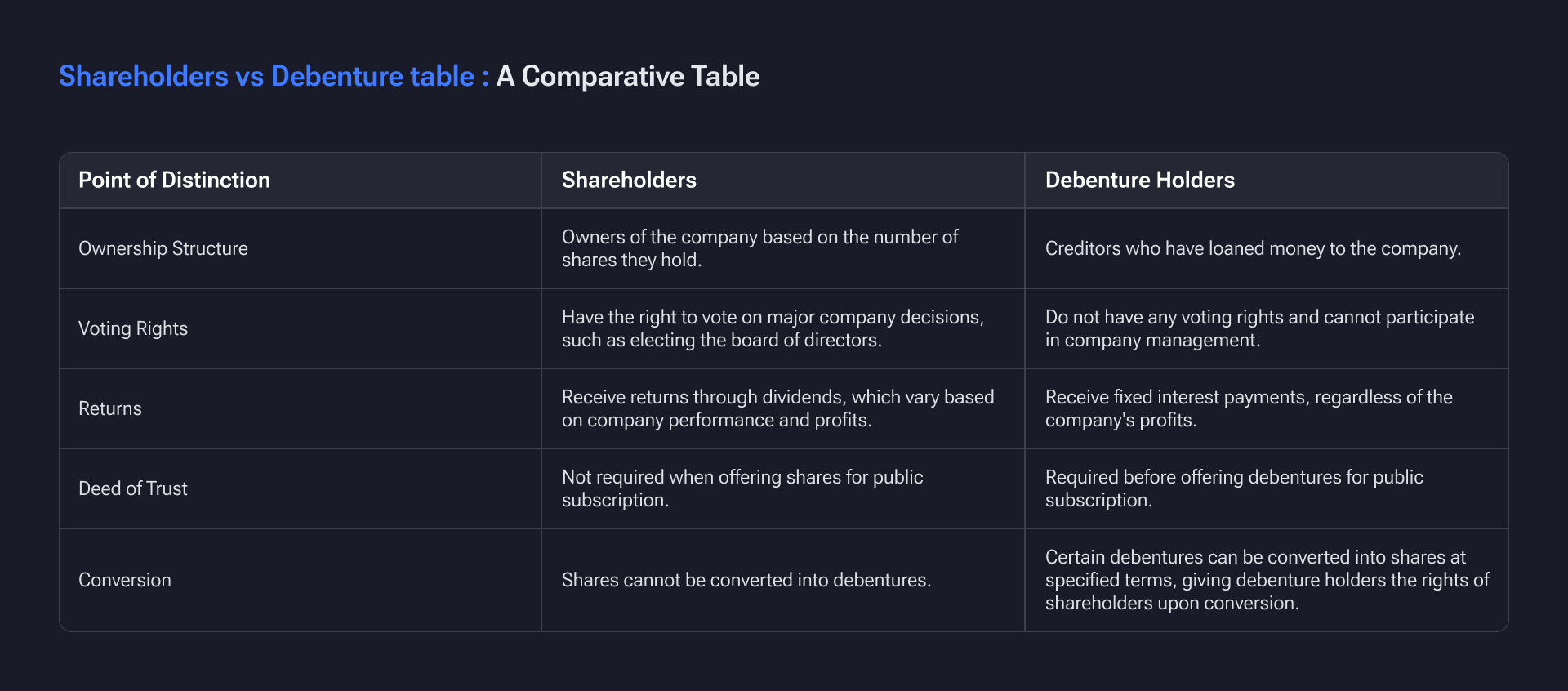
Shareholders: Shareholders are owners of the company. They have a share in the company's assets and profits based on how many shares they own.
Debenture Holders: Debenture holders are creditors. They have the right to claim repayment of the loan provided to the company, including interest, but do not own a part of the company.
Voting Rights
Shareholders: Shareholders have the right to vote on important company decisions, like setting policies and choosing the board of directors.
Debenture Holders: Debenture holders do not have voting rights and cannot participate in the company's management.
Returns
Shareholders: Returns for shareholders come in the form of dividends, which vary based on the company’s performance and profits.
Debenture Holders: Debenture holders receive fixed interest payments, regardless of the company’s profitability.
Deed of Trust
Shareholders: No deed of trust is required when offering shares for public subscription.
Debenture Holders: A deed of trust must be executed by the company before offering debentures for public subscription.
Conversion
Shareholders: Shares cannot be converted into debentures.
Debenture Holders: Some debentures can be converted into shares at specified terms. Upon conversion, debenture holders become shareholders and gain voting rights.
Shareholders vs. Debenture Holders: A Comparative Table
Implications in the Event of Liquidation
In the event of a company's bankruptcy, who gets paid first can make a big difference for shareholders and debenture holders. Shareholders are at higher risk because they are usually the last to be paid and might lose their investment. However, they have the chance to earn more through dividends and increased share value.
Debenture holders, on the other hand, are paid before shareholders. This reduces their risk because they get their money back first. Debentures offer lower risk and fixed returns compared to shares.
Conclusion: Informed Investment Strategies
Knowing the differences between shareholders and debenture holders is key to making smart investment choices and managing risks. Shareholders benefit from the company's growth and have a say in company decisions, while debenture holders get steady returns with less risk.
Investing in both shares and debentures can help balance a portfolio by combining the growth potential of shares with the stability of debentures. This approach diversifies investments, offering both growth and safety in the stock market.
Understanding the roles and benefits of each can help investors in developing strategies that align with their financial goals and risk tolerance. This knowledge empowers investors to navigate the complexities of the financial markets, ensuring well-informed decisions and optimized returns.
*Disclaimer: This information is for private use only and does not constitute investment advice. Recipients must assess risks and seek advice from financial, legal, and tax professionals. Private market investments carry risks, and there are no guarantees of returns or capital protection. We are not liable for investment decisions.