A recent example: SED completed a modernisation + expansion project for Parag Agro Foods & Allied Products’ sugar facility in Ravadewadi (Pune), helping lift crushing capacity to 7,000 tonnes of cane per day (TCD). The upgrade also focused on efficiency, with the plant’s steam consumption reportedly decreasing to 21–22% (on cane with B-molasses diversion) from ~32% earlier, supported by new evaporators and continuous pan systems.
What SED does and where it plays
SED operates as a process and project engineering equipment player - meaning its revenue is driven by:
Sale of engineered products and equipment
Erection/commissioning and related services
Long-cycle projects where execution quality, delivery timing, and working capital discipline matter
The company’s innovation focus sits around steam-saving and low-temperature process technologies, where customers (sugar and allied process industries) care about:
Lowering energy use
Improving yields and throughput
Supporting sustainability goals (lower emissions/less waste)
What changed beneath the surface
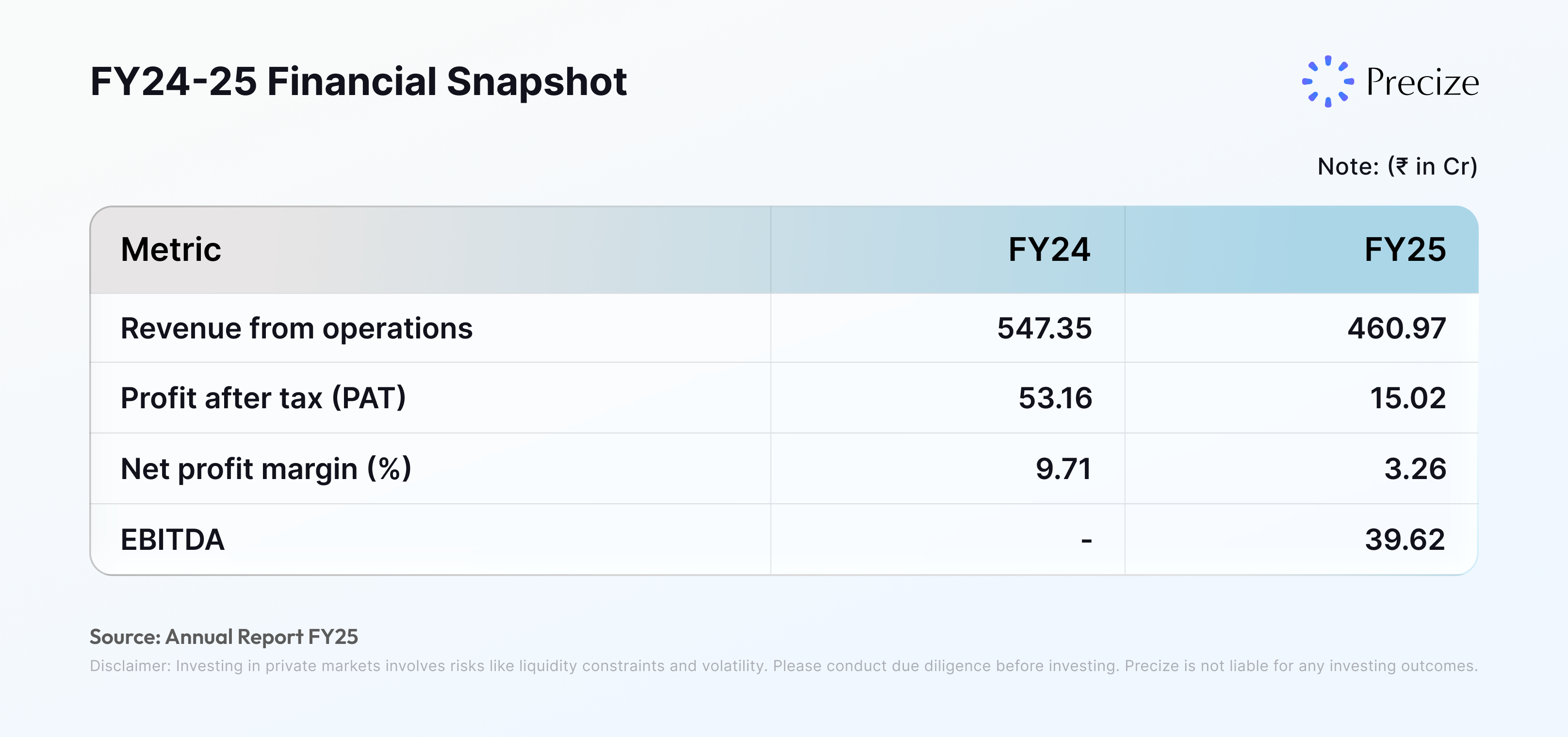
International revenue dropped sharply: Outside India revenue was ~₹20.47 crore versus ~₹100.25 crore in FY24. Domestic revenue stayed broadly similar.
Profitability also cooled: PBT was ~₹20.56 crore versus ~₹74.34 crore in FY24
This mix shift (lower exports + lower profit) is important because it hints that project/market composition can swing results year to year - common in engineered project businesses.
Working-capital reality: the part many investors underestimate
Project engineering businesses often look great on paper until you track cash conversion.
FY25 shows clear signs of working capital build-up:
Working capital (current assets - current liabilities): ~₹110.60 crore (FY24: ~₹56.78 crore)
Net capital turnover fell meaningfully, reflecting higher working capital relative to revenue
A key clue: advances from customers increased to ~₹40.73 crore (from ~₹16.33 crore), which can support execution, but the overall working-capital requirement still expanded.
Investor takeaway: when SED scales up projects, you want to watch (a) receivables and (b) inventory and (c) customer advances - because that’s where cash can get stuck.
Innovation engine: R&D spending and what it’s targeting
FY25 includes a meaningful push into development:
R&D expensed: ~₹4.26 crore
Development costs capitalised: ~₹10.94 crore (plus CWIP capitalised)
The capitalised development work targets themes like:
Lowering steam demand in sugar processing
Low-temperature evaporation and MVR-based systems
Energy-efficient jaggery production
Biomass-related processes
Why this matters: In this category, R&D isn’t a “nice to have.” It’s often what differentiates a vendor from a strategic partner, and it supports pricing power when customers care about energy bills and compliance.
Why the Parag Agro project is a useful signal
The Parag Agro modernisation is meaningful for two reasons:
It reinforces SED’s positioning in high-throughput sugar plant upgrades (7,000 TCD is a serious scale).
It highlights a core value proposition: capacity expansion + efficiency improvement together, with measurable operating outcomes (steam consumption reduction).
For investors, repeated wins like this can translate into:
Stronger order inflow from similar factories
Better referenceability
Mscope for repeat business (phased modernisation)
Key risks to track
A clean way to think about risks here:
Cyclicality of client capex: Sugar/distillery capex can be policy/price influenced; timing can swing.
Export volatility: The FY25 export drop shows that overseas execution or demand can be lumpy
Working-capital drag: Growth can consume cash fast; monitor receivables/inventory/advances
Margin sensitivity: Profitability moved materially from FY24 to FY25
What to watch next
If you’re tracking SED as an unlisted/private-market story, these checkpoints matter most:
Export mix stabilisation (does international revenue recover?)
Cash conversion (working capital normalises vs staying elevated)
Repeatability of efficiency-led projects like large sugar upgrades (more references like the Parag Agro win)
R&D-to-commercialisation loop (do the development themes translate into more differentiated contracts?)
How to Buy Spray Engineering Devices Unlisted Shares
Buying Spray Engineering Devices unlisted shares has become simple with the rise of trusted online platforms that specialize in private market investments. The process is fully digital and can be completed from your home in just a few steps. Here’s how it works:
Step 1: Create Your Account Online
Sign up on a reliable platform such as Precize.
Click on “Reserve Access” and enter your basic details.
Check your email for verification and choose a strong password to complete registration.
Step 2: Add Demat Details
Complete your profile by updating your PAN card, bank account details, and Demat account number (NSDL or CDSL).
This step is required for compliance and smooth share transfer.
Step 3: Decide and Place Your Order
Select the number of shares or lots you want to buy.
Note that most platforms set a minimum investment, usually starting around ₹10,000.
Add funds to your account UPI or net banking and confirm your order.
Step 4: Get Shares in Your Demat Account
Once your transaction is approved (generally within 24 to 48 business hours), the shares will be credited directly to your Demat account.
Ensure that your Demat details are correct to avoid any delays.
Having secured your unlisted shares, knowing the selling process ensures a seamless experience in the private market.
Conclusion
Spray Engineering Devices sits in a niche where India’s industrial efficiency push (energy, steam, emissions, waste reduction) intersects with long-cycle project execution. FY25 shows a softer year on revenue and profit, but also shows a strengthened equity base, controlled leverage, and continued investment in energy-efficiency innovation.
If you want to track PXIL unlisted shares more closely and monitor liquidity opportunities, you can do it through private-market platforms like Precize.