HDFC Securities, one of India's most well-known broking and financial services firms, has released its full-year results for FY2025-26. The headline number has caught the attention of investors in the unlisted share market: Profit After Tax declined 17% year-on-year to ₹929 crore. For those holding or tracking HDFC Securities unlisted shares, this result deserves a closer look beyond just the headline.
What Happened: HDFC Securities FY26 Results at a Glance
HDFC Securities, a subsidiary of HDFC Bank, operates as a full-service brokerage offering equity trading, mutual funds, insurance, and advisory services. For FY26, the company posted a drop in net profit despite a relatively active year for Indian capital markets.
Here is a quick summary of the key financial highlights:
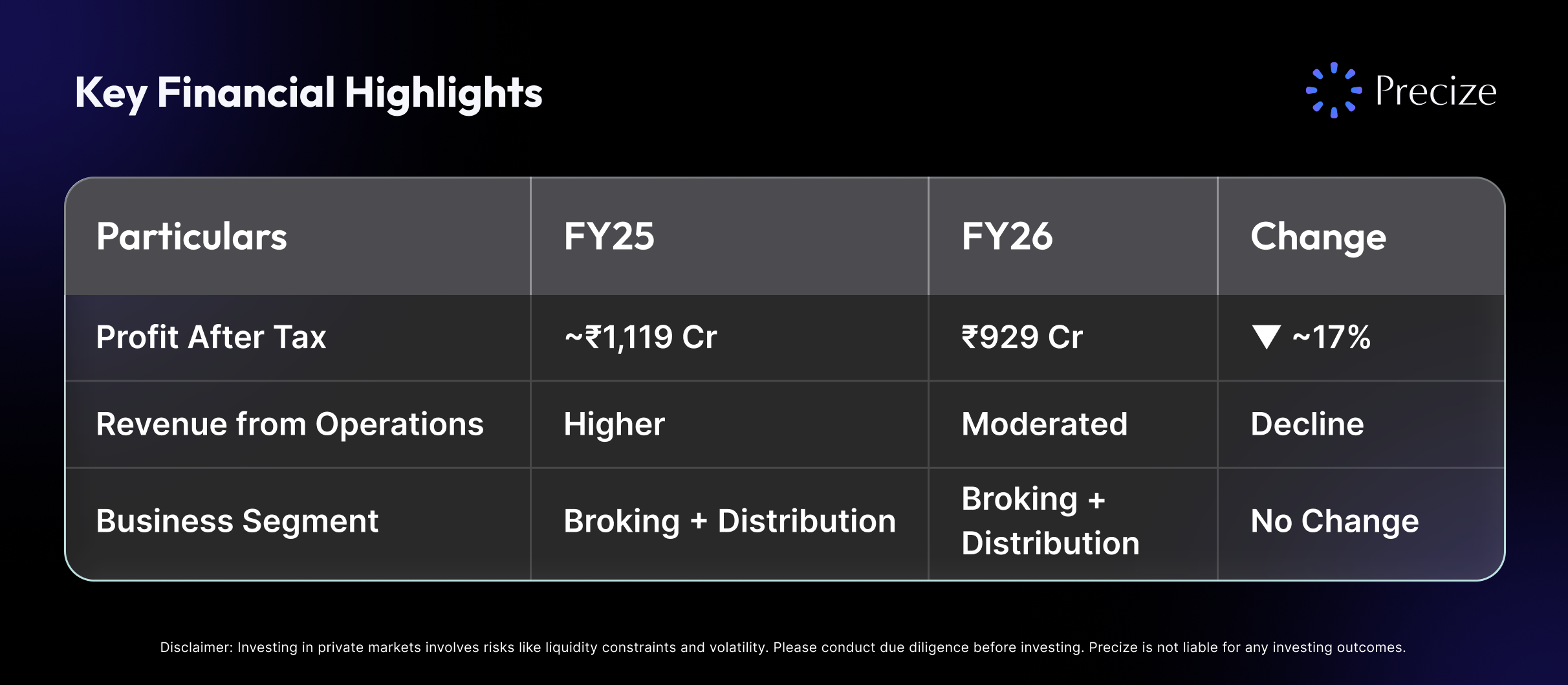
Note: Exact revenue figures are based on data shared via unlisted market platforms. Always cross-verify with official filings before making investment decisions.
The dip in PAT is notable, especially at a time when listed peers like Angel One, Motilal Oswal, and Nuvama saw mixed performance across the year.
Why Did HDFC Securities Profit Fall in FY26?
The 17% decline in PAT is not entirely surprising when you zoom out and look at the broader environment. Several factors likely contributed:
Market Volumes Softened in H2 FY26
After a strong FY25 driven by retail participation and F&O activity, trading volumes in the second half of FY26 were relatively subdued. This directly impacts broking revenue for any firm in this space.
Regulatory Headwinds from SEBI
SEBI's ongoing crackdown on F&O trading, including changes to lot sizes, weekly expiry restrictions, and increased margin requirements, has squeezed the revenue model for retail-facing brokers. HDFC Securities, which caters significantly to retail and HNI clients, would not have been immune to this.
Rising Operating Costs
Expanding digital infrastructure, compliance costs, and technology investments have pushed up expenses across the broking industry.
Competition from Discount Brokers
Platforms like Zerodha, Groww, and Upstox continue to eat into the market share of full-service brokers. While HDFC Securities retains a loyal customer base through the HDFC Bank ecosystem, the competitive pressure on brokerage yields is real.
What This Means for HDFC Securities Unlisted Share Investors
This is the section that matters most if you are tracking HDFC Securities unlisted share price or considering buying or selling in the pre-IPO market.
A profit decline typically creates short-term pressure on unlisted share valuations. However, context matters:
HDFC Securities Still Remains Highly Profitable
₹929 crore PAT is not a crisis; it is still an exceptional profit figure for a privately held broking firm. Very few unlisted companies in India generate anywhere near this level of earnings.
IPO Potential Remains a Key Trigger
The HDFC Securities IPO has been a topic of market speculation for years. While no official IPO date has been announced, any move by HDFC Bank to list or divest its stake in HDFC Securities would be a major re-rating event for unlisted shareholders.
Valuation Reset May Create Opportunity
If the FY26 result causes a temporary correction in the HDFC Securities unlisted share price, it could present a buying opportunity for long-term investors who believe in the company's fundamentals and eventual listing.
Also read: HDFC Securities Unlisted Shares: Buy/Sell Online
Key Things to Watch Going Forward
If you are an investor or market watcher, keep an eye on the following:
HDFC Bank's strategic intent: Will HDFC Bank look to list HDFC Securities as part of its subsidiary monetisation strategy?
SEBI regulatory updates: Any easing of F&O norms or new product approvals could boost broking revenues in FY27.
Unlisted share price movement: Track how the market reacts to the FY26 results over the coming weeks on platforms dealing in pre-IPO shares.
Q1 FY27 performance: A recovery in volumes and earnings in the first quarter of FY27 could quickly change the narrative.
Conclusion
HDFC Securities FY26 results showing a 17% decline in PAT to ₹929 crore is a meaningful data point, but it is not a red flag on its own. The drop is largely explained by industry-wide headwinds, including SEBI regulations, lower F&O volumes, and growing competition. The company remains one of India's most profitable unlisted financial services firms.
For investors in the unlisted share space, this result calls for patience rather than panic. The long-term case built around the HDFC brand, a loyal customer base, and IPO optionality remains intact. As always, do your own research and consult a registered financial advisor before making any investment decision.
Also read: HDFC Securities: Services, Business Model, Financials and Growth Outlook