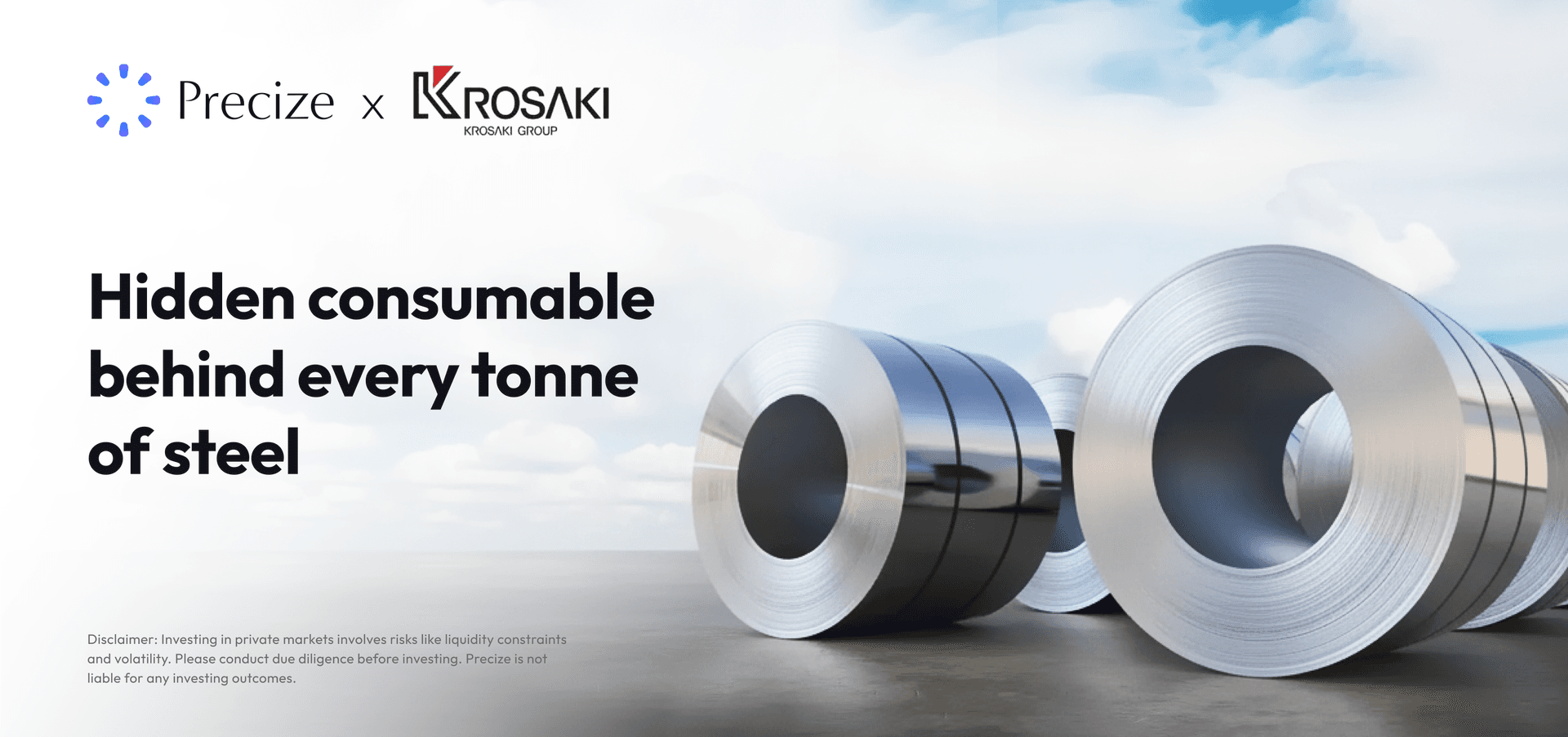
When a steel plant is running well, you rarely hear about refractories. When it isn’t, refractories suddenly become the headline. That’s because refractories are not “one-time capex items”. They’re a high-frequency industrial consumable that sits at the hottest points in steelmaking — ladles, tundishes, converters, blast furnaces, electric arc furnaces. Every heat literally wears them down.
So for investors tracking TRL Krosaki, the most useful mental model isn’t “bricks and shapes”. It’s this:
Refractories are the steel plant’s uptime insurance. And uptime is where the money is.
Why “heats” matter more than “tonnes”
In this business, performance is measured in campaign life — how long the lining, plates, nozzles, snorkels, or ladle systems last before needing replacement.
That’s why you’ll often see the best operators talk in heats:
Milestones like 20,000 heats on a ladle slide gate
10,000 heats at a converter
3,009 heats on a torpedo ladle car (TLC) campaign
Or multi-day casting sequences, hitting hundreds of heats
These numbers matter because each extension in campaign life reduces shutdown frequency, improves safety outcomes, and lowers the cost per tonne for the customer. TRL has highlighted multiple such “heat-based” milestones across large steel sites.
If you’re evaluating TRL as an investor, this is the lens you want:
Does the company continue to improve refractory life in mission-critical operations — and does that translate into stronger relationships?
TRL’s real business model: products + outcomes
A plain refractory supplier sells products. TRL’s positioning is closer to a solution partner, combining manufacturing with engineering, execution, and on-site technical support. Alongside its product portfolio, TRL offers refractories engineering and management services, including design, process automation, turnkey project execution, and on-site support focused on improving operational performance.
This matters because:
Product supply can be competitive.
But embedded service + daily site involvement makes replacement harder.
TRL also highlights a pan-India sales and service footprint with site service engineers deployed at key customer locations, which supports faster response times and deeper engagement.
That is a very different moat than “we manufacture bricks”.
What makes TRL Krosaki structurally interesting
Investors usually care about 4 structural strengths in a refractory company:
1) One-stop portfolio depth
TRL highlights a diversified portfolio under one roof (silica, high alumina, basic, dolomite, specialty flow control products, monolithics, taphole clay, etc.).
For a steel customer, that reduces vendor fragmentation - and increases wallet share potential.
2) Technology leverage through its Japanese parent group
TRL has an established association with Krosaki Harima, and it explicitly links this to expanded.
3) Scale and manufacturing backbone
The annual report describes modern manufacturing with capacity scale and upgrades, including a main plant at Belpahar and continuous modernization.
4) Export standing
TRL positions itself as a trusted supplier to major steel companies and the country’s largest exporter of refractories.
FY25 in one screen
Instead of repeating the full financial section, you can keep FY25 tight:
The company states FY25 delivered its highest-ever revenue and profit versus plan targets.
Consolidated Profit After Tax (PAT) reported: ₹342.21 Cr for FY24-25 vs ₹241.22 Cr for FY23-24 (as shown in the EPS workings).
Proposed dividend: ₹33 per equity share for FY25.
Investor checklist
If you want to track TRL like an investor watch these:
1) Steel cycle sensitivity
Steel production levels and capex cycles directly affect refractory demand. The key is whether TRL can protect performance and pricing through cycles via service-led engagements.
2) Share of “managed outcomes” vs pure product supply
Over time, stronger service penetration should show up as deeper account relationships and better repeatability.
3) Raw material security and disruption risk
The company itself flags raw material disruptions and market pressures as part of FY25’s operating context.
4) Working capital discipline
A practical investor check is whether receivables stay controlled. The report discloses receivables and contract liabilities as part of contract balances.
5) Operational proof points (the “heats” story)
Track whether the company continues to publish measurable improvements in refractory life, casting sequences, and incident-free performance, because that’s what drives customer stickiness.
What could go wrong (framed as failure modes, not generic risks)
To keep this blog from sounding like every other one, frame risks like this:
Steel downturn → volume drops, price pressure rises
Input disruption → margins get squeezed if costs move faster than pass-through
Execution risk at customer sites → performance failures can cost trust quickly in high-temperature operations
Conclusion: the simplest way to view TRL
TRL Krosaki is best understood as a performance partner to steel plants rather than a commodity supplier. If the company keeps extending campaign life, embedding deeper into customer operations, and scaling outcomes-based services, it strengthens the kind of relationship that tends to last through cycles.