Raising capital is a crucial aspect for any business looking to grow. While Initial Public Offerings (IPOs) are well-known, Direct Public Offerings (DPOs) are a lesser-known but viable alternative for companies that want to raise funds without intermediaries.
What is a Direct Public Offering (DPO)?
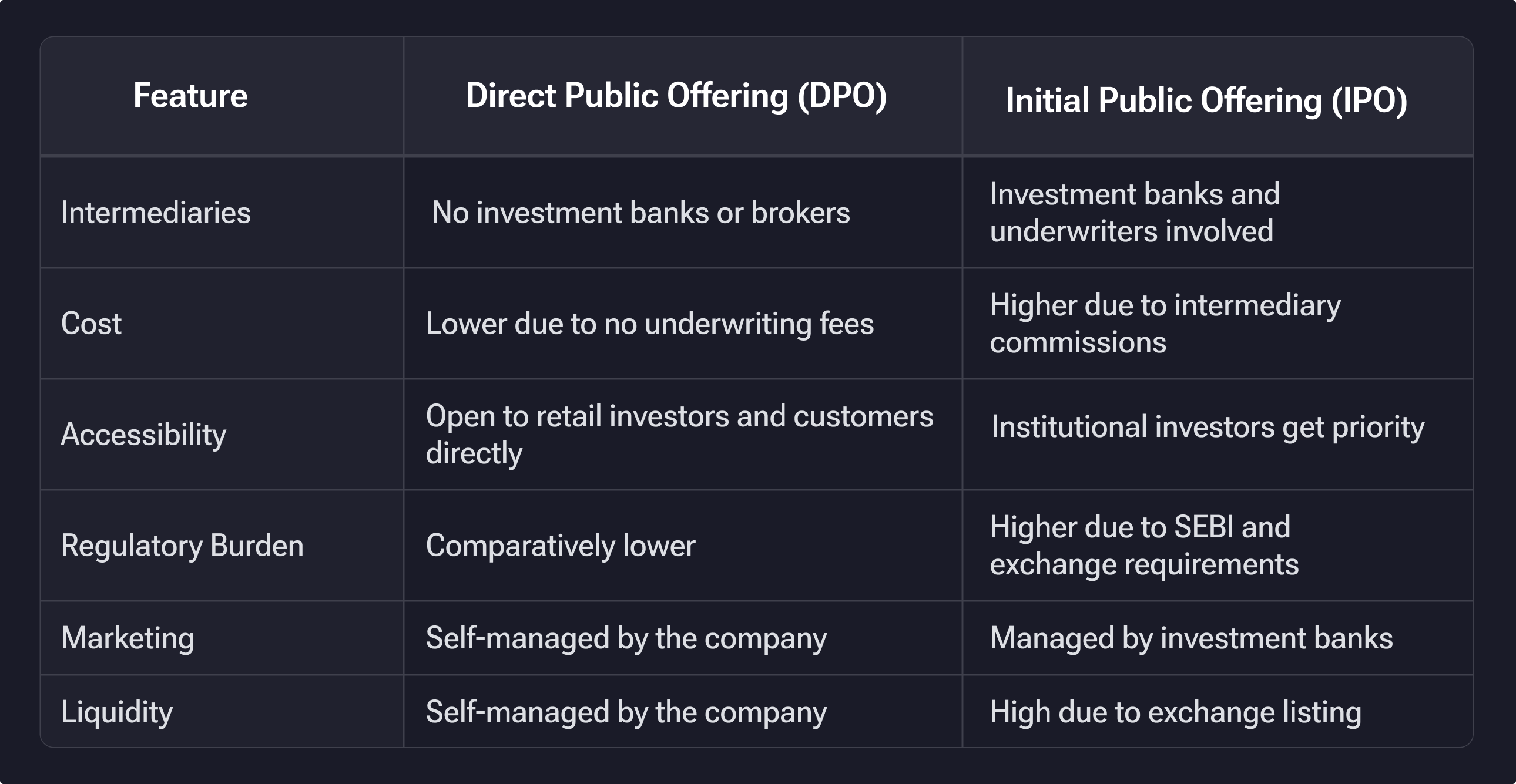
A Direct Public Offering (DPO) is a method by which a company raises capital directly from the public without using intermediaries like investment banks or brokers. Unlike an IPO, where financial institutions underwrite and distribute shares, a DPO allows the company to sell shares directly to investors, including customers, employees, and the general public.
How Does a DPO Work?
In a DPO, the company takes on the responsibility of marketing and selling its shares. Here are the steps involved:
Regulatory Compliance: The company must comply with the regulations of the jurisdiction where it is issuing shares. In India, this would involve adhering to the guidelines set by the Securities and Exchange Board of India (SEBI).
Valuation of Shares: The company determines the price of its shares based on its financial standing and market potential.
Marketing and Promotion: Unlike an IPO, where investment banks handle marketing, a company conducting a DPO must create awareness through advertising, social media, and outreach campaigns.
Selling the Shares: The company offers shares directly to investors through its website, crowdfunding platforms, or other channels.
Fund Utilization: Once the funds are raised, they can be used for business expansion, product development, debt repayment, or other operational needs.
Advantages of a DPO
Cost-Effective: A DPO eliminates the need for underwriters and brokers, reducing costs significantly.
Greater Control: Companies retain more control over the process, deciding how shares are sold and marketed.
Direct Investor Engagement: Investors directly engage with the company, leading to more transparency and trust.
Flexibility: Companies can determine their own pricing and share distribution strategy.
Faster Fundraising: Without the lengthy IPO underwriting process, companies can raise capital more quickly.
Disadvantages of a DPO
Limited Investor Interest: Without underwriters promoting the stock, reaching investors can be challenging.
Regulatory Compliance: While easier than an IPO, a DPO still requires companies to adhere to legal and financial regulations.
Liquidity Issues: Shares might not be as easily traded as those in a traditional IPO unless listed on an exchange.
Marketing Challenges: Companies must invest in marketing efforts to ensure the success of the offering.
Why Companies Choose DPO Over IPO
Many companies, especially startups and SMEs, prefer a DPO over an IPO for several reasons:
They want to avoid the high costs of going public through an IPO
They already have a loyal customer base willing to invest
They seek to maintain greater control over their financial decisions
They want to engage with investors more transparently
Examples of Companies That Used DPO
Some well-known companies have successfully used DPOs to raise capital. For example:
Ben & Jerry’s (Ice Cream brand) conducted a DPO before becoming a major name in the industry.
Annie’s Homegrown (An organic food company) used a DPO to expand before being acquired by General Mills.
Solar Companies in the renewable energy sector have increasingly opted for DPOs to raise funds from environmentally conscious investors.
How to Invest in a DPO?
Investing in a DPO is relatively straightforward. Here’s how you can do it:
Research Companies Offering DPOs: Look for businesses that are conducting a DPO.
Verify Regulatory Compliance: Ensure the company meets the necessary legal requirements.
Analyze Financial Health: Evaluate the company’s financial reports and business model.
Purchase Shares Directly: Follow the company’s designated process for buying shares.
Monitor Investment: Keep track of the company’s performance to assess returns.
Conclusion
A Direct Public Offering (DPO) provides businesses with a cost-effective way to raise capital while allowing investors to directly support companies they believe in. Although DPOs have challenges, such as marketing and liquidity concerns, they remain a compelling alternative for companies looking to avoid the complexities of an IPO. For investors, DPOs offer an opportunity to engage directly with businesses and potentially benefit from early-stage investments.
A Direct Public Offering (DPO) provides businesses with a cost-effective way to raise capital while allowing investors to directly support companies they believe in. Although DPOs come with challenges, such as marketing and liquidity concerns, they remain a compelling alternative for companies looking to avoid the complexities of an IPO.
If you're looking to diversify your portfolio with unique opportunities, consider exploring Precize, an alternative investment platform that provides access to pre-IPO shares and global trade finance opportunities.
Reserve your access to Precize today and take the next step in diversifying your portfolio.
(Disclaimer: This article is for informational purposes only and should not be considered financial, investment, or legal advice. Investing in securities, including Direct Public Offerings (DPOs), carries risks, and investors should conduct their research or consult with a financial advisor before making any investment decisions. The author and publisher are not responsible for any financial losses incurred as a result of the information provided in this article.)