
Before we start to compare the unlisted share investing experience between emerging economies like India and China, let’s drive back to how the developments have been in the unlisted share space in these two opposite environments.
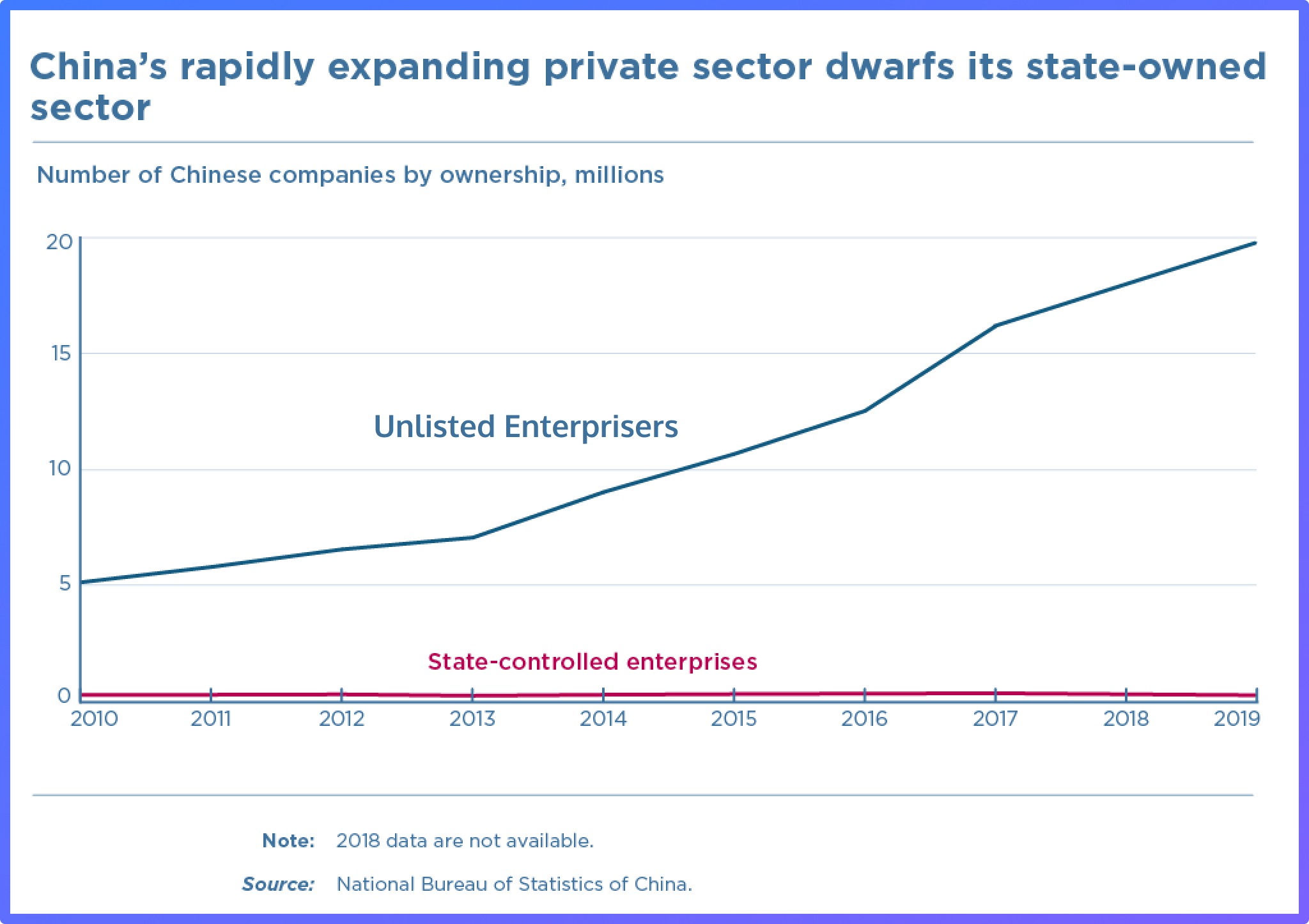
China's private sector is strong, vast, and rapidly expanding. As of the end of 2019, China has approximately 20 million unlisted enterprises and just 266 thousand state-controlled firms, according to the Chinese Statistical Office. Over the last decade, the number of unlisted enterprises has nearly quadrupled, while government firms have expanded relatively little. As of the end of 2019, there were about 83 million individual businesses owned simply by one legal person and not registered as companies, in addition to unlisted firms. As of the end of 2019, unlisted companies and individual firms account for over half of overall employment in China and a substantially more significant proportion of jobs in the urban regions.
According to the All-China Federation of Industry and Commerce's survey of the top 500 unlisted enterprises by revenue, their total revenue and net profits in 2020 were US$ 5.43 trillion and US$ 305 billion, respectively. The revenue threshold for inclusion on the 2020 list was US$ 3.6 billion. 98 organizations in the top 500 have assets over US$ 15.5 billion. These figures indicate many large unlisted Chinese companies with innovation potential.
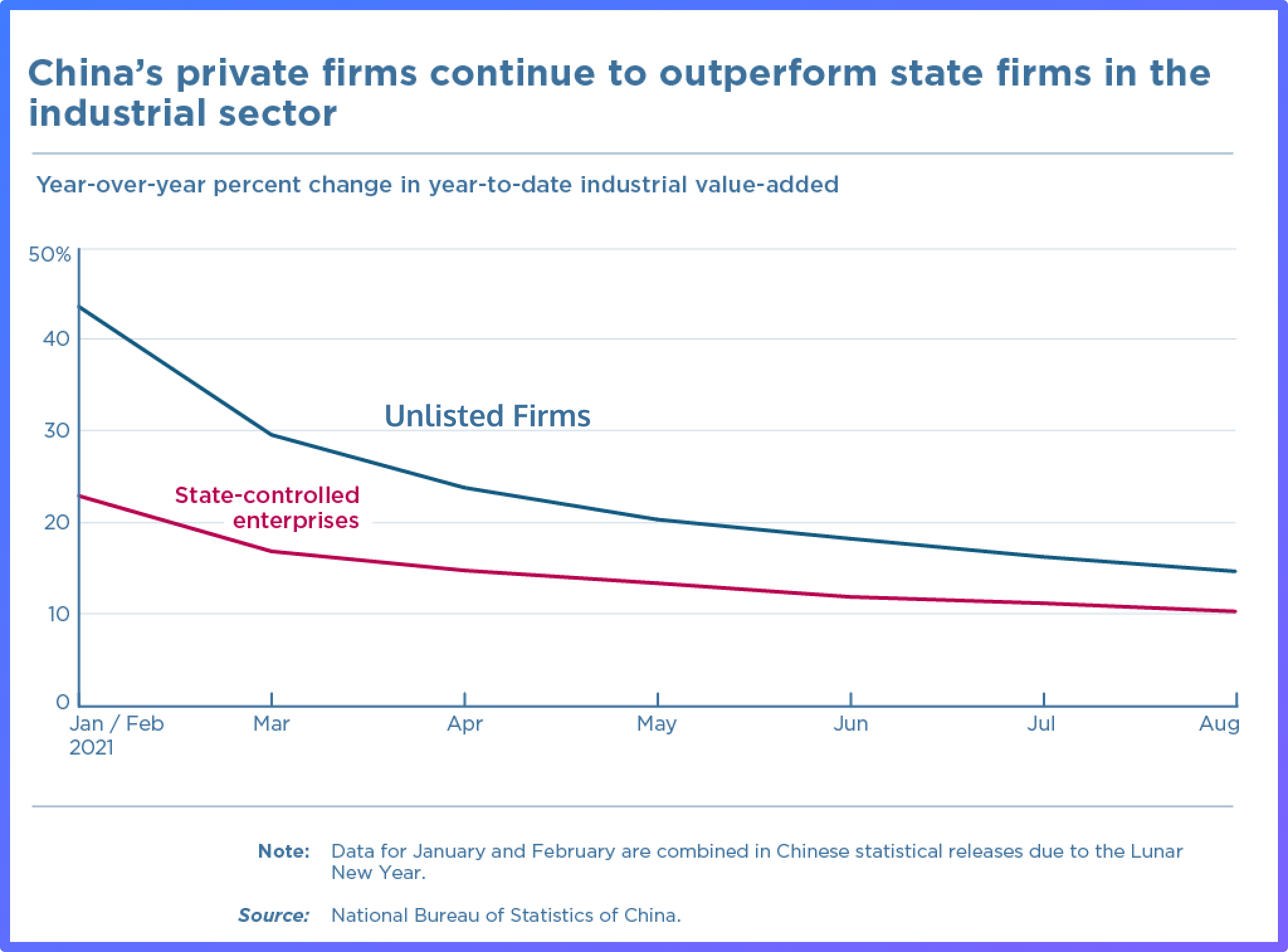
Investment of unlisted shares in China has increased in tandem with the country's strong economy over the last decade, and the visual data points attached below are proof of it. With state-owned firms getting sold, entrepreneurial activities growing, and financial markets becoming more efficient, the future is likely to bring even more opportunities. However, there will be a transitional phase when the market matures, and new legal frameworks and beneficial business arrangements emerge.
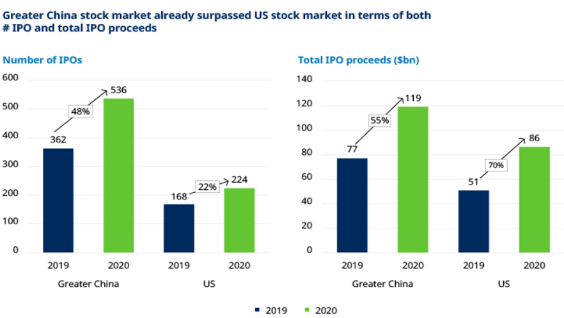
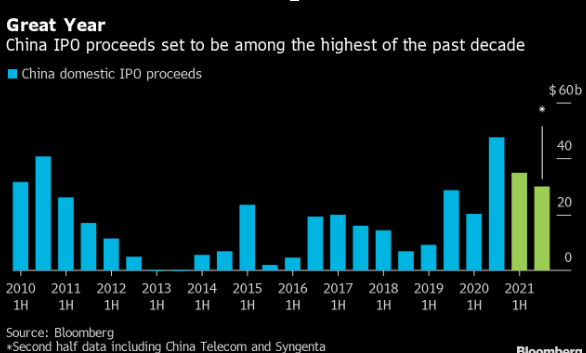
The expansion of unlisted shares in China is expected to continue. China, which has 18.74% of the world's population, is undergoing an economic burgeoning that presents numerous investment prospects. International institutional investors will need to include China in their investment portfolios as they strive to diversify their portfolios.