
Understanding IPO allotment:
Investing in an Initial Public Offering is a common method for individuals and institutions to purchase shares of a company as it becomes publicly traded. However, the IPO allotment process can often seem mysterious and confusing, resembling a lottery in many ways.
The approach to allotment varies depending on the type of investor, and understanding these details can help investors navigate the process more effectively.
In this blog, we'll decode the IPO allotment process, breaking down the details for different investor categories and explaining how both lottery-based and pro-rata allotments work.
Investor Categories and Reservation Portions
When a company launches an IPO, the shares are divided among different categories of investors. Each category is entitled to a certain reservation portion in the allotment process. Typically, there are three main investor categories:
Retail Individual Investors (RII)
Non-Institutional Investors (NII)
Qualified Institutional Buyers (QIB)
Here is a breakdown of the reservation portions for each category:
Retail Individual Investors (RII): Typically, 35% of the shares are reserved.
Non-Institutional Investors (NII): Generally, 15% of the shares are reserved.
Small High Net-Worth Individuals (sHNI): 5% of the shares are reserved.
Big High Net-Worth Individuals (bHNI): 10% of the shares are reserved.
Qualified Institutional Buyers (QIB): Usually, 50% of the shares are reserved.
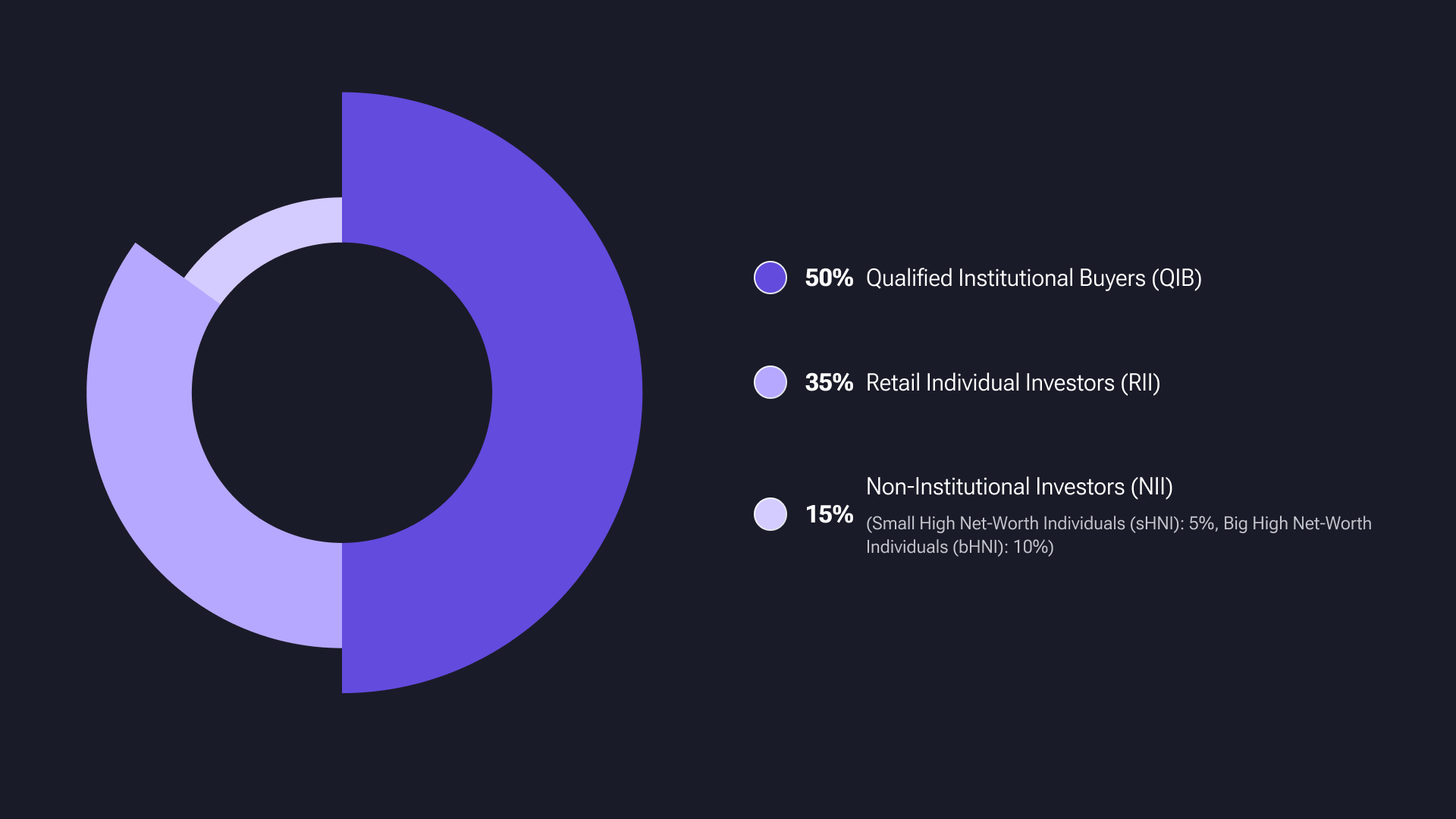
In certain cases, if a company has not been profitable for the last three financial years, the QIB reservation increases to 75%, while the retail reservation reduces to 10%. The NII category remains unchanged in such scenarios.
Types of IPO Allotments
The IPO allotment process can be broadly categorized into two types:
Lottery Basis Allotment
Pro-Rata Basis Allotment
Lottery Basis Allotment
The lottery basis allotment is primarily used for the Retail Individual Investors (RII), small High Net-worth Individuals (sHNI), and big High Net-worth Individuals (bHNI) categories. Here’s how it works:
Assume that 10 retail investors have applied for an IPO at the cut-off price, which is the price at which shares are issued. Each investor has placed a bid ranging from 1 to 5 shares. The list of investors and their bids might look like this:
If the total number of shares available for allotment is 5, the shares could be distributed as follows:
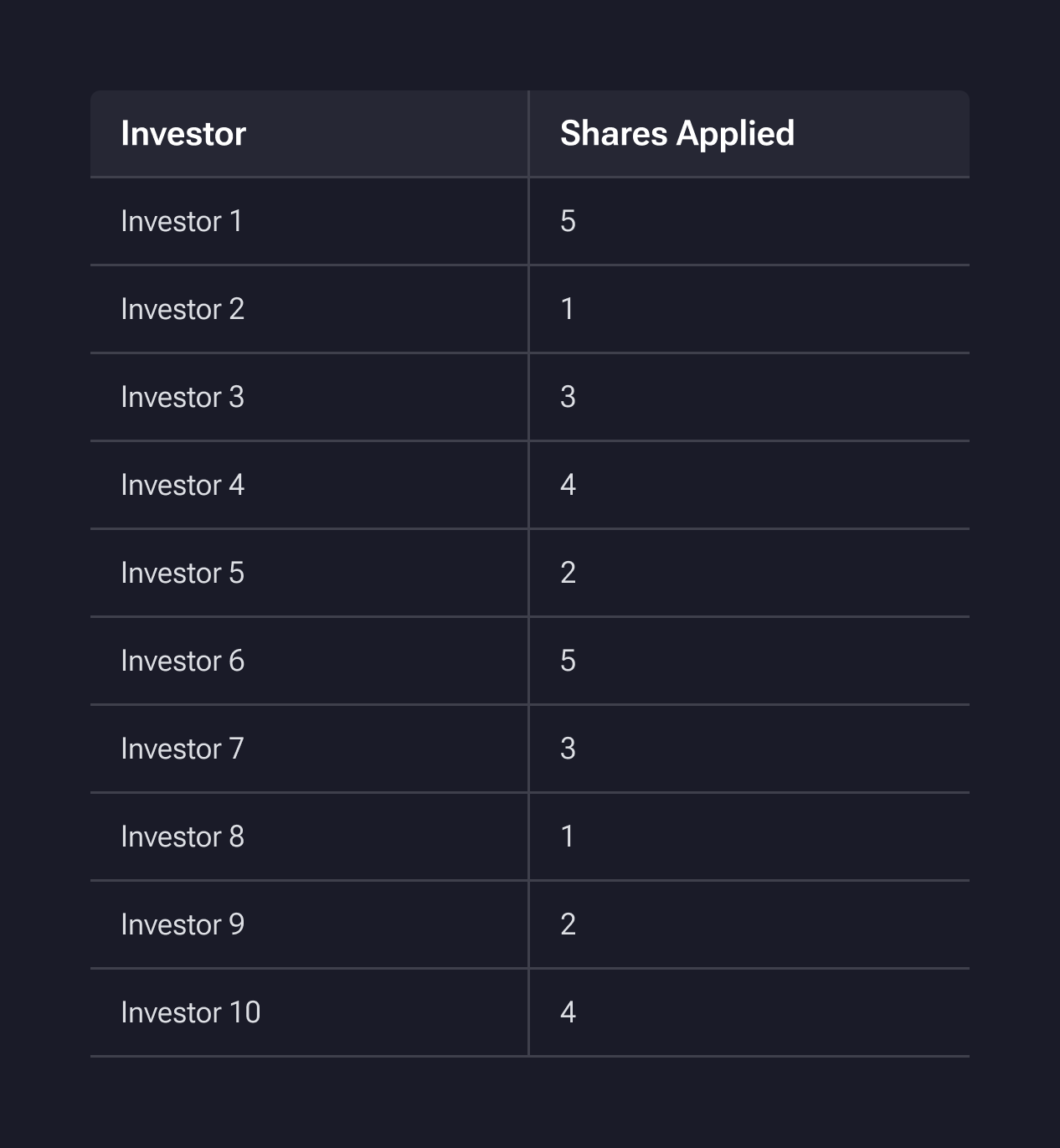
Investors (2), (3), (5), (9), and (10) have been selected through a lottery conducted by the registrar and will receive shares as per their IPO applications. Any investors who applied at a price below the upper price band were not considered for the allotment lottery.
Pro-Rata Basis Allotment
The pro-rata basis allotment is straightforward.
Here's how it works:
If an investor applies in the pro-rata allotment category, they receive shares proportionate to their application and the total subscription.
For example, AB Ltd. offered 10,000 shares to the public, but the demand was high, with applications received for 20,000 shares. To allocate the shares on a pro-rata basis, the company will distribute the 10,000 shares among the 20,000 applicants.
This results in a ratio of 20,000:10,000, or 2:1. Therefore, an applicant who requested 2 shares will receive 1 share. This process is known as pro-rata allotment.
Key terms related to IPO:
Here are the key terms associated with an IPO explained briefly:
Red Herring Prospectus (RHP): The mandatory offer document filed with SEBI provides detailed information about the company, including its financials, industry, business nature, and objectives for going public. It does not include the final share price.
Abridged Prospectus: A shorter version of the main IPO prospectus, highlighting key details. It must be included with all IPO application forms.
Anchor Investor: Special large investors who buy shares worth Rs.10 crore or more in an IPO. They get 60% of the shares reserved for big institutional investors.
ASBA (Application Supported by Blocked Amount): A process where your money stays in your bank account until shares are allotted to you. This makes applying for an IPO easier and quicker.
Bid Lot: The minimum amount of shares an investor must apply for in an IPO.
Book Building: A method to set the IPO price by collecting bids from investors within a price range. The final price is based on these bids.
Cut-off Price: The final price at which shares are sold in a book-building IPO. It’s based on investor demand and their willingness to pay.
Floor Price: The lowest price at which bids are accepted in a book-building IPO. It’s the minimum price in the given range.
Listing Date: The date when IPO shares begin trading on the stock exchange after allotting shares.
Red Herring Prospectus (RHP): A detailed document filed with SEBI provides important information about the company, such as its finances and business plans, but not the final share price.
Conclusion:
Understanding the IPO allotment process is crucial for anyone looking to invest in an IPO. This knowledge helps set realistic expectations and enables informed decision-making regarding potential allotment outcomes.
Investors can even invest in these companies before they go public. These companies are known as unlisted companies, and their shares are traded in the unlisted market.
Precize offers a curated selection of unlisted shares. For more information and to explore these investment opportunities, visit Precize.