Before knowing the Income Tax Slabs and Tax rates for 2024-2025, it’s essential to know what is Interim Budget and Interim Budget for 2024.
What is Interim Budget?
An interim budget is a temporary financial statement that the government puts forward. It's usually done in a year when general elections are planned and there's an expectation of a new government is expected to take power.
The primary aim of an interim budget is to enable the government to sustain its activities and fulfill its financial commitments until the new government assumes power and presents the complete budget. It covers the government's expenses and revenues for a portion of the fiscal year.
Key Characteristics of an Interim Budget:
Duration: Unlike the full annual budget, which outlines financial plans for the https://www.precize.in/blogs/what-are-pre-ipo-fundsentire fiscal year, the interim budget usually spans a shorter period—often just a few months until the new government is established.
Expenditure Approval: It seeks Parliament's endorsement for spending and withdrawing funds from the Consolidated Fund of India to support ongoing government operations until the full budget is approved.
Limited Announcements: The interim budget typically refrains from introducing significant policy changes or new programs. Its focus is on maintaining consistency in government spending and operations.
Vote on Account: The central aspect of an interim budget is the "vote on account," which requests approval for essential government expenditures, such as salaries, administrative costs, and ongoing project funding, without delving into each expenditure in detail.
Revenue and Expenditure Estimates: It offers an overview of the government's revenue and expenses for the part of the fiscal year covered. However, it may not include comprehensive economic forecasts or tax proposals, which are usually reserved for the complete budget.
Political Considerations: The interim budget, typically released before elections, is closely examined for any actions that could influence voters, even though it is traditionally anticipated to maintain a neutral stance as a financial statement.
Importance:
Continuity of Government Operations: It ensures that the government possesses the legal authorization to spend funds and maintain its operations smoothly, preventing any disruptions in public services.
Transition to New Government: It enables the incoming government to influence financial plans for a significant portion of the fiscal year, empowering them to implement their policies and priorities through a comprehensive budget.
Economic Stability: The interim budget contributes to upholding economic stability by guaranteeing uninterrupted government expenditures and operations.
Income Tax slabs and Tax rates for 2024-2025 after Interim Budget 2024.
According to an article published by The Times of India, the interim budget for the financial year 2024-25 proposed maintaining the existing tax rates without any changes. This means that unless there are alterations in the final budget following the general elections, the personal income tax rates for the financial year 2024-25 will remain as follows:
Income Tax Slabs for Old/Regular Tax Regime:
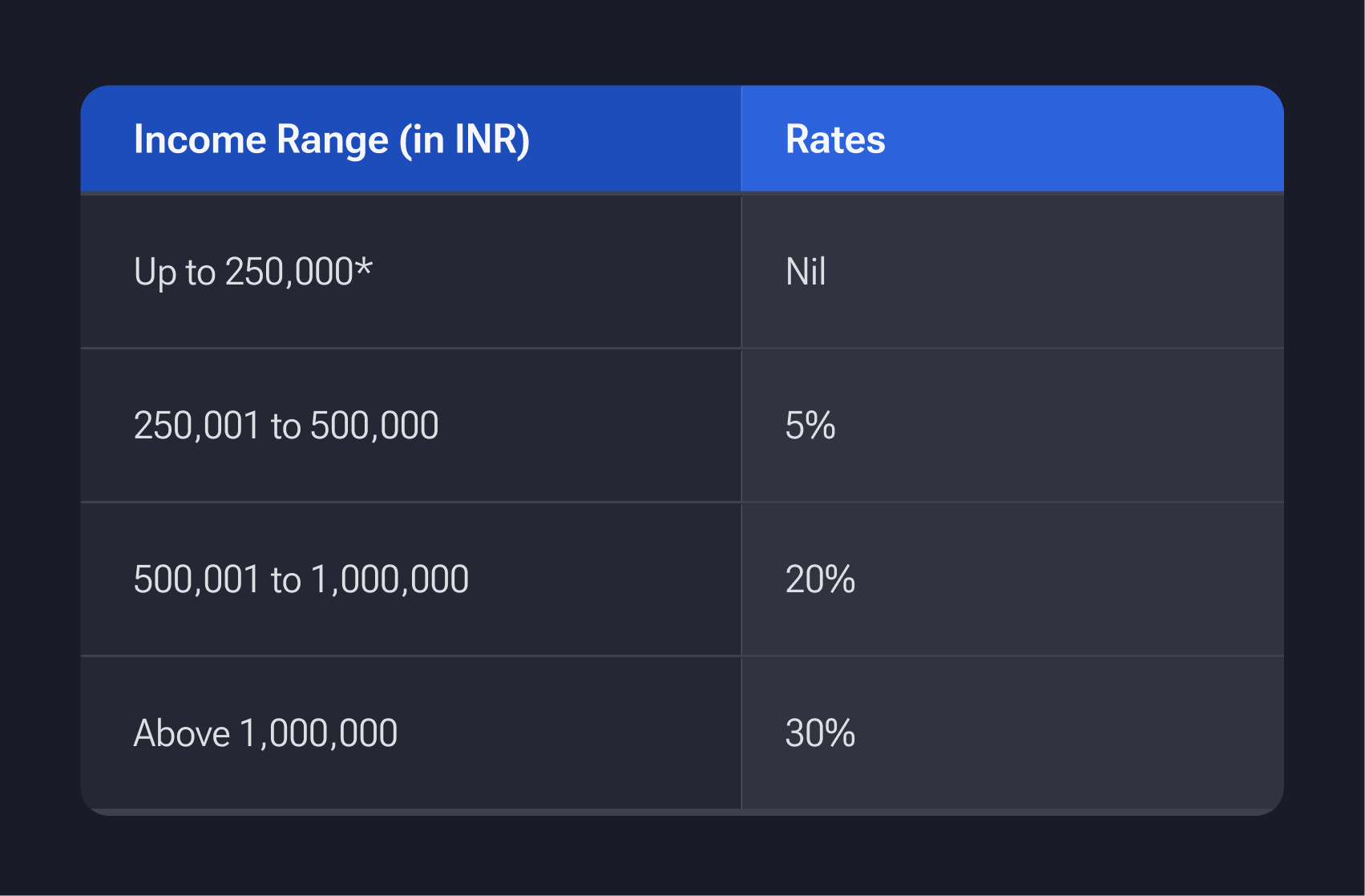
*These income tax slabs and rates apply to individuals who are residents below 60 years of age, as well as Non-Resident (NR) and Not Ordinarily Resident (NOR) individuals, for the financial year 2024-25.
For resident individual taxpayers with total income not exceeding INR 500,000, there will continue to be a tax rebate of Rs 12,500 or the actual tax payable, whichever is lower.
Senior citizens aged above 60 years are entitled to a basic exemption limit of Rs 3 lakh, while super senior citizens aged above 80 years have an exemption limit of Rs 5 lakh.
Income Tax Slabs for New Income Tax Regime:
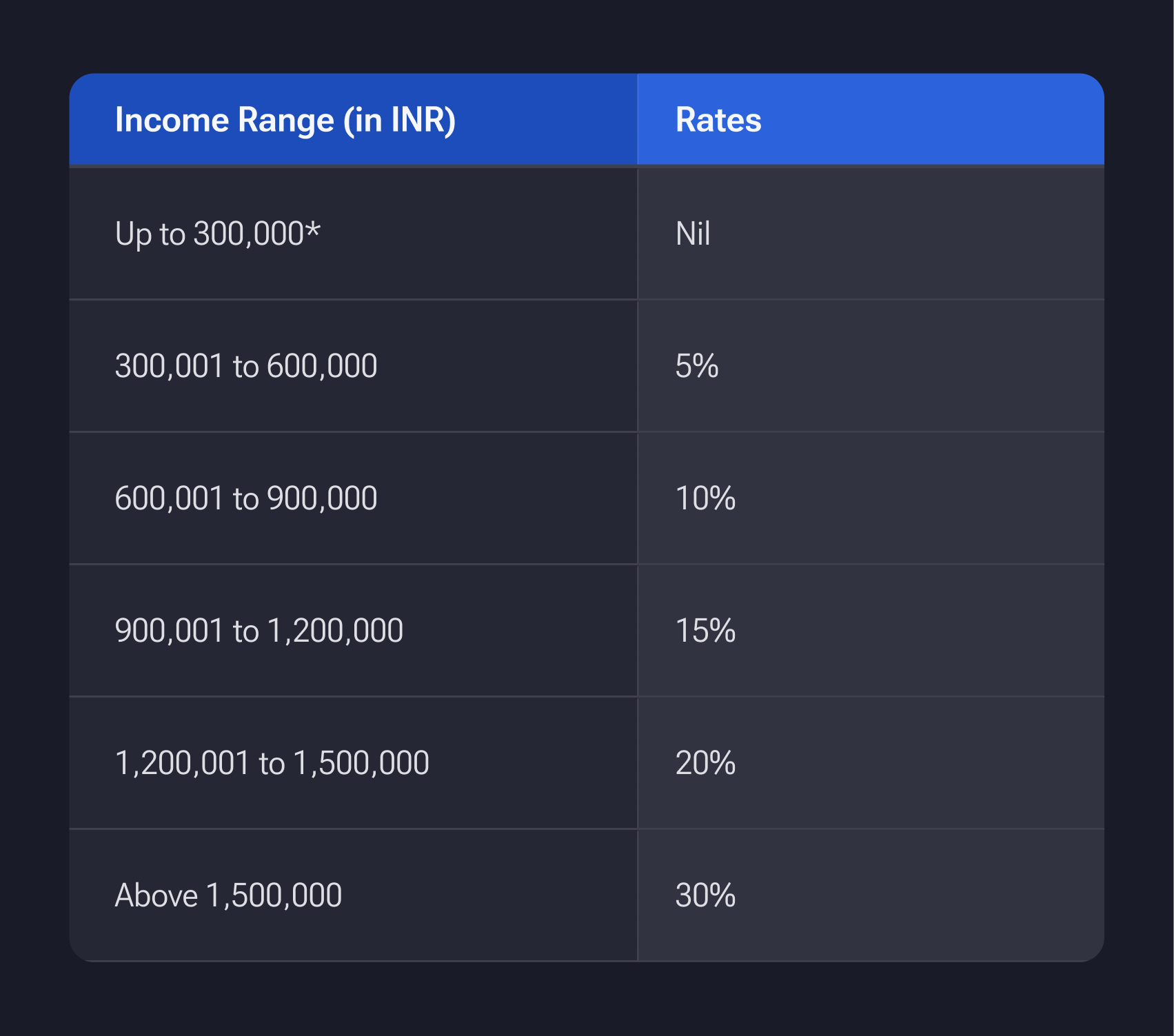
Under the new income tax regime, the rebate eligibility limit remains Rs 700,000, allowing taxpayers a rebate of up to Rs 25,000. Marginal relief will also continue for resident individuals with net taxable income exceeding Rs 700,000.
Additionally, a surcharge will be levied on individuals whose total income exceeds Rs 5,000,000. The surcharge rates vary based on income levels and are applied to both the regular/old tax regimes and the new tax regimes.
Moreover, there will be a levy of a health & education cess at a rate of 4% on the income tax and a surcharge (if applicable) calculated using the rates mentioned above.