Have you ever felt stuck trying to achieve something, wondering why your efforts don’t seem to pay off? Maybe you set big goals but struggle to take the first step, or you focus on small tasks without a clear direction. The truth is, knowing the difference between a short-term goal and a long-term goal can make your efforts more focused and effective.
In this blog, you will learn what goal-setting really means. We’ll explain short-term and long-term goals, and their key differences. You’ll also get simple tips on setting effective goals using the SMART method, avoiding common mistakes, and discovering useful tools to track your progress.
At a Glance
Short-term goals focus on immediate results, usually achievable within a year, helping you stay motivated and manage day-to-day priorities.
Long-term goals span several years, guiding your bigger vision and requiring careful planning and consistent effort.
SMART method (Specific, Measurable, Achievable, Relevant, Time-bound) helps create clear and realistic goals.
Tools such as apps, spreadsheets, and habit trackers help you keep track of your progress and stay well-organized.
What exactly is Goal Setting?
Goal setting is the process of clearly defining what you want to achieve within a specific time frame. As you plan your career, financial growth, or personal development, setting goals keeps you focused and organized. It gives you a clear direction and a sense of purpose, allowing you to measure your progress along the way. When you set well-defined goals, you know exactly what steps to take and can avoid getting distracted by unrelated tasks.
Once you understand what goal setting is and why it matters, the next step is to see how short-term goals play a role in achieving your immediate priorities and keeping you on track.
What Are Short-Term Goals?
Short-term goals are targets you plan to accomplish soon, typically within days, weeks, or up to one year. These goals are smaller steps that help you move towards your larger, long-term ambitions.
In the context of financial planning, a short-term goal could be saving a specific amount for an emergency fund, completing a financial course, or reducing monthly expenses by a set percentage.
To make the most of your short-term goals, it helps to know the key characteristics that define successful goals.
Common Characteristics of Short-Term Goals
Short-term goals have certain important features that make them easy to set and achieve. Here’s what you should know:
Specific: A short-term goal is clear and well-defined, so you understand exactly what needs to be done without any confusion.
Measurable: You can monitor your progress by setting measurable targets, like finishing a report or achieving a defined savings goal.
Achievable: These goals are realistic, based on your current skills, available resources, and the time you have, making it possible to act without feeling stressed.
Relevant: Every short-term goal is connected to your larger objectives, whether it’s improving your financial strategy, reaching a business target, or developing your professional skills.
Time-bound: A short-term goal has a definite deadline, usually within a year, which helps you stay organized and focused on completing it.
Action-oriented: The steps to achieve the goal are clear, so you know exactly what to do and where to start.
Quick Feedback: Results are visible in a short time, allowing you to make changes or improve your approach if needed.
Builds Momentum: Achieving short-term goals builds your confidence and encourages you to continue progressing toward larger, long-term objectives.
With these characteristics in mind, you can identify short-term goals that are realistic and achievable.
Example Short-Term Goals
The following are some examples of short-term goals you can set to improve your financial planning and stability:
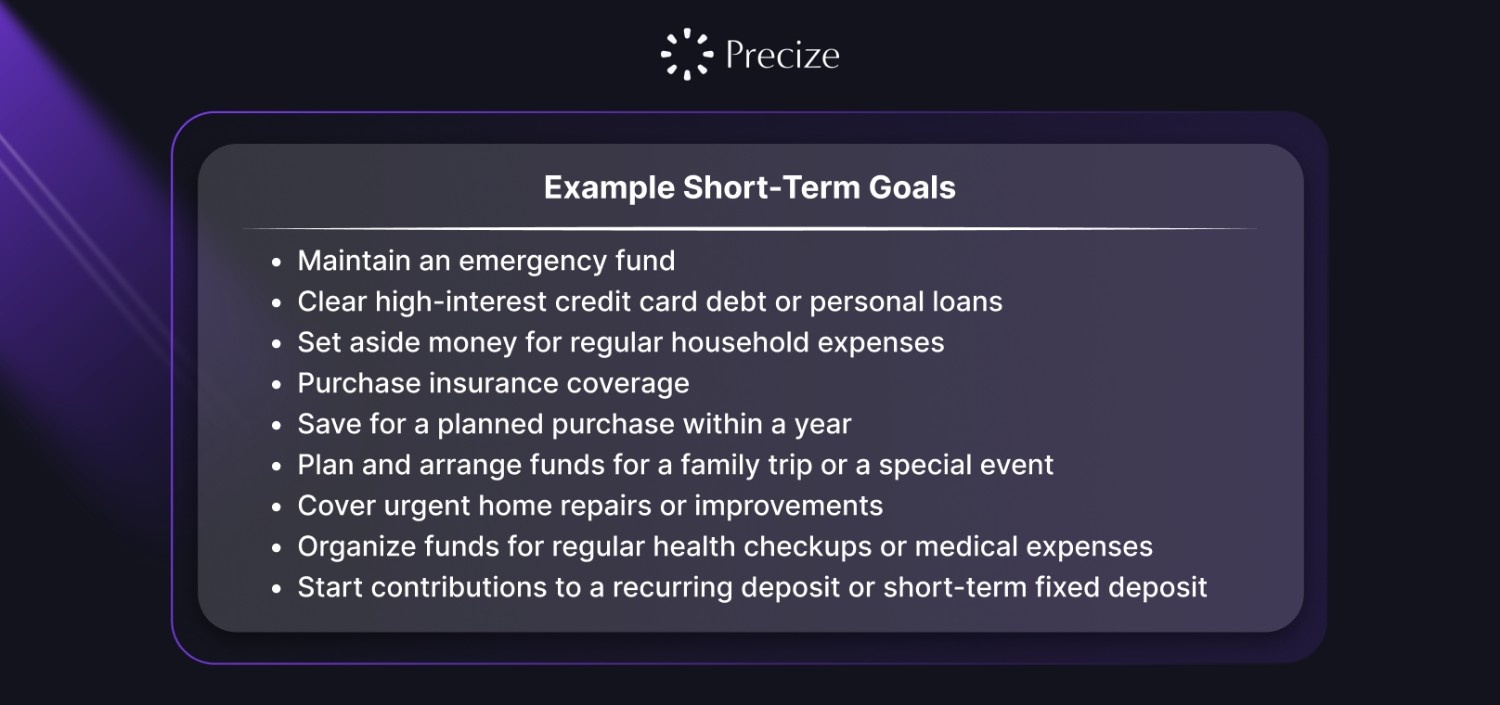
Maintain an emergency fund to handle unexpected medical costs, sudden loss of income, or urgent family expenses. Ideally, this fund should cover at least 3 to 6 months of your essential living costs.
Clear high-interest credit card debt or personal loans to reduce financial burden and improve your cash flow over time.
Set aside money for regular household expenses like education fees, rent deposits, or utility bills. Planning for these helps you avoid last-minute financial stress.
Purchase insurance coverage for health, life, or your vehicle. Proper insurance helps protect your family and valuable assets against major risks.
Save for a planned purchase within a year, such as a smartphone, refrigerator, or two-wheeler. Break the total cost into monthly savings targets to easily track your progress.
Plan and arrange funds for a family trip or a special event like a wedding or anniversary. Estimating the cost and setting a clear timeline helps you stay organized.
Cover urgent home repairs or improvements, such as fixing plumbing issues or replacing a faulty appliance, to avoid further damage or inconvenience.
Organize funds for regular health checkups or medical expenses, ensuring you’re prepared for unexpected health-related costs.
Start contributions to a recurring deposit or short-term fixed deposit, which offers reliable returns and helps you meet financial needs expected in the next one to three years.
While short-term goals help you manage immediate priorities, long-term goals focus on your broader vision and sustained growth.
What Are Long-Term Goals?
Long-term goals are objectives that you plan to achieve over an extended period, usually several years or more. These goals focus on your bigger ambitions and help shape your overall financial strategy.
In the context of financial planning, a long-term goal could be building a retirement fund, purchasing a home, planning for your children’s higher education, or achieving financial independence.
Before you start setting your long-term goals, it’s useful to know the qualities that make them realistic and actionable.
Common Characteristics of Long-Term Goals
Long-term goals usually span a period of three to five years or more, giving you time to work steadily and patiently toward important achievements. Here are their key characteristics:
Clear Purpose
Long-term goals are connected to your core values and reflect your career ambitions or life plans, keeping you focused on your key priorities.
Flexible
Your long-term goals should be adaptable. As your personal or professional circumstances change, adjusting your goals keeps you on the right track without losing momentum.
Broken Into Milestones
Large goals are divided into smaller, manageable steps. This makes them less overwhelming and helps you stay motivated by achieving progress along the way.
Regular Review and Adjustment
It’s important to regularly check your progress and update your strategy when needed, especially in fast-changing areas like financial planning or wealth management. This keeps you aligned with your long-term vision.
With these traits in mind, you can now look at practical examples of long-term goals you might set for yourself.
Examples of Long-Term Goals
Here are practical examples of long-term goals you can focus on:
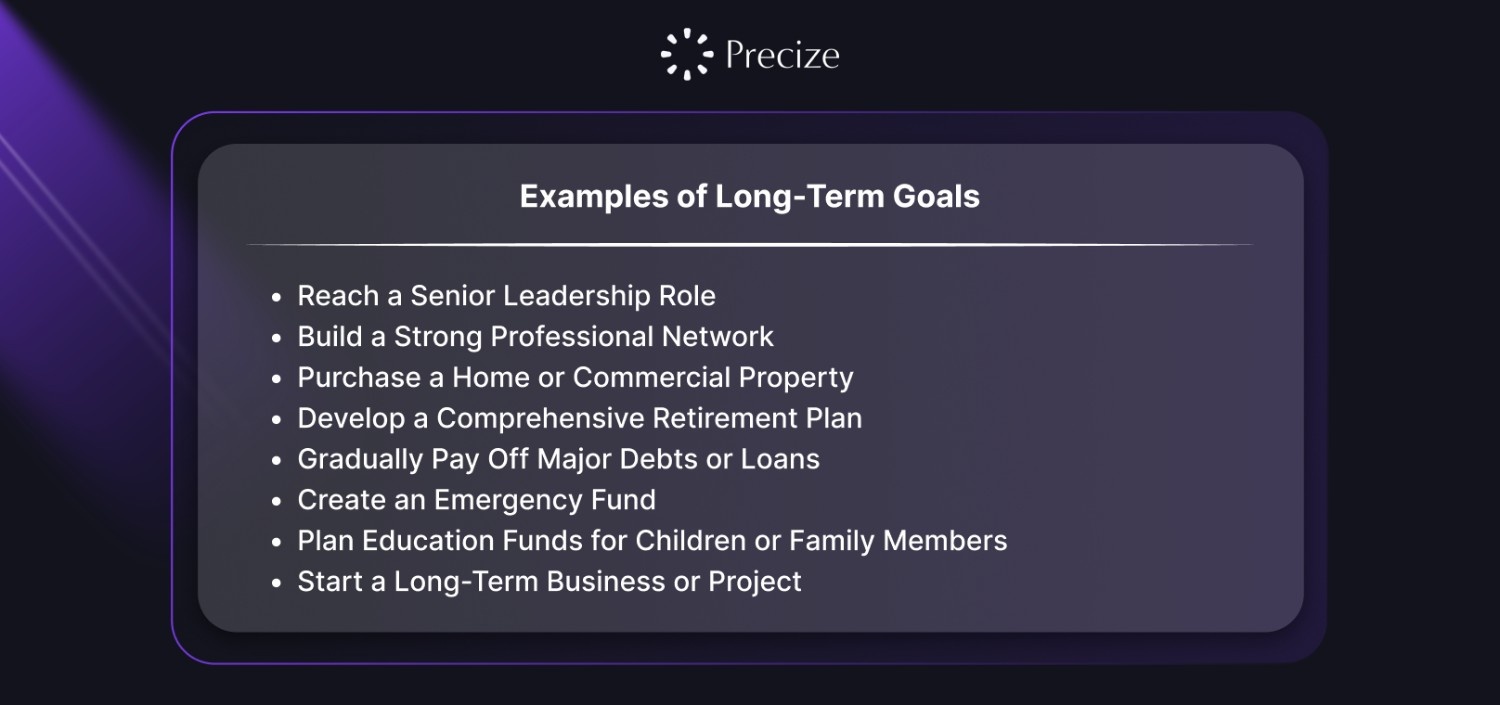
Reach a Senior Leadership Role: Aim for a high-level position managing teams or departments, developing skills like decision-making and communication over time.
Build a Strong Professional Network: Develop relationships with colleagues, industry experts, and mentors to gain guidance and opportunities.
Purchase a Home or Commercial Property: Plan and save steadily to acquire property that meets personal or business needs.
Develop a Comprehensive Retirement Plan: Set up a strategy for financial stability after retirement through consistent savings and planning.
Gradually Pay Off Major Debts or Loans: Follow a structured plan to reduce loans and improve financial stability.
Create an Emergency Fund: Set aside money to handle unexpected financial challenges.
Plan Education Funds for Children or Family Members: Save consistently to cover future education costs.
Start a Long-Term Business or Project: Focus on steady growth and long-term impact rather than immediate results.
These examples show what long-term goals can be; next, let’s compare them with short-term goals to see the key differences.
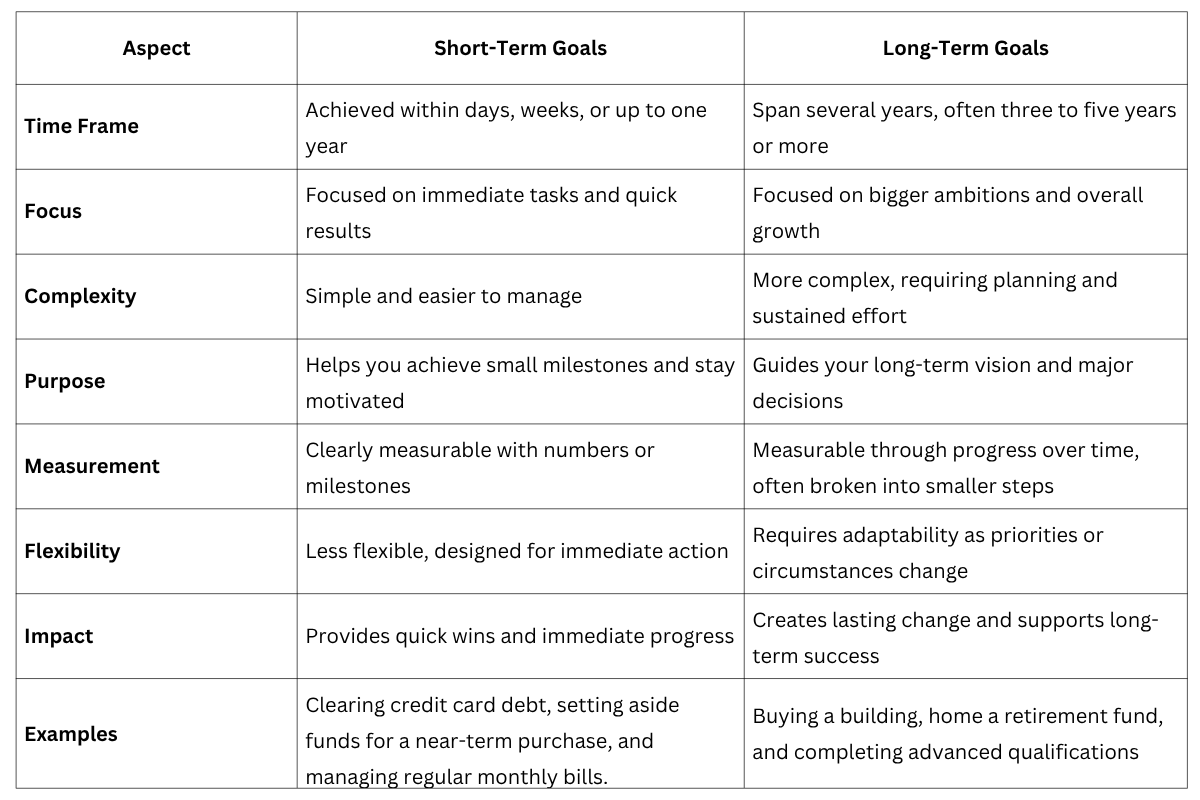
Key Differences Between Short-Term and Long-Term Goals
To give you a quick look, here is a comparison of the key differences between short-term and long-term goals.
With the key differences clear, it’s time to explore a method to create goals that actually work for you.