
What Is OFS?
OFS stands for Offer for Sale. It is a mechanism introduced by SEBI that allows existing promoters and large shareholders of a listed company to sell their shares to the public through the stock exchange platform, without the company having to go through a full-fledged IPO process.
In simple terms, OFS is a secondary market transaction. The company itself does not raise any fresh capital. Instead, existing shareholders offload part of their stake to investors through a transparent, exchange-based bidding process.
The OFS mechanism is available on both NSE and BSE, and NSE provides live data on all ongoing and upcoming OFS issues on its public issues OFS page.
What Is OFS in IPO?
Many investors get confused between an IPO and an OFS. While both involve selling shares to the public, they serve very different purposes.
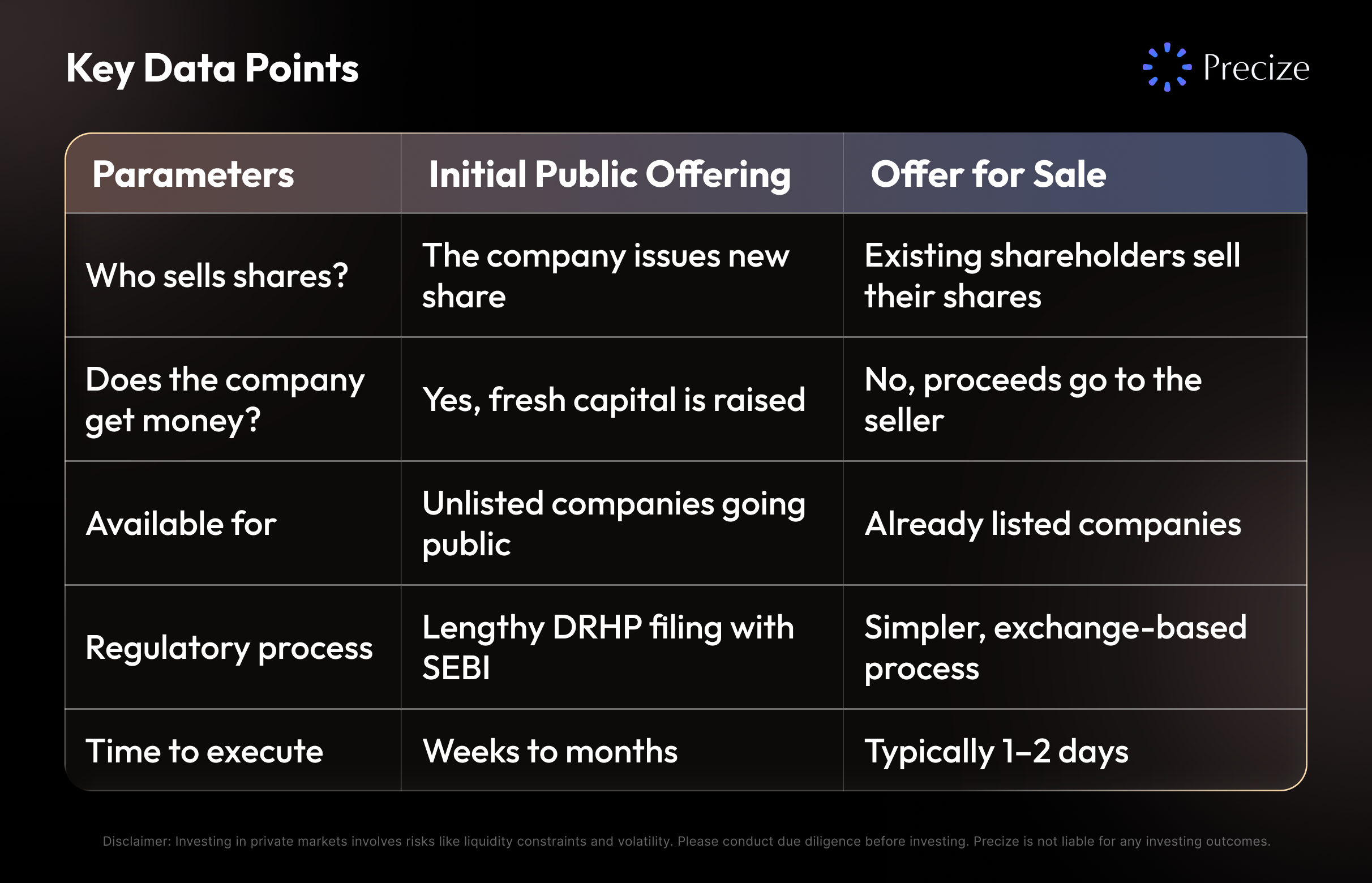
In an IPO, you may see an OFS component mentioned in the red herring prospectus. This is the portion where existing investors or promoters are selling their pre-held shares as part of the overall IPO. This is what is meant by "OFS in IPO" - it is not a fresh issue but a secondary sale happening alongside the primary issue.
How Does an OFS Work? Step-by-Step
Here's how the OFS process typically unfolds on the stock exchange:
Step 1 - Announcement: The promoter or eligible seller announces the OFS at least one trading day in advance, disclosing the number of shares on offer and the floor price.
Step 2 - Bidding Window Opens: On the designated day, a bidding window opens on the stock exchange. Investors can place bids at or above the floor price.
Step 3 - Price Discovery: Since multiple investors are bidding simultaneously, the final allocation price is discovered transparently through the exchange mechanism.
Step 4 - Allocation: Shares are allocated based on bids. Retail investors (those bidding up to ₹2 lakh) typically get a reserved portion of at least 10% of the total OFS shares.
Step 5 - Settlement: Settlement happens on a T+1 or T+2 basis, just like regular stock market trades.
Who Can Participate in an OFS?
As per NSE guidelines, OFS is open to three categories of investors:
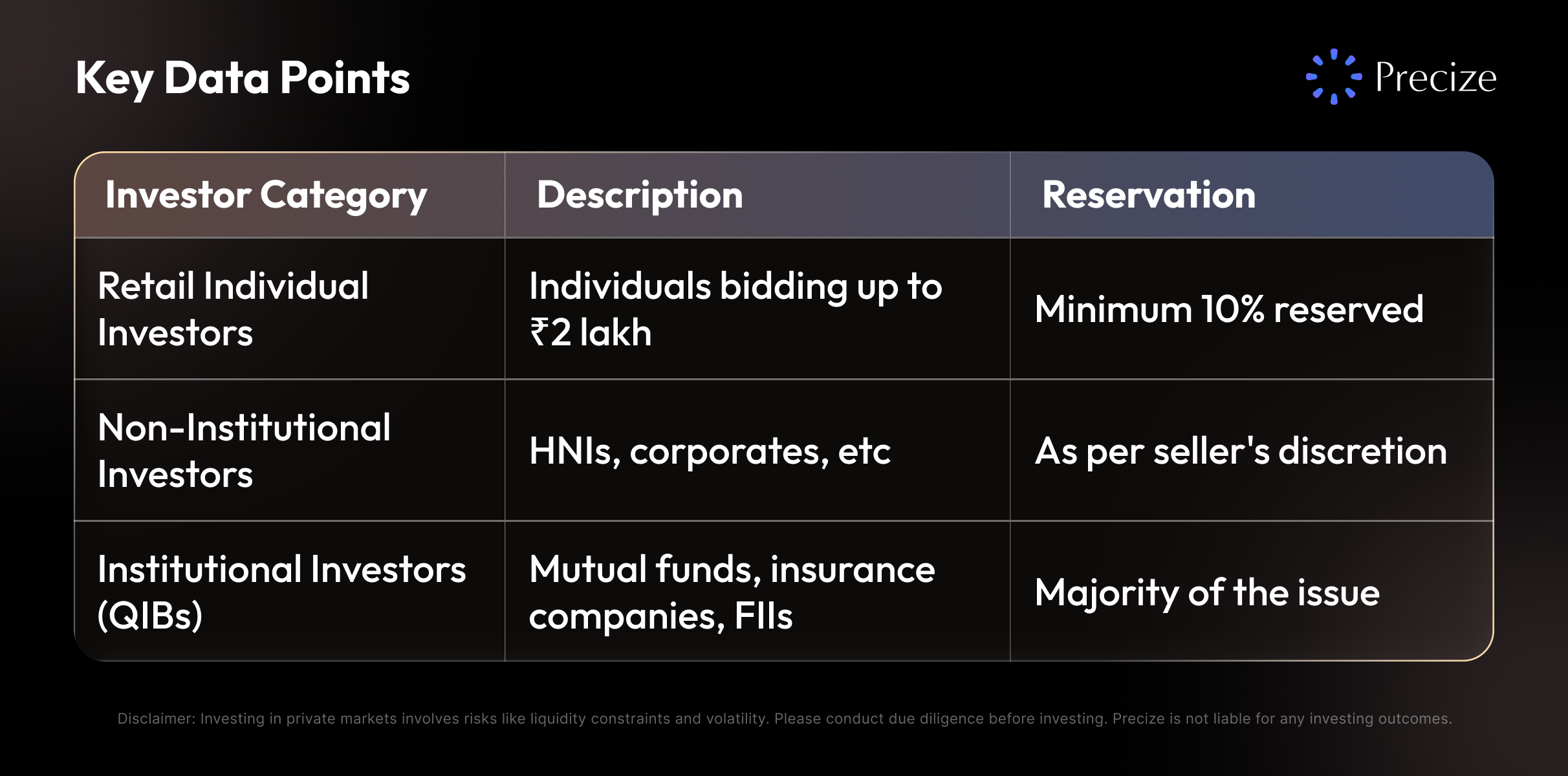
Retail investors can place a bid at the cut-off price (floor price), which increases their chances of allotment without having to guess the right price.
Why Do Promoters Use the OFS Route?
According to Bajaj Finserv, promoters and large shareholders typically opt for OFS because:
It is a faster and cost-effective route to divest their stake compared to a secondary market block deal.
The government frequently uses OFS to divest its stake in public sector undertakings (PSUs) and meet disinvestment targets.
It ensures price transparency since the process is exchange-driven and publicly visible.
Promoters can comply with SEBI's minimum public shareholding norms (MPS), which require promoters to reduce their holding if it exceeds the permitted threshold.
Key Things to Know Before Participating in an OFS
Minimum bid size - Typically 1 share or as specified by the seller
Retail investor limit - Up to ₹2 lakh per PAN
Price - Must be at or above the floor price
Refund - Unallotted amounts are refunded
Mode of participation - Through your broker's trading platform
A few practical tips worth keeping in mind: always check the floor price against the current market price before bidding. If the stock is trading well above the floor price, the OFS may attract high demand. Also, OFS does not guarantee allotment - if the issue is oversubscribed in the retail category, shares are allotted on a proportionate basis.
Conclusion
Understanding the meaning of OFS is essential for any retail investor who wants to take advantage of opportunities beyond traditional IPOs. OFS is a regulated, transparent, and relatively straightforward way to buy shares of an already-listed company, often at a slight discount to the prevailing market price. Whether it's the government divesting from a PSU or a promoter reducing their stake, OFS offers retail investors a fair chance to participate.
Before you bid in any OFS, always review the company's fundamentals, check the floor price relative to market price, and ensure you're investing within your financial means.
Also read: NSE IPO OFS: India's Most Awaited Listing