A brief history and positioning
MSEI was founded on 14 August 2008 as a national-level stock exchange and began operations in currency derivatives in October 2008. It operates from Mumbai and is recognised by SEBI under the Securities Contracts (Regulation) Act, with recognition also reflected under the Companies Act framework.
The exchange operates as a multi-asset platform with offerings across equities, derivatives, currency derivatives, debt instruments, ETFs, and related market products. It also maintains its own proprietary indices (including a diversified large-cap index and a banking-sector index).
On the compliance and continuity side, the report notes renewal of recognition as a stock exchange and long-running ISO/IEC 27001:2013 information security certification.
Business model and revenue mix
How exchanges earn
MSEI operates as a market infrastructure platform. Its core business is to enable market participation by providing:
A trading venue across permitted segments
Membership access for brokers and other participants
Market operations and surveillance systems
Supporting services like connectivity, data distribution, and index services
In other words, the product is not a single financial instrument. The product is a trusted market venue with participation, uptime, and regulatory compliance built in.
FY25 revenue mix
The FY25 mix shown in the report is led by non-transaction revenue lines, with meaningful contributions from:
This mix is important because it highlights the difference between “license and platform presence” versus “scale of trading activity”. In exchange businesses, trading activity is usually the strongest long-term driver once liquidity becomes durable.
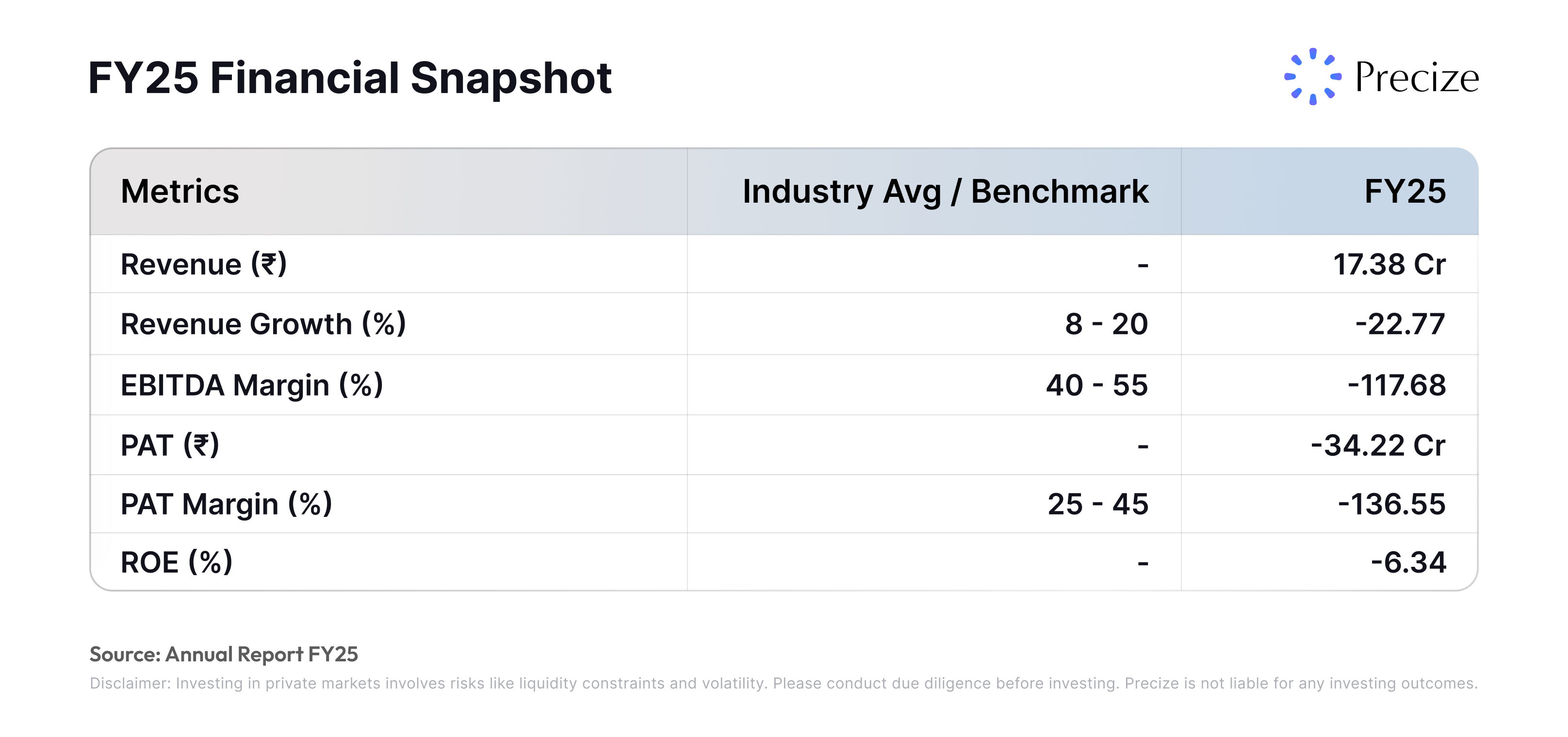
Competitive benchmark
Comparing MSEI with larger exchanges is useful only for one reason: it shows how exchange economics change when liquidity becomes durable.
At scale, exchanges typically display:
Higher proportion of income from transaction-linked revenue (because volumes are deep)
Stronger operating leverage (technology and compliance costs get absorbed over a much larger revenue base)
Higher profitability once fixed infrastructure costs are spread across larger activity levels
For a smaller exchange, the challenge is not building permissions - it’s building repeat liquidity and participation that creates stable, high-frequency revenue.
SWOC summary
Strengths
SEBI-recognised, multi-segment permissions across key market segments
Modernisation of tech and risk infrastructure supported by fresh capital
Strategic investor base and governance strengthening initiatives
Strong post-funding balance sheet characteristics
Weaknesses
Persistent operating losses and limited scale absorption
Low trading volumes and market share relative to major peers
Fixed-cost nature of exchange + compliance infrastructure
Opportunities
Growth in SME and mid-market issuer ecosystem
Retail participation expansion and app-led investing
Product expansion potential across segments where participation can be seeded
Index/data monetisation over time if adoption scales
Challenges
Entrenched network effects of incumbents
Regulatory and policy shifts that can impact economics
Execution risk in technology rebuild and clearing/settlement readiness
Liquidity and participant adoption risk in new segments
MSEI in the unlisted market
MSEI is unlisted, so participation typically happens through private market transactions rather than exchange trading. The report also highlights corporate actions and funding events that shape how private market participants track the story, including:
Rs. 240 crore Series A raise (Dec 2024)
Rs. 1,000 crore Series B raise (Aug 2025) with a post-money valuation figure referenced in the report
Authorised capital expansion as part of a broader readiness and scaling plan
Product expansion themes indicated for FY26, including new segments and platforms
Conclusion
MSEI sits within a highly consolidated exchange industry where scale and liquidity are decisive. The FY25 picture shows a platform with regulatory standing and multi-segment capability, supported by fresh capital and balance-sheet strengthening, while still operating below the scale needed for profitability. For readers tracking MSEI in the unlisted market, the key context is the broader exchange industry economics: network effects, technology execution, product breadth, and sustained participation are what eventually translate into durable financial outcomes.
Platforms like Precize add value by giving you access to private companies, making it possible to buy and sell unlisted and pre-IPO shares in a seamless manner.
Reserve access on Precize today!