
If you have been following OYO’s journey, you know that its growth story has always drawn attention. The OYO financial statements for FY25 give you more than just numbers; they tell you how the company has managed its revenues, costs, and overall performance in a competitive market.
In this blog on OYO Financial highlights FY25, you will see why looking at OYO’s financial data matters, the key highlights from the year, a clear breakdown of revenue and income, and an analysis of expenses and costs.
We will also look at the important financial metrics and ratios that shape OYO’s current position, along with its outlook for FY25 and beyond.
Let’s get started!
Quick Overview
Benefits of OYO’s Financial Turnaround: Improved profitability, better cost management, and operational efficiency strengthened the company’s position.
FY25 Growth Momentum: Adjusted EBITDA grew 27% to ₹1,132 crore.
Market Outlook: India remains OYO’s core market, with domestic tourism growth and global travel demand projected to expand, supporting future opportunities.
Why Look for the OYO Financial Statement?
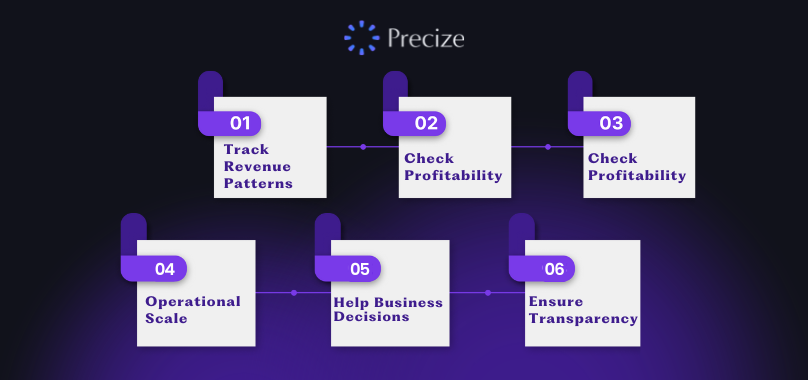
Looking at OYO’s financial statements helps you understand how the company is performing and what is driving its growth. These reports give you useful insights into different areas of the business:
Track Revenue Patterns: You can see how much OYO earns from hotel operations and other sources, and whether its income is rising or falling.
Check Profitability: In FY24, OYO reported its first net profit after years of losses. The numbers highlight how this shift happened through tighter cost control and better operations.
Review Debt Position: Details about loans, repayments, and interest costs give a clear picture of OYO’s financial responsibilities.
Measure Scale of Operations: Data on the number of hotels and homes under OYO reflects its market presence and expansion.
Help Business Decisions: For analysts, partners, or stakeholders, the financials provide facts that explain OYO’s current standing and possible direction.
Ensure Transparency: Since these are audited reports, they confirm compliance with accounting standards and provide reliable information.
Having grasped the importance of the statements, you can now explore OYO’s financial performance in detail for FY25.
OYO FY25 Financial Highlights
The financial year FY25 marked an important milestone for OYO, as the company reported a profit for the first time. This turnaround came on the back of stable revenues, better cost management, and stronger operational efficiency.
1. Profit After Tax (PAT)
The company reported a strong PAT of ₹623 crore in FY25, soaring 172% compared to ₹229 crore in FY24, according to unaudited filings.
2. Adjusted EBITDA
Adjusted EBITDA reached ₹1,132 crore, a 27% increase from ₹889 crore in FY24, marking an impressive ten consecutive quarters of EBITDA profitability.
3. Revenue
Revenue climbed 20% to ₹6,463 crore, fueled by business expansion and the growing popularity of higher-value hospitality offerings, particularly Townhouse and Sunday Hotels.
4. Earnings Per Share (EPS)
EPS rose sharply to ₹0.93 in FY25 from ₹0.36 in FY24, a remarkable 158% year-on-year growth.
5. Gross Booking Value (GBV)
GBV hit ₹16,436 crore, up 54% from the previous year, highlighting growth in bookings and the success of the company’s premiumization strategy.
6. Q4 FY25 Performance
The fourth quarter saw GBV jump to ₹6,379 crore, up 126% year-on-year. Quarterly revenue grew 41% to ₹1,872 crore, while Adjusted EBITDA climbed 61% to ₹442 crore, underlining strong momentum heading into the new fiscal year.
Having reviewed the key financial highlights, let’s explore what lies ahead for OYO in the coming years.