In a significant move announced in the Union Budget 2025-26, Finance Minister Nirmala Sitharaman proposed a major change to India’s income tax structure. From the assessment year 2026-27 (or FY 2025-26), there will be no tax payable on normal income up to ₹12 lakh under the new tax regime. This reform is expected to bring considerable relief to salaried employees and individuals falling within this income bracket. Let’s break down the key points to understand how this change impacts you.
Key Changes in Section 87A Rebate Limit:
One of the most talked-about changes in the Budget 2025-26 is the increase in the tax-free income limit under the new tax regime. However, the Finance Minister’s statement that there will be "no tax payable on income up to ₹12 lakh" doesn’t mean that the basic exemption limit has been raised to ₹12 lakh.
Instead, the no-tax benefit is the result of an increased tax rebate and revised tax slabs and rates. The government has proposed that individual taxpayers earning up to ₹12 lakh will be eligible for a tax rebate under Section 87A, effectively reducing their tax liability to zero. Here's how it works:
Tax Slabs and Rates for FY 2025-26:
In the revised tax structure for FY 2025-26 under the new regime, the government has made several adjustments, which will allow you to save more on your income tax. Here’s a look at the proposed tax slabs: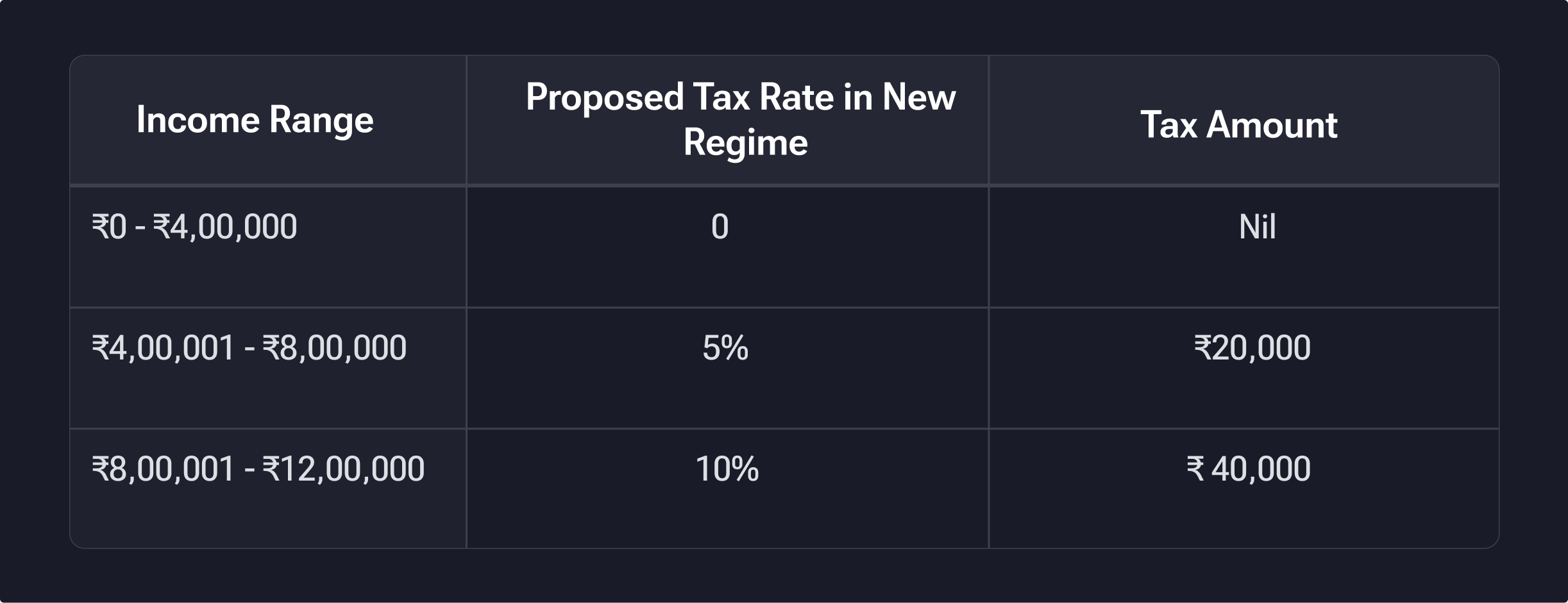
For income up to ₹4 lakh, no tax is payable.
For income between ₹4 lakh and ₹8 lakh, the tax rate is 5%, and the tax payable would be ₹20,000
For income between ₹8 lakh and ₹12 lakh, the tax rate is 10%, and the tax payable would be ₹40,000
How This Will Benefit Taxpayers:
You might notice that although the tax liability for an income of ₹4 lakh to ₹12 lakh would initially add up to ₹60,000, the Section 87A rebate of ₹60,000 effectively nullifies the tax payable.
So, for someone with a taxable income of up to ₹12 lakh, the tax rebate ensures that the total tax liability is zero. This is because the rebate fully offsets the tax amount of ₹60,000.
The Section 87A Rebate Under the New Tax Regime
Under the current FY 2024-25 tax regime, individuals with taxable income between ₹3 lakh and ₹7 lakh could claim a ₹25,000 rebate under Section 87A. This was intended to provide some relief to middle-income taxpayers.
However, the Union Budget 2025-26 proposed a substantial increase in the rebate. The new Section 87A rebate for income between ₹4 lakh and ₹12 lakh will be ₹60,000. This means that, under the new regime, individuals earning up to ₹12 lakh will pay no tax because the rebate fully covers the tax payable within this income range.
Why This Reform Matters for Taxpayers:
The reform proposed in the Union Budget 2025-26 offers several important benefits for taxpayers, particularly middle-income earners:
Tax Relief for Middle-Income Groups: By increasing the Section 87A rebate, the government has provided substantial relief to those who typically fall into the ₹4 lakh to ₹12 lakh income range. These individuals will no longer have to worry about taxes, giving them more disposable income
Simplified Financial Planning: Eliminating tax liability for individuals earning up to ₹12 lakh simplifies financial planning. With no taxes to pay, individuals can focus on savings, investments, and wealth-building without the complexity of tax-related deductions
Encouraging Savings and Investments: With increased disposable income, individuals may be more inclined to invest in financial products such as mutual funds, insurance, and retirement savings plans, among others. This can foster long-term financial security and contribute to overall economic growth
Boost to Consumption: The tax savings will also boost consumer spending, especially in sectors like retail, automotive, and real estate. As individuals have more money to spend, demand for goods and services is likely to rise, driving economic growth
Conclusion:
The proposed changes to Section 87A and the revised tax slabs will significantly relieve taxpayers earning up to ₹12 lakh. The increase in the rebate to ₹60,000 ensures that middle-income earners will have no tax liability up to this threshold, simplifying their financial planning and reducing their tax burden.
(Disclaimer: This information is for private use only and does not constitute investment advice. Recipients must assess risks and seek advice from financial, legal, and tax professionals. Private market investments carry risks, and there are no guarantees of returns or capital protection. We are not liable for investment decisions.)