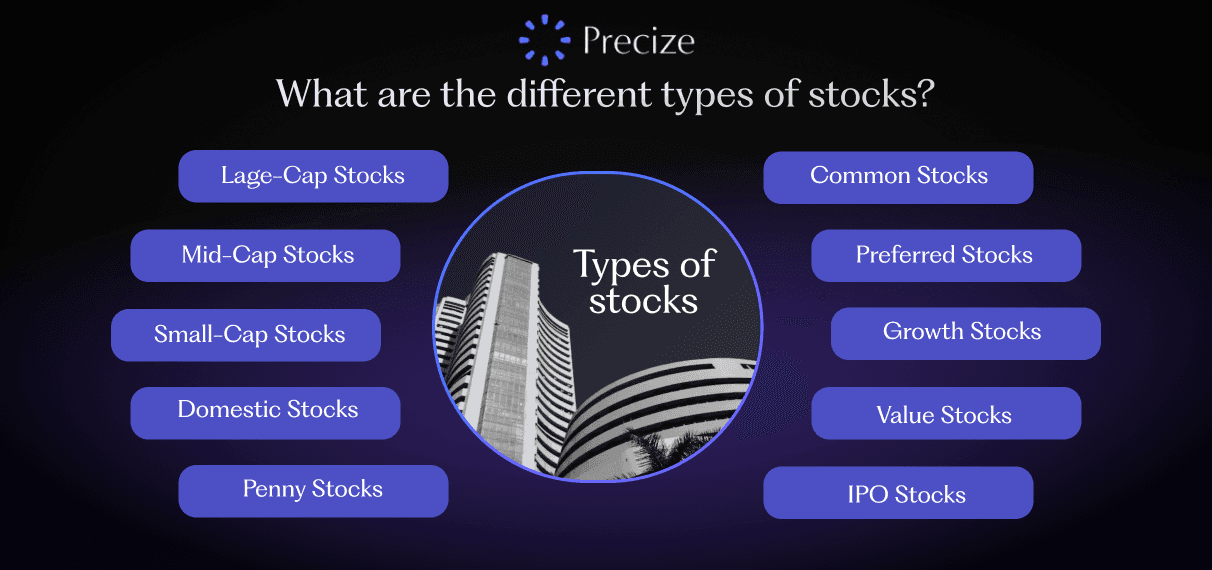
Understanding the Different Types of Stocks for Smart Investing:
Investing in the stock market is one of the most effective ways to grow wealth over time. With the right knowledge, investors can make informed decisions and minimise risks while maximizing returns. One of the key aspects of investing is understanding the different types of stocks available in the market. Each type has its characteristics, risk factors, and potential returns. Let’s dive into the various types of stocks and their significance in the investment world.
What Are Stocks?
Stocks, also known as shares or equity, represent ownership in a company. When investors buy stock, they essentially own a part of that company, proportional to the number of shares they hold. Companies issue stocks to raise capital for growth, expansion, and operational needs. Stocks can be broadly categorized into common and preferred stocks, and they can also be classified based on various other factors such as market capitalization, dividend payments, and economic cycles.
Types of Stocks:
1. Based on Ownership Rights
Common Stocks: These stocks give shareholders voting rights in company decisions, typically at annual general meetings. They also offer dividends, but the payout is not guaranteed. Investors holding common stocks may experience significant gains but face higher risks during market downturns
Preferred Stocks: These stocks provide investors with fixed dividend payments and take priority over common stocks in case of company liquidation. However, preferred shareholders usually do not have voting rights. This type of stock is suitable for investors seeking steady income rather than high capital appreciation
Hybrid Stocks: These stocks combine features of both preferred and common stocks. A common example is convertible preference shares, which can be converted into a fixed number of common stocks at a specific time. Companies may choose whether to offer voting rights with these stocks
2. Based on Market Capitalization
Market capitalization refers to the total market value of a company’s outstanding shares. Stocks are classified into three categories based on this:
Large-Cap Stocks: These are shares of well-established, financially stable companies with a high market capitalization. Large-cap stocks tend to be less volatile and offer steady returns over time
Mid-Cap Stocks: These belong to medium-sized companies with the potential for significant growth. While they carry more risk than large-cap stocks, they also offer higher returns
Small-Cap stocks: These stocks are associated with smaller companies that have high growth potential but, due to market volatility, carry greater risks
3. Based on Investment Strategy
Growth Stocks: These companies reinvest their profits into business expansion rather than paying high dividends. They have the potential for rapid growth and are ideal for investors looking for long-term wealth creation
Value Stocks: These are stocks of companies that are trading below their intrinsic value. Investors buy them expecting their price to increase once the market recognizes their true worth. Value investing focuses on established companies with strong fundamentals
4. Based on Geographic Location
Domestic Stocks: These are shares of companies listed in the investor’s home country
International Stocks: These are stocks of foreign companies that investors can buy through global stock exchanges or mutual funds. Investing in international stocks helps diversify portfolios and reduce country-specific risks
5. Based on Dividend Payments
Dividend Stocks: These stocks regularly distribute a portion of company profits to shareholders. They are suitable for investors looking for passive income
Non-Dividend Stocks: Some companies reinvest all their profits into the business rather than distributing dividends. Investors in these stocks rely on capital appreciation rather than dividend income
6. Based on Economic Cycles
Cyclical Stocks: These stocks perform well when the economy is growing but decline during economic downturns. Industries such as automotive, tourism, and luxury goods fall into this category
Defensive Stocks, also known as non-cyclical stocks, remain stable regardless of economic conditions. Sectors like healthcare, utilities, and consumer staples are considered defensive
7. Special Categories of Stocks
Blue-Chip Stocks: These stocks belong to well-established, financially sound companies with a long history of stability and profitability. Investors consider them safe long-term investments
Penny Stocks: These are low-priced stocks (usually under ₹10) of small companies that have uncertain financial conditions. While they have the potential for high returns, they also come with significant risks due to their volatility and lack of liquidity
IPO Stocks: Initial Public Offering (IPO) stocks are those that are offered to the public for the first time when a private company becomes publicly traded. IPO investments can be highly rewarding if the company performs well after listing
Employee Stock Ownership Plans (ESOPs): These stocks are granted to employees as a part of their compensation package. ESOPs align employees’ interests with company performance and often come with vesting conditions before employees can sell their shares
Why Diversifying Across Different Types of Stocks Matters?
Diversification is a key principle of smart investing. By investing in different types of stocks across various industries, market caps, and geographies, investors can mitigate risks and enhance potential returns. A well-balanced portfolio should include:
A mix of large-cap, mid-cap, and small-cap stocks
Growth and dividend stocks
Domestic and international stocks
A combination of cyclical and defensive stocks
Conclusion
Understanding the various types of stocks is essential for building a successful investment strategy. Whether you are a conservative investor seeking stability or a risk-taker aiming for high growth, there are numerous stock types suited to your financial goals. By diversifying your portfolio and staying informed about market trends, you can navigate the stock market with confidence and make well-informed investment decisions.
Invest wisely, stay patient, and watch your investments grow over time!
(Disclaimer: This information is for personal reference only and should not be considered investment advice. Investors should evaluate risks carefully and consult financial, legal, and tax professionals before making any decisions. Private market investments involve risks, and returns or capital protection are not guaranteed. We do not assume any responsibility for investment choices.)