What is delisting of a company?
Delisted shares are like stocks of a company that are permanently taken off the stock exchange, meaning they can't be bought or sold anymore. This removal from exchanges, like NSE and BSE, is regulated by SEBI. Delisting can happen voluntarily or involuntarily, depending on why it's being done.
A company's shares can get delisted for different reasons, like not having enough market value, going bankrupt, or not following the rules of the exchange. Once delisted, these shares won't be part of regular trading on the stock market.
What Occurs When Stocks Get Delisted: A Shareholder's Dilemma.
When a company gets delisted, the fate of your shares is undoubtedly a curious matter for all shareholders. Even after delisting, you still hold shares, but you can't trade them on any exchange. However, there's an alternative solution– you can sell them on the over-the-counter (OTC) market, which means finding a buyer outside the typical stock exchange.
In a financial sense, voluntary and involuntary delisting of shares will affect investors who own these shares.
When Companies Choose to Leave the Stock Market: Voluntary Delisting.
Voluntary delisting happens when companies decide to remove their stocks from the stock exchange, effectively turning themselves into private entities. This choice is typically driven by factors like mergers with other companies, amalgamation, or poor performance.
If you're a shareholder in a company going through voluntary delisting, the company must offer you two choices, following the delisting rules outlined by SEBI:
Selling Your Shares via Reverse Book Building
In the case of delisting, the promoter or acquirer can repurchase shares through a reverse book-building process. To initiate this, promoters must make a public announcement and send an offer letter and a bidding form to eligible shareholders.
In this situation, if you qualify as a shareholder, you have the option to sell your shares by submitting them. The ultimate price is determined by the highest price at which many shares are offered.
The delisting process is considered successful once the total shares tendered by shareholders meet the predetermined thresholds.
If the specified limit is not reached, the company will continue to be listed on the stock exchange.
Hold Onto Your Shares Until You Find a Buyer
If you haven't sold your shares through the reverse book-building process or during the exit window period, you still have the option to hold on to them until you locate a buyer in the over-the-counter market.
Selling delisted shares can be challenging since there are no immediate buyers, but with some patience, you can find someone willing to buy at your preferred price. It might require some patience, so be ready for that.
In cases where a company voluntarily delists with certain expansion plans, they often provide investors with a buyback opportunity at a premium price, potentially resulting in a significant profit. However, it's crucial to understand that this is usually a temporary opportunity for investors. Once the buyback window closes, the stock price is likely to decrease.
Forced Delisting: When Shares Are Booted
Involuntary delisting is when a company's shares are removed from the stock exchange against their will. This happens for various reasons, such as not following listing rules, filing reports late, or having a low share price.
In such cases, promoters must repurchase the shares at a value determined by an independent evaluator. While your ownership remains, the shares might not hold much value after delisting.
So, if any of your stocks get delisted, it's usually a good idea to sell them. You can choose to exit the market or sell them back to the company when a buyback is announced.
Making well-thought-out decisions based on a careful analysis of the situation can help you work toward your long-term investment objectives.
Can a Delisted Stock Stage a Comeback?
Absolutely, but there are rules. A delisted stock can make a return only if SEBI gives the green light. The market regulator has specific guidelines for relisting such shares.
For voluntarily delisted stocks, they need to bide their time for five years from the date of delisting before they can seek relisting.
As for those companies that got delisted involuntarily, they'll have to wait 10 years before returning to the exchanges.
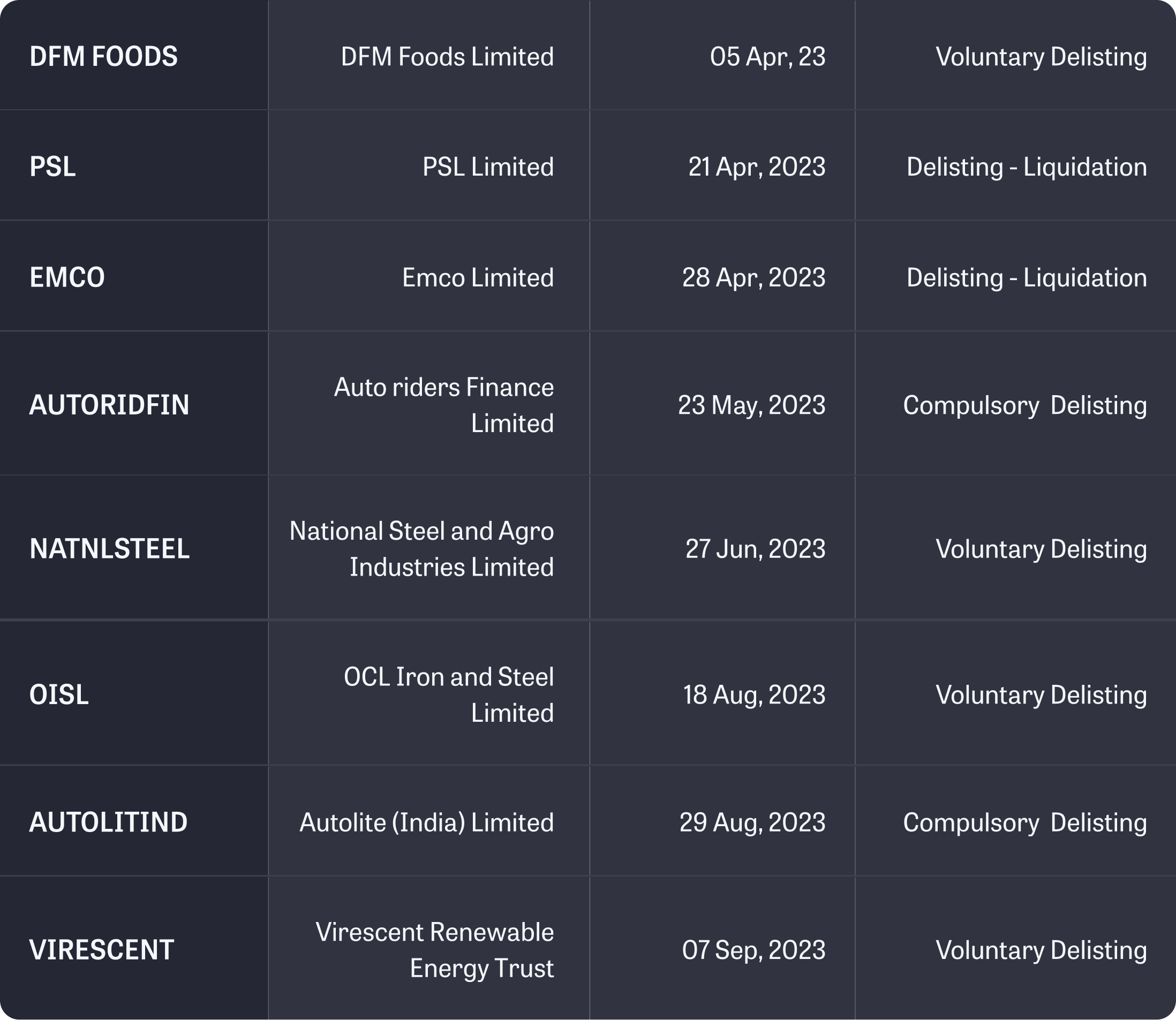
You can locate the delisted stocks on the BSE and NSE websites. A few of the delisted companies from NSE are:
When faced with delisting, it's time to be prepared. Seeking advice from financial experts and staying in the know about market rules can be your answer to safeguarding your investments. After all, being ready for the twists and turns of the stock market is the way to go!!