Investing in the stock market requires a deep understanding of how different stocks behave under various economic conditions. Two major classifications that investors must be aware of are cyclical and non-cyclical stocks. These stocks react differently to economic fluctuations, making them an essential consideration for portfolio diversification and risk management.
This blog explores the key differences between cyclical and non-cyclical stocks, their characteristics, industries, risk factors, and how investors can leverage them for long-term financial success.
Cyclical vs. Non-Cyclical Stocks: What's the Difference?
What Are Cyclical Stocks?
Cyclical stocks are those that are highly correlated with economic cycles. Their performance is directly linked to the rise and fall of the economy. When economic growth is strong, these stocks tend to rise in value, but during recessions or economic slowdowns, their prices typically decline as consumer spending decreases.
Characteristics of Cyclical Stocks:
Sensitive to Economic Cycles – Their prices fluctuate based on the overall economic environment.
Higher Volatility – Due to their dependence on economic growth, these stocks experience significant price swings.
Consumer-Driven Demand – Industries like automobiles, travel, and luxury goods see increased demand during economic booms.
Higher Growth Potential – During expansion phases, cyclical stocks often provide higher returns compared to defensive stocks.
Industries That Contain Cyclical Stocks:
Automotive: Companies in the automobile industry tend to do well when consumers have higher disposable income
Travel & Hospitality: Airlines, hotels, and leisure-related businesses flourish in strong economies
Luxury Goods & Retail: Retailers and luxury brands see higher demand during economic booms
Entertainment & Media: Businesses in film production, theme parks, and digital media grow when people have extra spending money
What Are Non-Cyclical Stocks?
Non-cyclical stocks, also known as defensive stocks, are stocks that remain relatively stable regardless of economic conditions. These stocks belong to industries that provide essential goods and services, which consumers purchase regardless of financial situations.
Characteristics of Non-Cyclical Stocks:
Less Affected by Economic Cycles – These stocks provide stable returns even during recessions.
Lower Volatility – Defensive stocks do not experience drastic price fluctuations.
Steady Demand – Since these products and services are necessities, they are always in demand.
Reliable Dividends – Many defensive stocks offer consistent dividend payouts to its shareholders.
Industries That Contain Non-Cyclical Stocks:
Healthcare & Pharmaceuticals: Businesses in the healthcare sector perform consistently as medical services and medicines remain essential regardless of economic conditions
Utilities: Providers of electricity, water, and gas remain stable investments since these services are fundamental necessities
Consumer Staples: Companies in the fast-moving consumer goods sector supply essential products such as food, beverages, and household items, maintaining steady demand
Telecommunications: Telecom services continue to be in demand as communication is a necessity, regardless of economic downturns
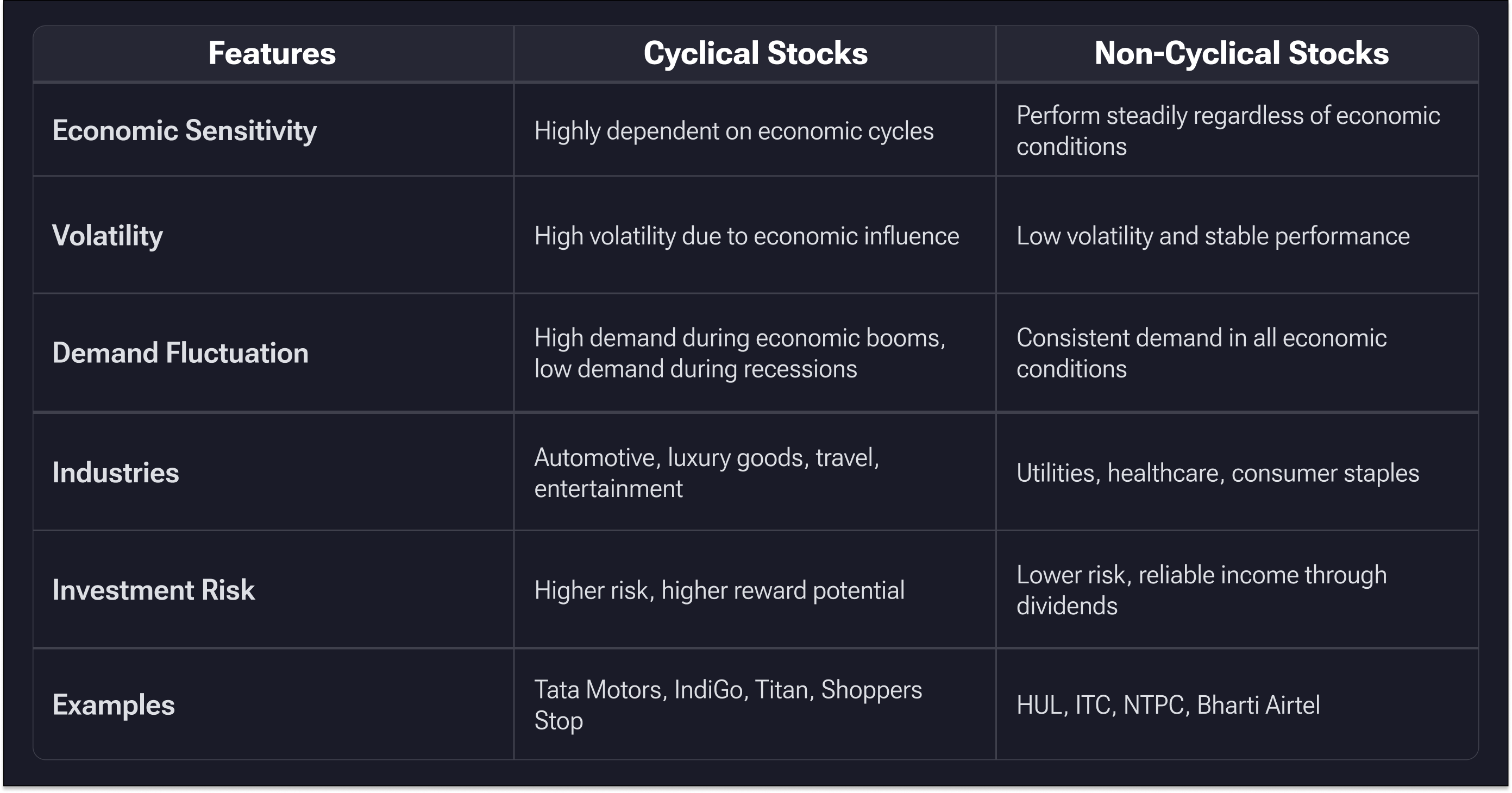
Key Differences Between Cyclical and Non-Cyclical Stocks
Investment Strategies for Cyclical & Non-Cyclical Stocks
1. Diversification for Stability
A well-balanced portfolio should contain both cyclical and non-cyclical stocks to mitigate risks. This ensures steady returns while capitalizing on economic growth phases.
2. Economic Monitoring
Keeping an eye on economic indicators such as GDP growth, inflation, and interest rates can help investors decide when to shift their focus between cyclical and non-cyclical investments.
3. Strategic Portfolio Adjustments
Investors can adjust their portfolio composition based on economic conditions:
During economic upswings: Prioritize sectors that benefit from increased consumer and business spending
During economic downturns: Focus on resilient industries that provide essential goods and services
4. Dividend Investing for Stability
Investors looking for stable, passive income can prioritize non-cyclical stocks with high dividend yields, such as those in the utilities and FMCG sectors.
5. Risk Appetite Consideration
Aggressive investors may prefer cyclical stocks for higher returns
Conservative investors may stick to non-cyclical stocks for steady growth and dividends
Choosing the Right Blend for Your Portfolio
For growth-oriented investors, increasing the proportion of cyclical stocks can be beneficial if you are comfortable with higher volatility in exchange for potentially higher returns. These stocks thrive during economic expansions, making them attractive for those seeking aggressive growth.
For conservative investors, non-cyclical stocks provide steady and reliable returns. They are ideal for those prioritizing stability, as these stocks remain resilient even during economic downturns.
For most investors, a balanced approach—combining both cyclical and non-cyclical stocks—ensures diversification. This strategy helps investors benefit from economic growth while also having protection during downturns, ensuring a balanced portfolio for different market situations.
Conclusion
Cyclical and non-cyclical stocks play a vital role in shaping a well-diversified investment portfolio. Cyclical stocks offer high growth potential during economic upswings, while non-cyclical stocks provide stability and consistent earnings during downturns.
By understanding and balancing these characteristics, investors can navigate market fluctuations more effectively and align their portfolios with their financial goals and risk tolerance. A diversified portfolio incorporating both stock types helps mitigate risks, maximize opportunities, and maintain long-term financial growth.
Disclaimer: (The information provided in this blog is for educational and informational purposes only and should not be considered financial advice. Stock market investments are subject to risks, and past performance does not guarantee future results. Please consult a financial advisor before making investment decisions.)