



HDFC Securities Q2 FY27 results highlight strong revenue growth, higher operating profitability and an expansion in EBITDA margins. For the quarter ended September 30, 2026, the brokerage firm reported revenue from operations of ₹964.61 crore, up 37.57% year-on-year (YoY). Profit after tax (PAT) increased 26.29% to ₹264.66 crore, while EBITDA grew by over 53%.
However, rising leverage and a decline in interest coverage indicate that investors should look beyond the headline growth numbers when evaluating the company’s financial performance.
HDFC Securities Q2 FY27 Results: Key Financial Highlights
HDFC Securities delivered a strong performance in the September 2026 quarter compared with the corresponding quarter of the previous financial year.
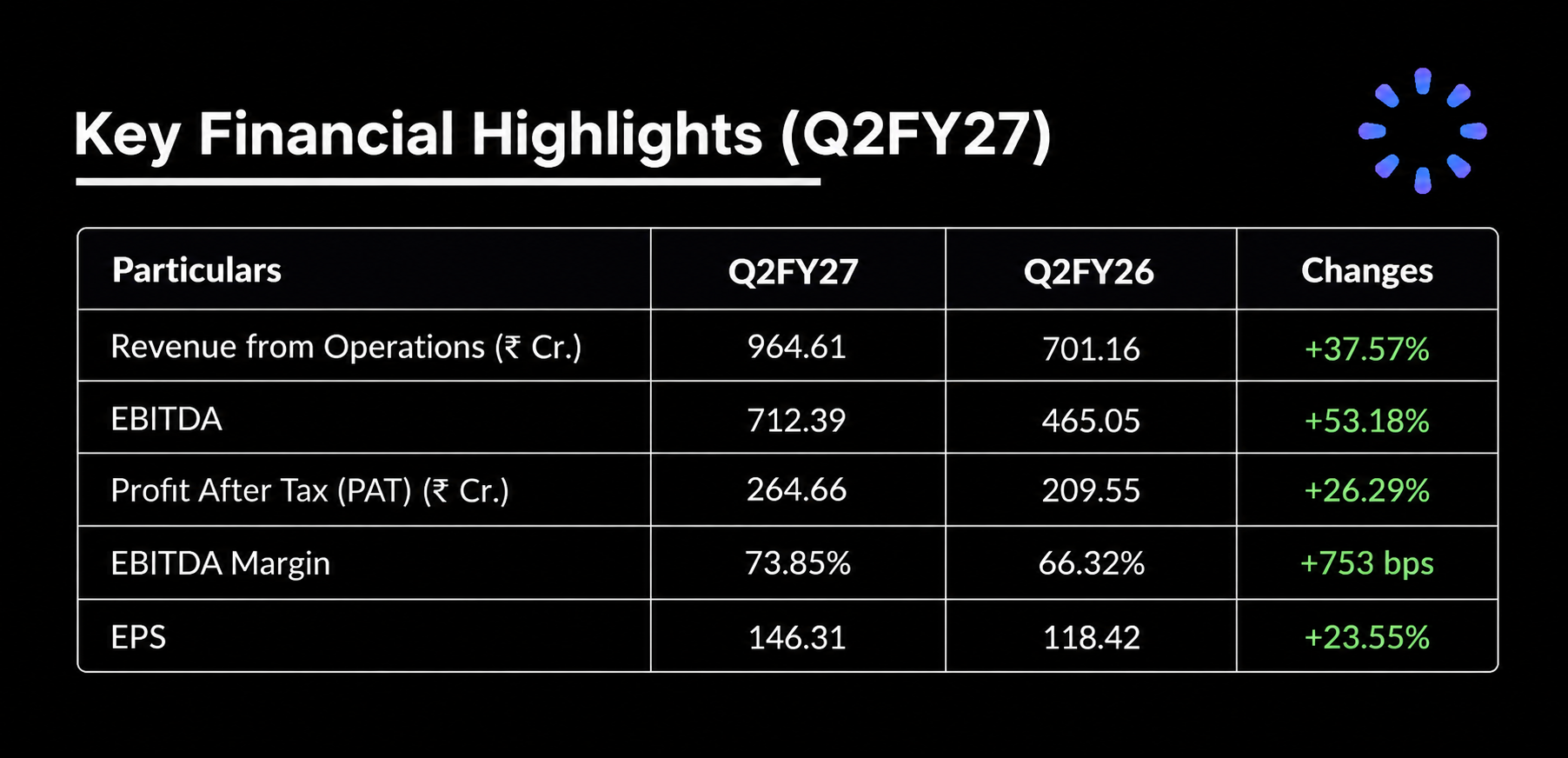
The results indicate that HDFC Securities grew its revenue faster than its operating expenses, supporting an improvement in operating profitability. However, profit growth remained slower than revenue growth, making cost trends and financing expenses important areas to monitor.
Revenue Growth Drives HDFC Securities’ Q2 Performance
HDFC Securities recorded revenue from operations of ₹964.61 crore in Q2 FY27, compared with ₹701.16 crore in Q2 FY26. This represents a year-on-year increase of 37.57%.
The company’s revenue profile includes interest income, fees and commission income, rental income, dividend income, gains or losses from fair value changes, and income from services.
Interest income increased to ₹532.49 crore from ₹347.13 crore in the year-ago quarter. Fees and commission income also rose to ₹443.65 crore from ₹368.06 crore, reflecting growth across two significant revenue streams.
These figures are particularly relevant for a brokerage business, where trading activity, client engagement and the mix of financial services can influence revenue generation. Sustaining this momentum will depend on business activity, market conditions and the company’s ability to maintain its customer base.
Invest in HDFC Securities Unlisted Shares Today
Discover opportunities to invest in HDFC Securities with Precize.

EBITDA Rises 53% as Operating Margins Expand
HDFC Securities’ EBITDA increased 53.18% year-on-year to ₹712.39 crore, according to the accompanying company summary. Its EBITDA margin expanded from 66.32% to 73.85%, an improvement of 753 basis points.
The margin expansion suggests stronger operating profitability during the quarter. EBITDA growth outpaced revenue growth, indicating that the business generated higher operating earnings relative to its revenue base.
Nevertheless, operating performance should be assessed alongside financing costs. In its standalone financial results, HDFC Securities reported finance costs of ₹326.33 crore in Q2 FY27, compared with ₹163.56 crore in Q2 FY26. The increase in finance costs is an important factor when assessing how much operating growth translates into profit after tax.
HDFC Securities Profit After Tax Increases 26%
HDFC Securities reported profit after tax of ₹264.66 crore in Q2 FY27, up 26.29% from ₹209.55 crore in Q2 FY26, as per the accompanying company summary. Earnings per share also increased to ₹146.31 from ₹118.42.
The increase in profit and EPS indicates an improvement in earnings compared with the previous-year quarter. However, PAT growth was lower than the reported growth in revenue and EBITDA.
This difference makes it important to examine expenses, taxes and financing costs alongside operating growth. Investors should also distinguish between standalone and consolidated results when comparing financial performance across reporting periods.
Key Risks to Watch After Q2 FY27
Despite strong headline growth, a few financial indicators warrant attention.
1. Rising debt-to-equity ratio
The company summary reports that the debt-to-equity ratio increased from 3.40x in Q2 FY26 to 4.72x in Q2 FY27. Higher leverage can increase financial risk and make financing costs more consequential, particularly if earnings or cash flows weaken.
2. Lower interest coverage
The interest service coverage ratio declined from 2.84x to 2.18x. This indicates reduced coverage of interest obligations under the reported ratio methodology. The trend deserves attention alongside the rise in finance costs.
3. Weak debt service coverage
The debt service coverage ratio remained at 0.04x in both quarters, according to the company summary. This is a low reported level and warrants further examination of the ratio’s calculation, cash-flow profile and debt repayment requirements.
4. Profit growth trails revenue growth
Although revenue and EBITDA increased strongly, PAT growth was slower. Investors should monitor whether financing expenses and other costs continue to limit the conversion of operating growth into bottom-line earnings.


What Does HDFC Securities’ Q2 FY27 Performance Mean for Investors?
HDFC Securities’ September-quarter results present a mixed but constructive picture. Revenue grew strongly, EBITDA expanded at a faster pace, margins improved and profit after tax increased year-on-year. These are positive indicators of operating performance.
At the same time, rising leverage, higher finance costs and declining interest coverage are important considerations when evaluating the sustainability of earnings growth.
For investors researching HDFC Securities, the next step is to track whether the company can sustain revenue momentum while managing financing costs and improving debt-servicing indicators. Quarterly results provide useful insights into business performance, but they should be assessed alongside the company’s longer-term financial trends, valuation and risk profile.
To compare companies, documents, and availability explore unlisted companies on Precize. For ongoing IPO and private-market updates, browse the Precize blog. Stay updated with unlisted companies through our Precize Community. If this article was useful, you can share it with other investors through the Precize Referral Program.
Frequently Asked Questions (FAQs)
HDFC Securities reported revenue from operations of ₹964.61 crore in Q2 FY27, up 37.57% year-on-year.
The accompanying company summary reports profit after tax of ₹264.66 crore, an increase of 26.29% compared with Q2 FY26.
EBITDA increased by 53.18% year-on-year to ₹712.39 crore, according to the company summary.
Key areas to monitor include rising leverage, higher finance costs, declining interest coverage and the slower growth of PAT relative to revenue.
The quarter shows strong revenue growth and improved operating margins. However, the rise in leverage and financing costs means investors should evaluate both the growth opportunity and the associated financial risks before drawing conclusions.
Disclaimer: This article is for informational purposes only and should not be considered as investment advice. Investing in unlisted shares carries risks including illiquidity and potential loss of capital. Please consult with a qualified financial advisor before making investment decisions. Precize is not a stock exchange and is not authorized by any capital markets regulator.