The merger of Hinduja Leyland Finance Limited (HLF) with NDL Ventures Limited marks an important development in the restructuring of the Hinduja Group's financial services business. Following approval from the National Company Law Tribunal (NCLT) in November 2026, NDL Ventures has recognised the accounting impact of the transaction in its September 2026 financial results, including ₹5,821.61 crore in goodwill in its standalone balance sheet.
Hinduja Leyland Finance–NDL Ventures Merger: Understanding the Transaction
Hinduja Leyland Finance is a non-banking financial company (NBFC) associated with the Hinduja Group and Ashok Leyland. Its lending activities include financing for commercial vehicles, passenger vehicles, tractors and other vehicle categories.
The proposed amalgamation with NDL Ventures Limited, formerly known as NXTDIGITAL Limited, forms part of the group's broader financial services restructuring. The NCLT Mumbai Bench approved the scheme of merger by absorption through its order dated 3 November 2026, followed by a clarification order dated 5 November 2026. The appointed date under the scheme is 1 April 2026.
Under the approved arrangement, NDL Ventures will issue 25 equity shares for every 10 equity shares held in Hinduja Leyland Finance. This share exchange ratio determines the number of NDL Ventures shares eligible HLF shareholders will receive under the scheme.
It is important to distinguish between the accounting and legal implementation of the merger. NDL Ventures recognised the accounting impact of the transaction in its September-quarter results following the NCLT orders. However, management indicated that the remaining regulatory and legal formalities, including the NBFC registration process, would need to be completed before the share swap and the scheme becoming fully effective. Management expected the process to be completed in Q4 FY27.
₹5,821.61 Crore Goodwill: What Does the Merger Accounting Reveal?
One of the most significant figures emerging from the transaction is ₹5,821.61 crore in goodwill, recognised in NDL Ventures' standalone balance sheet as of 30 September 2026.
The recognition follows the acquisition accounting treatment applied to the merger. Under this approach, the identifiable assets and liabilities of the acquired business are recognised at their applicable fair values. Goodwill represents the excess of the consideration recognised over the fair value of the identifiable net assets acquired.
In simple terms, goodwill captures the portion of the acquisition consideration that is not separately attributable to identifiable assets and liabilities. It should not be interpreted as cash paid for the business or as an independently established market valuation of HLF.
Why is the goodwill figure important for investors?
The ₹5,821.61 crore balance makes the quality of the acquired assets and the assumptions underlying the merger accounting important areas of investor attention.
Investors should consider three aspects:
Asset and liability valuation: The fair values assigned to HLF's identifiable asset quality and liabilities influence the calculation of goodwill.
Future impairment assessment: Goodwill is subject to impairment testing. If the expected economic benefits of the acquired business do not materialize, an impairment charge may affect future reported profitability.
Standalone versus consolidated reporting: The ₹5,821.61 crore figure relates specifically to NDL Ventures' standalone balance sheet. Investors should not assume that the same amount appears in its consolidated financial statements.
Therefore, goodwill should be assessed alongside the acquired loan portfolio, liabilities, future earnings potential and the performance of the combined business. The figure is an important accounting measure, but it does not independently establish whether the merger will create shareholder value. Investors can refer to this guide to understanding financial statements when evaluating the impact of such accounting entries.
Hinduja Leyland Finance Loan Discrepancies: Why Has an Independent Review Been Initiated?
Alongside the merger accounting, differences in HLF's loan balances have emerged as another important development. During Ashok Leyland's Q2 FY27 earnings call on 16 November 2026, management explained that discrepancies had been identified in underlying transactions related to loan balances across different internal systems of Hinduja Leyland Finance.
The issue needs to be viewed in the context of HLF's financial scale. For Q2 FY27, HLF reported:
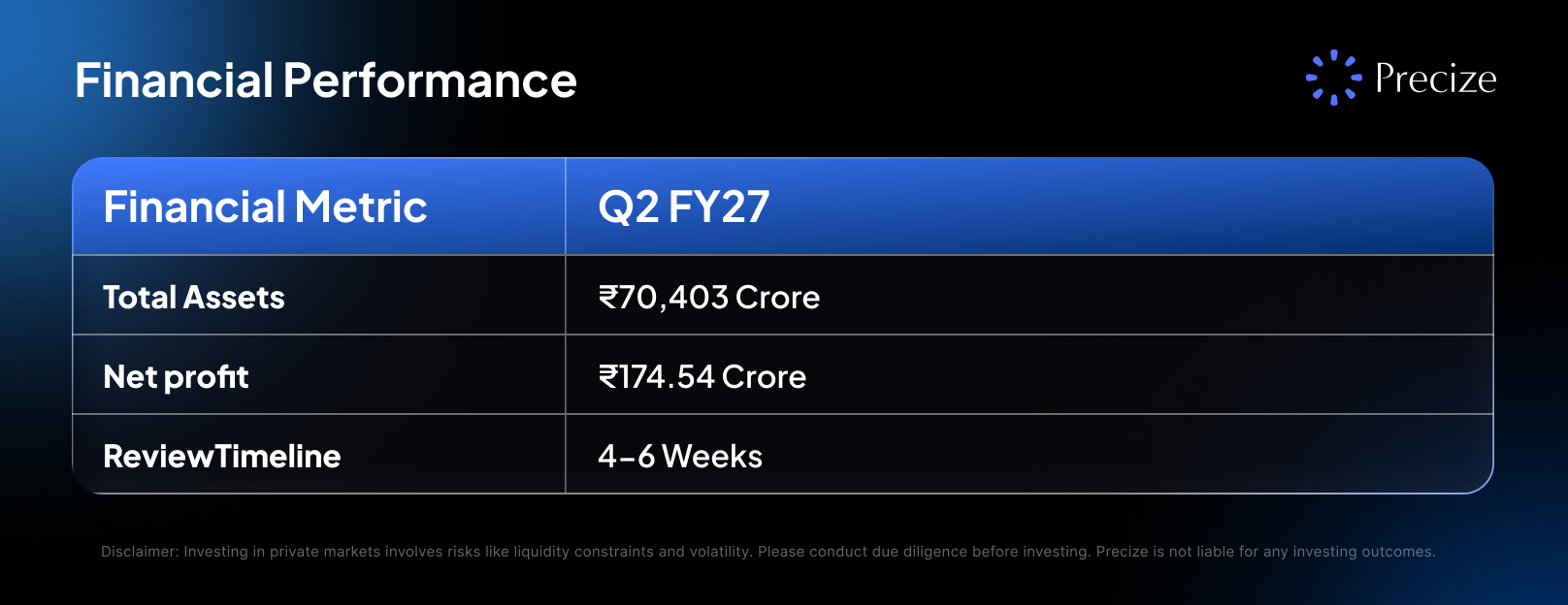
Management also highlighted that HLF has lakhs of loan accounts, making a comprehensive examination of its loan book and underlying records necessary.
The differences came to light during additional scrutiny of HLF's loan book in preparation for the merger. In response, the company initiated a system audit and began the process of appointing an independent agency to examine the relevant systems and processes.
According to management, the review would take approximately four to six weeks to establish the nature and extent of the discrepancies. The objective is also to identify whether any changes to existing processes or systems are required.
What do the loan discrepancies mean for HLF's financial reporting?
The financial impact of the identified differences has not yet been ascertained. HLF's September-quarter financial results were prepared without recognising any possible impact arising from the reconciliation exercise.
Its statutory auditors were unable to express a conclusion on the relevant financial results because sufficient appropriate evidence was not available to determine the potential financial effects. This distinction is important. The auditor's inability to express a conclusion does not, by itself, establish that the reported loan balances are incorrect by a particular amount or that a financial loss has occurred. The nature and quantum of the differences remain subject to the independent review.
For investors, the eventual findings will matter because loan balances form a central part of an NBFC's financial records. Any adjustments identified could influence the assessment of HLF's loan portfolio, reported financial position and the financial disclosures of the combined entity.
Financial Implications of the Merger: What Should Investors Monitor?
The merger brings HLF's lending operations into NDL Ventures' corporate structure, creating an opportunity to consolidate the group's financial services activities. However, the long-term financial outcome will depend on more than the completion of the scheme.
Four areas deserve particular attention:
1. Quality of the acquired loan portfolio
The independent review will provide greater clarity on the differences identified across HLF's internal systems. Investors should monitor whether the findings require reconciliation adjustments, changes to financial records or improvements in loan-management processes.
2. Goodwill and future profitability
The ₹5,821.61 crore standalone goodwill balance makes future impairment assessments relevant. Investors should examine whether the acquired business generates sufficient earnings and profitability to support the assumptions underlying the acquisition accounting.
3. Financial reporting and internal controls
The differences identified in loan balances highlight the importance of reliable transaction records and effective reconciliation systems. The independent review's findings and the corrective measures taken by management will be important indicators of the company's financial reporting processes and governance. A company's balance sheet is also an important starting point for assessing its reported assets, liabilities and financial position.
4. Completion of merger formalities
Although the NCLT has approved the scheme, the remaining regulatory and legal steps are important before the transaction becomes fully effective. Investors should track the NBFC registration process, the completion of the share exchange and the resulting corporate structure.
What Could the Hinduja Leyland Finance Merger Mean for NDL Ventures?
The merger provides NDL Ventures with an opportunity to expand its presence in the financial services sector through HLF's established lending operations. It could also create opportunities for operational integration and a more consolidated financial services platform within the group.However, the benefits of the restructuring will depend on effective integration, the quality of the acquired loan portfolio and the company's ability to maintain transparent financial reporting.
The recognition of goodwill provides an indication of the accounting impact of the transaction, while the loan discrepancies introduce an additional area that requires resolution. Until the independent review is completed and the remaining merger formalities are addressed, the full financial implications cannot be established.
For investors, the key consideration is therefore not simply whether the merger has received regulatory approval, but whether the resulting business can demonstrate sustainable earnings, reliable financial records and effective risk management.
What Should Investors Track Next?
The Hinduja Leyland Finance merger with NDL Ventures is an important corporate restructuring with implications for the group's financial services business. The ₹5,821.61 crore goodwill recognition, 25:10 share exchange ratio and unresolved loan discrepancies are three developments that investors should assess together.
The next important indicators will be:
Findings of the independent review into HLF's loan balances.
Any resulting adjustments to HLF's financial statements.
Future disclosures relating to goodwill and impairment assessment.
Completion of the remaining regulatory and legal merger formalities.
The financial performance and asset quality of the combined business.
Ultimately, the merger's long-term implications will depend on how effectively NDL Ventures integrates HLF's lending operations, addresses the identified discrepancies and converts the acquired business into a sustainable source of earnings.


Conclusion
The Hinduja Leyland Finance merger with NDL Ventures represents a significant step in the group's financial services restructuring, but its success will ultimately depend on the financial performance and operational strength of the combined business. While the ₹5,821.61 crore goodwill recognition reflects the accounting impact of the transaction, the unresolved loan discrepancies highlight the importance of accurate financial reporting and effective internal controls. As the independent review progresses and merger formalities move towards completion, investors will have a clearer basis for assessing the transaction's long-term value, integration risks and growth potential.
FAQs
The NCLT Mumbai Bench approved the merger of Hinduja Leyland Finance into NDL Ventures in November 2026, with an appointed date of 1 April 2026.
NDL Ventures will issue 25 equity shares for every 10 equity shares held in Hinduja Leyland Finance under the approved scheme.
The goodwill was recognised under the acquisition accounting treatment applied to the merger and represents the excess of consideration over the fair value of identifiable net assets acquired.
Differences were identified in underlying transactions related to loan balances across HLF's internal systems, prompting a system audit and an independent review.
The potential financial impact has not yet been ascertained. The independent review is expected to establish the nature and extent of the differences and whether adjustments are necessary.
Disclaimer: This article is for informational purposes only and should not be considered as investment advice. Investing in unlisted shares carries risks including illiquidity and potential loss of capital. Please consult with a qualified financial advisor before making investment decisions. Precize is not a stock exchange and is not authorized by any capital markets regulator.