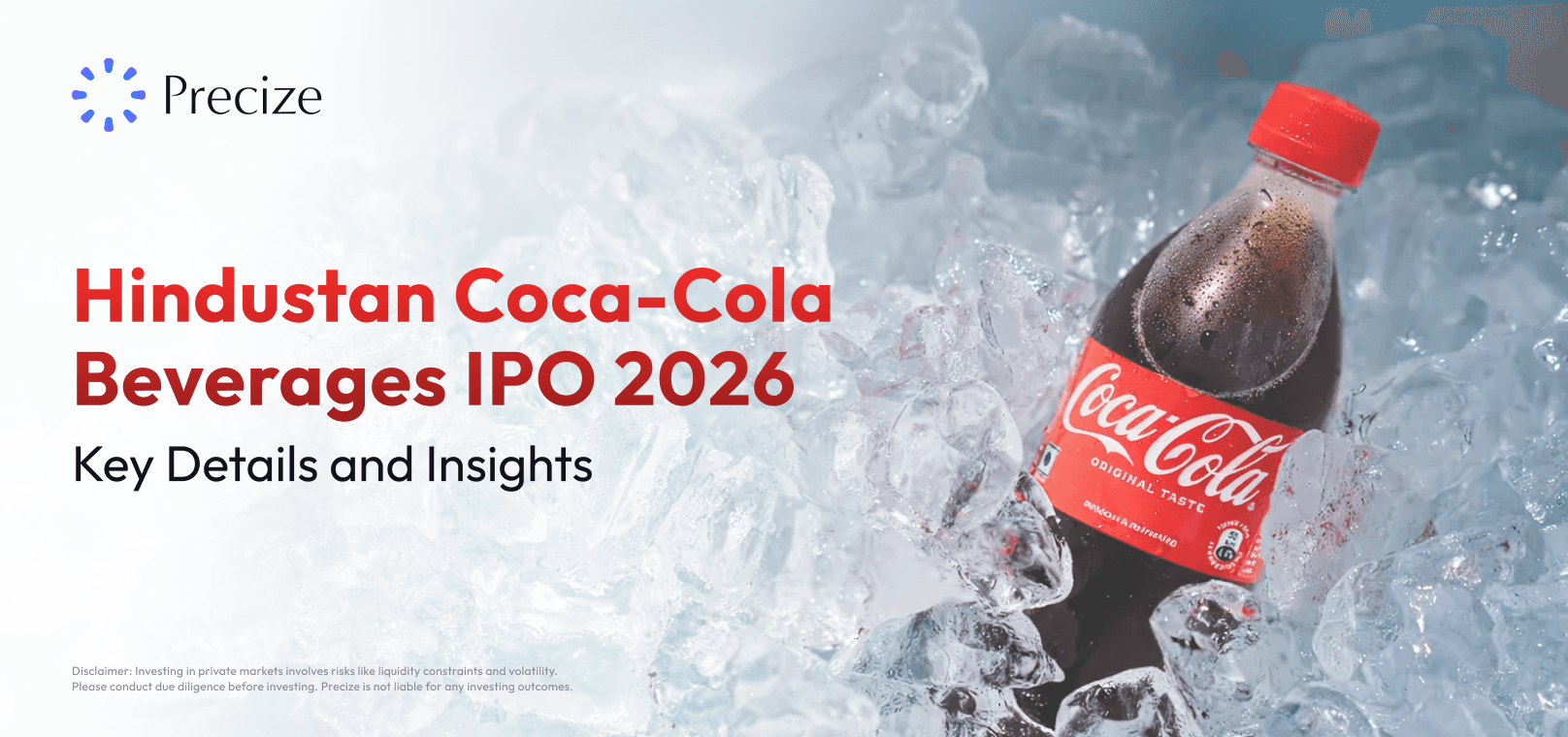
India’s packaged beverage market has been expanding on the back of rising urban consumption, wider retail reach, and higher out-of-home spend. In that backdrop, talk of a possible Hindustan Coca-Cola Beverages (HCCB) IPO has naturally drawn attention.
HCCB is the Indian bottling and distribution backbone for Coca-Cola’s beverage portfolio across large parts of the country. A listing, if it happens, would give public-market investors exposure to a scaled FMCG-linked operating platform rather than just a brand owner.
In this article, we bring together everything currently known about the Hindustan Coca-Cola Beverages IPO, including expected issue size, valuation cues, business overview, potential risks, and what investors should watch as official disclosures emerge.
At a glance
Market reports indicate an IPO size of around USD 1 billion (about Rs. 8,800–9,000 crore).
The implied valuation discussed in reports is around USD 10 billion (about Rs. 88,000 crore).
HCCB operates a large on-ground network of 14 bottling plants across 12 states, serving over 20 lakh retail outlets in 236 districts.
IPO specifics (dates, price band, lot size, structure) are not public yet.
Any listing would be subject to regulatory processes and final company decisions.
What the IPO chatter is really about
A consumer brand is only one part of the Coca-Cola ecosystem. In India, the bottling arm is the operating engine: procurement, manufacturing, packaging, route-to-market, cold chain execution, and retail availability.
That’s why a potential HCCB IPO is being tracked as a “scale operations” listing. The business is not a light-asset marketing company. It is a high-throughput manufacturing and distribution platform tied closely to:
Demand cycles (summer peaks are real),
Input costs (sugar, PET resin, aluminium, energy, freight),
Execution (plant utilisation, distribution efficiency, wastage control).
Company snapshot
Hindustan Coca-Cola Beverages (HCCB) is the Indian bottling and distribution arm associated with The Coca-Cola Company’s operations in India. Headquartered in Bengaluru, it handles packaging, sales, and distribution for a wide portfolio that includes carbonated soft drinks, juices, bottled water, and other non-alcoholic beverages.
Its operating footprint is typically described as:
14 bottling plants across 12 states
Reach across 236 districts
Distribution to 20 lakh plus retail outlets
Workforce of 5,200 plus employees
For a bottler, this physical footprint matters because it shapes costs, delivery speed, and the ability to service deep retail networks beyond metros.
What’s currently known about the HCCB IPO
From what is being reported publicly:
The issue size is expected to be around USD 1 billion (about Rs. 9,010 crore according to some reports),
The valuation discussed is around USD 10 billion (about Rs. 88,000 crore),
The issue is expected to be a book-built IPO
It may include a combination of new shares and stake sale, though the final structure is not disclosed.
There is also market talk of a confidential filing route. If that is the case, the detailed financials and risk disclosures become visible only when the documents move into the public domain.
So at this stage, treat this as an “IPO intent + sizing discussion” story, not as a confirmed calendar event with final numbers.
How to understand HCCB as a business
This is the part that helps readers go beyond headlines.
1) Bottling is a scale-and-efficiency game
A bottler’s performance is typically shaped by:
Plant utilisation and throughput
Packaging mix (PET, glass, cans)
Logistics efficiency (warehouse + last-mile replenishment)
Route productivity (Salesforce execution and retail servicing)
Even small improvements here can meaningfully change unit economics at scale.
2) Seasonality affects working capital and demand planning
Beverage demand can be sharply seasonal, with peak inventory build-up ahead of summer. This is why working capital discipline and distribution forecasting matter as much as top-line growth.
3) Input costs can change margins quickly
Sugar, PET resin, aluminium, fuel, and power costs can shift rapidly. A key question for any bottler is how effectively it manages:
Procurement contracts,
Price resets,
Pack-size strategy,
Operational efficiencies to protect margins.
The Jubilant Bhartia angle and why it matters
Recent strategic moves in the broader India bottling structure (including investment participation by Jubilant Bhartia Group at the holding level, as reported publicly) have kept attention on the asset.
For readers, the significance is simple: it signals that the India bottling platform is being treated as a valuable standalone operating business with strategic interest, not just an internal support unit.
What the offer documents will need to clarify
Until the offer documents are available, several important questions remain open:
Revenue mix and profitability trend: top-line growth, EBITDA profile, PAT trend, and the drivers behind them.
Debt and capital intensity: how much the system relies on borrowings and what capex needs look like.
Return metrics and cash conversion: whether profits translate into cash after working capital and capex.
Territory coverage and concentration: which regions contribute most, and how concentrated volumes are.
Route-to-market dependence: distributor structure, channel concentration, and cold-chain intensity.
Competitive positioning: how pricing power and market share are defended versus PepsiCo and faster-moving domestic challengers.
This is where the real story will emerge, because bottling businesses can look very different depending on utilisation, leverage, and cost control.
Risks & Considerations of Hindustan Coca-Cola Beverages (HCCB) IPO
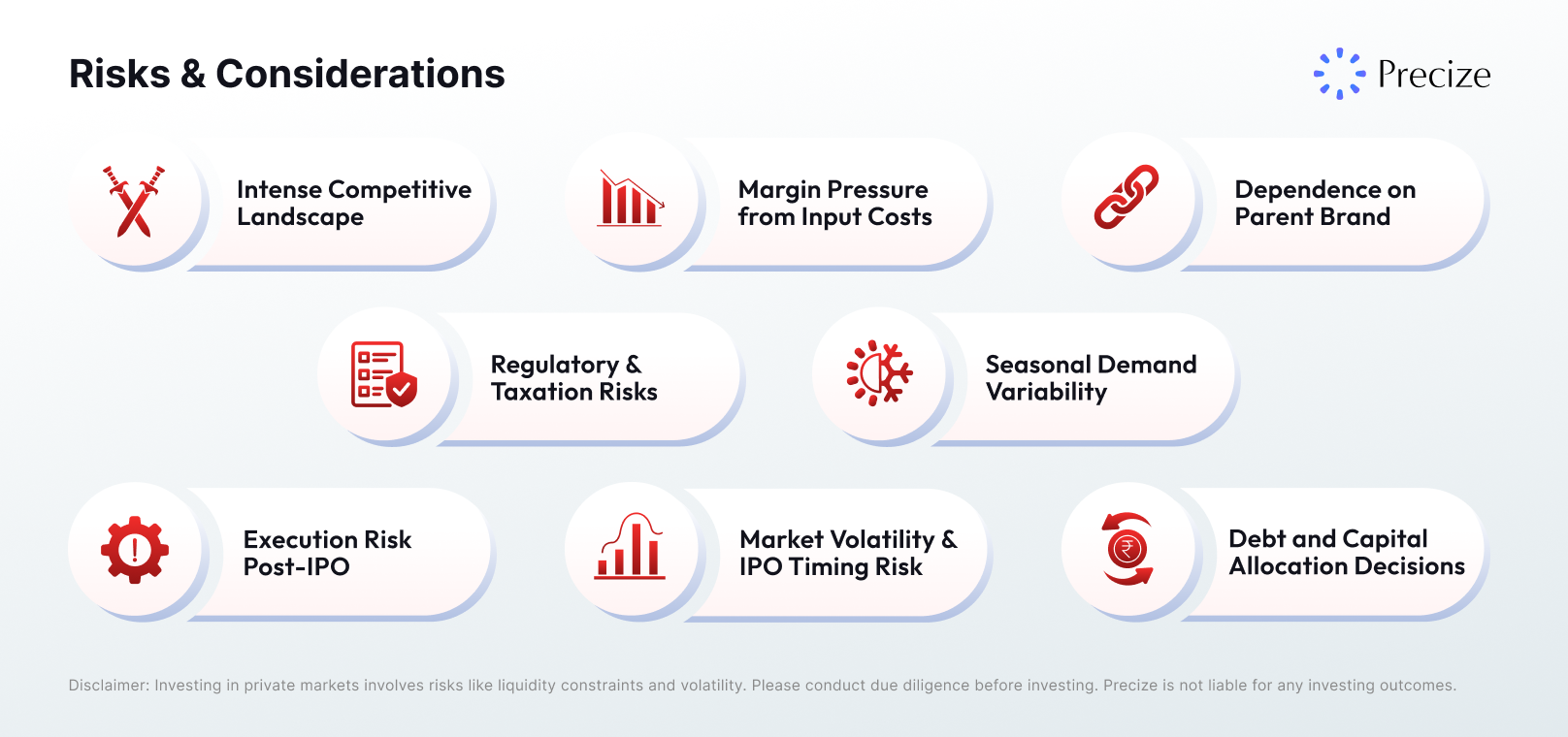
Here are some risks and considerations of the Hindustan Coca-Cola beverages IPO:
1) Intense Competitive Landscape
HCCB operates in a highly competitive beverage market, facing strong rivals such as PepsiCo and emerging domestic brands like Campa Cola, which may impact pricing power and market share.
2) Margin Pressure from Input Costs
Fluctuations in raw material prices (sugar, PET resin, aluminium) and rising logistics and energy costs could affect operating margins.
3) Dependence on Parent Brand
The company’s business is closely linked to The Coca-Cola Company’s brand portfolio, making it vulnerable to changes in global brand strategy or franchise agreements.
4) Regulatory and Taxation Risks
The beverage industry is subject to food safety regulations, sugar taxes, environmental norms, and packaging regulations, which may increase compliance costs.
5) Seasonal Demand Variability
Beverage consumption is highly seasonal, with demand peaking in summer months, leading to uneven revenue and working capital cycles.
6) Execution Risk Post-IPO
Managing large-scale operations while transitioning to public market scrutiny may pose operational and governance challenges.
7) Market Volatility and IPO Timing Risk
Broader equity market conditions and investor sentiment at the time of listing could influence IPO valuation and listing performance.
8) Debt and Capital Allocation Decisions
Long-term financial stability will depend on how the IPO proceeds are used, such as for growth, debt reduction, or day-to-day operations.
How to apply (once the IPO opens)
When the issue opens, the application flow is typically simple:
Check the final price band, lot size, and dates on your broker/bank IPO section.
Place your bid within the permitted price range.
Approve the UPI mandate (or apply via ASBA through your bank).
Funds remain blocked until allotment is finalised and are debited only if shares are allotted.
(IPO-specific details will only be known once the official documents are out.)
Conclusion
The HCCB IPO story is interesting because it sits at the intersection of consumer demand and large-scale operating execution. If the reported listing plan progresses, it could bring a high-footprint bottling and distribution platform into the public markets at a time when India’s consumption ecosystem is expanding.
Until the offer documents are public, the best way to track this is to stay grounded on the fundamentals that matter for bottlers: efficiency, cash conversion, cost control, and demand seasonality, not just headline valuation numbers.
At the same time, investors looking beyond conventional IPOs are increasingly exploring private and pre-IPO opportunities. Platforms like Precize offer carefully selected private investments backed by thorough research, helping investors spread their money across different types of assets beyond just public stocks.