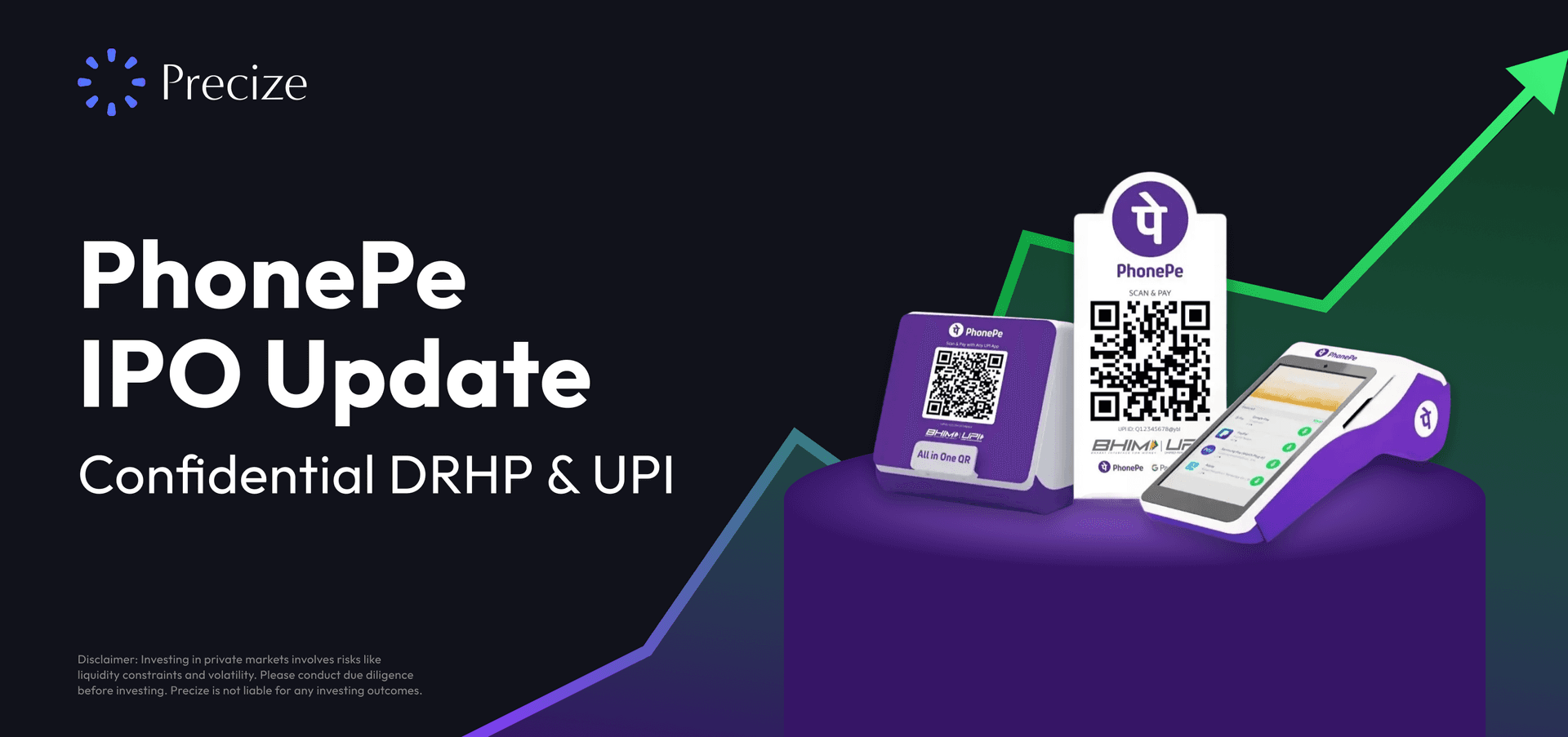
PhonePe has taken another concrete step toward a public listing by getting Sebi approval for IPO after a confidential filing. In simple terms, this lets a company begin the regulatory review process privately before the full draft prospectus becomes public.
While the headline is “PhonePe IPO”, the bigger story is what sits underneath: PhonePe’s scale on UPI, and how the company is using that distribution to expand beyond payments into higher-monetisation categories.
What just happened
PhonePe gets Sebi approval for IPO after confidential filing, indicating that IPO preparations are now active and moving through the regulatory pipeline. PhonePe gives up ₹1,500 crore revenue to future-proof its fintech story before going public. Market reports have discussed the potential for a large public issue, with a listing timeline that could fall in 2026
This is important because confidential filing is typically chosen by large, high-visibility companies that want flexibility on timing and disclosures while the regulator reviews the draft.
Why PhonePe’s user base matters for an IPO narrative
PhonePe’s core advantage is distribution. A large monthly active base gives the company three structural benefits that many fintechs struggle to build:
1) Lower customer acquisition cost (CAC) over time
When you already have users transacting frequently, adding new products (insurance, lending, ads, wealth) becomes more about conversion than acquisition.
2) More “surface area” to monetise
Payments can be a high-volume category, but it is not always the highest-margin category. The long-term upside comes from cross-selling and deepening the relationship per user.
3) Stronger merchant ecosystem flywheel
More users typically attract more merchants, which can improve acceptance density and create room for merchant-led monetisation (ads, discovery, tools).
What PhonePe’s latest numbers say about the business mix
In PhonePe’s latest disclosed financial snapshot for the six months ended September 2025, the company reported strong operating revenue growth, with payments still contributing the bulk of revenue.
At the same time, the data shows that non-payment monetisation is becoming meaningful, including categories like lending and insurance, contributing a visible share of the top line. This mix matters because the public market story for fintech is increasingly about:
Moving from “payments-only” to “financial services + distribution”
Improving unit economics
Building diversified revenue streams
Beyond payments: where PhonePe is expanding
PhonePe’s expansion beyond payments is not a single bet. It is a portfolio approach, using the UPI base as the funnel:
1) Lending and insurance distribution
This is one of the most direct paths to monetisation for a payments-led platform. Distribution income can scale without the balance sheet risk of becoming a lender, as long as underwriting remains with partner institutions.
2) Advertising and merchant monetisation
As platforms scale, advertising becomes a natural second engine. For commerce and discovery flows, ads can become a repeatable revenue line if the platform can prove ROI for merchants.
3) Platform adjacencies (example: app distribution)
PhonePe has also pushed into adjacent ecosystems (like app discovery/distribution). These moves are typically aimed at broadening the company’s role from “payments app” to “consumer internet distribution layer”.
The regulatory angle investors will track
Two regulatory themes often shape how payment companies are valued:
UPI market share concentration rules
PhonePe is one of the largest UPI players, and any market-share cap or enforcement timeline becomes a key variable in future growth assumptions.
Product-level restrictions impacting revenue lines
Recent rule changes in areas like rent payments and real-money gaming can affect transaction volumes and revenue recognition for specific streams. These items don’t always change the long-term story, but they do impact near-term optics and forecasting.
What this means for the PhonePe IPO story
This filing strengthens the signal that PhonePe wants to enter public markets with a clearer “beyond payments” narrative:
Payments as scale and retention
Financial services distribution as monetisation
Ads and merchant tools as operating leverage
Broader platform adjacencies to widen the funnel
The exact IPO timing and structure will become clearer only as filings and approvals progress, but the direction is visible: PhonePe is positioning itself as a scaled consumer-fintech platform, not just a UPI app.
Conclusion
PhonePe’s confidential DRHP approval is a meaningful step in its IPO journey. Still, the real investor question is simpler: can PhonePe turn its massive payments distribution into durable, diversified monetisation beyond UPI?
If the company can keep growing operating revenue while improving profitability metrics and expanding non-payment contribution, it strengthens the case for a premium public-market valuation.