Why Pre-IPO Investing Matters
High Growth Potential: Investing early means you have the opportunity to take advantage of the company’s growth once it goes public.
Exclusive Access: You’re buying shares before they’re available to the general public, which can lead to significant returns.
Potential for Higher Returns: As a private investor, you can purchase shares at a lower price, with the opportunity for higher returns once the company lists.
Now that you have a clear understanding of what pre-IPO investing is and why it matters, let’s understand how you can get started and the steps involved in purchasing pre-IPO shares.
How Does Pre-IPO Investing Work?

Understanding the process behind pre-IPO investing is key to making informed decisions. Here’s a breakdown of how it works:
1. Eligibility:
Traditionally, pre-IPO investments were available only to high-net-worth individuals (HNIs) or institutional investors. However, platforms like Precize are simplifying access to these opportunities, allowing a wider range of investors to participate with a lower minimum investment requirement.
2. Accessing Pre-IPO Shares:
You can buy pre-IPO shares through investment platforms like Precize, which provide access to unlisted shares of companies preparing for an IPO.
The process is simple:
Step 1: Choose the company you want to invest in.
Step 2: Add funds through UPI or net banking.
Step 3: Confirm your order and wait for shares to be credited to your account (usually within 24-48 business hours).
3. Valuation and Pricing:
Pre-IPO shares are priced based on the company’s latest private funding round. Since these shares are not yet available on the public market, their valuation is determined by the growth potential of the company, allowing you to buy them at a lower price before the IPO.
4. Lock-In Period:
Most pre-IPO investments come with a lock-in period of 6 months to a year. This means you won’t be able to sell your shares until the company’s IPO process is completed.
Pre-IPO investing provides a unique opportunity to access high-growth companies before they go public. However, understanding the pricing, eligibility, and lock-in period is crucial for making the right investment decision. Now that you know how it works, let’s look at the key benefits of investing in pre-IPO shares.
Also Read: Investment strategies of great investors
Benefits of Pre-IPO Investing
Investing in pre-IPO shares provides numerous benefits, making it a great option for investors seeking to diversify and enhance their portfolios. Here’s why pre-IPO investing can be an attractive choice:
1. Potential for High Returns
Pre-IPO shares are typically priced lower than their post-IPO market value. As the company grows and eventually lists on the stock exchange, the value of your shares may increase, offering you significant returns.
2. Exclusive Access to High-Growth Companies
Pre-IPO investing allows you to invest in companies with high growth potential that have not yet gone public. This gives you early access to promising businesses before they become widely available to the general public.
3. Diversification of Investment Portfolio
Adding pre-IPO shares to your portfolio helps diversify your investments, reducing reliance on traditional stocks and bonds and providing exposure to different types of assets.
4. Lower Initial Investment
Platforms like Precize make pre-IPO investing accessible to a broad range of investors, with a low minimum investment of ₹10,000, eliminating the need for large upfront capital.
The potential for substantial returns and the opportunity to invest in emerging companies make pre-IPO shares an exciting option. However, these investments come with risks, which is why it’s crucial to understand how to manage them. Let’s take a closer look at the risks of pre-IPO investing in the next section.
Risks of Pre-IPO Investing
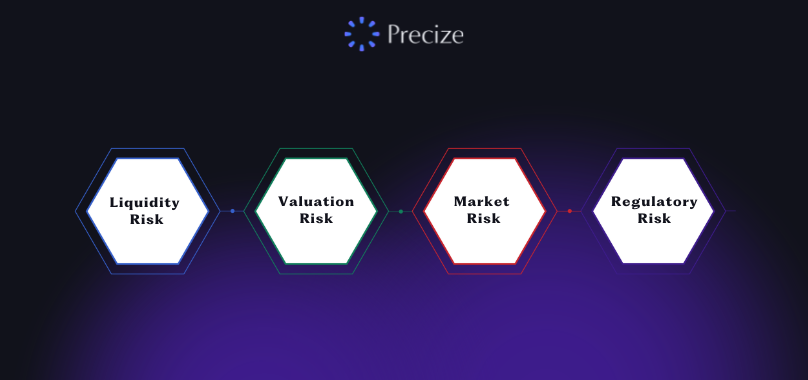
While pre-IPO investing offers the chance for high returns, it’s necessary to understand the risks involved. Here are some of the main risks you should consider:
1. Liquidity Risk
Pre-IPO shares are not publicly traded, which means they can be difficult to sell before the company goes public. This limits your ability to exit the investment quickly if needed.
2. Valuation Risk
The valuation of pre-IPO companies is based on private funding rounds, which may not accurately reflect the company’s true value once it’s publicly traded. This creates the risk that the company may not perform as expected after the IPO.
3. Market Risk
Even if the company performs well, the broader stock market conditions can impact the performance of your pre-IPO shares once the company goes public. Volatility in the market can affect the price of shares post-IPO.
4. Regulatory Risk
Changes in regulations or government policies can affect the company’s ability to go public or its performance after listing. New laws or regulatory issues could negatively impact your investment.
Understanding these risks is important to making an informed decision when investing in pre-IPO shares. Next, let’s explore some strategies to minimize these risks and increase your chances of success.
Strategies for Successful Pre-IPO Investing

To make the most out of your pre-IPO investments, consider these strategies:
1. Do Thorough Research
Before investing, research the company’s business model, leadership, and growth potential. Look for companies with strong fundamentals and a solid track record of growth.
2. Diversify Your Investments
Don’t invest all your funds into one pre-IPO company. Diversify your investments by spreading them across multiple companies to help minimize risk and improve your chances of earning returns.
3. Use Trusted Platforms
Use platforms like Precize to invest in pre-IPO shares. These platforms offer a secure and transparent investment process, providing you with the tools to make informed decisions.
4. Have a Clear Exit Strategy
Know when you plan to exit your investment. Whether you plan to sell after the IPO or hold for long-term growth, setting clear goals will help you stay focused on your investment strategy.
These strategies help you better understand the complexities of pre-IPO investing and improve your chances of success. Now, let’s move on to explore some practical tips on how to get started with pre-IPO investing.
Conclusion
Pre-IPO investing offers a unique opportunity to access high-growth companies before they go public. By understanding the process, weighing the risks, and employing effective strategies, you can make informed decisions that potentially lead to higher returns. Platforms like Precize provide a seamless experience for investing in pre-IPO shares, making it easier for investors of all levels to participate in these exciting opportunities.
Are you ready to start exploring pre-IPO investments? Sign up with Precize today and take the first step toward diversifying your portfolio with pre-IPO opportunities.