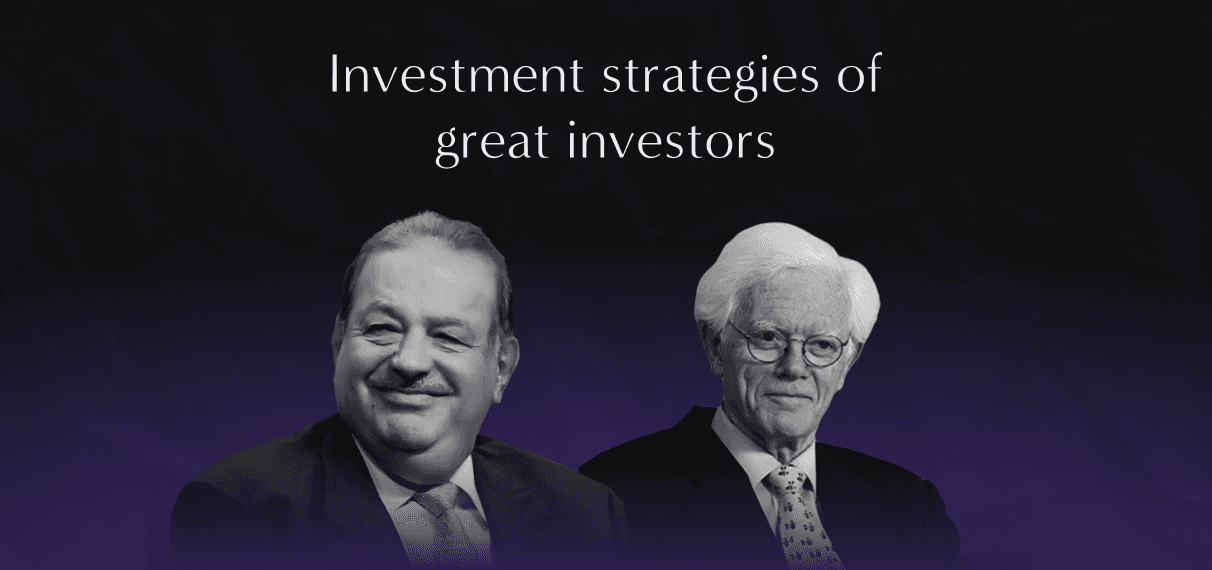
Investing is both an art and a science; the world's most successful investors have demonstrated an uncanny ability to master both aspects. In this article, we will delve into the investment strategies of two iconic figures: Carlos Slim Helú and Peter Lynch. Their distinct approaches to investing have yielded astonishing returns and offer valuable lessons for investors of all levels.
Carlos Slim Helú: The Power of Diversification
Carlos Slim Helú, a Mexican business magnate, is one of the wealthiest individuals in the world. At one point, his net worth was a staggering $105 billion or about 7% of Mexico's GDP, according to Wikipedia. Carlos Slim Helú's wealth was largely accumulated through a strategy of long-term investing and diversification, a testament to the effectiveness of spreading risk across various assets.
The Telmex Investment:
Carlos Slim Helú earned the majority of his fortune, approximately $93 billion, by diversifying his investments across various sectors. One of his significant investments was in telecommunications, where he allocated $1,734 million to acquire a major stake in Telmex, Mexico's leading telecommunications company. Additionally, Carlos Slim Helú invested $44 million in real estate, expanding his portfolio to include valuable properties. This approach highlights Carlos Slim's strategy of diversification, which involves spreading investments across multiple industries to minimize risk and maximize returns. (Source: Mexican Insights, Wikipedia)
Real Estate and Beyond:
Carlos Slim Helú, a prominent real estate investor, operates his extensive portfolio through his company, Inmobiliaria Carso. Since the 1960s, this company has developed, invested in, owned, and managed a wide array of residential and commercial properties throughout Mexico. Plaza Carso in Mexico City, constructed by his real estate company, serves as the common headquarters for many of his business ventures.
From the early 2000s to the mid-2010s, Carlos Slim Helú expanded his real estate investments internationally, particularly in Spain and the United States. In May 2014, he inaugurated the Inbursa Aquarium, the largest aquarium in Latin America.
In 2010, Carlos Slim Helú purchased the Duke Seamans mansion, a 1901 Beaux-Arts house on 5th Avenue in New York City, for $44 million. In May 2015, he listed it for sale at $80 million, nearly double the purchase price.
Additionally, in April 2015, Carlos Slim Helú acquired the Marquette Building in Detroit and PepsiCo Americas Beverages headquarters in Somers, New York, for $87 million. He also owns another mansion in New York City at 10 West 56th Street, bought in 2011 for $15.5 million.
In March 2015, Carlos Slim Helú began investing in Spain's real estate market, capitalizing on the country's economic downturn by purchasing properties at significantly reduced prices. (Source: Wikipedia)
The Diversification Principle
Carlos Slim Helú's strategy underscores the importance of diversification in investment. By investing in different industries and assets, he minimized his risk exposure and maximized his potential for returns. His portfolio was not overly reliant on any single investment, which provided a cushion against market volatility.
Peter Lynch: Investing in What You Know
Peter Lynch, a renowned investor and former manager of the Fidelity Magellan Fund, is celebrated for his remarkable track record. From 1977 to 1990, Lynch grew the fund from $18 million to over $14 billion, achieving an average annual return of 29.2%. His success stemmed from a simple yet profound strategy: investing in familiar companies and conducting thorough research. (Source: Wikipedia)
The Familiarity Advantage:
Lynch's investment philosophy revolved around "investing in what you know." He believed that individual investors could gain an edge by focusing on industries and companies they understood.
Thorough Analysis and Research:
While familiarity was a starting point, Lynch emphasized the importance of rigorous analysis and research. He meticulously evaluated the company's business models, financial health, and growth potential before making investment decisions. This disciplined approach allowed him to make informed choices and avoid common pitfalls.
The Key Takeaway:
Peter Lynch's strategy teaches investors the value of combining personal knowledge with thorough research. By investing in companies and industries they understand, investors can make more informed decisions and potentially achieve higher returns. Lynch's approach encourages investors to stay within their circle of competence while continuously expanding their knowledge through research and analysis.
Conclusion:
Carlos Slim Helú and Peter Lynch's investment strategies exemplify the principles of diversification, familiarity, and rigorous research. Remember, the journey to becoming a great investor involves continuous learning, disciplined decision-making, and a willingness to adapt to changing market conditions.
*Disclaimer: This information is for private use only and does not constitute investment advice. Recipients must assess risks and seek advice from financial, legal, and tax professionals. Private market investments carry risks, and there are no guarantees of returns or capital protection. We are not liable for investment decisions.