
If you’ve ever wondered how businesses manage to grow when traditional bank loans seem out of reach, you’re not alone. Over the past few years, a quieter yet powerful shift has occurred in India’s financial space; private credit is filling the gaps.
In this blog, we’ll explore the rise of private credit in India and unpack what’s fueling this change. We’ll look at its rapid market expansion, the sectors benefiting the most, innovative funding structures, and how regulations influence its growth.
You'll also learn about the factors setting the stage for future growth and what lies ahead for private credit in India.
Scroll down to learn!
What is the Private Credit Market in India?
The private credit market in India is all about non-bank lending options offered by private institutions like private equity funds, asset management companies, and other non-traditional lenders.
Unlike the rigid terms of traditional bank loans, private credit gives you more flexibility in things like structure, repayment plans, and tenure, making it ideal for businesses that need customized financial solutions.
This type of financing is especially useful for mid-sized and large businesses looking for funds to grow, make acquisitions, or meet working capital requirements, particularly when traditional banks can’t meet their needs.
With a clear idea of what the private credit market entails, it’s time to look at the key factors driving its rise across India.
Reasons for the Rise of the Private Credit Market in India

The private credit market in India has grown rapidly in recent years, driven by several important factors that have reshaped the financial ecosystem and created new possibilities for both borrowers and investors. Here’s why this market is on the rise:
Need for Flexible Financing
Many businesses, particularly mid-sized firms, struggle to secure traditional bank loans due to stricter lending norms and the risks tied to their operations. Private credit fills this gap by offering customized financing options for their specific needs.
For example, private credit lenders often structure deals without requiring traditional collateral, instead focusing on a company’s growth potential.
Boost from Infrastructure Projects
The Indian government’s strong push for infrastructure development has significantly increased the demand for capital.
Private credit providers have stepped in to finance these projects, playing a critical role in driving economic growth and stability.
Supportive Regulatory Changes
The introduction of the Insolvency and Bankruptcy Code (IBC) in 2016 has been a game-changer for the private credit market. By offering a transparent framework for resolving insolvencies and protecting creditor interests, the IBC has boosted investor confidence, making private credit a more attractive option.
Rise of Alternative Investment Funds (AIFs)
Alternative Investment Funds have played a significant role in expanding the private credit market. With their flexible investment strategies and local expertise, AIFs have successfully catered to diverse business needs and have often outperformed global competitors in the Indian market.
Advances in Digital Tools and Data Access
The digital transformation in India has made it easier for private credit lenders to evaluate risks and make faster lending decisions. Access to data like GST filings and credit histories has streamlined the underwriting process, improving efficiency and transparency.
Growing Investor Interest
High-Net-Worth Individuals (HNWIs) and family offices increasingly view private credit as an attractive investment option. With the potential for better returns compared to traditional investments, especially in a stable interest rate environment, this asset class has gained significant traction.
These reasons have set the stage for significant growth—let’s explore the latest trends shaping the market’s expansion.
Current Trends in the Market Expansion of Private Credit in India
The private credit market in India is growing rapidly, shaped by key trends that are redefining the financial sector. Here are the prominent trends shaping this growth as of January 2025:
Record Growth in Investments
Private credit investments in India have seen remarkable growth, positioning the country as a regional heavyweight in the private credit space. In 2024, for the first time, private credit investments surpassed the significant milestone of $10 billion, a substantial increase from approximately $600 million in 2010.
This growth underscores the rapid expansion and maturity of the private credit market in India, highlighting its pivotal role in addressing the evolving financial needs of businesses.
Government Push for Infrastructure Development
The Indian government’s focus on infrastructure has been a significant growth driver for private credit.
With a record INR 11.11 lakh crore allocated in the FY25 budget for infrastructure projects, small and mid-sized companies are increasingly turning to private credit for the flexible funding needed to participate in these initiatives.
Customized Financing Options
Private credit lenders provide more flexible financial solutions than traditional banks, which often impose rigid lending requirements. These customized options include innovative loan structures and repayment plans designed to meet the unique needs of borrowers, particularly mid-sized businesses that require adaptable financial support.
With the market expanding rapidly, it’s important to understand which sectors benefit most and how investments are being structured.
Sectors and Investment Structures of Private Credit in India
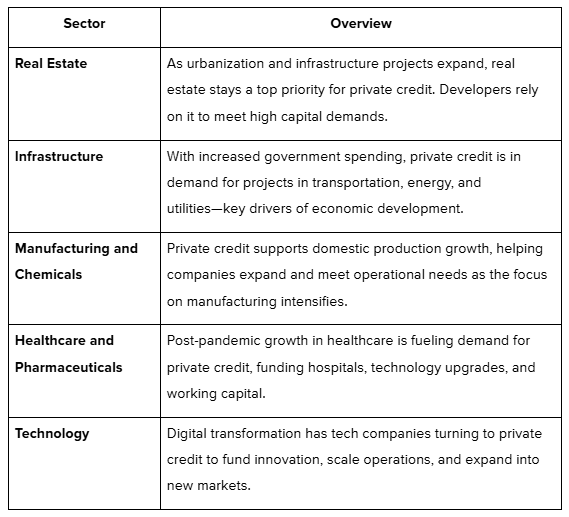
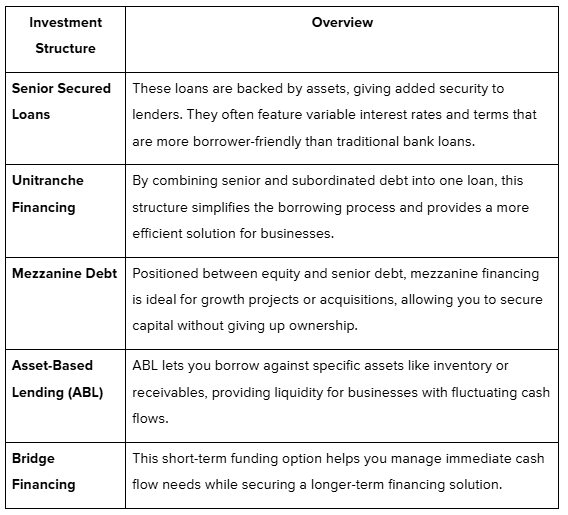
The private credit market in India caters to a variety of industries and employs flexible investment structures to address the unique needs of borrowers. Here’s a closer look at the key sectors and financing models that define this growing market.
Key Sectors for Private Credit Investment
Private credit in India is heavily focused on certain industries that present significant growth and financing opportunities:
Investment Structures in Private Credit
Private credit lenders use a variety of financing structures designed to offer flexibility and cater to the specific requirements of borrowers:
Now that we’ve covered the sectors driving private credit, it’s time to examine the regulatory framework governing this growth.
Regulatory Climate and Implications of Private Credit in India
The regulatory environment in India plays a key role in shaping the private credit market. A clear understanding of the current framework and its implications can help you navigate the complexities involved in private credit transactions.
Current Regulatory Framework
The framework governing private credit in India ensures oversight and transparency, primarily driven by two major regulatory bodies:
Reserve Bank of India (RBI): Manages lending norms, and compliance, and ensures stability in financial transactions.
Securities and Exchange Board of India (SEBI): Regulates Alternative Investment Funds (AIFs) and oversees market practices to promote investor trust.
The focus is on creating an environment conducive to both domestic and foreign investments.
Impact of the Insolvency and Bankruptcy Code (IBC)
The IBC has brought transformative changes, particularly in creditor confidence and risk management:
Streamlined Insolvency Resolution: A structured process that enables quicker resolution of insolvencies.
Risk Reduction: Lenders feel more secure in extending credit, even to businesses previously considered high-risk.
Boost in Lending Activity: More companies can access credit due to improved lender confidence.
Challenges with Regulatory Compliance
While progress has been made, regulatory compliance still poses challenges for both lenders and borrowers:
Approval Delays: Sectors like pharmaceuticals and retail face prolonged timelines due to strict regulations.
Cumbersome Processes: Multiple layers of compliance deter some investors from entering the market.
Cost Implications: Regulatory complexities often increase business costs in these sectors.
Foreign Investment Regulations
Foreign investment policies in India are evolving, but certain conditions can create barriers:
FDI Flexibility: Some sectors, like single-brand retail, allow 100% FDI but impose conditions like local sourcing requirements.
Sector-Specific Challenges: Restrictions in sensitive sectors can reduce foreign investor interest in private credit markets.
Uncertain Policies: Periodic changes in regulations can create uncertainties for foreign participants.
Implications for Market Participants
For both lenders and borrowers, understanding the regulatory environment is vital for smooth operations:
Lenders: Strong knowledge of compliance provides a strategic edge and reduces risks in deal execution.
Borrowers: Awareness of regulations helps in structuring financing and avoiding potential hurdles during the process.
Competitive Advantage: Navigating these regulations effectively can set businesses apart in a competitive market.
With a clear picture of the regulatory framework, let’s look at what lies ahead for private credit in India.
Future Outlook of the Private Credit Market in India

India’s private credit market is set to grow and evolve significantly in the coming years. Various factors, both domestic and global, are driving this positive outlook.
Supportive Economic Conditions
India’s economy is expected to grow by 6.6% in FY 2025, driven by strong domestic demand and sectoral improvements in agriculture, manufacturing, and services. This economic momentum creates a favorable environment for businesses to expand and seek financing, boosting demand for private credit.
Focus on Middle-Market Businesses
Private credit providers are increasingly targeting middle-market companies that need customized financial solutions. These businesses often face challenges accessing traditional loans, making private credit a viable alternative. As more lenders recognize the potential in this segment, competition is expected to drive innovation in financing options tailored to their needs.
Diversified Investment Structures
Private credit providers are increasingly exploring flexible and innovative investment structures to meet the diverse needs of borrowers. Options like unitranche financing and mezzanine debt are becoming more popular, offering tailored solutions and catering to various risk profiles. This trend is set to grow as lenders prioritize adaptability and effective risk management.
Conclusion
The private credit market in India is gaining confidence as a strong asset class among High Net Worth Individuals (HNIs) and family offices. Its ability to bridge the persistent credit gap in the country by offering tailored financial solutions to businesses has positioned it as a key player in the financial ecosystem.
With a positive outlook for future growth and a regulatory environment gradually adapting to support alternative investments, the private credit market is set to expand further.
To explore opportunities in this evolving sector, consider Precize, an alternative investment platform in India offering access to private equity and private credit opportunities.
From facilitating investments in private growth companies to providing unique global trade finance opportunities, Precize ensures a user-friendly experience with a low minimum investment threshold of ₹10,000. With a focus on security and research-driven insights, Precize empowers you to make informed decisions.
Reserve your access to Precize today to diversify your portfolio!
Disclaimer
The information provided in this blog is for informational purposes only and does not constitute financial, investment, or legal advice. Readers are encouraged to conduct their own research and consult with professional advisors before making any financial decisions.