
What is a Public Limited Company?
A public limited company is an organization managed by directors and owned by shareholders. It can sell shares to the public and has specific responsibilities due to its public status. These include additional administrative tasks related to taxes and the requirement to make financial reports available, ensuring potential investors have all the necessary information before investing. Additionally, a public limited company is listed on the stock market, which means it must be more transparent about its operations than a private company.
What is a Private Limited Company?
In India, a private limited company is a privately owned business entity with limited liability. A private limited company is a business structure providing limited liability protection to its shareholders, meaning they are only responsible for the company's debts up to the amount they invested. This protects their personal assets in case the company faces financial difficulties. Furthermore, a private limited company is considered a separate legal entity from its owners, which allows the company to own property, enter into contracts, and engage in legal actions under its own name.
To establish a private limited company, there must be a minimum of two shareholders, with a maximum of 200 shareholders allowed. It is also necessary to have at least two directors, one of whom must be a citizen of India.
Difference between a Public Limited Company and a Private Limited Company
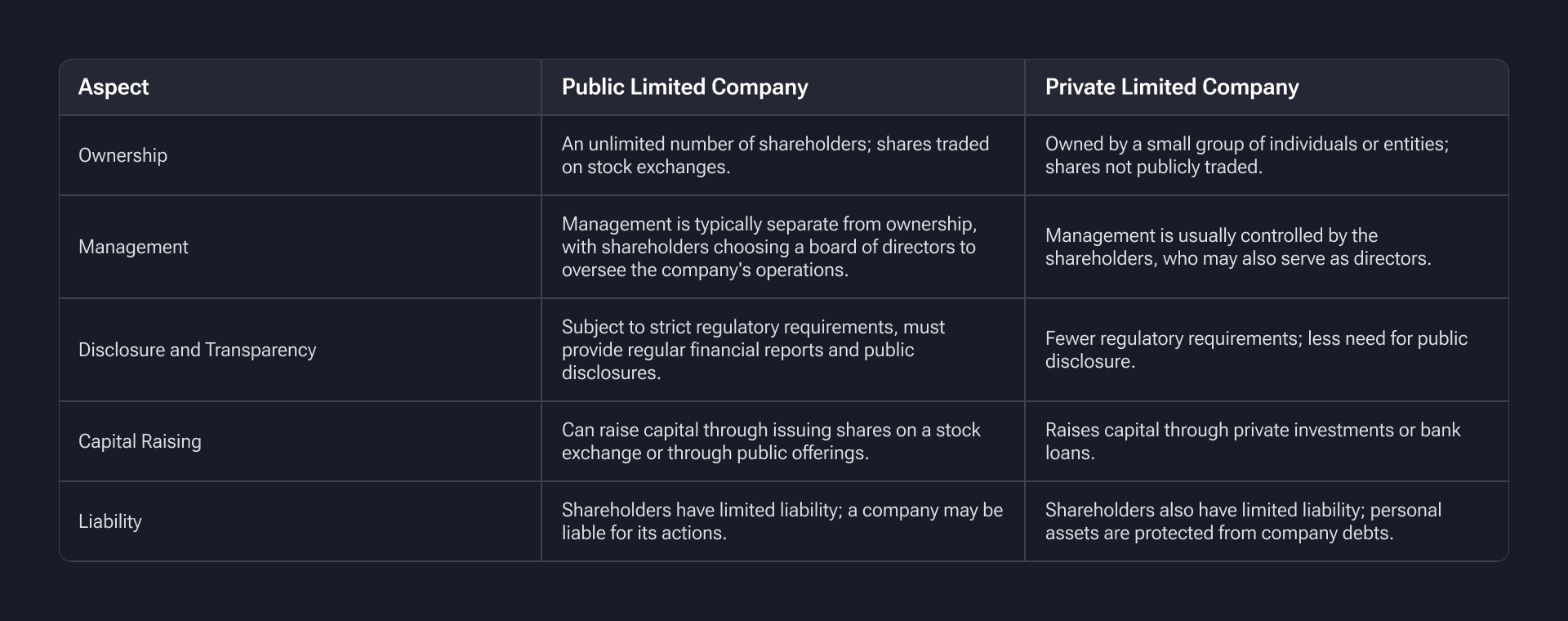
The primary difference between a public limited company and a private limited company lies in its ownership structure, management, and regulatory oversight. Here are some key distinctions between the two:
What is an unlisted public limited company?
An unlisted public company, also known as an unquoted public company, is a business that has issued equity shares not traded on any stock exchange.
There are several reasons why companies may choose to remain unlisted. Often, they are too small to meet the listing requirements of major exchanges, which typically include minimum annual earnings, a specific number of outstanding shares, and various listing fees. Cost savings are another important factor; a struggling company may prefer not to incur the significant expenses associated with going public.
Additionally, companies that have been delisted from major exchanges may end up as unquoted public companies. Delisting can occur voluntarily or due to failure to meet the exchange's listing standards.
However, unlisted public companies are still subject to more regulation than private companies. As public entities, they must comply with financial reporting requirements and may comply with the same takeover codes as listed companies. Furthermore, unquoted public companies may be restricted from actively marketing themselves to investors.
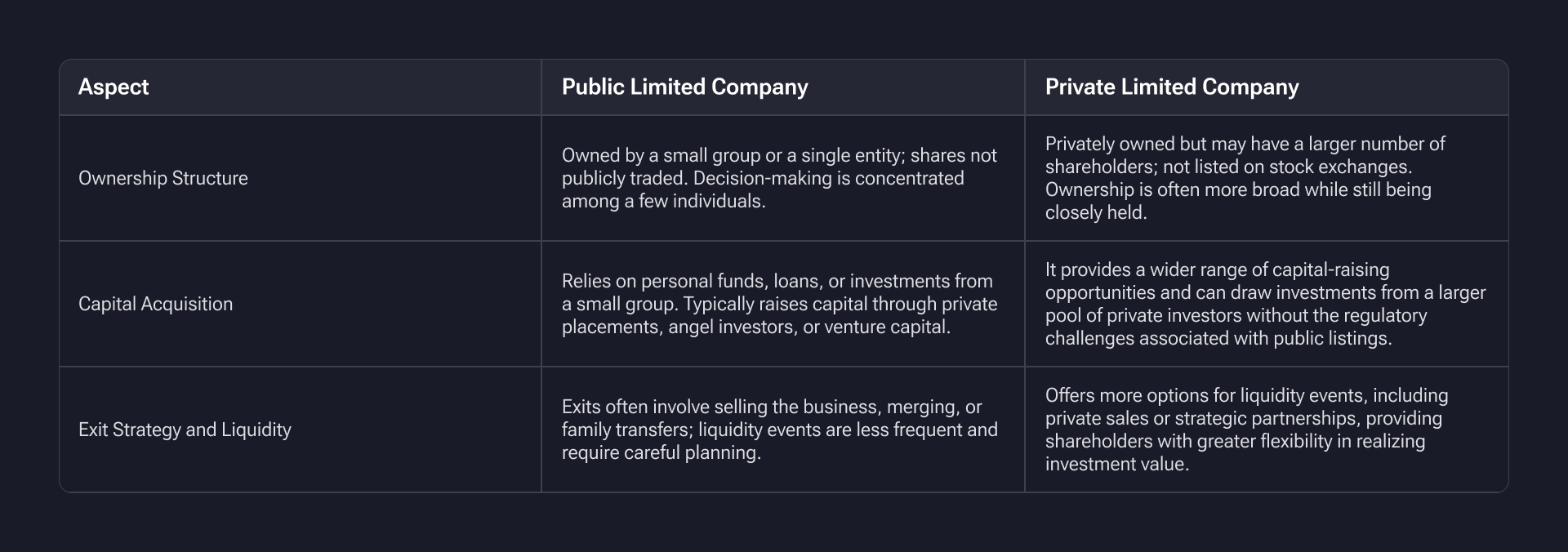
Unlisted Public Limited Company vs. Private Limited Company
When comparing unlisted public companies and private companies, there are three major differences:
Conclusion:
In conclusion, both private and unlisted public company structures offer distinct advantages and challenges, making the choice between them dependent on specific business goals, capital requirements, and risk tolerance levels. Private companies excel in agility and confidentiality, while unlisted public companies leverage a broader investor base and enhanced transparency. An understanding of these differences empowers entrepreneurs and investors to navigate the business landscape effectively, selecting the path that aligns with their aspirations for success.
*Disclaimer: This information is for private use only and does not constitute investment advice. Recipients must assess risks and seek advice from financial, legal, and tax professionals. Private market investments carry risks, and there are no guarantees of returns or capital protection. We are not liable for investment decisions.