What is 80C in Income Tax? A Simple Guide
Section 80C of the Income Tax Act enables you to lower your taxable income through specific investments and payments. You can claim deductions up to Rs. 1,50,000 under this section, which helps in lowering your tax burden. Here’s a breakdown of the various deductions you can claim under Section 80C and its related sub-sections:
80C Deduction List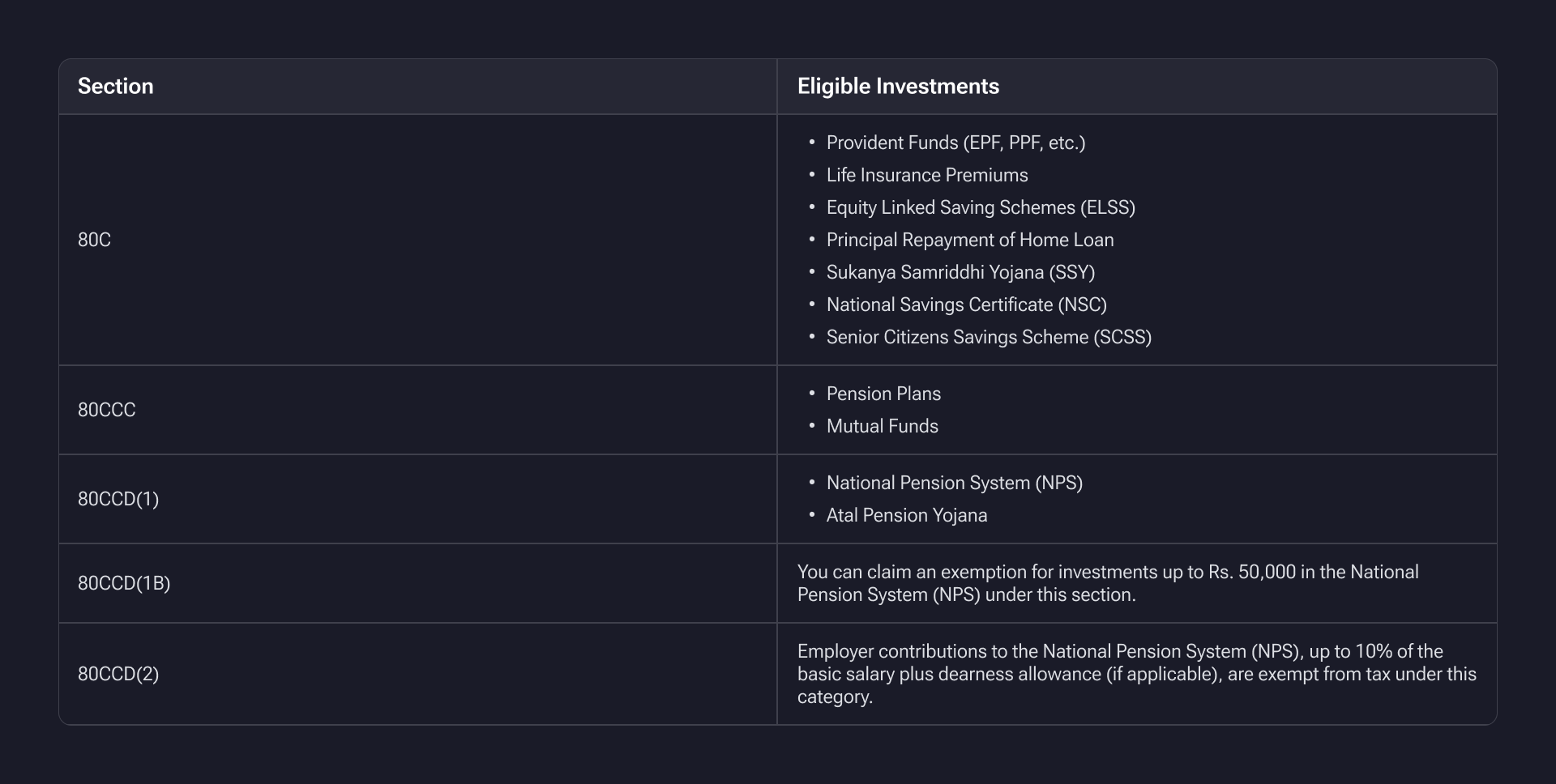
Eligibility for Section 80C Deductions:
Individuals and Hindu Undivided Families (HUFs) can claim deductions under Section 80C, which applies to both residents and non-resident Indians. However, companies and other corporate entities are not eligible for these deductions.
Investment Options Under Section 80C
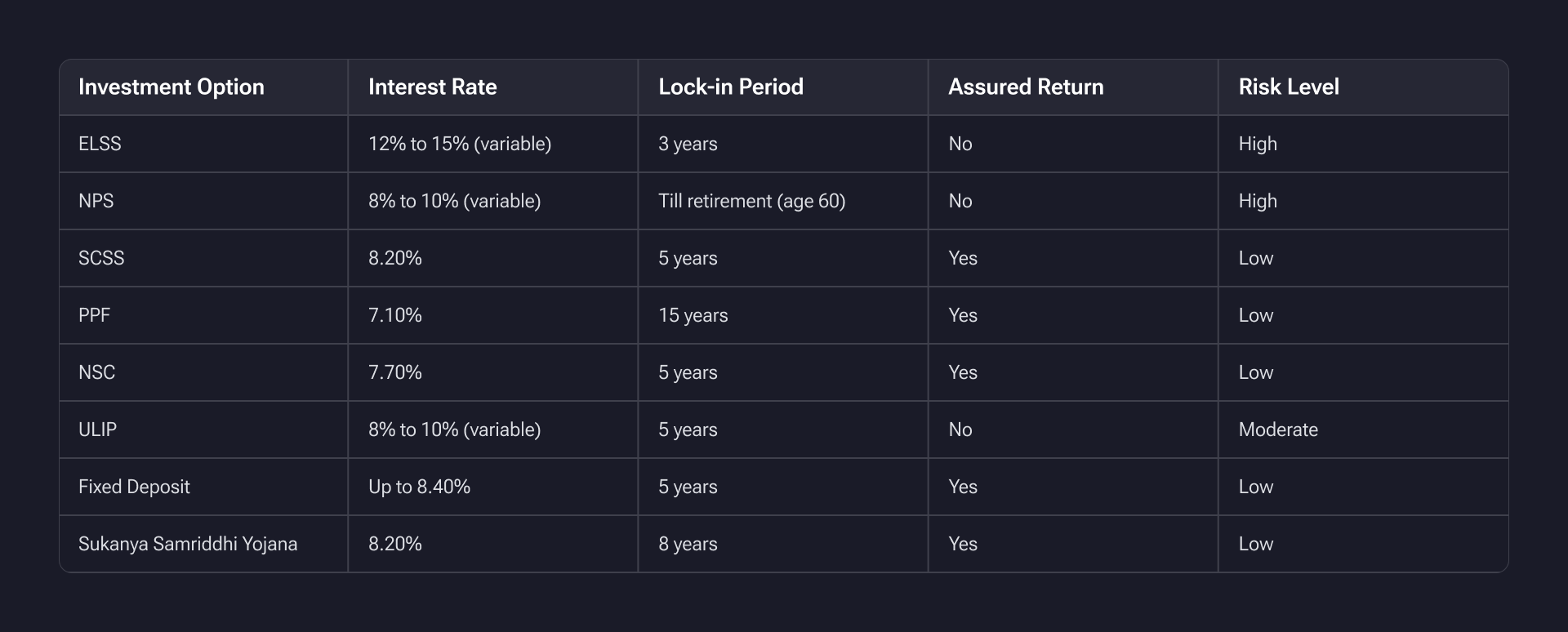
Here's a look at various investment options you can choose from:
Life Insurance Premiums: Premiums paid for life insurance policies are eligible for tax exemption under Section 80C. You can claim deductions for policies taken for yourself, spouse, or dependent children.
Public Provident Fund (PPF): Contributions to PPF are eligible for tax deduction under Section 80C. The maximum deposit limit is Rs. 1,50,000, and you can claim this entire amount as an exemption.
NABARD Rural Bonds: Investments in NABARD Rural Bonds are tax-exempt up to Rs. 1,50,000 under Section 80C.
Unit Linked Insurance Plans (ULIPs): ULIPs offer tax benefits under Section 80C and can help you save taxes up to Rs. 1,50,000.
National Savings Certificate (NSC): Interest on NSC is compounded semi-annually. Although there's no cap on the total amount you can invest, only up to Rs. 1,50,000 is eligible for tax exemption under Section 80C.
Tax Saving Fixed Deposits: These FDs have a lock-in period of 5 years and allow deductions up to Rs. 1,50,000 under Section 80C. Note that returns from these deposits are taxable.
Employee Provident Fund (EPF): Contributions to EPF, including any voluntary contributions, are eligible for tax exemptions under Section 80C.
Infrastructure Bonds: Investments in infrastructure bonds can be deducted up to Rs. 20,000, in addition to the Rs. 1,50,000 limit under Section 80C.
Equity-Linked Saving Scheme (ELSS): ELSS investments qualify for tax exemptions up to Rs. 1,50,000 under Section 80C and come with a mandatory 3-year lock-in period.
Senior Citizens Savings Scheme (SCSS): SCSS offers tax benefits under Section 80C for investments up to Rs. 1,50,000, with a minimum lock-in period of 5 years.
Principal Repayment of Home Loan: Under Section 80C, you can claim deductions for the principal repayment of a home loan, given that specific conditions are fulfilled, including the completion of property construction.
Stamp Duty and Registration Charges: Under Section 80C, tax exemptions can be claimed for stamp duty and registration charges on property transactions, but only in the year these charges are paid.
Sukanya Samriddhi Yojana: This scheme is designed for the education and marriage of a girl child. The interest earned and the investment amount qualify for tax deductions under Section 80C.
By planning your investments wisely and making use of these tax-saving options, you can effectively reduce your tax liability under Section 80C.
FAQs on Section 80C Deductions
1. Are taxpayers allowed to claim 80C deductions while filing Income Tax returns?
Yes, you can claim 80C deductions when filing your income tax return, but you must do this before the end of the Assessment Year.
2. What is the 80C tax benefit and how do I claim it?
Under Section 80C, you can save up to Rs. 1.5 lakh on your income tax. This section includes various investment options that offer both insurance and investment benefits. You can either invest the full Rs. 1.5 lakh in one option or spread it across multiple investments.
3. Can someone claim an 80C deduction on the life insurance premium paid to a private insurance aggregator?
Yes, you can claim a deduction under Section 80C for life insurance premiums paid to any insurance aggregator that is recognized by the Insurance Regulatory and Development Authority of India (IRDAI). This applies to both public and private sector insurance companies.
4. Are donations eligible for tax exemptions under Section 80C?
No, donations are not covered under Section 80C. Donations to certain institutions and funds have their own tax benefits under different sections of the Income Tax Act.
5. Can taxpayers invest in more than one investment policy and claim a Rs. 1.5 lakh exemption for each investment?
No, the maximum tax exemption you can claim under Section 80C is Rs. 1.5 lakh. This limit includes all investments made in tax-saving instruments under this section.