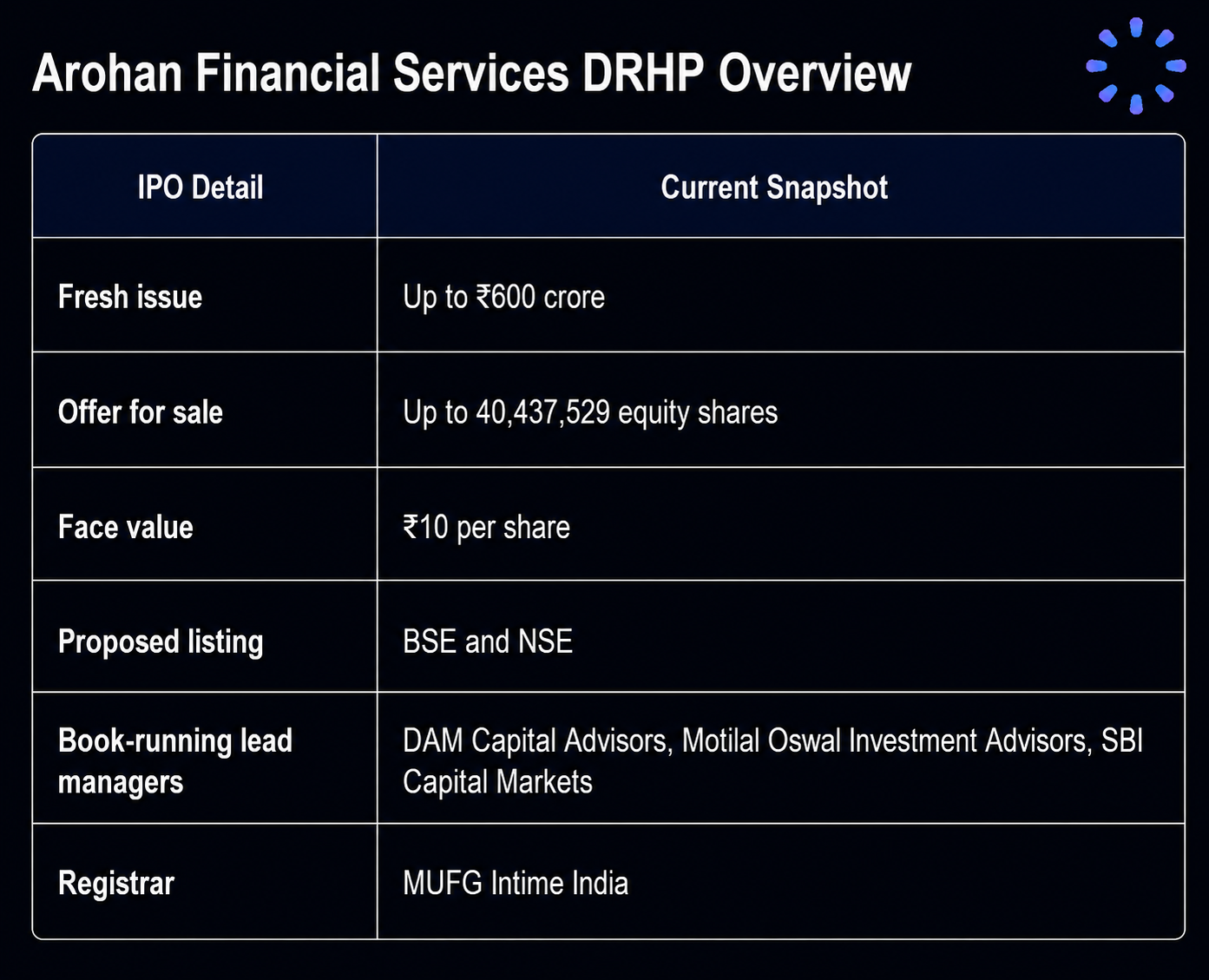
Arohan FY26 Results: What Changed After the RBI Restriction Was Lifted?
The biggest change in the Arohan FY26 results is that the company moved from regulatory disruption to visible recovery.
Arohan was under an RBI-mandated restriction on loan disbursements from October 2024 to January 2025. The restriction was later lifted, and FY26 appears to show the benefit of resumed lending, stronger collections, and improved operating momentum.
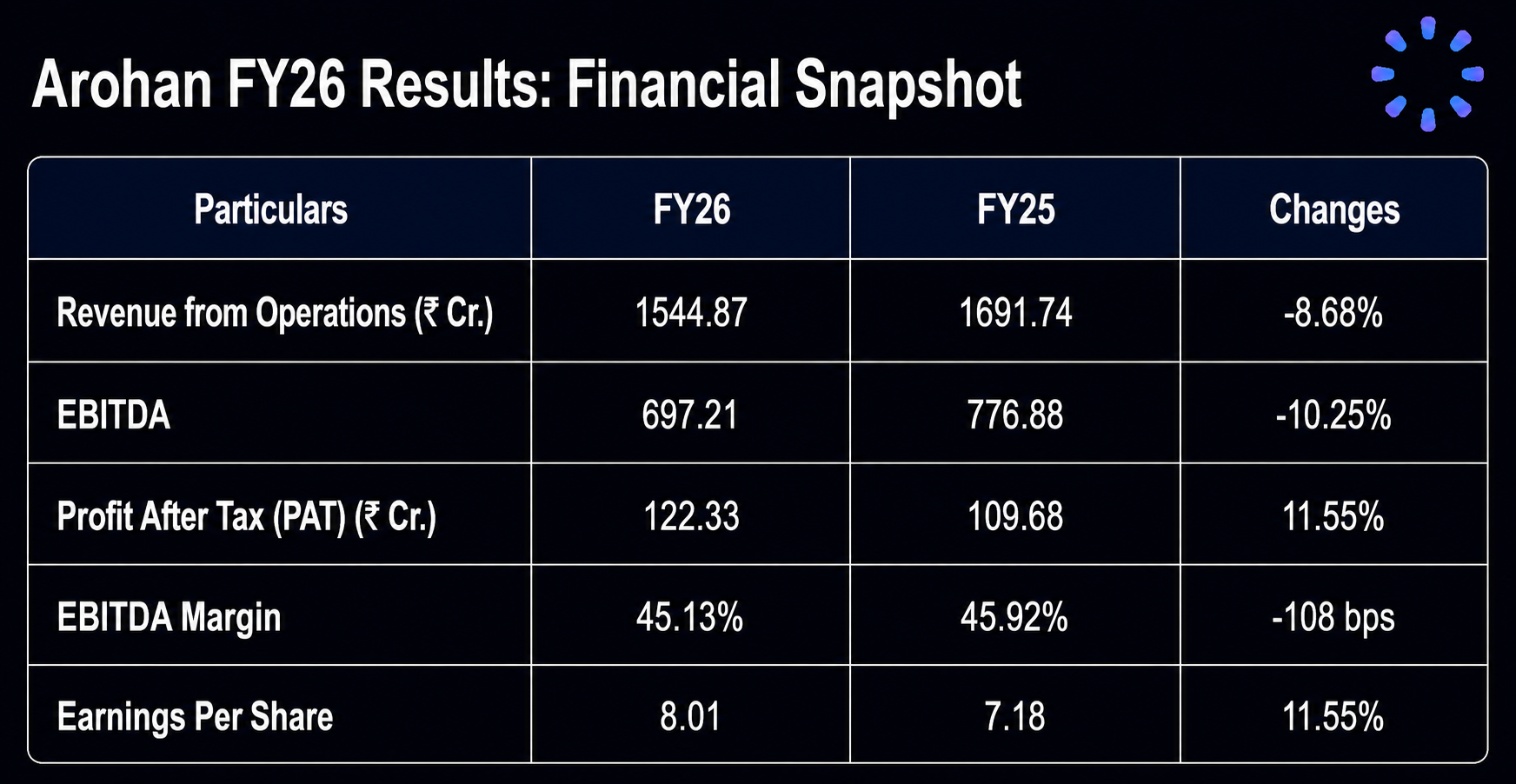
Arohan Financial earnings improved in FY26, but investors should separate recovery-driven gains from sustainable full-cycle performance. Microfinance lenders can look very strong during growth years and then face sudden stress when borrower cash flows weaken. That is why Arohan's credit cost trend after the IPO will matter as much as its FY26 profit number.
Why Asset Quality Is the Main Metric to Watch
For an NBFC-MFI, asset quality is not just one metric. It is the core of the business.
Arohan's Gross Stage 3 ratio reportedly improved to 1.07% in March 2026 from 2.85% in March 2025. That is a meaningful improvement because Stage 3 assets are loans where repayment stress has become visible under accounting norms.
The company also reported a provision coverage ratio of 83.25%. A higher provision coverage ratio means the lender has set aside a larger buffer against stressed loans. This can protect earnings if some borrowers default, though it does not remove credit risk.
Investors should track these numbers in the final offer document:
Gross Stage 3 and Net Stage 3 ratios: These show the size of stressed loans before and after provisions.
Portfolio at risk: This shows early repayment delays before they become formal bad loans.
Credit cost: This shows how much profit is being absorbed by loan-loss provisions.
Write-offs and recoveries: These show whether asset quality improvement is due to genuine borrower recovery or accounting clean-up.
State-wise stress: This matters because MFI problems often show up first in specific geographies.
The key point is simple: Arohan's IPO case becomes stronger if FY26 asset quality improvement continues for multiple quarters after listing.
Technology Strategy: AI, Cashless Disbursement and Risk Controls
Arohan's DRHP-related disclosures and management commentary point to a more technology-led operating model.
The company has adopted a "phygital" approach, combining on-ground borrower relationships with digital systems. This matters in microfinance because customer acquisition, credit assessment, collections, and fraud controls all depend on execution at scale.
Three technology areas stand out:
Arohi voice bot: Arohan has used a generative AI-driven voice bot with vernacular capabilities for hard-bucket recoveries. In plain English, this can help the company contact borrowers in local languages and manage overdue accounts more consistently.
NIRNAY credit scoring model: The company's internal credit model has been upgraded to version 2.0 to support risk-based pricing and credit decisions.
Core Banking System: A full-scale Core Banking System supports more standardised operations and 100% cashless disbursements.
AI in microfinance can improve efficiency, but it is not a replacement for credit discipline. The real test is whether these systems reduce over-lending, improve collection outcomes, and help the company identify borrower stress earlier.
Eastern India Focus: Strength and Concentration Risk
Arohan's strongest market is Eastern India, including states such as West Bengal, Bihar, Odisha, and Jharkhand. As of December 2025, 69.13% of AUM was concentrated in Eastern India.
That focus gives Arohan an edge. The company understands local borrower behaviour, has branch density in familiar markets, and operates in regions where formal credit demand remains high.
But concentration cuts both ways. If a few states face political disruption, floods, local collection resistance, or borrower over-indebtedness, the impact can show up quickly in asset quality. This is especially important because most microfinance loans are unsecured.
Investors should look for two things in the final IPO document:
Geographic strength is valuable only when it is paired with disciplined lending.
Arohan IPO Valuation: What Investors Should Check Before Applying
The Arohan IPO valuation cannot be assessed fully until the price band is announced. Still, investors can prepare a checklist before the final red herring prospectus is released.
For a microfinance IPO, the most useful valuation checks are:
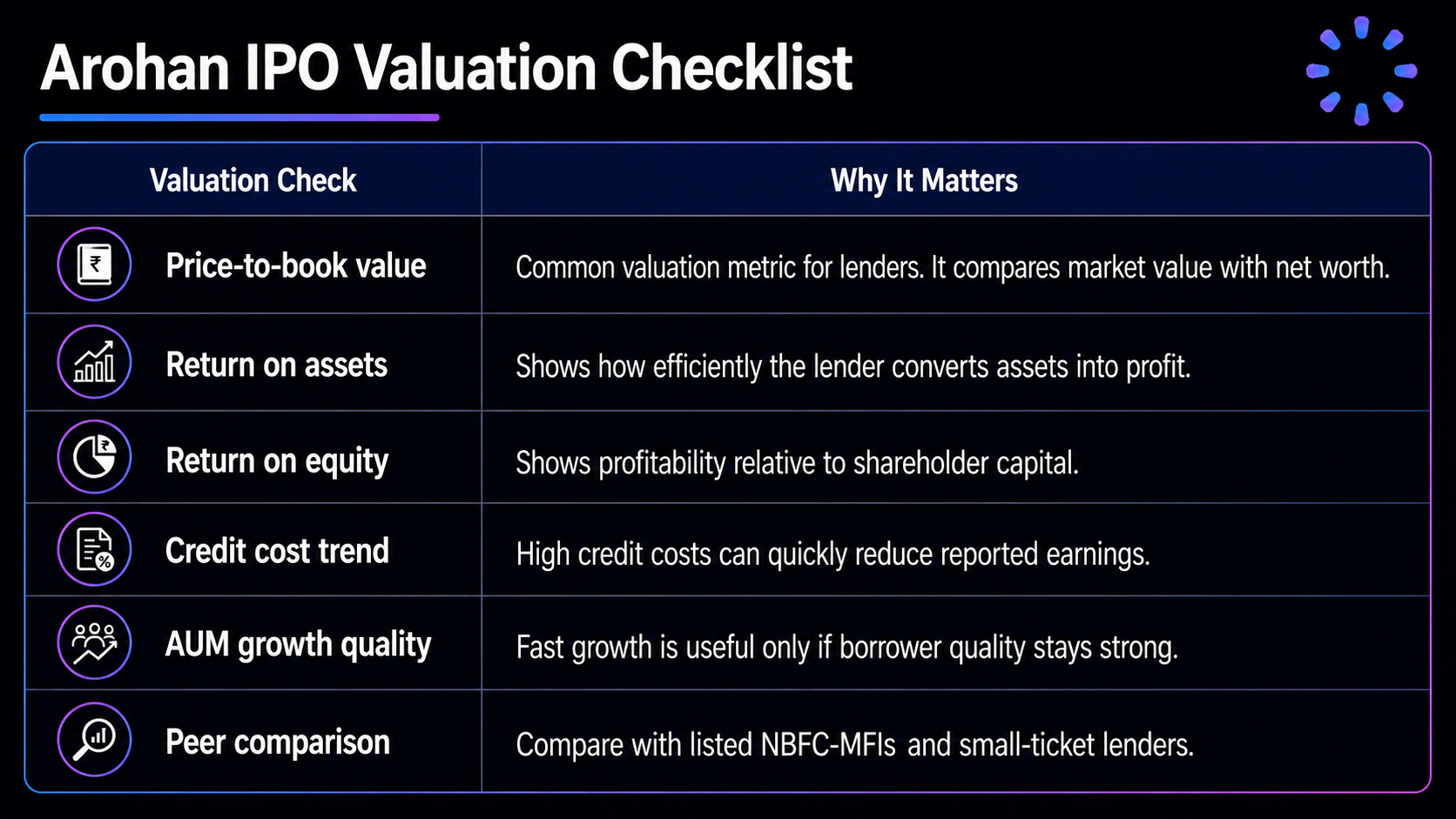
The fresh issue should improve Arohan's capital base. But if the IPO is priced too aggressively, investors may be paying upfront for growth that still needs to be proven through another credit cycle.
For more market education and company research, readers can explore the Precize blog.
Microfinance Investment Risks in Arohan IPO Analysis
Arohan's recovery is real enough to study, but the risks are also material.
Regulatory sensitivity: Arohan has already experienced an RBI restriction on loan disbursements. The issue was remediated, but it reminds investors that NBFC-MFIs operate under close regulatory oversight.
Unsecured loan book: Most microfinance loans are collateral-free. If borrower incomes weaken, recovery options are limited compared with secured lending.
Borrower over-indebtedness: Microfinance stress can build when borrowers take loans from multiple lenders. Investors should review Arohan's underwriting controls and bureau checks.
Geographic concentration: A large Eastern India exposure supports growth, but it also increases sensitivity to local disruptions.
OFS component: The offer for sale gives existing investors an exit route. This is normal in IPOs, but investors should check which shareholders are selling and how much stake they retain.
Valuation risk: A strong FY26 recovery does not automatically make the IPO attractive. The final price band will decide whether the risk-reward is reasonable.
These are the main microfinance investment risks investors should weigh before focusing on valuation alone.
Analyst View: Is Arohan IPO Well-Timed?
Arohan appears to be entering the IPO process after a reported operational recovery. Profit after tax improved, AUM expanded, asset quality strengthened, and capital adequacy remained comfortable based on the supplied FY26 figures.
The timing also makes sense from a sector perspective. Microfinance sentiment had been under pressure after asset-quality stress in 2024 and 2025. If investors believe the cycle has stabilised, Arohan may benefit from renewed interest in rural and semi-urban credit growth.
Still, the IPO should not be viewed only as a recovery trade. Investors need to see whether the company can grow without taking excessive credit risk. The best version of the Arohan story is a disciplined lender using technology, local market knowledge, and stronger capital to expand responsibly. The weaker version is a fast-growing unsecured lender exposed to the next MFI stress cycle.
That difference will become clearer when investors can review the final red herring prospectus, IPO price band, updated financials, and peer valuation.
Bottom Line
Arohan Financial Services has moved from regulatory pressure to a stronger FY26 recovery, making the IPO worth tracking for investors interested in NBFC-MFI stocks in India. The company brings scale, Eastern India depth, improving asset quality, and a more technology-led operating model.
But the investment case depends on valuation and credit discipline. Before applying, investors should read the final offer document, compare Arohan with listed peers, and check whether the IPO price leaves room for the risks that come with unsecured microfinance lending.
FAQs on Arohan Financial Services
1. What Is the Arohan IPO Size?
The Arohan IPO includes a fresh issue of up to ₹600 crore and an offer for sale of up to 40,437,529 equity shares, based on public DRHP-related reports. The final issue size in rupee terms will depend on the IPO price band.
2. What Will Arohan Use the Fresh Issue Proceeds For?
Arohan plans to use the fresh issue proceeds to strengthen its capital base and support future lending. This is important because NBFC-MFIs need capital to grow their loan book while meeting regulatory requirements.
3. How Did Arohan Perform in FY26?
Based on the source draft, Arohan reported FY26 profit after tax of ₹122.33 crore, AUM of about ₹7,006.99 crore, total income of ₹1,551.55 crore, and basic EPS of ₹8.02. These Arohan Financial earnings figures suggest a recovery from the prior stress cycle.
4. What Is the Biggest Risk for Arohan Investors?
The biggest risk is asset quality in an unsecured microfinance portfolio. Even after FY26 improvement, investors should track borrower repayment behaviour, credit costs, state-wise stress, and regulatory compliance.
If you are evaluating pre-IPO or unlisted financial services companies, you can screen unlisted companies on Precize and contact Precize Care if you need help understanding the process. Stay updated with Arohan Financial Services and other unlisted companies through our Precize Community. If this article was useful, you can share it with other investors through the Precize Referral Program.
Disclaimer: This content is for informational purposes only and does not constitute investment advice. Investing in unlisted shares involves risks including illiquidity and potential loss of capital. Consult a qualified financial advisor before making investment decisions. Precize is not a stock exchange and is not regulated by SEBI. Past performance does not guarantee future results. Returns on unlisted shares are not guaranteed. This is not a recommendation to buy or sell shares of Arohan Financial Services.