API Holdings FY26 Results: A Look at the Turnaround and Debt-Free Balance Sheet
API Holdings, the parent company behind the PharmEasy ecosystem, operates as an integrated digital healthcare platform spanning consumer healthcare, pharmaceutical distribution and diagnostics. Its business model combines online and offline capabilities to provide healthcare access across multiple parts of the value chain.
The company's FY26 performance shows signs of operational improvement, with revenue growth, a shift to positive EBITDA and a significant reduction in net losses. At the same time, API Holdings has taken a major balance-sheet step by repaying ₹1,050 crore of debt, while retaining control of Thyrocare.
API Holdings FY26 Financial Performance
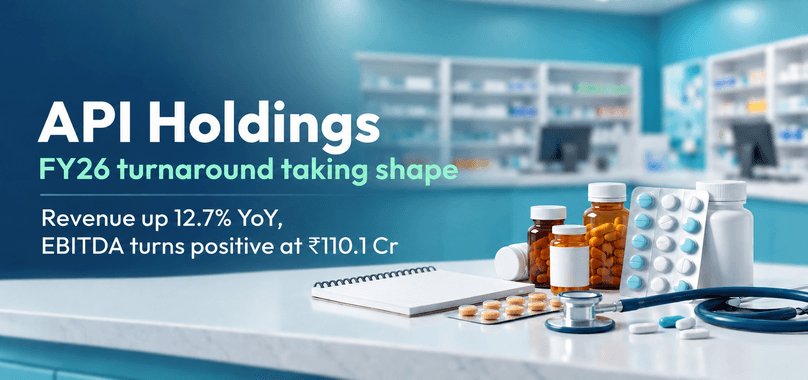
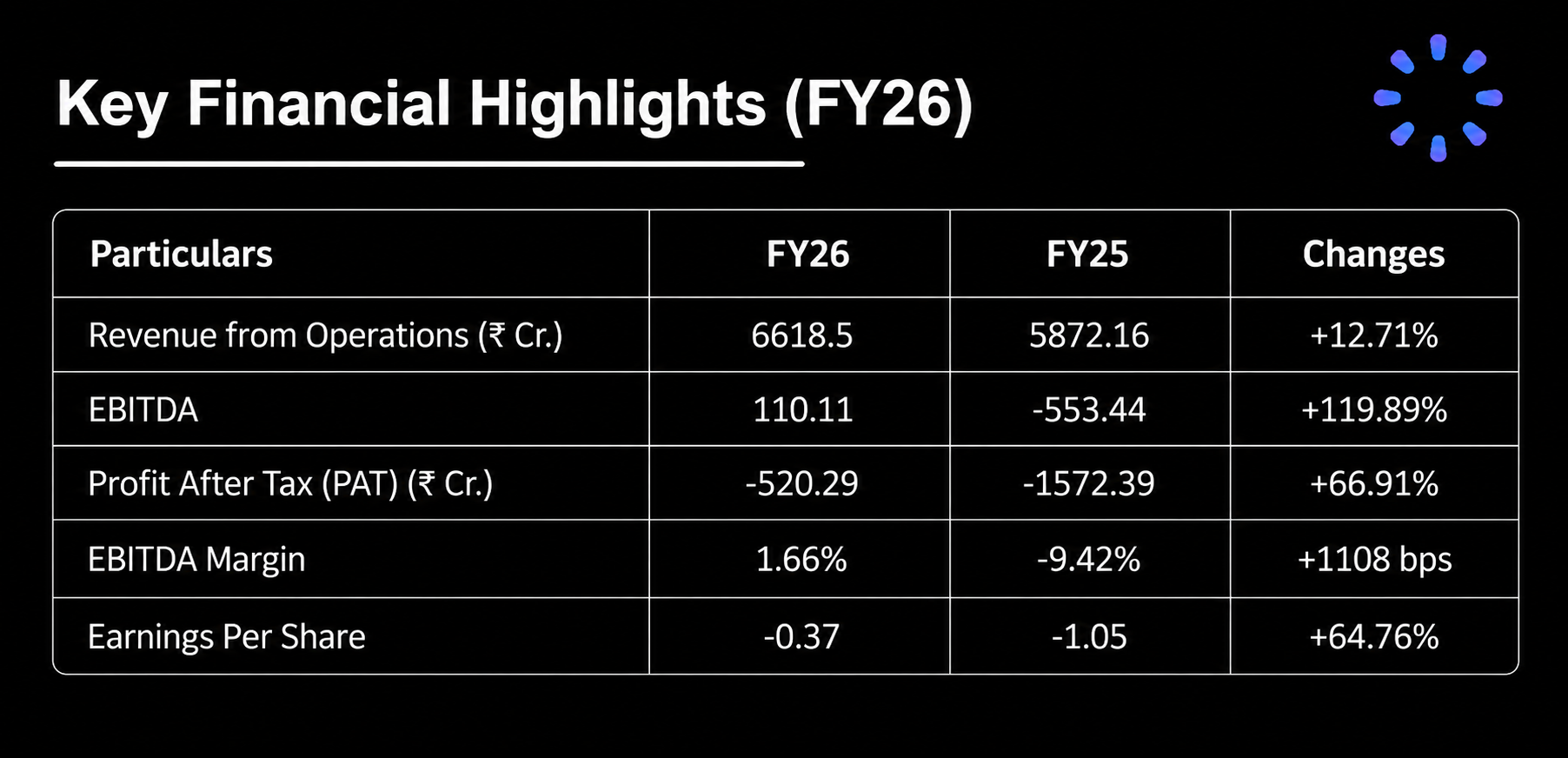
API Holdings recorded ₹6,618.50 crore in revenue from operations in FY26, compared with ₹5,872.16 crore in FY25, representing 12.71% YoY growth.
A notable improvement came at the EBITDA level. EBITDA moved from a loss of ₹553.44 crore in FY25 to positive ₹110.11 crore in FY26. Consequently, the EBITDA margin improved from -9.42% to 1.66%, an improvement of 1,108 basis points.
The company also reduced its net loss substantially. FY26 PAT stood at -₹520.29 crore, compared with a loss of ₹1,572.39 crore in FY25.
What Do the FY26 Numbers Indicate?
The financial performance points toward an early-stage operational turnaround. Revenue continued to grow while EBITDA moved into positive territory, indicating an improvement in operating performance.
However, the company remains loss-making at the PAT level, with a negative EBITDA margin still relatively thin at 1.66%. This makes the progression toward sustainable profitability an important factor to monitor.
API Holdings Becomes Debt-Free
One of the biggest developments highlighted in the FY26 update is API Holdings' debt repayment.
The company repaid ₹1,050 crore of debt through the sale of part of its Thyrocare stake along with internal accruals. Following the repayment, the company became debt-free, and the pledge on the remaining Thyrocare shares was released.
Importantly, API Holdings continues to retain 51.02% ownership of Thyrocare, allowing it to maintain control despite the stake sale.
The transaction reduced API Holdings' ownership in Thyrocare from 60.92% to 51.02%, representing a 9.9 percentage-point reduction in its stake.
Key Ratio Trends in FY26
API Holdings also showed improvement across several operating and return metrics.
Debt-to-Equity: Improved from 0.62x to 0.38x
ROA: Improved from -20.47% to -7.73%
ROE: Improved from -53.66% to -15.53%
Trade Receivables Turnover: Increased from 8.54x to 10.34x
Inventory Turnover: Remained broadly stable at 8.70x
Sales & Marketing Expense/Revenue: Improved from 1.05x to 0.93x
Current Ratio: Declined from 1.41x to 1.19x
These numbers suggest improvement in leverage and certain operating metrics, although profitability and returns remain negative.
What Investors Should Watch in API Holdings
1. Path to Sustainable Profitability
The company has moved to positive EBITDA, but FY26 PAT remained negative at ₹520.29 crore. Further improvement in margins and eventual movement toward positive net profit will remain important.
2. Benefits of a Debt-Free Balance Sheet
The repayment of ₹1,050 crore of debt significantly reduces financial leverage. With the debt burden removed, future operating performance can be assessed with a lower financing burden.
3. Thyrocare Ownership
API Holdings continues to hold 51.02% of Thyrocare after selling part of its stake. The transaction therefore helped reduce debt while retaining majority control of the diagnostics business.
API Holdings FY26: Key Takeaway
API Holdings' FY26 performance marks an important transition in its financial profile. Revenue grew 12.71%, EBITDA turned positive, net losses narrowed and ₹1,050 crore of debt was repaid.
At the same time, the company is not yet profitable at the PAT level, and its 1.66% EBITDA margin remains relatively low. For investors tracking API Holdings unlisted shares, the key factors to monitor are therefore the pace of margin expansion, reduction in net losses and the company's ability to sustain growth following its move to a debt-free balance sheet.
To compare companies, documents, and availability explore unlisted companies on Precize. For ongoing IPO and private-market updates, browse the Precize blog. Stay updated with unlisted companies through our Precize Community. If this article was useful, you can share it with other investors through the Precize Referral Program.