India's Healthcare Sector Outlook in 2026
Healthcare sector remains one of India's most important long-term growth themes. It is being shaped by four forces at once:
Rising healthcare spending from both public and private sources.
Faster adoption of diagnostics, insurance, and organized hospital care.
Strong pharmaceutical manufacturing and export momentum under India's global generic medicines role.
Digital health, MedTech, and preventive wellness models expanding beyond traditional care delivery.
Official and industry data supports the scale of this opportunity. A Press Information Bureau document on India's pharmaceuticals sector notes that India ranks 3rd globally in pharmaceutical production by volume, exports medicines to 191 countries, and recorded pharmaceutical exports of about USD 30.5 billion in FY25. The same source cites a domestic pharmaceutical market valued near USD 60 billion, with projections toward USD 130 billion by 2030.
On the broader healthcare side, IBEF's healthcare industry overview highlights sustained government spending, infrastructure expansion, and insurance-linked access programs. Ayushman Bharat and related digital health initiatives continue to push utilization across hospitals, diagnostics, and outpatient care.
That backdrop matters for unlisted investors because India's healthcare growth is no longer limited to a few listed giants. It is spreading across:
Branded and API-focused pharmaceutical manufacturers.
Multi-specialty and regional hospital networks.
Contract research and bioequivalence testing.
Medical devices and hospital equipment.
Digital pharmacy, diagnostics, telemedicine, and preventive wellness platforms.
Healthcare education and medical simulation.
This is why healthcare pre-IPO shares are becoming a distinct research theme within India's broader unlisted market.
Top Healthcare Unlisted Shares in India to Watch in 2026
The Healthcare & Pharmaceuticals sector on Precize includes companies such as API Holdings (PharmEasy), Philips India, Veeda Clinical Research, Anglo French Drugs & Industries, Lakeshore Hospital & Research Centre, and Maverick Simulation Solutions.
Important: The companies below are discussed as sector examples based on market interest and business positioning. This is not a ranked buy list. Unlisted share prices are indicative, can change quickly, and should always be verified before any transaction.
API Holdings (PharmEasy)
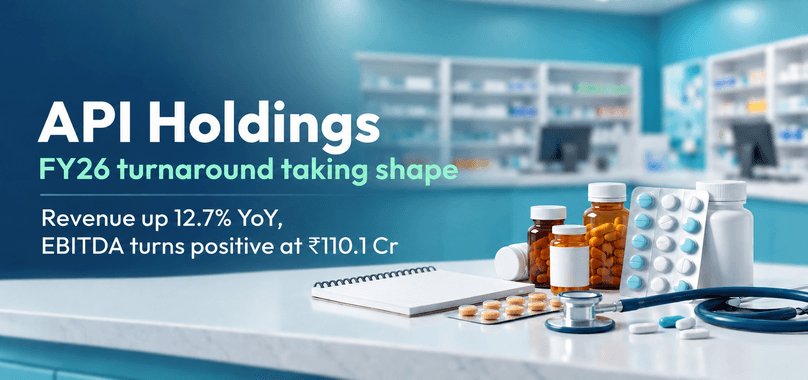
API Holdings is the parent company behind PharmEasy, one of India's best-known digital healthcare platforms. The business spans online pharmacy, diagnostics, telemedicine, healthcare logistics, and B2B pharmaceutical distribution. Its acquisition of Thyrocare added a major diagnostics layer to the platform.
Why investors track it
Leading digital healthcare platform with strong consumer brand recognition.
Multi-vertical model across pharmacy, diagnostics, and care delivery.
Large addressable market as online health adoption grows.
Frequently discussed as a potential IPO candidate, though listing timelines remain uncertain.
What to verify
Segment profitability across B2C, B2B, and diagnostics.
Working capital, finance costs, and path to sustainable EBITDA.
Competitive pressure from other e-pharmacy and diagnostics players.
Any IPO-related commentary should be treated as market speculation until supported by official filings.
For deeper context on the group's recent corporate actions, see our analysis of the API Holdings and Docon Technologies amalgamation.
Philips India
Philips India operates in medical technology rather than drug manufacturing. Its portfolio includes MRI systems, CT scanners, ultrasound machines, patient monitoring systems, ICU equipment, connected care solutions, and healthcare informatics used by hospitals and diagnostic centres.
Why investors track it
Global MedTech expertise with strong hospital relationships.
Direct exposure to India's hospital infrastructure expansion.
Beneficiary of rising demand for advanced diagnostics and monitoring equipment.
Represents the equipment side of healthcare rather than services or formulations.
What to verify
India revenue mix versus global parent dependency.
Hospital capex cycles and import or localization dynamics.
Competition from other imaging and device manufacturers.
Service and aftermarket revenue contribution.
Veeda Clinical Research
Veeda Clinical Research is a contract research organization (CRO) that supports pharmaceutical and biotech companies through clinical trials, bioequivalence studies, bioanalytical testing, regulatory services, and early-stage drug development.
Why investors track it
Exposure to global pharma outsourcing trends.
High entry barriers due to regulatory and scientific expertise.
Export-oriented business model with international client base.
Less tied to domestic drug pricing politics than pure formulation companies.
What to verify
Client concentration and repeat business from global sponsors.
Order book visibility and trial pipeline.
Regulatory compliance track record.
Margin profile across service lines.
Anglo French Drugs & Industries
Anglo French Drugs & Industries, established in 1923, is among India's older pharmaceutical companies. It manufactures branded prescription medicines across cardiology, dermatology, ophthalmology, anti-infectives, and nutritional products.
Why investors track it
Long operating history and established domestic brand.
Diversified therapeutic portfolio.
Strong distribution relationships built over decades.
Represents legacy branded pharma rather than platform-led healthcare.
What to verify
Revenue growth and margin trends in core therapy areas.
Dependence on legacy brands versus new product launches.
Distribution reach and field-force productivity.
Any export or contract manufacturing contribution.
Lakeshore Hospital & Research Centre
Lakeshore Hospital & Research Centre is a leading tertiary care hospital in Kerala known for complex procedures including organ transplantation, robotic surgery, gastroenterology, cardiology, nephrology, and oncology. Kerala's medical tourism profile adds another demand layer.
Why investors track it
Advanced specialty care platform.
Potential beneficiary of medical tourism and high-quality regional healthcare demand.
Represents premium hospital infrastructure in the unlisted market.
What to verify
High-acuity procedure volumes and specialty profitability.
Medical tourism contribution.
Debt levels tied to advanced equipment and infrastructure.
Competition from other tertiary hospitals in South India.
Maverick Simulation Solutions
Maverick Simulation Solutions operates in medical simulation and healthcare training. It develops simulation-based learning systems for hospitals, medical colleges, nursing institutions, and healthcare professionals.
Why investors track it
Niche exposure to medical education and clinical skills training.
Beneficiary of rising focus on patient safety and simulation-led learning.
Very different risk profile from pharma or hospital operators.
What to verify
Customer mix between institutions and recurring service contracts.
Product versus project revenue.
Competition from global simulation brands.
Adoption cycles in medical colleges and teaching hospitals.
Why Investors Monitor Healthcare Pre-IPO Companies
Healthcare remains one of the more defensive long-term sectors because demand for medicines, diagnostics, and hospital care tends to persist even when other parts of the economy slow down. For investors exploring private markets, healthcare unlisted shares in India can offer exposure before companies access public capital.
Some of the main reasons investors research these businesses include:
Structural growth. India's healthcare market is expanding on the back of demographics, chronic disease burden, insurance coverage, and infrastructure investment.
Diversified themes within one sector. Pharma, hospitals, diagnostics, MedTech, healthtech, CROs, and wellness businesses behave differently. That allows theme-based research within healthcare itself.
Innovation-led models. Digital health, MedTech, diagnostics, and preventive care platforms are changing how care is delivered and paid for.
Potential IPO upside. Some investors track private healthcare companies for possible listing gains. That outcome is never guaranteed, and private-market prices can move ahead of fundamentals when a theme gets popular.
Past performance does not guarantee future results. Returns on unlisted shares are not guaranteed.
Risks Investors Should Consider
Healthcare may feel defensive at the sector level, but individual unlisted companies can still carry significant company-specific and industry-specific risk.
Liquidity Risk
Unlisted shares are harder to buy and sell than listed stocks. You may need a longer holding period, accept wider price gaps, and wait for a matching buyer when you want to exit.
Regulatory and Pricing Pressure
Pharmaceutical companies face drug price controls, approval delays, and compliance requirements. Hospitals and healthtech platforms are exposed to changing rules around telemedicine, diagnostics, and online pharmacy operations.
Execution and Capital Intensity
Hospital expansion, API capacity additions, platform growth, and MedTech distribution all require capital and strong execution. A good sector theme does not remove project or operating risk.
Information and Valuation Risk
Unlisted companies may disclose less information than listed peers. Pre-IPO valuations can also move sharply based on IPO rumors, funding conditions, or sector popularity. If you are new to this market, review common questions in Precize FAQs before committing capital.
How to Evaluate Healthcare Unlisted Shares
Before investing in pharma, hospital, or healthtech unlisted companies, use a structured checklist.
1. Map the Business to the Right Sub-Segment
Ask whether the company is a drug maker, API manufacturer, hospital operator, CRO, MedTech supplier, or digital platform. Each model has different margins, regulation, and growth drivers.
2. Check Revenue Quality
Look for recurring demand, export contracts, insurance-linked volumes, subscription revenue, or repeat prescriptions. One-off spikes can make short-term growth look stronger than it really is.
3. Review Regulatory and Compliance Positioning
In pharma and healthcare services, compliance is a competitive advantage. Weak quality systems or approval delays can hurt credibility quickly.
4. Study the Balance Sheet
Check debt levels, working capital needs, promoter holding, and whether the business can fund growth without constant dilution or expensive borrowing. Hospital and manufacturing businesses can be especially capital-heavy.
5. Assess IPO Visibility Carefully
IPO interest can support private-market demand, but rumors are not filings. Treat listing timelines as uncertain unless supported by official exchange or regulatory documents. For general pre-IPO process context, browse Precize blog explainers rather than relying on social media speculation.
6. Compare Valuation to Business Quality
A popular healthcare theme can push private-market prices up quickly. Ask whether the current valuation already prices in several years of growth. If you cannot verify financials or cash flows, treat valuation as a major unknown.
How to Research Healthcare Pre-IPO Opportunities on Precize
If you want to move from theme-level reading to actual company research, use a platform workflow rather than headline chasing.
Open the Healthcare & Pharmaceuticals sector page to see which unlisted companies fall under the theme.
Use the Precize screener to compare availability, price references, and company profiles.
Read research materials, financial disclosures, and sector context before discussing lot size or transfer terms.
Confirm demat transfer, seller verification, and holding-period implications before placing an order.
Treat any investment as illiquid and size the position accordingly.
You can start exploring from ₹10,000 on Precize, but a low entry amount should not be confused with low risk.
If you need help with platform access, documentation, or order support, contact Precize Care.
Healthcare Unlisted Shares Outlook for 2026
India's healthcare sector is entering a new phase of growth, supported by demographics, insurance expansion, pharmaceutical exports, hospital infrastructure, and technology-led care models.
For private-market investors, 2026 is less about finding one perfect name and more about identifying which healthcare business models are best placed to compound through the next phase of India's healthcare buildout.
That likely keeps healthcare unlisted shares in India on the watchlist for investors tracking:
Branded pharma and API manufacturing.
Multi-specialty and regional hospital networks.
Digital pharmacy, diagnostics, and telemedicine platforms.
MedTech and medical simulation businesses.
Clinical research and export-linked healthcare services.
The opportunity is real. So is the need for patience, liquidity planning, and disciplined research.
Final Thoughts
India's healthcare sector offers one of the broadest private-market opportunity sets in the country. You can find legacy pharmaceutical manufacturers, regional hospital operators, global MedTech names, digital health platforms, CROs, and niche healthcare training businesses within the same theme.
Companies such as API Holdings, Cult.fit Healthcare, Philips India, Veeda Clinical Research, Arch Pharmalabs, Anglo French Drugs, Martin and Harris Laboratories, Deys Medical Stores, East India Pharmaceutical Works, Down Town Hospital, Lakeshore Hospital, Sri Anu Hospitals, and Maverick Simulation Solutions reflect that diversity. They are not interchangeable. Each sits on a different part of the healthcare value chain with different risks and return drivers.
As healthcare spending, insurance coverage, and technology adoption continue to expand, healthcare unlisted shares in India may remain an important long-term research theme in the pre-IPO market. The investors who do best will likely be the ones who combine sector enthusiasm with company-level research, realistic liquidity expectations, and clear risk limits.
Ready to explore opportunities? Use the Precize screener to review healthcare unlisted companies, compare research, and start building a watchlist with better context. Stay updated with unlisted companies through our Precize Community. If this article was useful, you can share it with other investors through the Precize Referral Program.
Frequently Asked Questions
What are healthcare unlisted shares?
Healthcare unlisted shares are equity stakes in private companies operating in pharmaceuticals, hospitals, diagnostics, medical devices, healthtech, clinical research, and related healthcare segments. They are not listed on stock exchanges and usually trade through private-market platforms or negotiated transactions.
Which healthcare companies are available on Precize?
The Healthcare & Pharmaceuticals sector on Precize includes companies such as API Holdings (PharmEasy), Cult.fit Healthcare, Philips India, Veeda Clinical Research, Arch Pharmalabs, Anglo French Drugs & Industries, Martin and Harris Laboratories, Deys Medical Stores, East India Pharmaceutical Works, Down Town Hospital, Lakeshore Hospital & Research Centre, Sri Anu Hospitals, and Maverick Simulation Solutions. Availability and pricing can change over time.
Why are pharma and MedTech pre-IPO companies attracting investor interest?
These companies operate in sectors supported by long-term healthcare demand, rising spending, export growth, and technology adoption. Many investors also monitor them for potential future IPOs, although listing timelines are never guaranteed.
Are healthcare unlisted shares suitable for long-term investing?
Healthcare is generally considered a long-term growth sector because demand for medicines, diagnostics, and hospital care tends to remain steady. Even so, investors should evaluate each company's financial performance, business model, valuation, liquidity, and risks before investing.
How can I invest in healthcare unlisted shares?
Investors can explore healthcare opportunities, research reports, and available companies through the Precize screener and Healthcare & Pharmaceuticals sector page after completing KYC and reviewing transfer terms.
Where can I track more healthcare and pre-IPO market updates?
You can monitor sector companies on Precize Healthcare & Pharmaceuticals and follow broader private-market explainers on the Precize blog.
Disclaimer: This article is for informational purposes only and should not be considered as investment advice. Investing in unlisted shares carries risks including illiquidity and potential loss of capital. Please consult with a qualified financial advisor before making investment decisions. Precize is not a stock exchange and is not authorized by any capital markets regulator.