Why Investors Are Tracking SBI Mutual Fund Unlisted Shares
1) Category Leadership
SBI Fund Management already operates at very large scale. In asset management, scale supports distribution, brand trust, and operating leverage.
2) Strong Distribution Moat
The SBI ecosystem gives the company a unique edge in customer reach across metros, tier-II cities, and tier-III markets.
3) Structural Growth in Mutual Funds
India's household savings are steadily shifting from traditional savings products to market-linked products. SIP growth and wider equity participation continue to support the AMC industry.
4) Diversified Product Mix
Revenue is not tied to one narrow product line. The platform covers active, passive, and advisory-led business lines, which can improve resilience through cycles.
5) Asset-Light Model
AMC businesses generally scale better than balance-sheet-heavy financial businesses. As AUM grows, profitability can improve faster than fixed operating costs.
Business Model in Simple Terms
SBI Fund Management mainly earns recurring fees linked to AUM and product mix. Core fee lines include:
In practical terms: if long-term AUM grows with healthy net inflows and stable margins, earnings can compound over time.
Growth Drivers for SBI Fund Management IPO 2026 Narrative
Key long-term factors supporting the business include:
Rising SIP contributions.
Greater mutual fund penetration across India.
Expansion in underpenetrated cities.
Higher financial awareness among retail investors.
Growing use of digital investment platforms.
Broader demand for retirement and wealth products.
These trends do not remove market risk, but they strengthen the medium-term demand backdrop for high-quality AMCs.
What DRHP Filing Means for Pre-IPO Investors
The DRHP is useful because it gives better visibility before pricing:
Detailed financial disclosures.
Risk factors and litigation notes.
Shareholding structure.
Governance framework.
Offer structure and selling shareholder details.
Milestones to Watch Next
SEBI observations.
Updated prospectus and RHP filing.
IPO price band announcement.
Issue opening and allotment timeline.
Sentiment in the unlisted market usually responds to these milestones, especially near pricing and final launch dates.
Key Risks You Should Not Ignore
Even strong AMCs carry real risks. For SBI Fund Management unlisted share price 2026, the main watchpoints are:
Market Risk
Prolonged equity market corrections can affect AUM and fee income momentum.
Regulatory Risk
SEBI policy changes on expense ratios, disclosures, and product structures can influence profitability.
Competitive Risk
Listed peers already compete aggressively for flows, distributors, and product shelf share.
Valuation and Liquidity Risk
Unlisted shares can trade at sharp premiums or discounts. Lower liquidity can create wider bid-ask spreads and slower exits.
SBI Fund Management vs Listed AMC Peers
Once listed, SBI Fund Management will be compared with major listed AMC names like:
The core investor question will be valuation versus growth quality, not just headline size or brand strength.
Should You Buy SBI Fund Management Unlisted Shares Before IPO?
SBI Fund Management has many strengths:
Market leadership.
Strong parentage (SBI plus Amundi).
Recurring and scalable fee model.
Clear IPO progression after DRHP filing.
But pre-IPO decisions should still be disciplined. Before investing, evaluate:
Current unlisted valuation versus listed peers.
Liquidity conditions in the unlisted market.
Final IPO terms and potential listing valuation.
Your own risk capacity and portfolio allocation.
If you are building a broader unlisted watchlist, start with the Precize investment platform, use the Precize unlisted shares screener, browse educational updates on the Precize blog, and review common process queries in Precize FAQs.
Conclusion
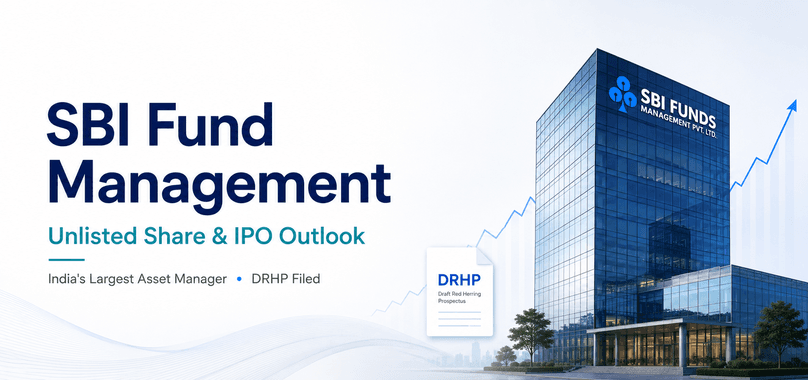
SBI Fund Management has crossed an important milestone with DRHP filing, and that makes SBI Fund Management Unlisted Share Price 2026 one of the most watched pre-IPO themes in India's financial services space.
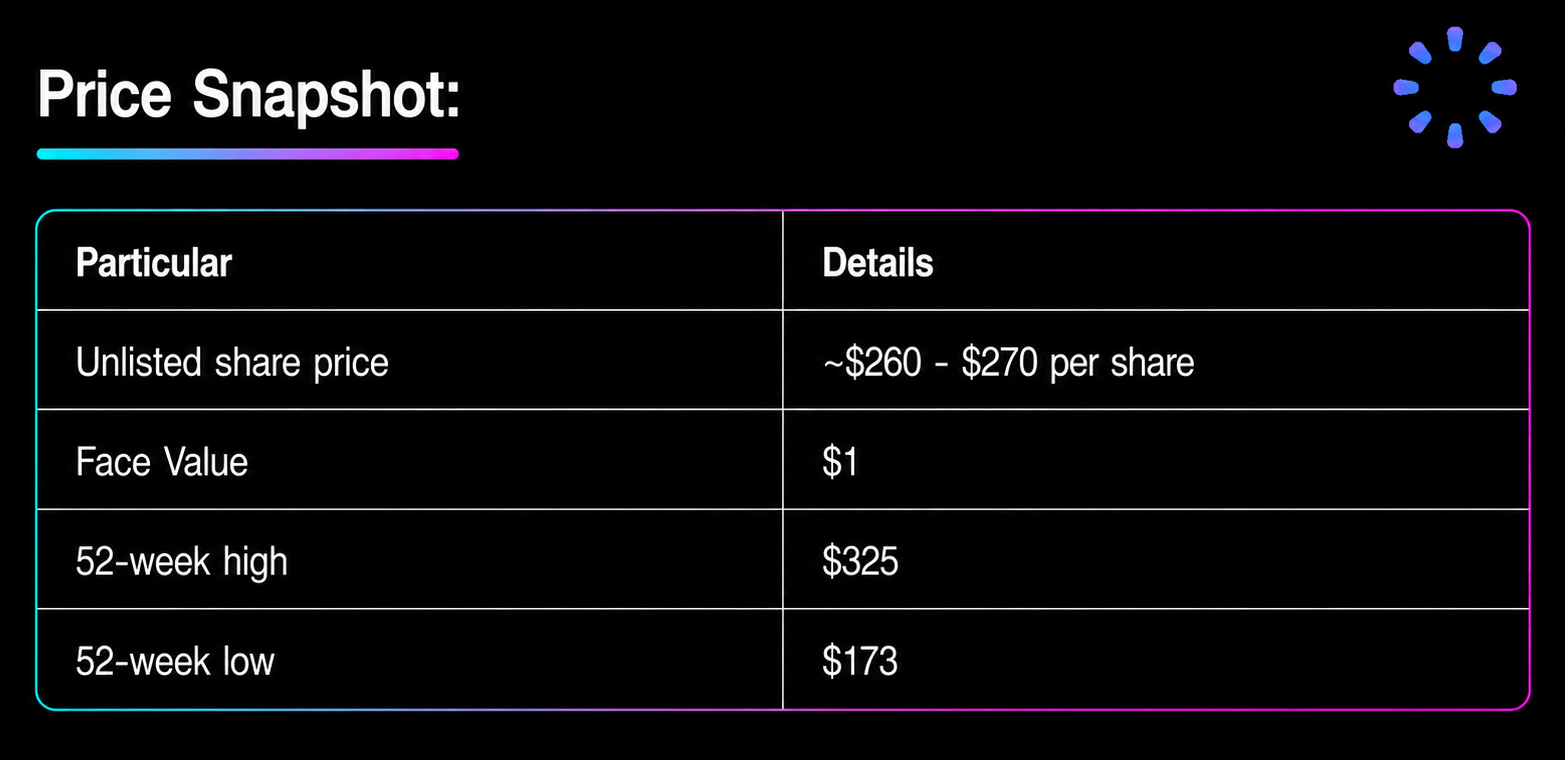
At the current reference level of ₹766 per share, interest is likely to stay high as the IPO process advances. The opportunity is compelling, but investors should stay valuation-aware, track official updates, and avoid making decisions only on IPO buzz.
For platform-related help, you can always reach Precize Care. Stay updated with unlisted companies through our Precize Community. If this article was useful, you can share it with other investors through the Precize Referral Program.
Frequently Asked Questions (FAQs)
1. What is the latest SBI Fund Management unlisted share price in 2026?
As of June 2026, the tracked unlisted share price is trading around ~₹870 -₹880 per share on Precize. Prices can change based on market liquidity and deal flow.
2. Has SBI Fund Management filed DRHP for IPO?
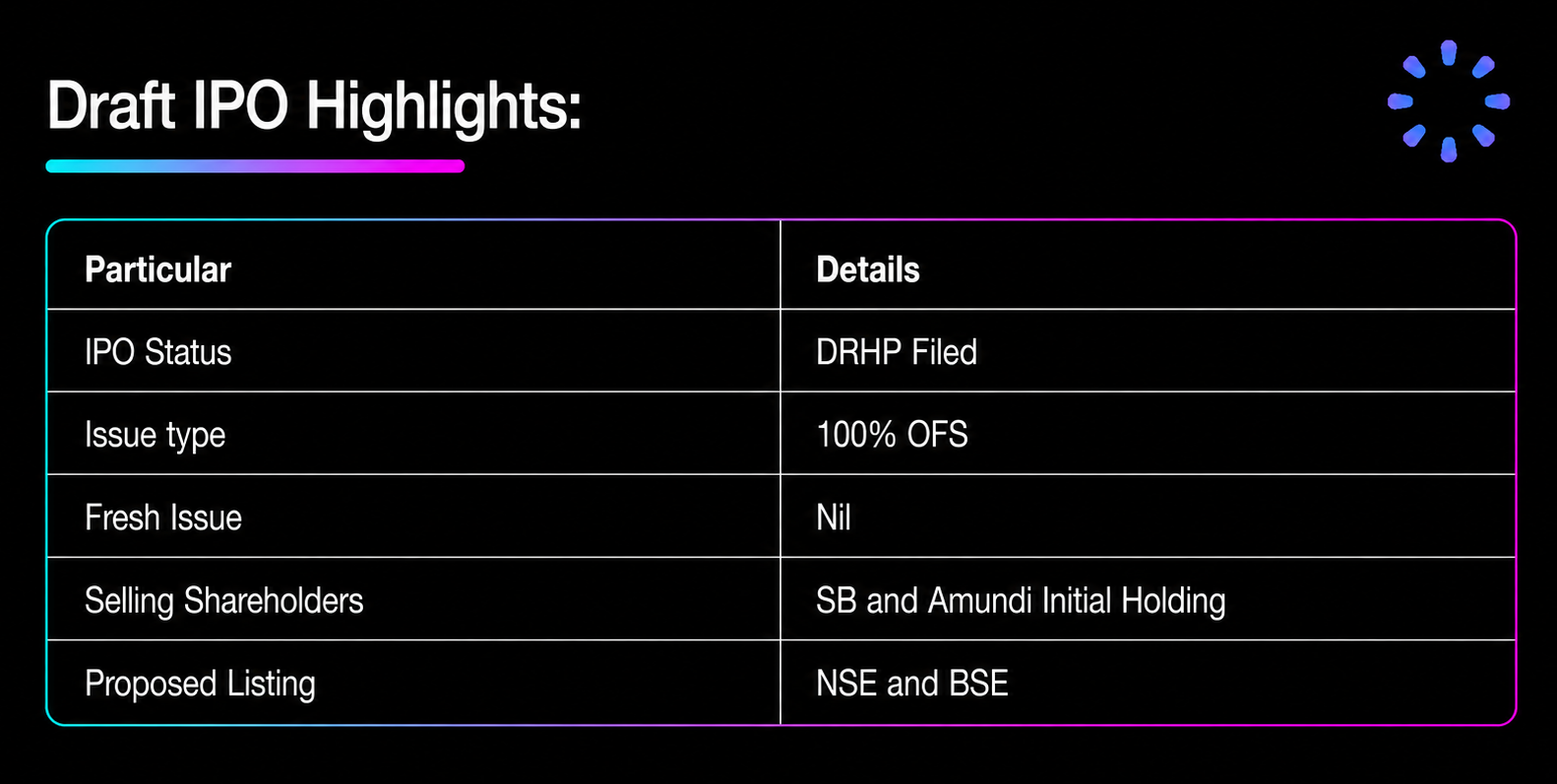
Yes. SBI Fund Management has filed its DRHP with SEBI, which is a formal step in the IPO process.
Is SBI Mutual Fund IPO expected in 2026?
The filing has improved visibility for a 2026 IPO path, but final timing depends on SEBI observations, RHP filing, and market conditions.
3. Is SBI Mutual Fund IPO a fresh issue?
As currently drafted, the issue is structured as a 100% OFS, with no fresh issue in the draft.
4. Where can I track and buy SBI Fund Management unlisted shares?
You can track live pricing and process investment through the Precize listing page after onboarding and KYC.
Disclaimer: This content is for informational purposes only and does not constitute investment advice. Investing in unlisted shares involves risks including illiquidity and potential loss of capital. Consult a qualified financial advisor before making investment decisions. Precize is not a stock exchange and is not regulated by SEBI. This is not a recommendation to buy or sell shares of SBI Fund Management. Do your own research before investing.