ESDS Software Solution is back in the IPO spotlight. SEBI has issued observations on ESDS’s draft papers, which typically means the company can move ahead with its IPO plans within the next year.
For investors tracking upcoming tech and infrastructure listings, ESDS is an interesting name because it sits at the intersection of cloud infrastructure, managed services, data centres, and enterprise software.
What just happened
SEBI issued observations on ESDS’s IPO document on December 19, and the status was reflected in the processing tracker published on December 23. The same update notes that ESDS refiled its Draft Red Herring Prospectus in March and is looking to raise ₹600 crore through a fully fresh issue (no offer-for-sale component).
ESDS IPO details at a glance
Issue type: Fresh issue (no OFS)
Issue size: Up to ₹600 crore (fresh issue up to ₹6,000 million)
Use of proceeds (headline): Primarily towards cloud computing and data-centre infrastructure capex, plus general corporate purposes
Promoters: Piyush Prakashchandra Somani, Komal Piyush Somani, and P.O. Somani Family Trust
BRLMs: DAM Capital Advisors, Systematix Corporate Services
Pre-IPO placement: The company may undertake a pre-IPO placement; if done, the fresh issue size may reduce accordingly
What ESDS does (and why it matters)
ESDS positions itself as one of the few India-based platforms that brings together cloud services, managed services, data-centre infrastructure, and software solutions under one umbrella.
Operational markers:
ESDS began data-centre services in 2010 and cloud services in 2011.
It operates four data centres across Nasik, Mumbai, and Pune, and also uses third-party facilities in Bengaluru and Hyderabad.
Its cloud platform highlights availability of at least 99.995%.
From an investor lens, the key question is simple: can ESDS scale capacity while sustaining margins, reliability, and customer stickiness in a market where global hyperscalers and large Indian players are also aggressive?
Customer profile and concentration signals
As of January 31, 2025, ESDS had:
152 institutions in the BFSI segment across 724 branches
142 customers for SAP HANA Enterprise Cloud
On sector exposure, also flags that government entities formed a meaningful portion of revenue.
This isn’t automatically “good” or “bad” - it’s a monitoring item. Large government contracts can bring stability, but also come with slower cycles, compliance overhead, and renewal/collection dynamics.
Competitive landscape: who ESDS is up against
Intense competition, including global cloud players and other data-centre/cloud operators. Competitors such as Amazon Web Services, Google, Microsoft Azure, Oracle, Alibaba, Rackspace, Akamai, and Indian/enterprise providers like Netmagic, NTT, CtrlS, Sify, AdaniConneX, RailTel, among others.
For public-market investors, the question becomes: what is ESDS’s defensible wedge - pricing, compliance, hybrid setups, managed services depth, latency-sensitive workloads, industry specialization, or distribution?
Key risks investors should track
A few risks highlighted that are worth keeping on a watchlist:
Competitive intensity could pressure pricing and customer retention.
Employee attrition / specialized talent: ESDS notes dependency on skilled personnel and cites attrition levels as a risk factor.
Compliance and approvals: operating data-centre and cloud infrastructure involves multiple regulatory and contractual obligations.
Customer concentration and sector exposure: meaningful government exposure is a monitoring factor.
Capex execution: scaling physical infrastructure carries procurement, deployment, and utilization risks (the market will watch how efficiently the new capacity is monetized).
What to watch next
Here’s what typically changes the narrative post-SEBI observations:
IPO timing and pricing cues as markets open up a window for tech and infra listings.
Any pre-IPO placement announcement (since it can change fresh issue size).
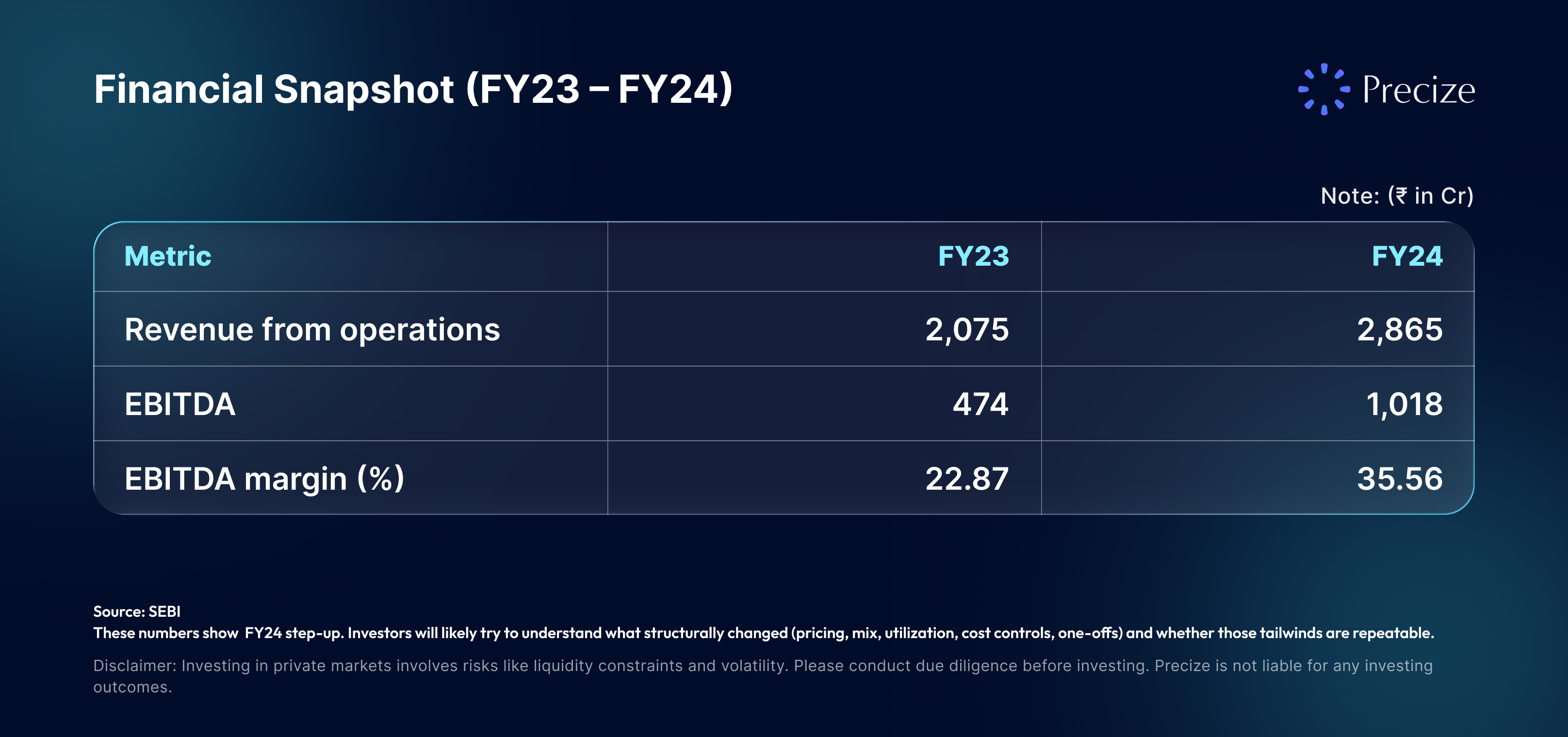
Updated financials and utilization indicators - whether FY24’s step-up sustains.
Capex rollout milestones (capacity commissioned vs. billed workloads).
If you’re tracking upcoming IPOs and also evaluating pre-IPO opportunities in the private market, you can reserve access on Precize to stay on top of updates like these without having to chase multiple sources.
How to Buy ESDS Unlisted Shares
Buying ESDS unlisted shares has become simple with the rise of trusted online platforms that specialize in private market investments. The process is fully digital and can be completed from your home in just a few steps. Here’s how it works:
Step 1: Create Your Account Online
Sign up on a reliable platform such as Precize.
Click on “Reserve Access” and enter your basic details.
Check your email for verification and choose a strong password to complete registration.
Step 2: Add Demat Details
Complete your profile by updating your PAN card, bank account details, and Demat account number (NSDL or CDSL).
This step is required for compliance and smooth share transfer.
Step 3: Decide and Place Your Order
Select the number of shares or lots you want to buy.
Note that most platforms set a minimum investment, usually starting around ₹10,000.
Add funds to your account UPI or net banking and confirm your order.
Step 4: Get Shares in Your Demat Account
Once your transaction is approved (generally within 24 to 48 business hours), the shares will be credited directly to your Demat account.
Ensure that your Demat details are correct to avoid any delays.
Having secured your unlisted shares, knowing the selling process ensures a seamless experience in the private market.