NeRL sits in a niche most investors don’t see every day: it is a regulated market infrastructure that helps convert stored commodities into a digitised, transferable warehouse receipt that can be used for financing.
National E-Repository Limited (NeRL) is a WDRA-regulated electronic repository that enables electronic Negotiable Warehouse Receipts (eNWRs). In simple terms, when commodities are stored in WDRA-accredited warehouses, NeRL helps generate an electronic receipt that can be transferred and pledged (often for loans against the stored goods).
Why the eNWR space is important
India’s agri and commodity ecosystem has a big post-harvest friction: farmers/traders often need liquidity while inventory is sitting in a warehouse. eNWRs solve for this by turning storage into a verifiable financial instrument, which improves the ability to lend against inventory.
The structural appeal of repositories is that they’re platform businesses: once the ecosystem (warehouses, banks, participants) expands, volumes can scale without costs rising at the same pace.
NeRL’s position in the market
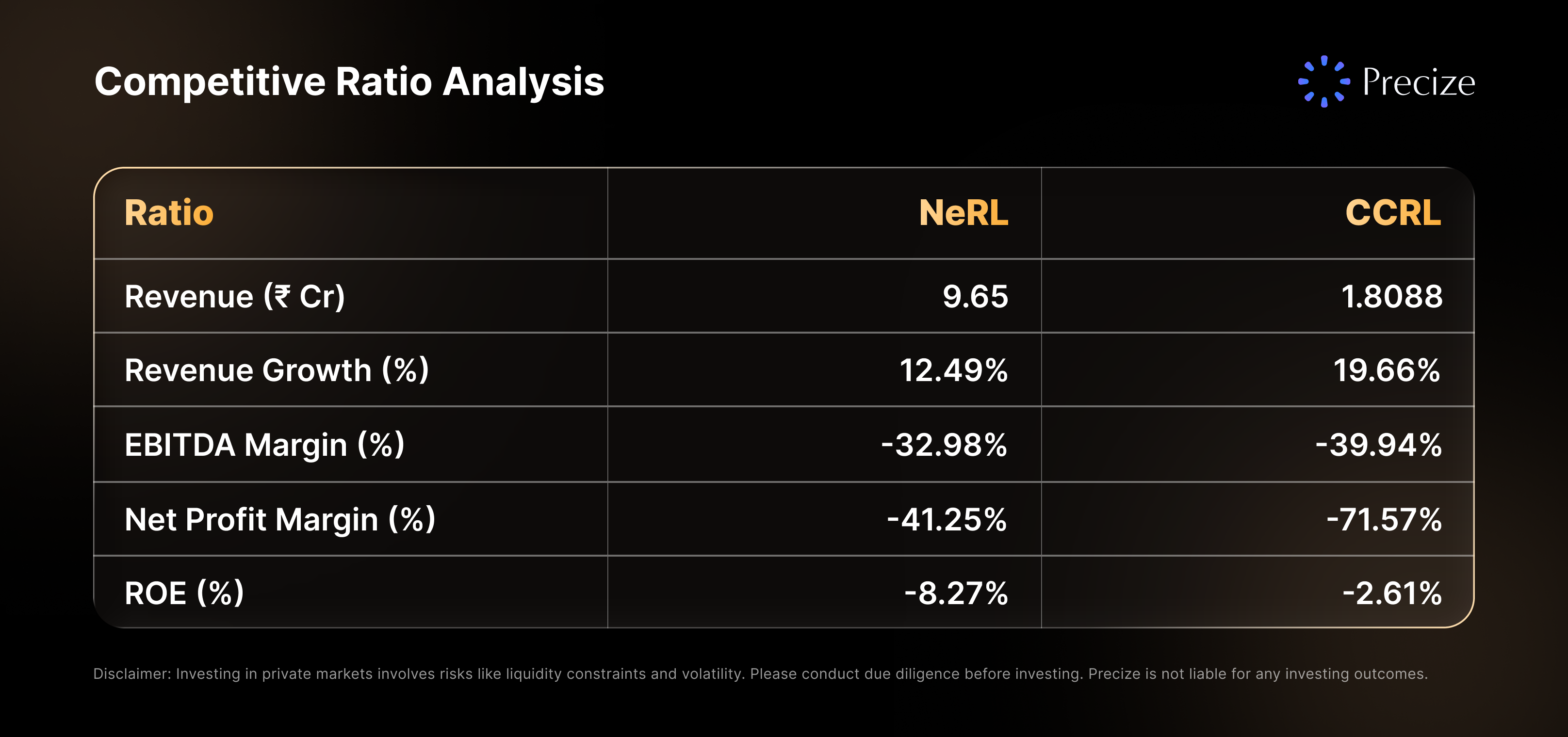
The WDRA repository ecosystem is shown as a two-player market, with NeRL indicated at around ~60% share and CCRL at ~40%.
That scale advantage is visible in operating revenue (FY25) in the image below:
What investors should actually track in NeRL
If you’re evaluating NeRL unlisted shares, these are the practical drivers that typically decide outcomes for a platform like this:
Adoption and throughput: more warehouses onboarded, more eNWR issuance, higher pledge usage
Unit economics improving with scale: negative margins can improve if volumes expand faster than cost growth
Regulatory and operational resilience: as market infrastructure, trust and compliance are non-negotiable
Loss trend: narrowing losses is a good sign, but the “break-even path” still matters
Risks to keep in mind
Still loss-making: profitability depends heavily on volume ramp-up and operating leverage
Ecosystem dependency: adoption is not only about NeRL, it also depends on warehouse capacity, participant behaviour, and financing workflows
Infrastructure-grade expectations: technology uptime, controls, and compliance standards are held to a higher bar
How to Buy NeRL Unlisted Shares
Buying NeRL unlisted shares has become simple with the rise of trusted online platforms that specialize in private market investments. The process is fully digital and can be completed from your home in just a few steps. Here’s how it works:
Step 1: Create Your Account Online
Sign up on a reliable platform such as Precize.
Click on “Reserve Access” and enter your basic details.
Check your email for verification and choose a strong password to complete registration.
Step 2: Add Demat Details
Complete your profile by updating your PAN card, bank account details, and Demat account number (NSDL or CDSL).
This step is required for compliance and smooth share transfer.
Step 3: Decide and Place Your Order
Select the number of shares or lots you want to buy.
Note that most platforms set a minimum investment, usually starting around ₹10,000.
Add funds to your account UPI or net banking and confirm your order.
Step 4: Get Shares in Your Demat Account
Once your transaction is approved (generally within 24 to 48 business hours), the shares will be credited directly to your Demat account.
Ensure that your Demat details are correct to avoid any delays.
Having secured your unlisted shares, knowing the selling process ensures a seamless experience in the private market.
Conclusion
NeRL is not a typical consumer or manufacturing story. It is a regulated infrastructure platform that digitises warehouse receipts and supports financing against stored commodities. The business is growing, still loss-making, and its long-term story is driven by ecosystem adoption and operating leverage as volumes scale.