Every business, no matter how big or small, needs a certain amount of money to keep things running every single day, whether it’s paying employees, buying raw materials, or managing regular expenses.
This base level of funds that a company cannot do without is known as permanent working capital. It acts like the backbone of business operations, making sure that activities continue without interruption.
In this blog, you will learn what permanent working capital means, why it is important, the types of permanent working capital, and how to calculate it. We will also look at the difference between permanent and temporary working capital, strategies, and the common challenges.
Let’s get started!
Overview
Permanent working capital is the minimum level of current assets needed to keep business operations running smoothly at all times.
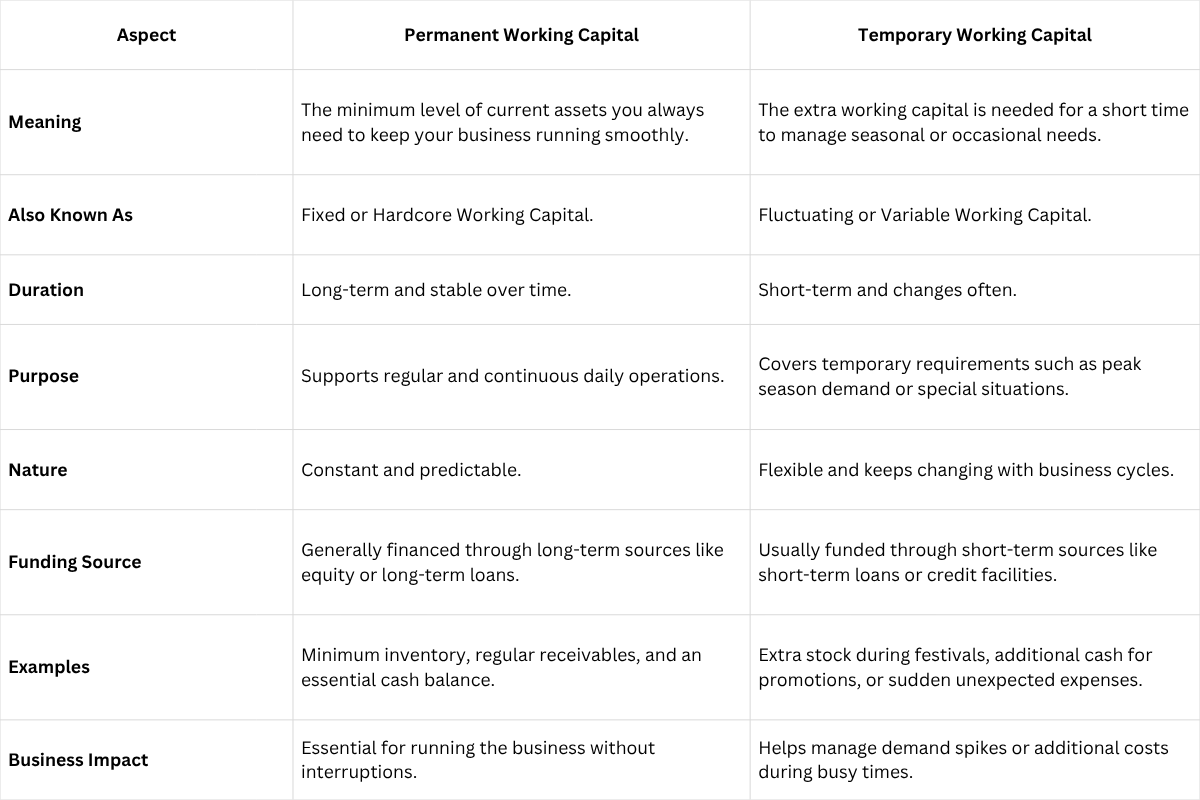
It stays constant and covers essentials like cash, inventory, receivables, and prepaid expenses, unlike temporary working capital, which changes with seasons.
Main types include regular working capital (routine needs), reserve working capital (safety cushion), and fixed capital (long-term assets).
It can be calculated using the formula: Permanent Working Capital = Minimum Current Assets – Minimum Current Liabilities.
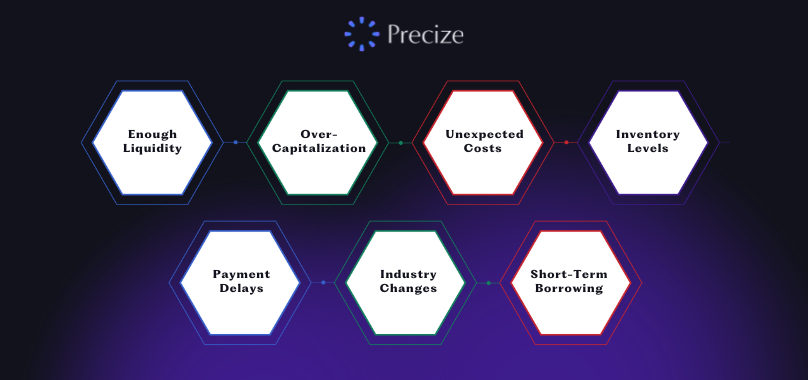
Key challenges include maintaining liquidity, balancing inventory, handling receivable delays, and avoiding excess reliance on short-term borrowing.
What is Permanent Working Capital?
Permanent working capital is the minimum level of current assets that your business needs to keep on hand at all times to run daily operations without interruption. It is not affected by seasonal demand or short-term changes and remains constant throughout the year. For example, you will always need a fixed amount of cash, raw materials, and inventory to keep your business running smoothly.
Understanding the definition is just the first step, what really matters is the role it plays in everyday business operations.
Importance of Permanent Working Capital
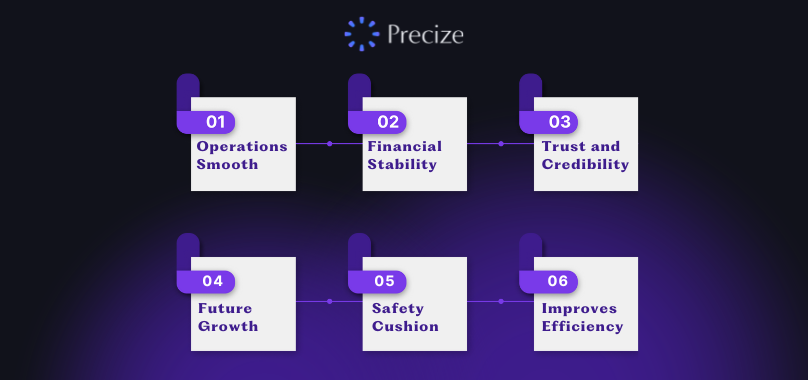
The role of permanent working capital goes beyond just numbers; it directly affects stability and growth. Here is the main importance.
1. Keeps Daily Operations Smooth
Permanent working capital takes care of routine needs like paying salaries, buying raw materials, keeping stock ready, and handling regular expenses such as rent or electricity.
2. Strengthens Financial Stability
When you always have enough permanent working capital, your business stays financially sound. It allows you to pay employees and suppliers even if sales dip, protecting you from sudden financial stress.
3. Builds Trust and Credibility
Having reliable permanent working capital shows suppliers, lenders, and customers that you are dependable. It reflects your ability to meet payments on time, which helps in forming strong and lasting relationships.
4. Supports Future Growth
With permanent working capital secured, you can focus on new projects, products, or services without worrying about running short on funds needed for regular operations.
5. Acts as a Safety Cushion
Since markets are often uncertain, permanent working capital works as a backup to handle unexpected costs or a sudden fall in revenue. It lets you manage surprises without affecting daily business functions.
6. Improves Efficiency
By keeping the minimum level of current assets ready at all times, you avoid cash shortages and prevent delays in payments or deliveries. This keeps your business more efficient and helps you stay focused on long-term goals.
Now that you know why permanent working capital matters, it’s equally important to see the different types it takes in day-to-day business.
Types of Permanent Working Capital
To understand permanent working capital better, it’s helpful to look at its key types that support daily operations in different ways.
1. Regular Working Capital
This is the basic amount needed for everyday business activities.
It covers routine expenses such as purchasing raw materials, paying wages, managing utilities, and maintaining stock.
The amount usually remains steady throughout the year, allowing operations to go on without interruptions.
2. Reserve (or Buffer) Working Capital
This is the extra working capital kept aside to deal with sudden needs, emergencies, or market fluctuations.
It acts as a cushion, so that small disruptions do not affect your daily operations.
Having this reserve gives your business added stability and flexibility.
3. Fixed Capital
Although technically different from working capital, fixed capital is closely linked to permanent requirements; it refers to long-term investments in assets like land, buildings, machinery, vehicles, and equipment.
These assets provide the foundation for your core operations, stay within the business for years, and are not used up in the short term.
Knowing the types is useful, but what really matters is learning how to calculate them for your business.
How to Calculate Permanent Working Capital
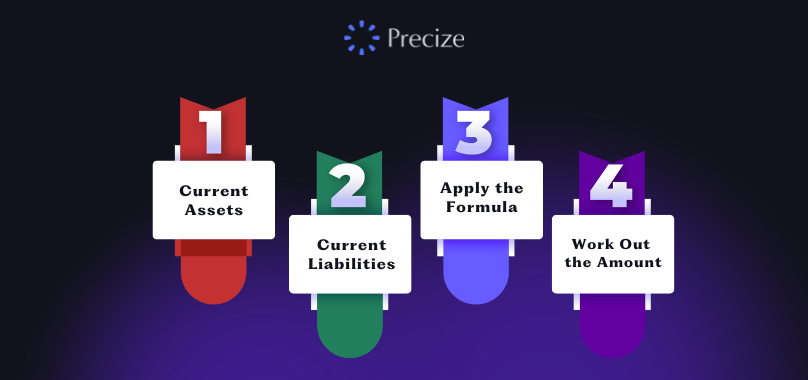
When you want to figure out the permanent working capital for your business, there’s a simple process you can follow. Permanent working capital usually includes cash, inventory, accounts receivable, and prepaid expenses. Here are simple steps to follow:
1. Find the Minimum Current Assets
Start by identifying the least amount of current assets your business must have at all times. This may include:
Cash and cash equivalents to handle basic expenses.
Inventory of raw materials, work-in-progress, and finished goods that should never run out.
Accounts receivable that remain constant from credit sales.
Prepaid expenses, such as rent or insurance that are essential for smooth functioning.
2. Identify the Minimum Current Liabilities
Next, calculate the unavoidable current liabilities that your business needs to pay regularly, such as:
Short-term debts or bills payable.
Outstanding wages, taxes, and other operational dues appear consistently.
3. Apply the Formula
Use this formula to calculate permanent working capital:
Permanent Working Capital = Minimum Current Assets – Minimum Current Liabilities
4. Work Out the Amount
Subtract the minimum current liabilities from the minimum current assets. The result is the permanent working capital your business must keep to ensure day-to-day activities continue without disruption.
Example
Let’s say your business has the following minimum current assets:
Cash: ₹2,00,000
Inventory: ₹3,00,000
Accounts receivable: ₹1,50,000
Prepaid expenses: ₹50,000
Total minimum current assets = ₹7,00,000
Now, consider the minimum current liabilities:
Short-term bills payable: ₹1,00,000
Outstanding wages and taxes: ₹50,000
Total minimum current liabilities = ₹1,50,000
Using the formula:
₹7,00,000 – ₹1,50,000 = ₹5,50,000
So, your permanent working capital is ₹5,50,000. This means your business should always have ₹5,50,000 set aside to keep daily operations running smoothly, regardless of seasonal or market changes.
Knowing the calculation is important, but it’s equally useful to see how permanent working capital compares with temporary working capital in real business situations.