Key takeaways:
Polymatech is aiming for USD 10 billion revenue by 2030 as it expands its semiconductor footprint and product mix.
The company operates in opto/LED and adjacent specialised chip segments, with use-cases spanning lighting and select applications like medical equipment, agricultural technology, and telecommunications.
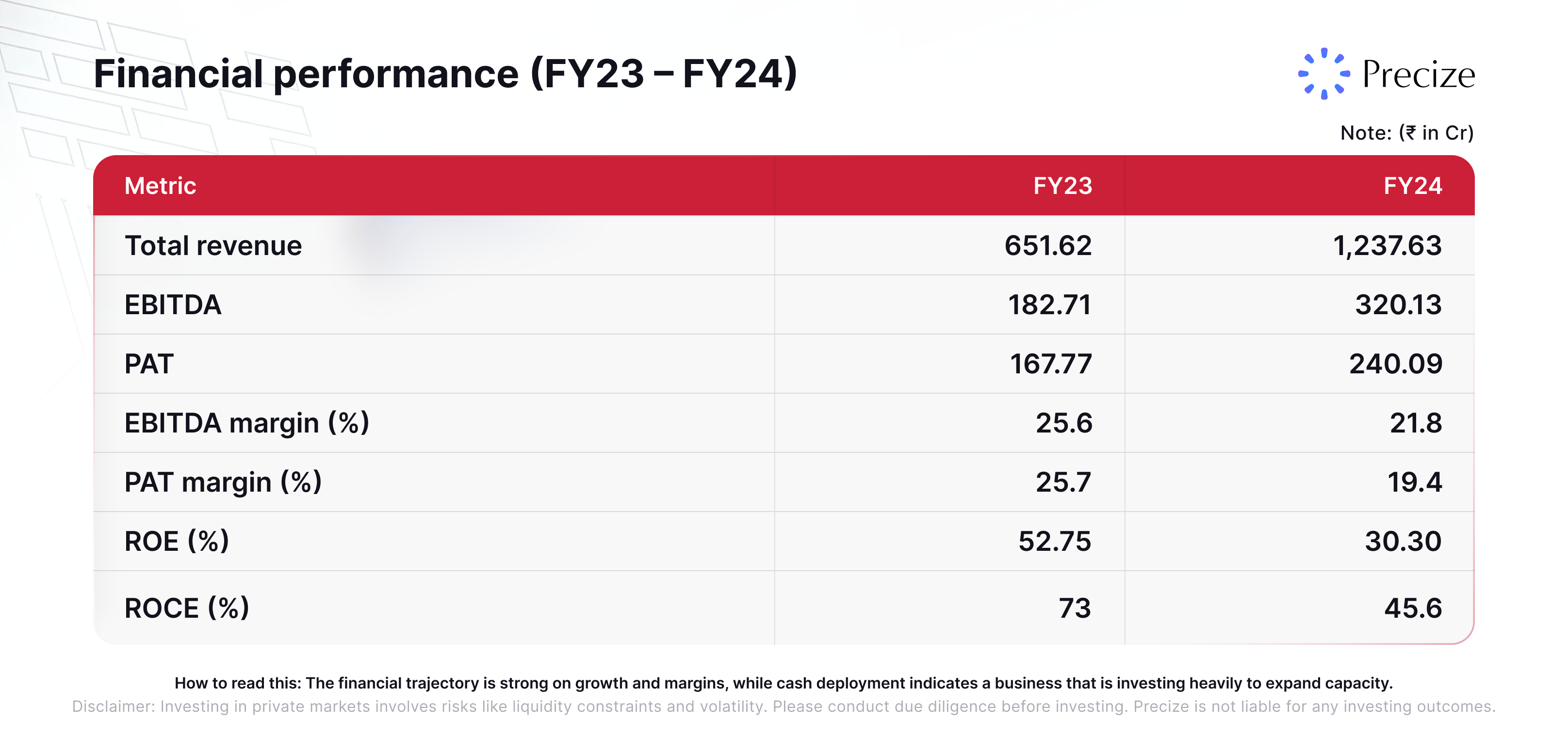
The last reported 4-year financial trend shows sharp scale-up: ₹47.19 crore → ₹1,237.63 crore revenue (FY21 to FY24), with profitability also expanding to ₹240.09 crore PAT (FY24).
For investors, the core diligence questions are execution and sustainability: capacity ramp, working capital, customer concentration, input dependencies, and governance/disclosure quality.
Why Polymatech is being watched
Polymatech sits in a part of the semiconductor value chain that can scale faster than full-stack fabs: opto/LED and packaging/assembly-oriented manufacturing. That positioning, combined with India’s broader semiconductor and electronics manufacturing push, has pushed the company into the “high interest” bucket for private-market investors.
What the company does
Polymatech manufactures opto/LED and related semiconductor components and products. The business spans:
Chip-related manufacturing and packaged formats
Industrial-grade lighting/luminaire solutions for large deployments
Expansion into additional specialised chip categories over time
A practical way to think about it: Polymatech is building a manufacturing-led semiconductor business with a focus on products that have large domestic demand potential and export viability.
Where Polymatech makes money
Core revenue drivers:
Semiconductor/opto components sold to OEM and institutional buyers
Lighting and deployment solutions for large projects (industrial, infrastructure, commercial)
Demand characteristics that matter:
B2B demand is driven by project cycles and procurement, not just consumer retail pull.
Large orders can create visibility, but also create dependencies on timely delivery, yield, and working capital.
Industry tailwinds investors should understand
A few structural factors support long-duration growth in this space:
Broader semiconductor localisation push
Rising demand for efficient lighting and electrification projects
Export-oriented manufacturing opportunities, if quality/certifications and scale hold up
These tailwinds don’t guarantee outcomes, but they do create a high ceiling for companies that execute.
Financial performance (FY23–FY24)
In the image below are some of the headline numbers investors typically start with:
Order book and execution reality
An order book of ~₹7,000 crore (stated as of 11 May 2024) is a major attention point for investors.
What matters more than the headline:
What portion is repeat business vs one-time
Customer concentration and pricing power
Delivery schedules, penalty clauses, and cancellation flexibility
Conversion of order book into cash (not just revenue)
Ownership and leadership
Promoter holding is high, with a meaningful non-promoter stake:
Eswara Rao Nandam: 41.56%
Uma Nandam: 38.07%
NAV Capital VCC: 17.71%
Others: 2.66%
This structure can be positive for alignment, but it also increases the importance of governance standards and disclosure discipline.
Corporate actions and IPO pathway signals
There are multiple “public market readiness” markers:
Conversion to public limited company (timeline actions)
DRHP filing milestone (earlier cycle)
Preferential allotments at multiple price points
Facility acquisition for capacity expansion (second plant)
For investors, these milestones matter because they affect:
Cap table dynamics
Valuation anchoring from prior issuance prices
Timeline expectations toward a listing or larger institutional round
Key risks to track (investor-first)
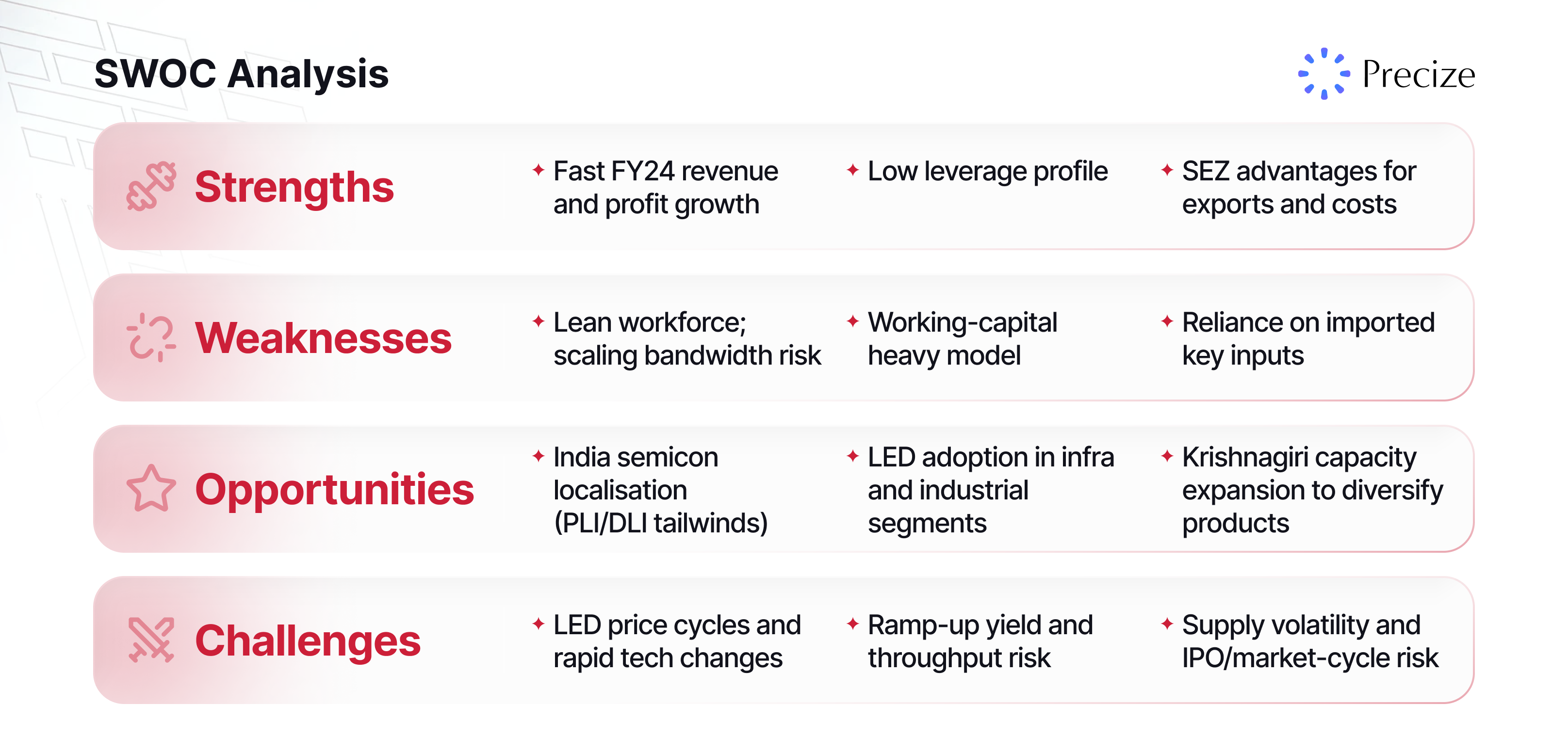
1) Manufacturing and yield risk
Semiconductor-adjacent manufacturing is execution-heavy. Scale-up can stress yields, throughput, and quality systems.
2) Working capital intensity
Growth can absorb cash through inventory and receivables. Watch whether operating cash flow stays healthy as scale increases.
3) Input and supply chain dependencies
Specialised inputs, imported components, and vendor concentration can become bottlenecks during rapid growth.
4) Customer concentration and pricing power
Large B2B orders are good, but concentration risk can be real. Track customer diversification and repeat order quality.
5) Governance and disclosures
For unlisted companies, investor outcomes improve dramatically when reporting is consistent, audit quality is strong, and related-party disclosures are clean.
What an investor should monitor going forward
A simple tracking dashboard for Polymatech should include:
Quarterly/half-year revenue and margin direction (if available)
Capacity commissioning milestones and utilisation
Order book conversion, cancellations, and customer mix
Working capital cycle (inventory days, receivable days)
Cap table changes and fresh issuances
Any regulatory, certification, or export-related developments
How to Buy Polymatech Unlisted Shares
Buying Polymatech unlisted shares has become simple with the rise of trusted online platforms that specialize in private market investments. The process is fully digital and can be completed from your home in just a few steps. Here’s how it works:
Step 1: Create Your Account Online
Sign up on a reliable platform such as Precize.
Click on “Reserve Access” and enter your basic details.
Check your email for verification and choose a strong password to complete registration.
Step 2: Add Demat Details
Complete your profile by updating your PAN card, bank account details, and Demat account number (NSDL or CDSL).
This step is required for compliance and smooth share transfer.
Step 3: Decide and Place Your Order
Select the number of shares or lots you want to buy.
Note that most platforms set a minimum investment, usually starting around ₹10,000.
Add funds to your account UPI or net banking and confirm your order.
Step 4: Get Shares in Your Demat Account
Once your transaction is approved (generally within 24 to 48 business hours), the shares will be credited directly to your Demat account.
Ensure that your Demat details are correct to avoid any delays.