
India’s power markets are getting deeper and more structured each year - more renewables on the grid, tighter balancing requirements, and a growing push for transparent price discovery. In that setup, Power Exchange India Limited (PXIL) sits at an interesting intersection: a platform business with operating leverage, multiple market segments (power and certificates), and a regulatory environment that can either accelerate growth or reshape the economics overnight.
New Managing Director and CEO
PXIL has appointed Vivek Singla as Managing Director and CEO. Leadership changes matter more than people think in exchange businesses because execution is everything: product rollouts, participant acquisition, tech reliability, and staying aligned with evolving regulations.
For investors, the key question is not the headline - it’s what the next 12–24 months of product momentum and market share look like under the new leadership.
What PXIL does
PXIL operates an exchange-led marketplace model. It enables participants to transact on standardized market products where demand and supply meet on a transparent platform with defined rules and settlement frameworks.
PXIL’s activity spans:
Electricity trading across segments (including conventional and green categories)
Renewable Energy Certificates (RECs) market participation
Energy Saving Certificates (ESCerts) market participation
Think of it like market infrastructure: if volumes rise and product mix improves, revenues can scale without linear cost increases - but regulation and competition heavily influence the slope.
FY25 operating momentum: Volumes moved up meaningfully
One of the cleanest signals for a power exchange is whether market participants are using it more.
In FY25, PXIL reported higher overall electricity transaction volumes versus FY24, with growth across categories (conventional and green included). The direction is positive, and it supports the broader thesis that exchange-led power markets continue to deepen.
For an investor, this matters because transaction-linked revenues depend on activity - not just brand.
How PXIL makes money
PXIL’s core operating revenue is primarily driven by:
Transaction charges (linked to trading activity)
Annual subscription charges (linked to membership/participant base)
Smaller lines under other operating revenue/fees
This is important because the mix between transaction charges and subscription charges can affect how “volume-sensitive” the business is in a given year.
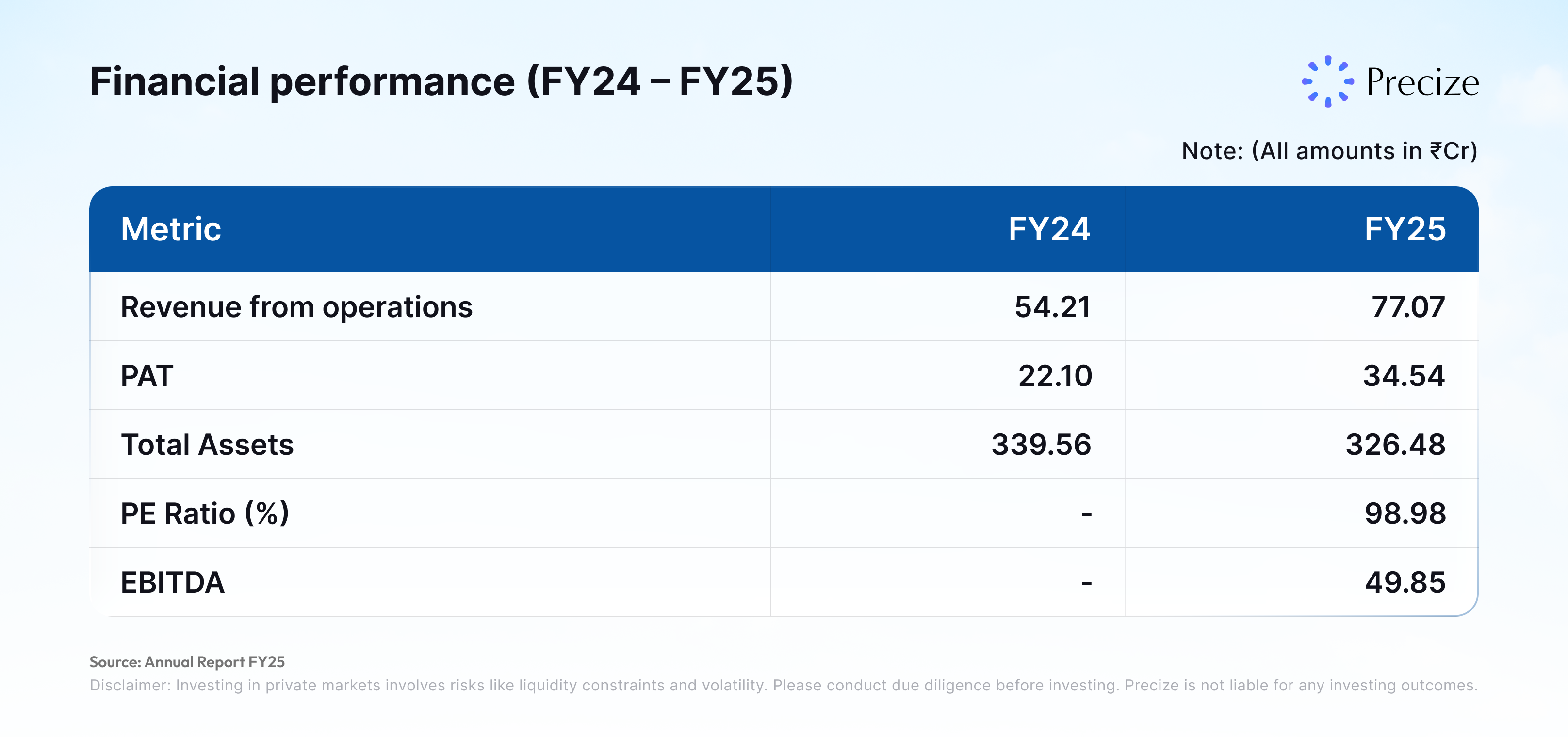
A few investor takeaways:
Profitability is strong for the scale of operating revenue
Finance costs are small, suggesting low leverage stress
Liquidity levels are meaningful, which can provide resilience and flexibility
(You should still treat exchange businesses as “regulation-sensitive compounders” rather than simple linear growth plays.)
Certificates markets: A second growth lever investors often miss
Beyond electricity trading, certificate markets (RECs and ESCerts) are important because they can:
Add new participant categories
Diversify revenue drivers
Benefit from India’s wider compliance and sustainability push
PXIL reports activity and market presence in these segments, and shifts in certificate market sizes and PXIL’s share can materially affect growth expectations year to year.
Competition: The listed comparable that everyone watches
From a public-market lens, the obvious listed comparable is Indian Energy Exchange (IEX).
When markets compare PXIL to IEX, they usually focus on:
Relative scale and liquidity of the marketplace
Product breadth and adoption
Regulatory impact sensitivity
Network effects (where “more participants” attract “more participants”)
PXIL doesn’t need to “beat” IEX to be investable in unlisted markets - but it does need a clear, sustainable path to increasing relevance in specific segments and maintaining stable unit economics.
PXIL unlisted share price snapshot
As of 09 Jan 2026, the PXIL unlisted share price is shown around ₹584 per share, along with other reference metrics like lot size, 52-week range, market cap, and valuation multiples.
Important note: unlisted prices can vary by counterparty, size, and settlement terms. Treat online quotes as reference points, not a guaranteed executable price.
What to watch next
If you’re tracking PXIL as an investor, these are the practical checkpoints:
Market share trend across key products (power segments + certificates)
Product rollout cadence and participant adoption
Regulatory developments (market coupling, product design, fee structures)
Unit economics - how revenue scales relative to costs
Corporate/structural updates that affect shareholding, governance, or listing readiness
Leadership execution - especially on tech + market development
How to Buy PXIL Unlisted Shares
Buying PXIL unlisted shares has become simple with the rise of trusted online platforms that specialize in private market investments. The process is fully digital and can be completed from your home in just a few steps. Here’s how it works:
Step 1: Create Your Account Online
Sign up on a reliable platform such as Precize.
Click on “Reserve Access” and enter your basic details.
Check your email for verification and choose a strong password to complete registration.
Step 2: Add Demat Details
Complete your profile by updating your PAN card, bank account details, and Demat account number (NSDL or CDSL).
This step is required for compliance and smooth share transfer.
Step 3: Decide and Place Your Order
Select the number of shares or lots you want to buy.
Note that most platforms set a minimum investment, usually starting around ₹10,000.
Add funds to your account UPI or net banking and confirm your order.
Step 4: Get Shares in Your Demat Account
Once your transaction is approved (generally within 24 to 48 business hours), the shares will be credited directly to your Demat account.
Ensure that your Demat details are correct to avoid any delays.