According to SpaceX's IPO announcement and an SEC filing, the company applied to list on Nasdaq under the ticker SPCX. SpaceNews reported that the offer could raise about $75 billion before expenses, making it one of the largest public offerings in market history.
For years, investors searched for ways to buy SpaceX stock, track the SpaceX share price, and access SpaceX pre-IPO opportunities. Now that public-market access is opening, Indian investors should ask a sharper question:
What can this listing teach us about discovering strong companies before they become public?
SpaceX IPO Date, Share Price, and Valuation
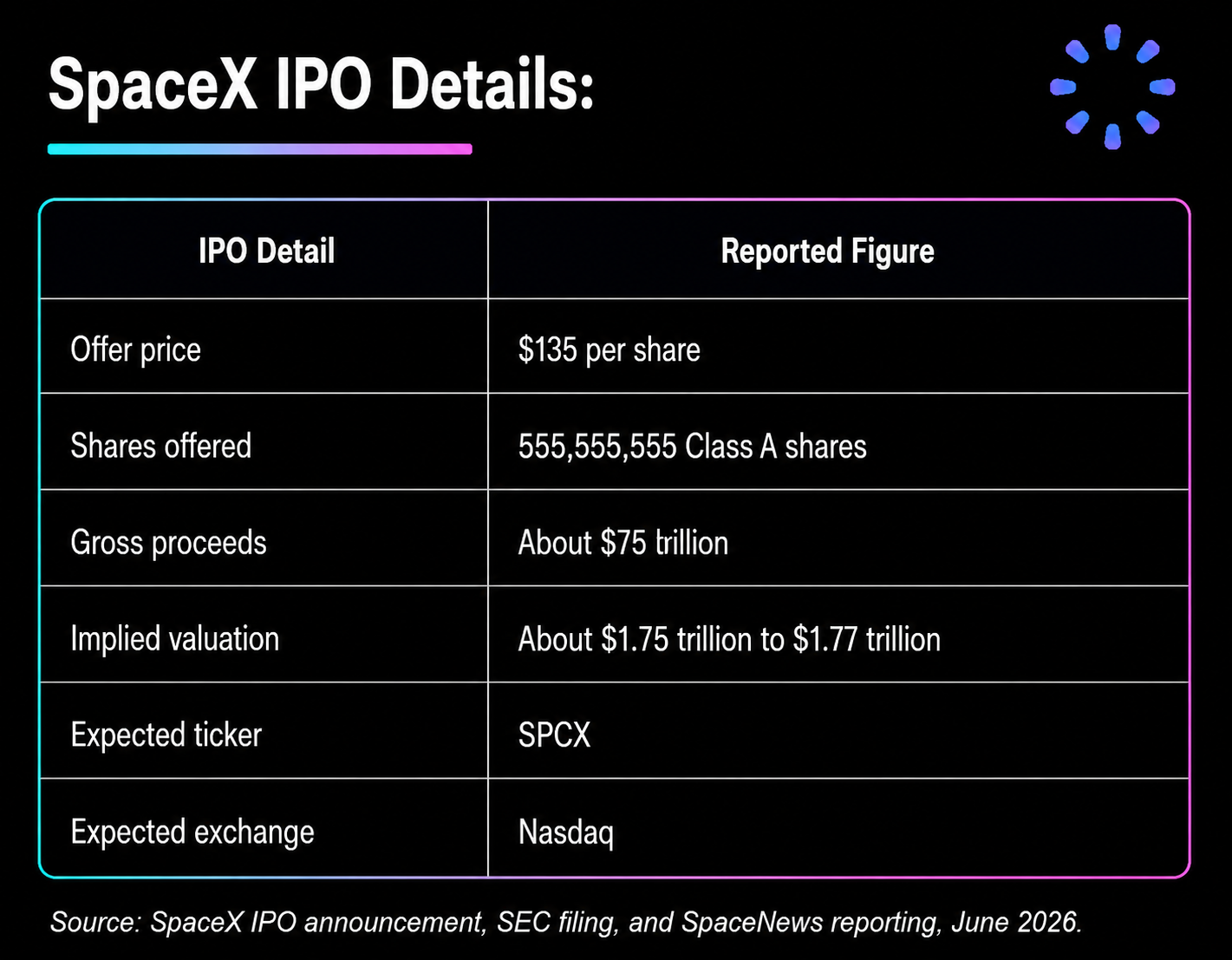
The SpaceX IPO date is a milestone for global markets. Based on the company's offering details and SEC-linked filings, SpaceX is offering 555,555,555 Class A shares at $135 per share, with trading expected under the ticker SPCX.
Here are the key IPO numbers investors are watching:
This article is not a recommendation to buy or sell SpaceX shares. Investors should review official filings, broker availability, tax rules, and their own risk profile before making any decision.
The valuation is unusually large because SpaceX is not being valued as a simple rocket company. Investors are weighing several businesses and themes together:
Starlink satellite internet, which could become a global connectivity platform.
Reusable rocket economics, which may lower launch costs over time.
Government and defence demand, including space infrastructure and launch contracts.
Long-term space commercialization, including satellites, cargo, lunar missions, and future orbital infrastructure.
AI infrastructure ambitions, following reported expansion into compute-heavy businesses.
That mix explains the excitement around the SpaceX share price. It also explains the debate. A company can be exceptional and still become expensive if the IPO valuation already prices in many years of future growth.
Why Investors Wanted SpaceX Pre-IPO Access?
Before the SpaceX IPO, most retail investors could not buy SpaceX shares directly. Access was mainly available to founders, employees, venture funds, institutional investors, and select private-market participants.
That is why SpaceX became one of the most searched private companies in the world. Investors were not just interested in the brand. They were interested in the possibility of entering before a public listing made the company widely available.
The logic is simple:
A company grows privately.
Its valuation rises through funding rounds and secondary transactions.
Public investors get access only when the company lists.
By that point, part of the growth story may already be reflected in the IPO price.
This does not mean every pre-IPO opportunity is attractive. It means the timing of access matters. Early access can be valuable only when the business quality, entry valuation, liquidity risk, and exit path make sense together.
The SpaceX IPO Lesson for Indian Investors
The SpaceX public offering is a global event, but the lesson applies directly to India.
India has a growing pipeline of private companies that may list in the coming years. Some are in financial infrastructure. Others are in quick commerce, consumer brands, renewable energy, fintech, manufacturing, and technology.
This is why more Indian investors are learning about:
unlisted shares;
pre-IPO investing;
late-stage startups;
private-market transactions;
alternative investment opportunities outside listed equities.
Precize helps investors research and access Indian private-market opportunities in a more structured way. Investors can also use the Precize unlisted shares screener to compare companies, sectors, availability, and investment details before deciding what fits their portfolio.
The goal is not to copy the SpaceX story. SpaceX is a rare company with unusual scale, founder visibility, and capital intensity. The goal is to understand the pattern: Companies can build meaningful value before the IPO headline appears.
Pre-IPO Investing in India: What It Means?
Pre-IPO investing means buying shares of a company before its initial public offering. In India, this often happens through unlisted shares, employee stock option exits, private transactions, or platforms that connect investors with available opportunities.
An unlisted share is a share of a company that is not traded on NSE or BSE. These shares can still be held in a demat account, but they do not have the same daily liquidity or price discovery as listed shares.
That difference matters. In public markets, you can usually see live prices and sell through an exchange. In private markets, availability, pricing, lot size, buyer demand, and transfer timelines can vary.
Pre-IPO investing may suit investors who:
understand the business they are buying;
can hold for a longer period;
are comfortable with lower liquidity;
can evaluate valuation against public peers;
do not rely on quick listing gains;
want private-market exposure as part of a broader portfolio.
It may not suit investors who need short-term liquidity, low volatility, or daily price visibility.
Indian Pre-IPO Companies Investors Are Tracking
The Indian pre-IPO market is no longer limited to a single sector. Investor interest today spans across financial services, quick commerce, consumer technology, renewable energy, hospitality, and infrastructure-driven businesses.
Many investors tracking unlisted shares are looking for companies with:
strong brand recognition
scalable business models
improving financial performance
large market opportunities
credible IPO potential
Some Indian companies that continue attracting strong investor attention in the unlisted and pre-IPO market include:
National Stock Exchange (NSE)
One of India’s most closely watched potential IPO candidates, NSE remains a major name in the unlisted market because of its dominant position in India’s capital-market infrastructure and strong profitability profile.
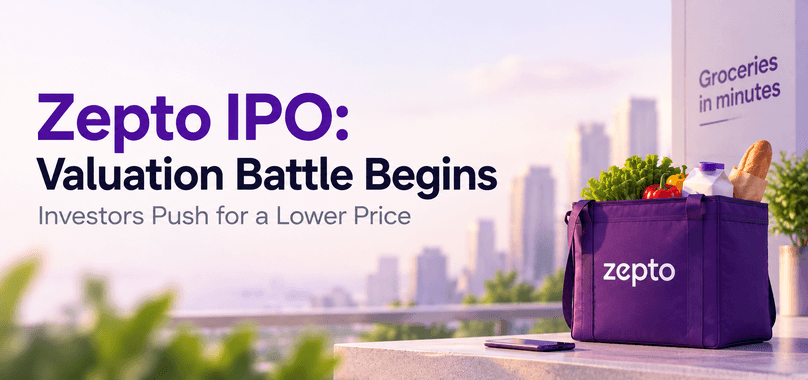
Zepto
Zepto has emerged as one of the fastest-growing quick-commerce platforms in India. Investors closely track the company because of its rapid expansion, aggressive growth strategy, and increasing relevance in India’s consumer internet ecosystem.
OYO
OYO continues to remain a highly discussed pre-IPO company due to its large consumer brand presence and long-standing IPO conversation. Investors view it as a major hospitality and travel play within India’s startup ecosystem.
boAt
Known for its audio products and wearables, boAt has built strong consumer recognition in India. The company remains a popular unlisted stock because of its public-market ambitions and position in the fast-growing electronics segment.
Nayara Energy
Nayara Energy attracts investor attention due to its scale within India’s downstream energy sector and its strategic relevance in refining and fuel distribution.
Apollo Green Energy
Apollo Green Energy has gained traction among investors interested in renewable energy and infrastructure-led themes. Growing focus on clean energy transition in India has increased interest in companies operating within this segment.
If you are new to the category, review Precize's unlisted shares FAQs before buying unlisted shares. It helps clarify how transfers, demat accounts, risks, and platform processes work.
Can Indian Investors Buy SpaceX Stock?
Indian investors may be able to buy SpaceX stock after listing through eligible international investing routes, depending on broker access, availability, taxes, and applicable rules.
Resident individuals in India can invest overseas within the broader Liberalised Remittance Scheme framework, subject to regulatory limits and platform processes. The Reserve Bank of India's overseas investment directions provide the official framework for overseas investment rules.
However, access to high-demand IPO allocations can be limited. Even when a company lists in the US, Indian investors may not receive IPO allotment and may only be able to buy after trading begins. At that stage, the price may already reflect strong demand.
That is one reason many Indian investors also study domestic pre-IPO opportunities. They may not offer the same global brand pull as SpaceX, but they can provide exposure to India's own private-company growth cycle.
What to Check Before Buying Unlisted Shares
The SpaceX IPO has created excitement, but excitement is not due diligence. Before buying any unlisted share in India, investors should slow down and check the fundamentals.
Use this checklist:
Business quality: Does the company solve a real problem in a large market?
Revenue growth: Is growth consistent, or dependent on one-off events?
Profitability path: Is the business profitable, near breakeven, or still burning cash?
Valuation discipline: Does the price make sense compared with listed peers and recent private transactions?
Liquidity: Can you hold the investment if there is no quick buyer or IPO?
IPO visibility: Has the company filed a DRHP, appointed bankers, or shared credible listing plans?
Disclosure quality: Are financials, shareholding data, and business updates available?
Regulatory context: Are there sector risks, lock-in rules, or policy dependencies?
A draft red herring prospectus, or DRHP, is the first detailed IPO filing a company submits before listing. By the time a DRHP becomes public, investor attention may already increase. That is why some investors study companies earlier, while accepting that earlier access also means more uncertainty.
Risks Investors Should Understand
Famous companies can still be risky investments. The SpaceX IPO is no exception.
Investors evaluating SpaceX stock may need to consider:
aggressive valuation expectations;
heavy capital spending;
execution risk in rockets, satellites, and AI infrastructure;
dependence on Elon Musk's leadership and brand;
uncertainty around long-term profitability;
market volatility after a major IPO.
Indian pre-IPO investing has its own risks:
Lower liquidity: You may not be able to sell quickly.
Longer holding periods: IPO timelines can shift or get delayed.
Valuation fluctuations: Private-market prices can change without daily exchange-based price discovery.
Limited public disclosure: Unlisted companies may share less information than listed companies.
No guaranteed listing gains: A company can list below expectations, postpone its IPO, or choose not to list.
Past performance does not guarantee future results. Returns on unlisted shares are not guaranteed.
How to Approach Pre-IPO Opportunities After the SpaceX IPO
The right lesson from the SpaceX IPO is not "buy every company before IPO." It is "learn how private-market value is created and priced."
A practical approach looks like this:
Start with sectors you understand. Financial infrastructure, energy, consumer brands, and quick commerce have very different risk profiles.
Study the company before the price. A lower price is not useful if the business quality is weak.
Compare with listed peers. Public-market valuations can provide a reference point.
Check the exit assumption. Do not invest only because an IPO is rumoured.
Size positions carefully. Unlisted shares should match your risk appetite and time horizon.
Use research tools. Review company information, sector trends, and transaction details before investing.
Precize helps investors explore private-market opportunities with company information, sector context, and a digital-first process. If you need help understanding a specific process or transaction, you can contact Precize Care.
Final Thoughts
The SpaceX IPO may become one of the defining stock market events of this decade. But for Indian investors, the most useful takeaway is not about rockets, satellites, or celebrity founders.
It is about timing and discipline.
Public markets often open access after a company has already become valuable. Pre-IPO investing can help investors study some businesses earlier, but it also requires patience, better research, and a clear understanding of risk.
If you are exploring India's private-market ecosystem, start with the basics: understand the company, check the valuation, know the risks, and invest only when the opportunity fits your portfolio.
To research current unlisted shares and pre-IPO opportunities in India after the SpaceX listing, explore available unlisted shares on Precize. Stay updated with unlisted companies through our Precize Community. If this article was useful, you can share it with other investors through the Precize Referral Program.
FAQ: SpaceX IPO and Pre-IPO Investing in India
1. What is the SpaceX IPO price?
The SpaceX IPO price is reported at $135 per share for 555,555,555 Class A shares. That implies gross proceeds of about $75 billion and a valuation near $1.75 trillion to $1.77 trillion.
2. Can Indian investors invest in SpaceX stock?
Indian investors may be able to buy SpaceX shares after listing through eligible international investing platforms, subject to broker availability, taxes, foreign remittance limits, and applicable regulations. IPO allocation access may be limited.
3. What is the main SpaceX IPO lesson for Indian investors?
The main lesson is that major companies often create significant value before they list publicly. Indian investors can use the SpaceX IPO as a reason to learn about pre-IPO investing, valuation discipline, and unlisted share risks.
4. Are unlisted shares the same as IPO shares?
No. Unlisted shares are shares of companies that are not traded on public exchanges. IPO shares are issued or sold during a company's public listing process. Pre-IPO investors may hold unlisted shares before the company lists.
Disclaimer: This article is for informational purposes only and should not be considered as investment advice. Investing in unlisted shares carries risks including illiquidity and potential loss of capital. Please consult with a qualified financial advisor before making investment decisions. Precize is not a stock exchange and is not authorized by any capital markets regulator.