TL;DR
Cash in Advance (CIA): Seller receives payment before shipment; secure for the seller, but risky for the buyer who must pay upfront.
Letters of Credit (LC): Bank guarantees payment once conditions are met; secure but costly with complex documentation.
Documentary Collection: Involves banks but offers no payment guarantee; cheaper than LC but riskier for the seller.
Open Account: Goods shipped before payment; favorable for buyers but high risk for sellers.
Consignment: Seller ships goods and gets paid after sales; great for market expansion but risky due to delayed payments.
In international trade, the choice of payment method plays a pivotal role in determining how smoothly transactions unfold. Payment methods influence the level of risk each party bears, affect cash flow management, and build or strain trust between buyers and sellers across borders. Since trading partners often operate under different legal systems and cultural practices, selecting the right payment approach is essential to protect interests and foster strong business relationships.
This blog explores the most common methods of payment used in international trade. We will discuss their key features, advantages, and disadvantages, helping you understand which payment method suits your trading needs best.
What is International Trade?
International trade refers to the exchange of goods, services, and capital across international borders or territories. It enables countries to access products and services they cannot produce themselves or produce efficiently, while providing a market for their own goods.
By engaging in international trade, businesses can expand their reach, increase profits, and access new markets. This process is essential for economic growth and development, fostering global collaboration and innovation.
Common Methods of Payment in International Trade
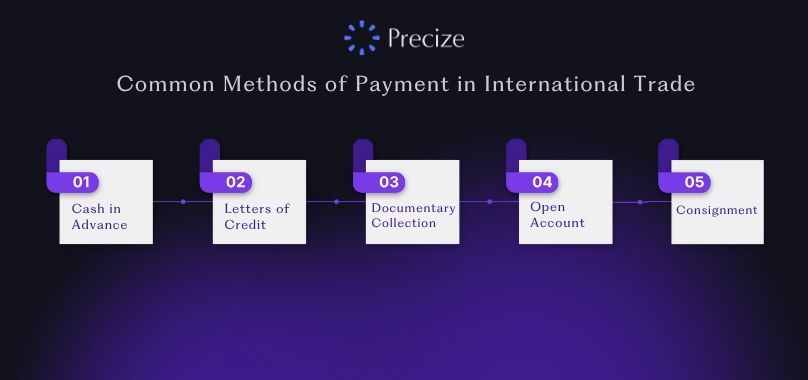
In international trade, choosing the right payment method is crucial for managing risk, cash flow, and trust between trading partners. Each payment method offers unique advantages and challenges, affecting both buyers and sellers differently. Here, we explore the most common methods used in international transactions, helping you understand their benefits and drawbacks to make informed decisions.
Cash in Advance (CIA)
Cash in Advance requires the buyer to pay the seller before goods are shipped. This payment method is commonly used when the seller wants to avoid the risk of non-payment or when dealing with new or less established buyers.
Pros:
The seller receives payment upfront, offering maximum security.
Immediate cash flow helps sellers manage their finances better.
There is virtually no risk of non-payment for the seller.
Cons:
Buyers face the risk of paying without receiving the goods or receiving goods that do not meet expectations.
It can strain the buyer’s cash flow since payment must be made before shipment.
Typical payment modes for CIA include wire transfers, credit card payments, and digital payment platforms.
In summary, Cash in Advance offers strong security for sellers but demands significant trust and financial readiness from buyers.
Next, we’ll look at Letters of Credit, a method that balances security with trust.
Letters of Credit (LC)
A Letter of Credit is a bank-issued guarantee ensuring that payment will be made to the seller once all terms and conditions stipulated in the LC are fulfilled. This method is widely used in international trade for medium to large transactions.
Pros:
The bank guarantees payment, reducing risk for both buyer and seller.
Provides security to sellers that payment will be received upon meeting documentation requirements.
Well-suited for large or high-value transactions where trust is developing.
Cons:
The process involves complex and time-consuming documentation.
Banks charge relatively high fees for processing LCs.
Payment depends entirely on precise submission and verification of documents, which can cause delays.
Letters of Credit offer a robust framework for managing risk but require careful attention to paperwork and terms.
Moving on, Documentary Collection provides a more cost-effective option, albeit with some risk.
Documentary Collection
Documentary Collection involves the banks of both the buyer and seller to facilitate payment, without providing a payment guarantee. It operates mainly in two forms: Documents Against Payment (D/P), where the buyer pays before receiving documents; and Documents Against Acceptance (D/A), where the buyer accepts a bill to pay later.
Pros:
Less expensive than Letters of Credit due to fewer bank formalities.
Provides moderate security since banks handle the documents and payments.
Cons:
No guarantee of payment, leaving sellers exposed to buyer default.
Relies heavily on the buyer’s willingness and ability to pay.
This method suits transactions where a moderate level of trust exists and sellers are willing to accept some risk to reduce costs.
Next, we explore Open Account, a method increasingly preferred by buyers.
Open Account
Open Account terms mean goods are shipped and delivered before the payment is due. This is highly advantageous for buyers who can manage their cash flow better and benefit from flexible payment schedules.
Pros:
Buyers enjoy improved cash flow and flexible payment terms.
Encourages stronger buyer-seller relationships due to trust.
Cons:
Sellers bear a high risk of non-payment or delayed payment.
Requires sellers to perform strong credit assessments and risk management.
Sellers often mitigate risks with measures such as export credit insurance or by offering Open Account terms only to trusted buyers.
Now, let’s discuss Consignment payments, where sellers take on significant risk for market expansion.
Consignment
In consignment sales, the seller ships goods to the buyer or distributor but receives payment only after the goods are sold.
Pros:
Enables sellers to expand market reach without requiring immediate payment.
Increases product availability for buyers and distributors.
Cons:
Sellers face delayed cash flow and uncertain payment timings.
High risk due to no immediate payment guarantee.
Consignment is often used when entering new markets or launching new products where buyers are unwilling to pay upfront.
Understanding these common international trade payment methods helps businesses balance risk, cost, and cash flow requirements. Choosing wisely can protect your interests and build stronger trade relationships in the global marketplace.
Factors to Consider When Choosing a Payment Method
When deciding which payment method to use in international trade, consider the following:
Risk tolerance and trust: How much risk can each party bear? What is the level of trust between buyer and seller?
Transaction size and frequency: Larger or frequent transactions may warrant more secure methods like Letters of Credit.
Cash flow impact: How will the payment terms affect each party’s cash flow?
Legal and regulatory compliance: Are there legal restrictions or compliance requirements in the countries involved?
Balancing these factors will help you select a payment method that aligns with your business objectives and risk appetite.
Final Thoughts
Choosing the right payment method in international trade is vital for managing risks, maintaining cash flow, and building trust. From the secure upfront payment of Cash in Advance to the buyer-friendly flexibility of Open Account, each method offers different benefits and challenges.
Understanding these options allows you to tailor payment terms to suit your specific trade relationships and transaction needs. Always assess the unique context of each deal and seek expert advice when necessary to ensure smooth and successful international trade operations.
Looking to optimise your international trade payments and reduce risks? Explore Precize today for expert trade finance solutions and smarter payment management.
Disclaimer
The information provided in this article is for general informational purposes only and does not constitute financial or legal advice. International trade involves complex risks and regulations that may vary by country and circumstance. Readers are encouraged to consult qualified trade finance professionals or legal advisors to obtain advice tailored to their specific situations before making any decisions.