boAt IPO: Key Dates, FY25–FY26 Timeline & Essential Details

Get a clear view of the expected boAt IPO date in FY25–FY26. Learn the key timelines, and what the upcoming listing could mean for interested participants.
13 min read
boat ipo date fy25 fy26 aman gupta

boAt has become one of India’s most recognisable consumer electronics brands, and many investors are tracking the expected timeline for its public listing. In FY25, boAt returned to profit with a net profit of around ₹60 crore on standalone revenue of ₹3,089 crore.

With these updated financials coming into focus, interest around the boAt IPO in 2025 and the FY25–FY26 timeline has grown again. This blog breaks down the expected IPO date, the sequence of events so far, and the essential details available from reliable reports so you can understand where things stand before the final dates and price band are announced.

Key Takeaways

  • The boAt IPO is expected to open in FY25 or FY26, but exact dates and details will be confirmed closer to the launch once the price band and lot size are finalised.

  • The total issue size is estimated at ₹1,500 crore, with ₹500 crore in fresh issue and ₹1,000 crore in Offer for Sale (OFS) by existing shareholders.

  • In FY25, boAt reported a net profit of ₹60 crore and revenue of ₹3,089.6 crore, showing strong recovery after two years of losses.

  • Key risks to consider include market volatility, competition from established brands like Sony and JBL, and uncertainty around the IPO pricing, which could impact investor interest.

What is boAt? Company Overview and Operational Insights

boAt is an Indian consumer-electronics brand under Imagine Marketing Limited, founded in 2016 by Aman Gupta and Sameer Mehta. It has become known for affordable audio products, wearables, and mobile accessories targeted at young, value-conscious consumers.

Below are the essentials you should know about who runs the business, what it does today, and the operational footprint that underpins its scale:

  • Parent company: Imagine Marketing Limited; founders: Aman Gupta and Sameer Mehta.

  • Core offerings include audio products (earbuds, headphones, Bluetooth speakers), smart wearables (smartwatches), mobile accessories (chargers, cables, power banks), and lifestyle electronics.

  • Manufacturing relies on a mix of domestic partners and overseas vendors.

  • Production and sourcing partnerships (including with Indian manufacturers such as Dixon Technologies) help keep costs competitive.

  • Distribution spans major e-commerce platforms (Amazon, Flipkart, Myntra), the boAt official website, and thousands of offline retail stores via regional distributors.

  • Frequent new-product launches and a strong after-sales support network help sustain boAt’s market presence and consumer trust across India.

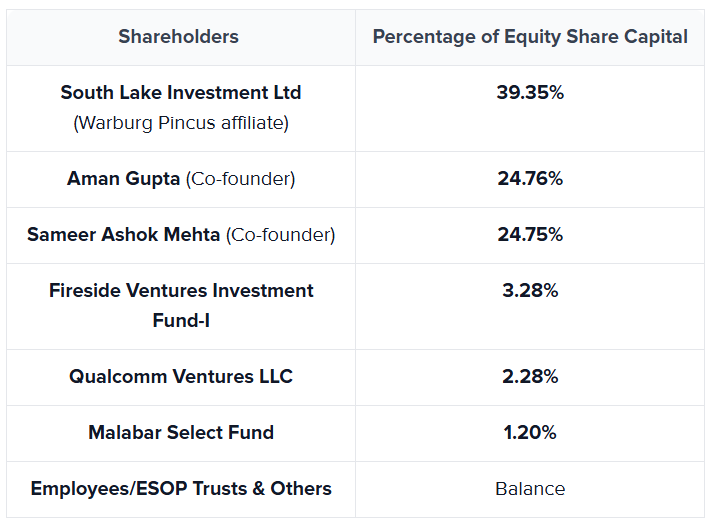
boAt Shareholding Pattern

As the IPO approaches, it’s important to understand the ownership structure of the company. Here's a breakdown of the boAt shareholding pattern:
Having explored the background and operational footprint of boAt, let’s now take a closer look at its financial performance, which provides crucial insights into the company’s growth trajectory and profitability as it moves towards its IPO.

boAt’s Financial Performance Overview

boAt’s recent financial results show a clear recovery after two challenging years, and these numbers form an important part of the brand’s upcoming IPO journey. The turnaround in FY25 and early signs from FY26 give a clearer picture of the company’s current financial strength.

To help you understand what’s confirmed and what this performance indicates, here’s a structured breakdown of the key financial milestones.

Key Highlights

These details are based on official financial disclosures and reliable business reports:

  • FY25 Net Profit: Over ₹60 crore, marking a return to profitability after two years of losses

  • FY25 Standalone Revenue: Approximately ₹3,089.6 crore

  • FY25 EBITDA: Around ₹142 crore, reflecting an improvement in operating performance

  • Profitability Drivers: Better product mix, improved cost control, and stronger demand for core categories such as audio products

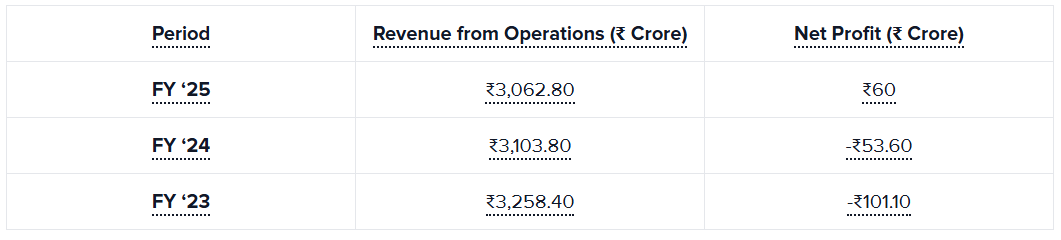
Revenue and Profit Table

Here is a snapshot of boAt’s revenue and net profit performance for the last few years:
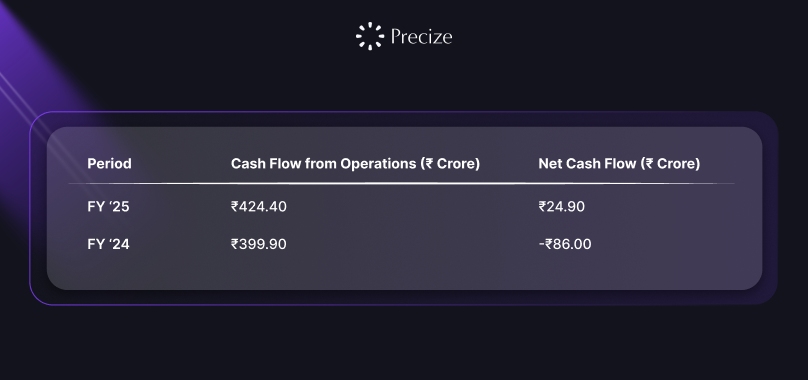
Cash Flow Table

Here’s a look at boAt’s cash flow from operations and net cash flow:

Early FY26 Indications (Publicly Reported)

These data points provide additional context on the momentum moving into FY26:

  • Q1 FY26 Profit: ₹21.4 crore

  • Early FY26 numbers suggest continued stability, though full-year performance will become clearer after subsequent quarterly updates.

With a clear understanding of boAt’s financial health, it’s important to examine how the company plans to structure its upcoming IPO and how the funds raised will be used to support its future growth.

Suggested Read: Demystifying Private Assets: A Beginner’s Guide to How to Access Private Assets

Expected IPO Structure: Issue Size, Fresh Issue vs OFS, Use of Proceeds

boAt’s IPO structure has been outlined through regulatory disclosures and public reports, giving a clear view of how the company plans to raise capital. While the final details will be confirmed in the RHP, the broad structure is already available through credible filings and news updates.

To help you understand what the IPO may look like, here’s a breakdown of the issue size, components of the offer, and the proposed use of funds.

Confirmed Components (Based on Latest Public Filings)

These details have been reported through exchange-related updates and reliable financial publications:

  • Total Issue Size: Approximately ₹1,500 crore

  • Fresh Issue Portion: Around ₹500 crore, earmarked for corporate growth requirements

  • Offer for Sale (OFS): Nearly ₹1,000 crore, enabling existing shareholders to sell a portion of their holdings

  • Listing Proposal: Shares expected to list on NSE and BSE once finalised

What the Fresh Issue Is Expected to Support

Based on disclosures and analyst notes, the fresh issue is expected to be allocated toward:

  • Repayment and prepayment of certain outstanding borrowings

  • Funding working capital needs for product expansion

  • Strengthening operational capabilities as the company scales

  • General corporate purposes, as outlined in the draft proposal

What’s Yet to Be Announced

These details will be shared once the final price band and RHP are released:

  • Final price band per share

  • Minimum application size (lot size)

  • Total number of shares allocated under each category

  • Final breakdown of fresh issue utilisation with exact numbers

With the issue size and structure laid out, the next step is to look at the timeline for the boAt IPO, including what’s already confirmed and what details remain to be finalised.

IPO Timelines & What’s Still Unclear

boAt has completed key steps toward its public issue, including securing regulatory approval for its IPO proposal. These developments indicate steady progress toward listing, but several time-sensitive details are yet to be announced. Since the company has not released its final schedule, investors are tracking updates from official filings and verified news sources.

To help you understand what is confirmed and what remains pending, here’s a simple breakdown of the current timeline status.

Confirmed Milestones

These steps have been publicly reported through regulatory and financial disclosures:

  • boAt’s parent company, Imagine Marketing Ltd., received SEBI approval for a ₹1,500 crore IPO on 29 October 2025

  • Issue Structure Finalised: The offer structure of ₹500 crore as Fresh Issue and ₹1,000 crore as OFS was reported on 29 October 2025, alongside the SEBI approval notice.

  • Listing Proposal: The IPO is proposed to list on NSE and BSE as per publicly available IPO summaries updated in 2025

What’s Still Unclear (To Be Announced)

These details will be shared once the company releases its updated RHP:

  • IPO Open & Close Dates: pending finalisation of the price band

  • Price Band per Share: yet to be disclosed

  • Lot Size & Minimum Application Amount: to be announced after pricing discussions

  • Category-wise Allocation Details: including retail, QIB, and NII quotas

  • Anchor Book Opening Date: typically released one business day before the issue opens

  • Final RHP Release: expected once market conditions and pricing decisions are settled

Expected Post-Issue Timeline (Standard SEBI Process)

Once boAt announces its subscription window and the issue closes, the remaining steps are likely to follow SEBI’s standard T-day schedule:

  • T+1: Basis of allotment finalised

  • T+2: Refunds/UPI unblocks for non-allottees

  • T+2/T+3: Shares credited to Demat accounts

  • T+3: Expected listing on NSE & BSE

(The exact dates will depend on boAt’s final schedule once the price band and subscription period are announced.)

While the IPO dates and structure are being finalised, understanding the potential risks and uncertainties is crucial before moving forward.

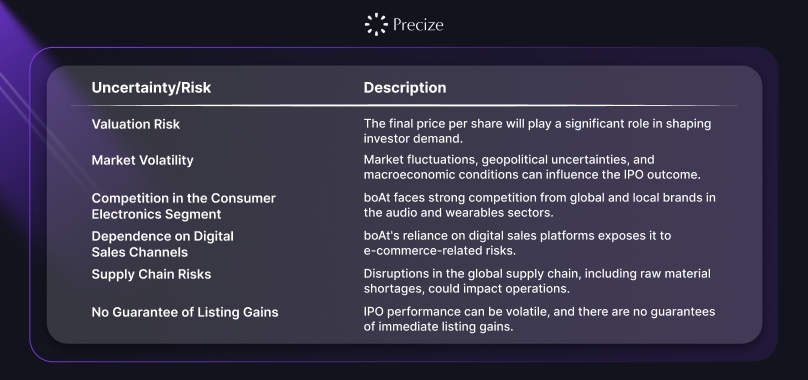
What Are the Uncertainties / Risks to Watch

While boAt’s IPO shows strong potential, there are several uncertainties and risks that investors should consider. These factors could impact the IPO's success or post-listing performance, making it important for stakeholders to stay informed.

1. Valuation Risk

  • boAt’s IPO valuation has not yet been disclosed, but given its previous financial results, the market will likely scrutinise the company’s price band closely.

  • The final price per share, which will determine the IPO’s valuation, will play a significant role in shaping investor demand. If the IPO is priced too high, it could lead to tepid investor interest. Conversely, a lower-than-expected valuation could signal concerns about the company’s long-term growth potential.

2. Market Volatility

  • The overall market conditions at the time of the IPO could heavily influence the outcome.

  • As seen in recent years, market fluctuations, geopolitical uncertainties, or changes in macroeconomic conditions can result in IPO postponements or poor listings.

  • While boAt has shown growth, external market factors (like stock market fluctuations or global supply chain disruptions) can create unpredictability for new IPOs.

3. Competition in the Consumer Electronics Segment

  • The consumer electronics market, especially the audio and wearables sectors, is highly competitive.

  • boAt faces strong competition from global and local brands such as Sony, JBL, Noise, and Realme, which also cater to price-sensitive customers.

  • Market share loss to these competitors could affect boAt’s post-IPO stock performance, particularly if it struggles to maintain its growth momentum.

4. Dependence on Digital Sales Channels

  • A significant portion of boAt’s sales comes from digital platforms like Amazon, Flipkart, and its own website.

  • This heavy reliance on online sales exposes the company to risks such as changes in e-commerce platform policies, supply chain disruptions, or shifts in consumer purchasing behavior.

  • Any downturn in the e-commerce industry or changes in customer preferences could negatively impact boAt’s sales.

5. Supply Chain Risks

  • boAt’s manufacturing is outsourced to both domestic and international suppliers, including contract manufacturers in countries like China and Vietnam.

  • Any disruptions in the global supply chain, such as raw material shortages, factory closures, or trade barriers, could lead to delays or increased costs for the company.

  • The ability of boAt to maintain its low-cost model while navigating supply chain challenges remains a critical risk factor.

6. No Guarantee of Listing Gains

  • While boAt is expected to generate significant interest, there is no guarantee of listing gains, as with any IPO.

  • Historically, the performance of an IPO after listing can be volatile, and the stock price might not immediately reflect the perceived value from the initial offering.

  • Investors should be prepared for potential price fluctuations once boAt’s shares start trading on the exchanges.

After reviewing the uncertainties to watch, here’s what you need to do to apply for the boAt IPO once it opens.

Also Read: IPO vs FPO vs OFS-Key Differences Every Investor Must Know

Steps to Apply for boAt IPO

Applying for the boAt IPO is a simple process. Follow these steps to successfully apply:

  1. Ensure Eligibility: Make sure you are eligible to apply. Residents and HUFs can apply, along with Qualified Institutional Buyers (QIBs) and Non-Institutional Investors (NIIs).

  2. Open a Demat and Trading Account: You need both a Demat and a Trading account. A Demat (dematerialised) account is an electronic account where your shares are held, and a Trading account lets you buy and sell them on the stock exchange. If you don’t have these, open them with any SEBI-registered broker or intermediary.

  3. Check the IPO Price Band & Lot Size: Once the IPO dates are announced, boAt will publish its price band (the minimum and maximum price per share) and the lot size (the minimum number of shares you need to apply for in one bid). These details will be available in the Red Herring Prospectus (RHP) and on your broker’s IPO page.

  4. Bidding Process via ASBA (Application Supported by Blocked Amount): Most investors apply using ASBA, a SEBI-approved process where your application amount is blocked in your bank account instead of being debited immediately. You can do this through your net banking portal or your broker’s platform, depending on the options they offer.

  5. Fill Out the IPO Application Form: In your trading app or bank’s ASBA section, select the boAt IPO, choose the number of lots you want to apply for, and enter your bid price (or choose the “cut-off” option if available).

  6. Payment and Application Submission: Confirm the total amount for your application. Your bank will then block this amount in your account until allotment is completed.

  7. Wait for Allotment: After the IPO closes, the registrar will finalise the basis of allotment. This determines whether you receive shares, depending on demand and the category you applied in.

  8. Check Allotment Status & Funds Unblocking: Once allotment is done, you can check your status using your PAN, application number, or Demat details. If you are not allotted shares, the blocked amount will be unblocked in your bank account.

  9. Shares Credited and Listing: If you receive an allotment, the shares will be credited to your Demat account shortly before the listing date. After listing on NSE and BSE, boAt shares will be available for trading like any other listed stock.

How Precize Helps You Explore Opportunities Beyond IPOs

At Precize, our focus is on helping you explore alternative opportunities beyond traditional listed stocks. Instead of only participating when a company finally lists, you can look at opportunities earlier in the journey and in adjacent private-credit products.

Here’s how Precize fits into your investing toolkit:

  • Access to Unlisted & Pre-IPO Shares:
    Explore curated deals in unlisted and pre-IPO companies so you can consider opportunities before they come to the public markets.

  • Low Minimum Ticket Size (From ₹10,000):
    Start with relatively smaller amounts, making private-market opportunities accessible to a wider range of investors instead of only large institutions.

  • Research-Driven Decisions with Precize Beacon:
    Use insights from Precize Beacon and SEBI-licensed research to understand company fundamentals, risks, and business models before you commit capital.

  • Private Credit in Global Trade Finance:
    Look beyond equity and consider private-credit opportunities that finance cross-border trade, helping you deploy idle capital more efficiently while staying aware of the underlying risks.

  • Secure, Simple Investing Experience:
    Invest through a digital platform with bank-level security, a simple three-step investing flow, and transparent processes around order placement and settlement.

  • Always-On Support:
    Get assistance throughout your investing journey, from understanding opportunities to navigating platform workflows and documentation.

These features ensure that you have the tools, data, and support needed to evaluate private-market opportunities with clarity.

Conclusion

The boAt IPO is an important development in the Indian consumer electronics market. With strong revenue, a return to profitability, and an expanding market presence, the IPO offers a unique opportunity for those looking to explore opportunities beyond the public markets. However, as with any IPO, it’s essential to be mindful of the risks involved, such as market conditions, competition, and the final IPO pricing.

At Precize, we focus on making alternative opportunities simple, secure, and well-informed. Whether you’re looking into pre-IPO shares or exploring short-term trade finance options, we’re here to help you navigate the market with confidence.

Reserve your access with Precize and discover carefully curated opportunities in the private markets alongside headline IPOs like boAt.

Disclaimer

This blog is for informational purposes only and does not constitute investment, legal, tax, or other financial advice, nor a recommendation to buy, sell, or hold any security. References to specific companies or IPOs, including boAt, are illustrative and should not be treated as investment recommendations.

Investments in unlisted and privately placed securities carry significant risks, including lack of liquidity, limited disclosures, potential loss of capital, and longer investment horizons. Past performance is not indicative of future results.

FAQs

1. When is the boAt IPO expected to open?

The boAt IPO is expected to open in FY25 or FY26, depending on market conditions and final approvals. The company has not yet announced the exact dates, but they will be released closer to the launch.

2. What is the expected issue size for boAt's IPO?

The expected total issue size for the boAt IPO is around ₹1,500 crore, with approximately ₹500 crore in fresh issue and ₹1,000 crore in Offer for Sale (OFS) by existing shareholders.

3. What is the price band for the boAt IPO?

The price band for boAt’s IPO has not been announced yet. The company will disclose the final price range closer to the opening date, along with the lot size and allotment details.

4. What risks should I consider before applying for the boAt IPO?

While boAt shows strong potential, risks include market volatility, intense competition in the consumer electronics space, and pricing uncertainty. It’s important to consider these factors before deciding whether to apply for the IPO.

5. How can I apply for the boAt IPO?

To apply for the boAt IPO, ensure you have a Demat and Trading account. You can apply via ASBA through your bank's net banking platform or through a registered broker once the IPO opens.

Precize
Precize
Content Strategy and Research Analyst

Stay in the Loop

Join our newsletter for exclusive access to thoughtfully curated content and we promise, no spam

The next generation of asset classes in India

Resources

Our Office

Office No. 1219, The Summit Business Park, Andheri Kurla Road, Andheri East, Mumbai, Maharashtra - 400093

Find us on Google

support@precize.in

+91 7738336457

All trademarks and logos or registered trademarks and logos found on this Site or mentioned herein belong to their respective owners and are solely used for informational and educational purposes.

The material presented in this advertisement is for informational purposes only and should not be construed as investment advice or investment availability. It is not a recommendation of, or an offer to sell or solicitation of an offer to buy, any particular unlisted share, security, strategy, or investment product. Investing in the private market and securities involves risks, including the potential loss of money, and past performance does not guarantee future results. Market trends, data interpretations, graph projections are provided for informational and illustrative purposes and may not reflect actual future performance. Nothing on this website should be construed as personalized investment advice or should not be treated as legal, financial, or any other form of advice. Precize is not liable for financial or any other form of loss incurred by the user or any affiliated party based on information provided herein.

Precize is neither a stock exchange nor does it intend to get recognized as a stock exchange under the Securities Contracts Regulation Act, 1956. Precize is not authorized by the capital markets regulator to solicit investments. The securities traded on these platforms are not traded on any regulated exchange.

The website will be updated regularly.

Copyright © 2026 - Precize - All Rights Reserved