boAt Unlisted Share Price
As of June 2026, the boAt unlisted share price on Precize is around ~₹853 - ₹886 per share. The recent 52-week range has been approximately ~₹823 - ₹1,638, showing how sharply private-market prices can move around IPO expectations.
Before investing, check:
Current availability of boAt shares.
Minimum lot size and total ticket size.
Seller and transfer terms.
Demat transfer timeline.
Any lock-in or post-listing restrictions.
Whether the current quote leaves enough room versus the expected IPO valuation.
You can review live private-market availability on the Precize boAt page and compare the quoted price with the latest IPO valuation expectations before placing an order.
What Does boAt Do?
boAt is a consumer electronics and lifestyle brand operated by Imagine Marketing. Founded by Aman Gupta and Sameer Mehta, the company became popular by selling affordable, design-led audio products to Indian consumers.
Its main categories include:
Wireless earbuds and earphones.
Headphones.
Bluetooth speakers.
Smartwatches and wearables.
Mobile accessories.
Gaming and lifestyle electronics.
boAt built its early growth through online marketplaces such as Amazon and Flipkart, celebrity-led marketing, influencer campaigns, youth-focused brand positioning, and quick product launches at affordable prices. It later expanded into offline retail through large-format stores, distributors, and retail chains.
The company is not a pure hardware manufacturer in the traditional sense. Its strength has been product selection, branding, pricing, distribution, and marketing. That asset-light approach helped boAt scale quickly, but it also means the company competes in categories where product designs can be copied and price pressure can rise quickly.
Why Investors Are Watching boAt Unlisted Shares
Investor interest in boAt unlisted shares has increased because the company now has clearer IPO visibility. When a large consumer brand moves closer to listing, pre-IPO demand often rises as investors try to enter before the public issue.
There are four main reasons boAt is attracting attention.
1. Strong Brand Recall
boAt has become one of India's most recognized audio and wearable brands. It speaks directly to young consumers through price, design, influencer marketing, and familiar brand ambassadors.
For investors, brand recall matters because it can lower customer acquisition costs and support repeat purchases. However, brand strength must still translate into profitable growth.
2. Large Addressable Market
India's audio, wearables, and smart accessories market has grown because of smartphone adoption, streaming, gaming, remote work, fitness tracking, and lower device prices.
boAt sits in a category where replacement cycles are short. Consumers may buy new earbuds, speakers, or smartwatches more often than they replace larger electronics. That creates recurring demand, but it also creates pressure to keep launching new products.
3. IPO Visibility
Reported SEBI observations give the company a clearer path toward public listing than it had after the postponed 2022 IPO attempt. This makes boAt more visible to pre-IPO investors, especially those tracking consumer-tech listings in India.
That said, SEBI observations do not guarantee a listing on a fixed date. Companies can still wait for better market conditions, adjust valuation expectations, or revise offer details before launch.
4. Reported Return to Profitability
Public reports suggest boAt returned to profitability in FY25 after posting losses in FY23 and FY24. Market coverage from sources such as Angel One indicates profit of around ₹60 crore in FY25, while revenue remained broadly around the ₹3,000 crore level.
That turnaround is important. Public market investors have become more selective about loss-making consumer-tech companies. A profitable listing story is easier to support than one based only on growth.
boAt's financial profile appears to be shifting from high growth to more disciplined profitability. That can be positive if the company sustains margins, but it also raises questions about how fast the business can grow from here.
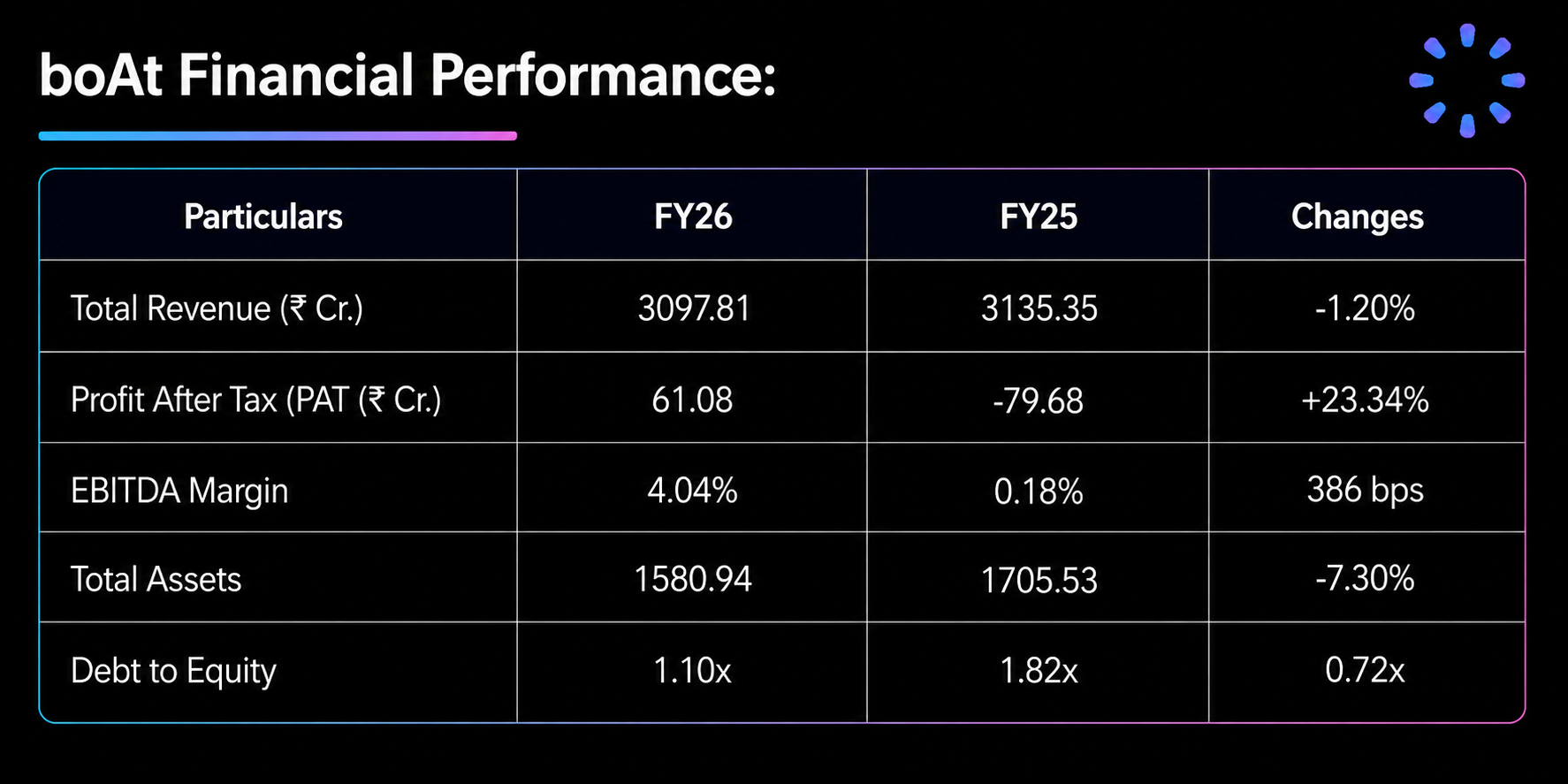
For investors, the key issue is not only whether boAt made a profit in one year. The bigger question is whether it can keep profits stable while defending market share against Noise, Fire-Boltt, JBL, Realme, OnePlus, Xiaomi, and other brands.
Before buying boAt pre-IPO shares, investors should review the latest financial statements in the final IPO documents. Pay attention to revenue growth, gross margin, advertising spend, inventory levels, cash flow, and related-party transactions.
boAt Valuation Outlook for 2026
Valuation will decide whether boAt unlisted shares are attractive before the IPO. A good company can still be a poor investment if the entry price already reflects too much optimism.
Some public reports have discussed a potential valuation near $1.5 billion, or around ₹13,000 crore, although final IPO valuation will depend on the price band and market demand. If boAt's FY25 profit is around ₹60 crore, investors should recognize that the market may be valuing the company on brand strength, revenue scale, and future growth rather than current earnings alone.
At a private-market quote of roughly ~₹853 - ₹886 per share, investors should be especially careful about the gap between unlisted-market enthusiasm and eventual IPO pricing. A wide 52-week range also shows that sentiment can change quickly.
That does not make the valuation automatically expensive or cheap. It means investors should compare boAt against:
Listed consumer electronics and lifestyle peers.
Other Indian consumer brands with strong distribution.
D2C brands with similar revenue and margin profiles.
IPO valuations of recent new-age companies.
The company's own growth, margin, and cash-flow trend.
Pre-IPO investors should also leave room for IPO pricing risk. If the IPO is priced lower than the unlisted market expectation, pre-IPO buyers may not get the listing gain they expected.
Key Growth Drivers for boAt
boAt still has multiple growth levers, especially if it can move beyond low-margin, entry-level products.
Premiumisation
The company is trying to sell higher-value audio products, smarter wearables, and more feature-rich accessories. This can help average selling prices and margins if consumers accept the upgrade.
The challenge is that premium categories bring stronger competition from global brands.
Offline Expansion
boAt started as a digital-first brand, but offline retail remains important in India. A wider offline presence can help the company reach buyers who prefer to see products before purchasing.
Offline expansion can improve reach, but it can also increase distribution costs and working capital needs.
New Product Categories
boAt has explored areas such as grooming, gaming accessories, smart lifestyle devices, and connected wearables. These categories can increase revenue if the brand earns consumer trust beyond audio.
Investors should watch whether new categories improve profit margins or simply add complexity.
Domestic Manufacturing and Supply Chain Control
The company has spoken in the past about increasing local manufacturing and reducing supply-chain dependence. If executed well, this could support better cost control and reduce import-related risks.
However, supply-chain changes take time. Investors should verify actual manufacturing dependence, supplier concentration, and import exposure in the IPO documents.
Risks of Investing in boAt Unlisted Shares
The risks are meaningful. Investors should not buy boAt unlisted shares only because the brand is familiar or the IPO is expected.
1. High Competition
boAt competes in crowded categories where pricing, features, design, and online ratings can shift demand quickly. Competitors include Indian brands, global audio companies, and smartphone ecosystems with their own accessories.
If competition increases, boAt may need to spend more on discounts and marketing.
2. Limited Technology Moat
boAt's biggest advantage is brand and distribution, not necessarily deep proprietary technology. That makes execution critical. A brand-led business can perform well, but it needs constant product refreshes, marketing discipline, and supply-chain control.
3. Margin Pressure
Affordable electronics can be a thin-margin business. Product returns, warranty costs, discounts, logistics, and marketplace fees can all affect profitability.
One profitable year is encouraging, but investors should look for margin consistency across several reporting periods.
4. Import and Supplier Dependence
If key components or finished goods depend on overseas suppliers, currency fluctuations, shipping delays, import duties, or geopolitical issues can affect costs.
The final IPO documents should give investors a clearer view of supplier concentration and manufacturing risk.
5. Unlisted Share Liquidity Risk
Unlisted shares are not traded on NSE or BSE. You may not be able to sell quickly, and available buyer prices can differ from the price you paid.
There may also be transfer timelines, minimum lot sizes, documentation requirements, and lock-in rules after listing. Read these carefully before investing.
Should You Buy boAt Unlisted Shares Before IPO?
boAt unlisted shares may be worth tracking in 2026, but they are not a simple "buy now" opportunity for every investor. The company has strong brand recall, a large consumer market, better IPO visibility, and a reported return to profitability. These are real positives.
At the same time, the risks are also clear. Revenue growth has moderated, competition is intense, margins can remain under pressure, and unlisted share pricing can move ahead of fundamentals when IPO excitement builds.
This section is not personalized investment advice. Use it as a decision framework and consult a qualified financial advisor if you are unsure whether unlisted shares fit your portfolio.
boAt may suit investors who:
Understand pre-IPO and unlisted share risks.
Can hold through uncertain IPO timelines.
Are comfortable with limited liquidity.
Have checked the latest valuation against financial performance.
Want exposure to India's consumer electronics and wearables market.
boAt may not suit investors who:
Need short-term liquidity.
Are investing only for expected listing gains.
Are uncomfortable with valuation risk.
Have not reviewed the latest IPO documents.
Prefer listed companies with daily price discovery.
If you are comparing boAt with other private-market opportunities, use the Precize unlisted shares screener to review available companies, sectors, price history, and basic investment details. For process-related questions, the Precize FAQs explain common points around unlisted shares, demat transfers, and investor requirements.
What to Check Before Investing
Before buying boAt unlisted shares, review these points carefully:
Latest unlisted share price: Check the live quote, lot size, and availability before placing an order. The June 2026 reference range is around ₹853 to ₹886 per share, but live prices can move.
Final IPO documents: Read the RHP when available, not only media summaries.
Revenue trend: See whether growth is restarting or still slowing.
Profit quality: Check whether FY25 profit came from core operations or one-off items.
IPO valuation: Compare the expected market cap with revenue, profit, and peer multiples.
OFS size: Understand how much of the IPO proceeds go to the company versus selling shareholders.
Lock-in and liquidity: Confirm transfer rules, lock-in rules after listing, and your exit options.
Risk factors: Read the risk section in the IPO document before investing.
If you need help understanding the process, you can contact Precize Care before making a decision.
Final View on boAt Pre-IPO Shares
boAt is one of India's most visible consumer-tech brands, and its IPO will likely be watched closely by retail and institutional investors. The company has brand strength, scale, and a large addressable market. It also appears to be entering the IPO phase with better profitability than in its earlier listing attempt.
Still, investors should keep the decision grounded in valuation. If the unlisted share price assumes a perfect IPO outcome, the risk-reward may be less attractive. If pricing is reasonable compared with growth, margins, and peer valuations, boAt could remain an interesting pre-IPO opportunity for investors who can accept the risks.
For now, the better approach is to track the final RHP, updated financials, IPO price band, and live unlisted share pricing before deciding.
Stay updated with unlisted companies through our Precize Community. If this article was useful, you can share it with other investors through the Precize Referral Program.
FAQs on boAt Unlisted Shares
1. Is boAt IPO approved by SEBI?
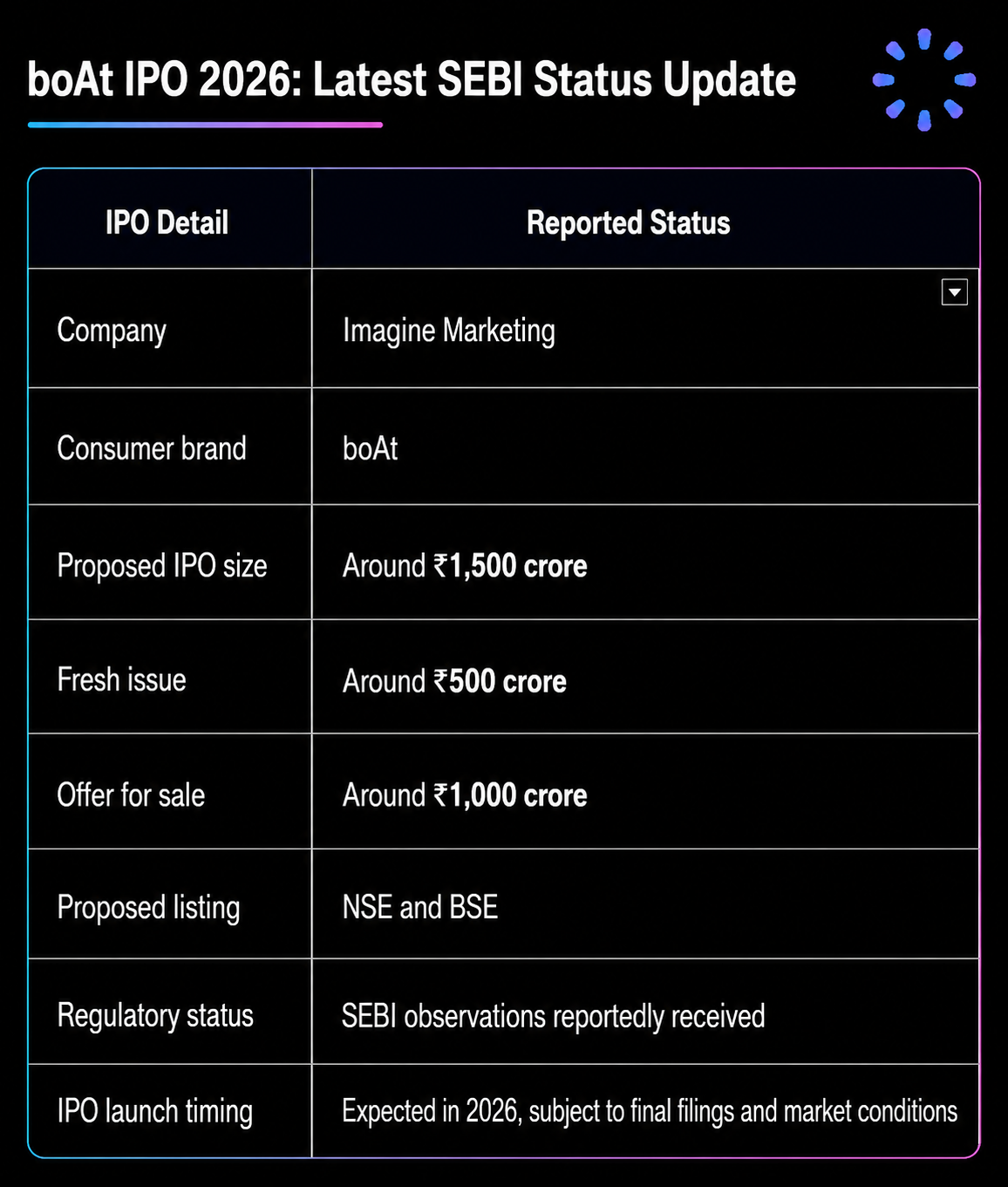
Public reports state that Imagine Marketing has received SEBI observations for its IPO proposal, which media coverage often treats as the regulatory go-ahead for a public issue. Investors should still check final IPO documents and official exchange updates before making any decision.
2. What is the expected size of the boAt IPO?
The boAt IPO is reported to be around ₹1,500 crore, including a ₹500 crore fresh issue and ₹1,000 crore offer for sale.
3. Is boAt profitable?
Public reports suggest boAt returned to profitability in FY25, with profit of around ₹60 crore after losses in earlier years. Investors should verify final financials in the IPO documents.
4. What are the main risks of boAt unlisted shares?
The main risks include high competition, valuation risk, limited liquidity, margin pressure, import or supplier dependence, and uncertainty around IPO timing and pricing.
Disclaimer: This content is for informational purposes only and does not constitute investment advice. Investing in unlisted shares involves risks including illiquidity and potential loss of capital. Consult a qualified financial advisor before making investment decisions. Precize is not a stock exchange and is not regulated by SEBI.