Looking at a company’s balance sheet can feel like trying to decipher a foreign language. Numbers are everywhere, and it’s easy to get lost. That’s where equity book value comes in; it’s the figure that shows what a company truly owns after accounting for what it owes. Think of it as a clear snapshot of the company’s net worth on paper.
In this blog, we’ll simplify equity book value. You’ll understand what it is, its key components, how to calculate it, and why it matters. We’ll also cover how it differs from market value and its limitations.
Let’s get into it!
Quick Overview
Equity book value shows a company’s net worth by subtracting total liabilities from total assets.
Key components include total assets, total liabilities, and shareholders’ equity.
It provides a conservative measure of financial health and a baseline for comparison with market value.
Limitations include reliance on historical costs, depreciation impact, and exclusion of market conditions or intangible assets.
Comparing book value with market value helps understand the differences between accounting worth and market perception.
What is Equity Book Value?
Equity book value is the net value of a company’s assets after deducting its liabilities. It shows the portion of the company that belongs to the shareholders according to the balance sheet. This value represents the company’s actual worth on paper at a specific point in time.
To see how equity book value is calculated, it helps to look at the individual components that go into it.
Components of Equity Book Value
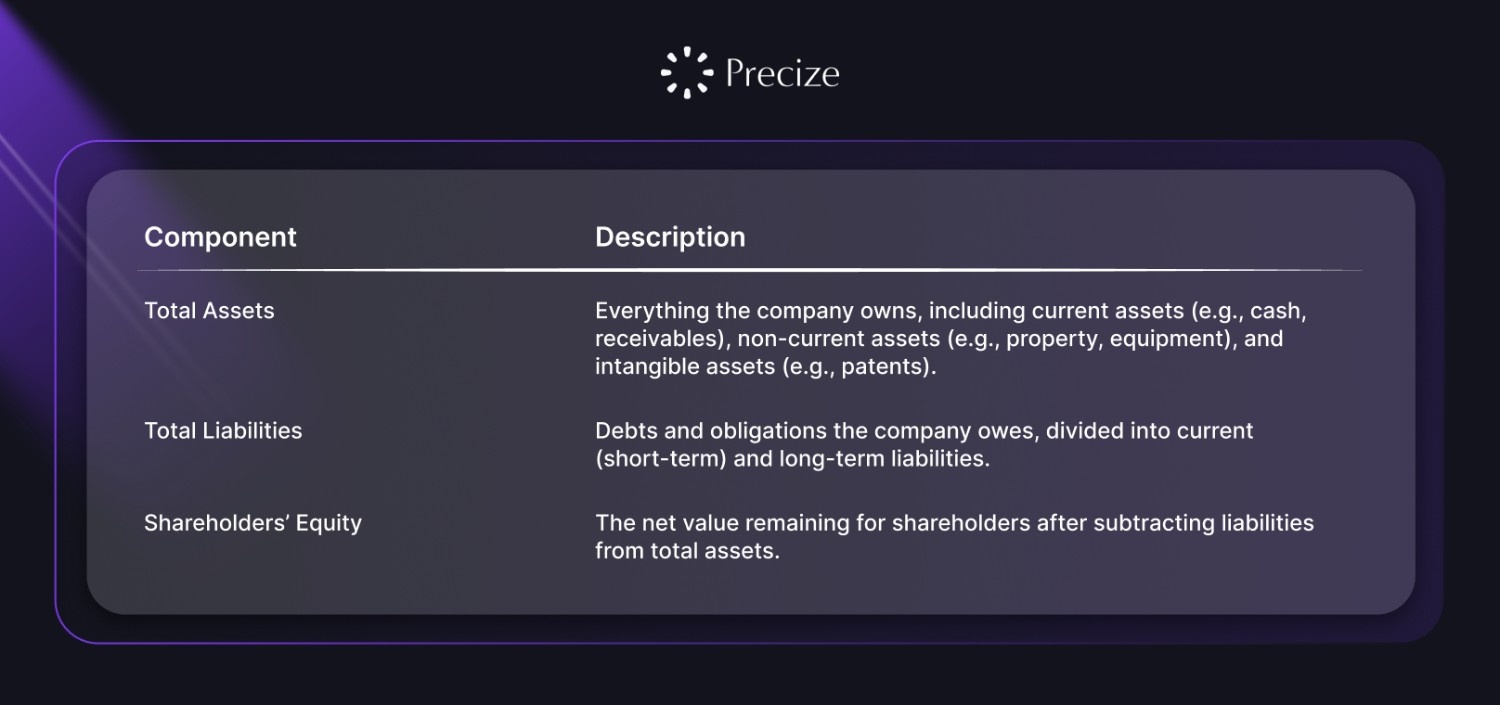
To understand equity book value, it helps to know what makes it up. At its core, equity book value is calculated from the company’s balance sheet, and it primarily includes the following components:
Total Assets
This covers everything the company owns that has value. Assets can be divided into:
Current Assets: Such as cash, accounts receivable (money owed to the company), inventory, and short-term investments.
Fixed or Non-current Assets: Property, plant, equipment, and land.
Intangible Assets: Items such as patents, trademarks, or goodwill. Some calculations may exclude intangible assets for a more conservative view since they are harder to sell.
Total Liabilities
Liabilities include all debts and obligations the company needs to pay:
Current Liabilities: Short-term obligations like accounts payable, salaries, taxes, and other bills due within a year.
Long-term Liabilities: Loans, mortgages, bonds, and other obligations payable over a longer period.
Shareholders’ Equity
Once you subtract total liabilities from total assets, the remainder is shareholders’ equity, also known as equity book value.
This represents the company’s net worth according to its financial records and is usually listed in the equity section of the balance sheet.
Having explored the key components, it’s now time to see how they combine to determine a company’s equity book value.
Formula and Calculation of Equity Book Value
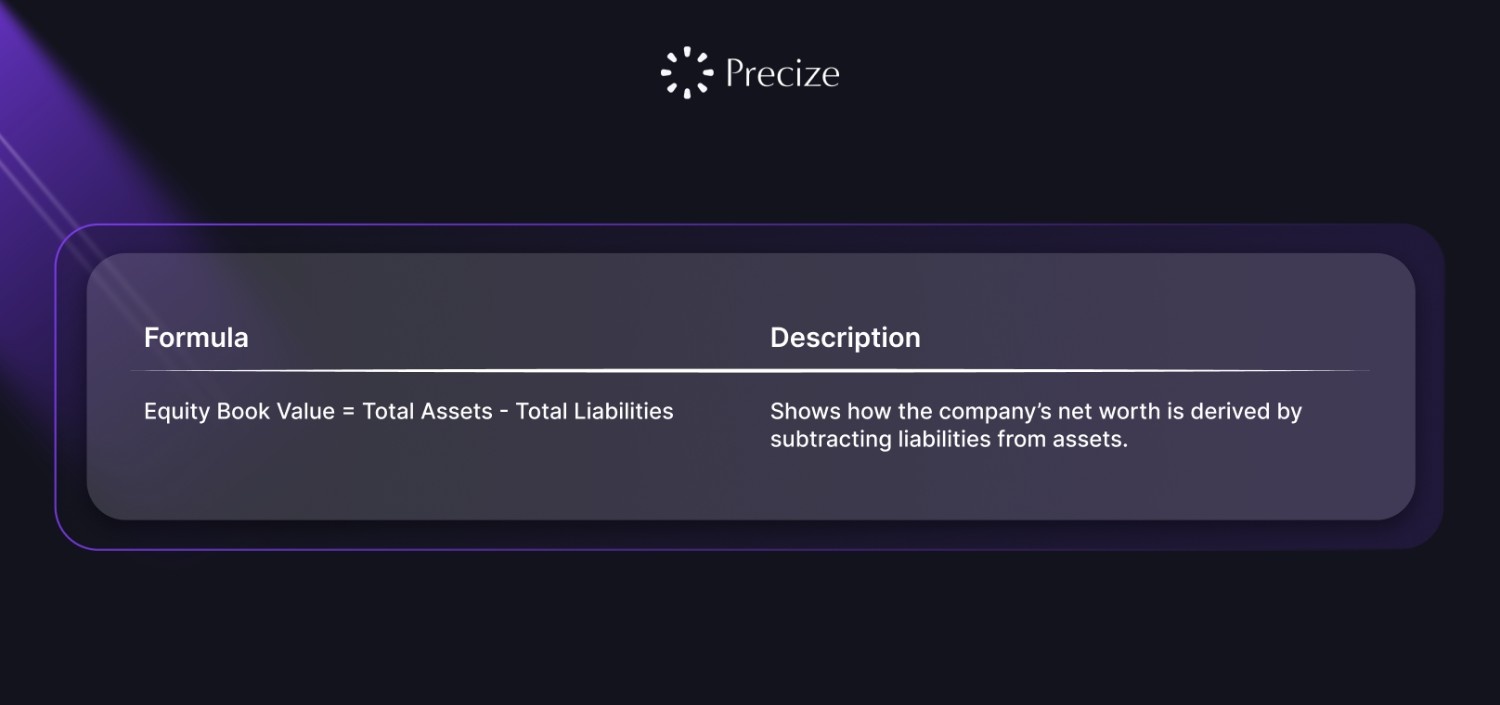
Learn how to determine a company’s equity book value by using its assets and liabilities through the simple and practical calculation below.
Formula:
Equity Book Value = Total Assets - Total Liabilities
Where:
Total Assets include both current assets, like cash, inventory, and receivables, and non-current assets, such as property, equipment, and long-term investments.
Total Liabilities include current obligations, like accounts payable and short-term loans, as well as long-term debts such as bonds or bank loans.
How to Calculate
Take the latest balance sheet from the company’s financial statements.
Note the total value of assets.
Note the total value of liabilities.
Subtract liabilities from assets to get the equity book value.
Quick Example
If a company has total assets of ₹100 crore and total liabilities of ₹60 crore:
Equity Book Value = 100 crore − 60 crore = 40
This ₹40 crore represents the company’s net value on paper, giving you a clear view of the equity recorded in its books.
After calculating equity book value, it’s helpful to look at the ways this metric can give insights into the company’s stability and net worth.
Importance of Equity Book Value
Understanding equity book value is useful because it shows the actual financial position of a company and the value available to shareholders after all liabilities are settled. Here is why it matters:
Reflects the Company’s Net Worth: It shows the net value of a company by subtracting total liabilities from total assets. This tells you what would remain for shareholders if all debts were cleared.
Helps Assess Financial Health: You can get a sense of how strong the company is financially by looking at how much value it holds after meeting its obligations. This indicates whether the company is stable and able to operate smoothly.
Provides a Conservative Measure: Since it is based on the historical cost of assets, equity book value gives you a grounded measure that doesn’t factor in market ups and downs or future growth.
Represents Shareholders’ Interest: It highlights the portion of the company that belongs to shareholders, showing what you would theoretically receive if all assets were sold and debts paid.
Supports Decision-Making: Knowing the equity book value helps you make practical decisions about the company’s finances and planning.
Tracks Changes Over Time: Equity book value changes as the company acquires new assets or takes on more liabilities. Tracking it over time helps you follow the company’s financial growth or decline.
Foundation for Other Metrics: It is also the basis for calculating measures like book value per share, which shows the value of each share according to the company’s books.
Knowing the importance of equity book value helps put into context how it relates to market value and why the two measures can differ.
Equity Book Value vs. Market Value
When looking at a company’s worth, it’s important to understand the difference between equity book value and market value. The table below highlights the key differences:
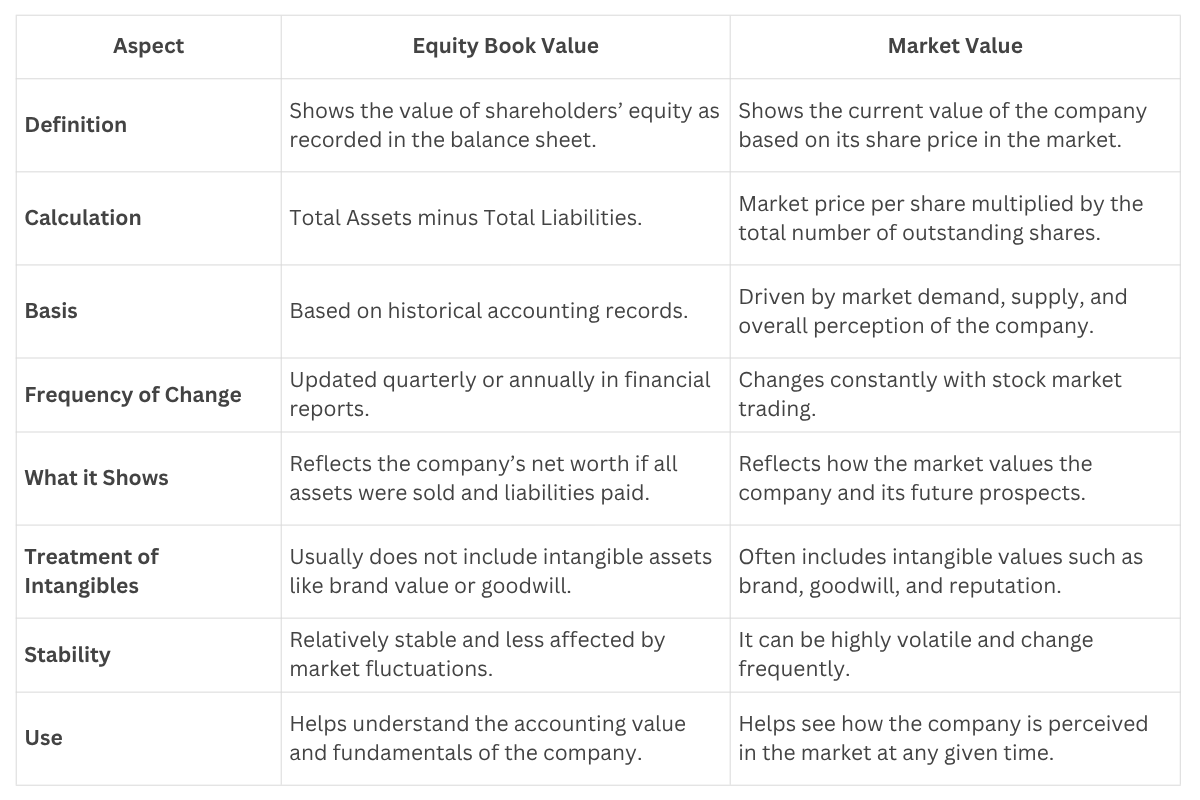
Equity book value provides useful insights, but like any financial measure, it comes with certain constraints that you should keep in mind.
Common Limitations of Equity Book Value
While equity book value gives you a useful idea of a company’s financial position, there are some limitations you should keep in mind:
Based on Historical Costs
Book value uses the original purchase price of assets, not what they are worth today. So, assets like land or property that have gone up in value over time may appear lower than their real worth.
Effect of Depreciation
The value of assets is shown after depreciation, which depends on the accounting method used. If depreciation is high, it can make the book value seem smaller than the actual value of the assets.
Subjective Valuation of Intangibles
Assets like patents, trademarks, or goodwill are often valued based on judgment. This means the book value might not match how the market or others see the company’s true worth.
Doesn’t Reflect Market Conditions
Book value doesn’t take into account current market trends, demand, or economic factors that can change the value of assets or the company overall.
May Not Show True Net Worth
Since assets and liabilities are recorded according to accounting rules, the book value may not fully reflect the real financial strength of the company.
Limited Use for Some Companies
If a company relies heavily on intangible or service-based assets, book value might not give a complete picture, as these assets often aren’t fully recorded on the balance sheet.
Only a Snapshot
Book value represents the company at a specific point in time. It may not show how the company’s value could change in the near future due to business growth, losses, or market fluctuations.
Conclusion
Equity book value is a fundamental metric that helps you understand a company’s net worth based on its financial statements. By looking at assets, liabilities, and shareholders’ equity, you can get a practical sense of the company’s financial position and track changes over time. While it has limitations, such as being based on historical costs and not reflecting market conditions, it remains a useful measure for assessing the net value recorded in the books.
For those looking to explore alternative financial opportunities, platforms like Precize make it easier to access unique options. Precize facilitates participation in leading private companies, allowing you to buy and sell unlisted shares and pre-IPO shares. It also provides access to global finance opportunities.
Reserve your access to explore a diversified portfolio and take advantage of these unique financial opportunities!
Disclaimer
This blog is intended for general information only & should not be considered as financial, legal, or professional advice. While we strive to provide accurate information, readers should verify details independently before relying on them. The content does not recommend any specific actions, and neither the authors nor the platform is responsible for decisions made based on this information.
FAQs
1. How does equity book value differ from tangible book value?
Equity book value includes all assets, both tangible and sometimes intangible, minus liabilities. Tangible book value, on the other hand, excludes intangible assets like goodwill, patents, or trademarks. This makes tangible book value a more conservative measure, showing the net worth based only on physical and financial assets.
2. Can equity book value be negative, and what does it mean?
Yes, equity book value can be negative if a company’s total liabilities exceed its total assets. This indicates that the company owes more than it owns on paper, which could be a sign of financial strain or the need for restructuring, depending on the overall business situation.
3. How often is equity book value updated in a company’s financial statements?
Equity book value is typically updated whenever a company releases its balance sheet, which is usually quarterly or annually. Changes in assets, liabilities, or retained earnings affect the book value, so regular updates are important to track the company’s financial progress over time.
4. Why might equity book value not match the market price of shares?
Equity book value is based on historical costs and accounting records, while market price reflects current demand, investor perception, and future prospects. Market sentiment, news, and economic conditions can make the market value much higher or lower than the book value.
5. How can shareholders use equity book value to understand company performance?
Shareholders can use equity book value as a baseline to see the net worth of the company recorded in its books. Tracking changes over time can highlight growth, accumulation of profits, or increases in liabilities, helping shareholders evaluate the company’s financial stability.