Why the Zepto DRHP Filing Matters
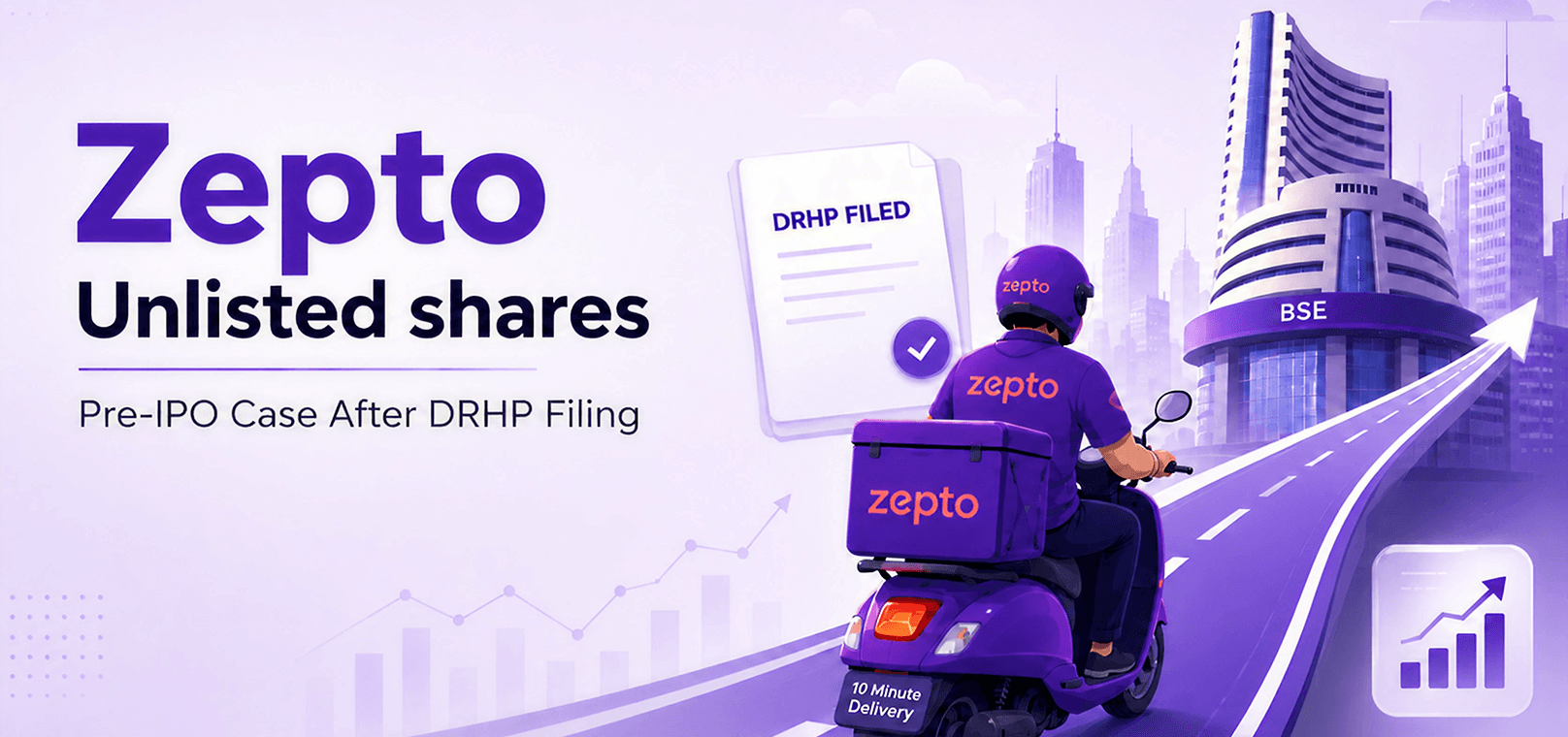
A confidential DRHP filing is a formal step toward an initial public offering, or IPO. It allows a company to start regulatory review before releasing the full public offer document.
For Zepto unlisted shareholders, the filing matters for three reasons.
1. IPO Visibility Improves
The DRHP filing reduces uncertainty around Zepto's listing intent. It signals that the company is actively preparing for public markets, even if the final IPO date, issue size, and price band are not yet confirmed.
That visibility can support investor interest in the unlisted market. However, it should not be confused with a guaranteed liquidity event. IPO timelines can shift based on market conditions, regulatory feedback, company readiness, and investor demand.
2. Price Discovery Becomes Sharper
As Zepto moves closer to a public filing, investors will look for clearer valuation anchors. The public DRHP or final prospectus should help investors assess revenue growth, losses, cash burn, shareholding, related-party transactions, and use of proceeds.
This is important because unlisted share prices can move on limited supply and sentiment. Public-market investors usually demand more disclosure and more discipline on valuation.
3. Institutional Scrutiny Increases
Before listing, institutional investors tend to study the company more closely. They look at the size of the market, revenue quality, contribution margins, customer retention, fulfilment costs, and governance.
This scrutiny can help mature the investment conversation. It can also expose risks that were easier to ignore when the company was valued mainly on growth.
Zepto's Business Model in Simple Terms
Zepto operates in quick commerce, delivering groceries and daily essentials through a network of dark stores located close to customers. A dark store is a small fulfilment centre built for online orders rather than walk-in shoppers.
The model depends on four moving parts:
Dense demand: Orders need to come from compact urban areas so delivery routes stay efficient.
Fast inventory movement: Products must turn over quickly to reduce wastage and working capital pressure.
Reliable fulfilment: Picking, packing, and delivery must happen quickly without frequent errors.
Repeat behaviour: Customers need to order often enough to justify the infrastructure.
The attraction is clear. Grocery and everyday essentials are repeat categories, not one-time purchases. If customers build a Zepto habit, the company can benefit from frequent orders and strong app engagement.
The challenge is equally clear. Speed costs money. Dark-store rent, delivery partner costs, inventory, discounts, technology, and customer support all sit close to every order. That is why investors should focus on unit economics, not only revenue growth.
Growth Drivers Behind the Pre-IPO Case
The bull case for Zepto rests on the idea that quick commerce can become a durable urban consumption channel in India. If that happens, companies with strong consumer recall and efficient fulfilment networks could hold meaningful market share.
Quick Commerce Is Becoming a Habit
Urban consumers increasingly use quick-commerce apps for top-up grocery, snacks, personal care, household items, and urgent purchases. The more often customers open the app, the more valuable the platform becomes.
For Zepto, this habit formation is central to the long-term case. A business that handles frequent, low-friction purchases may be able to build loyalty through availability, speed, and convenience.
Zepto Has Strong Brand Recall
Zepto is one of the best-known names in Indian quick commerce. That matters in a crowded market because customers often choose the app they remember first, especially for urgent purchases.
Brand recall can reduce friction in customer acquisition. But it does not remove the need for pricing discipline, good product selection, and consistent delivery performance.
The Online Grocery Opportunity Is Still Large
India's grocery market remains massive, and online penetration is still small compared with the overall market. That leaves room for growth if quick commerce can expand beyond early urban adopters.
The opportunity is not limited to groceries. Non-grocery categories, in-app advertising, private labels, and higher-value baskets may become important margin levers over time.
Institutional Backing Adds Credibility
Zepto has raised capital from large institutional investors and has been valued at multibillion-dollar levels in private funding rounds. That backing helps fund expansion and signals confidence from professional investors.
Still, institutional backing is not the same as investment certainty. Private valuations can reset, and IPO investors may price the business differently once full financials are available.
Is Zepto's Current Unlisted Price Attractive?
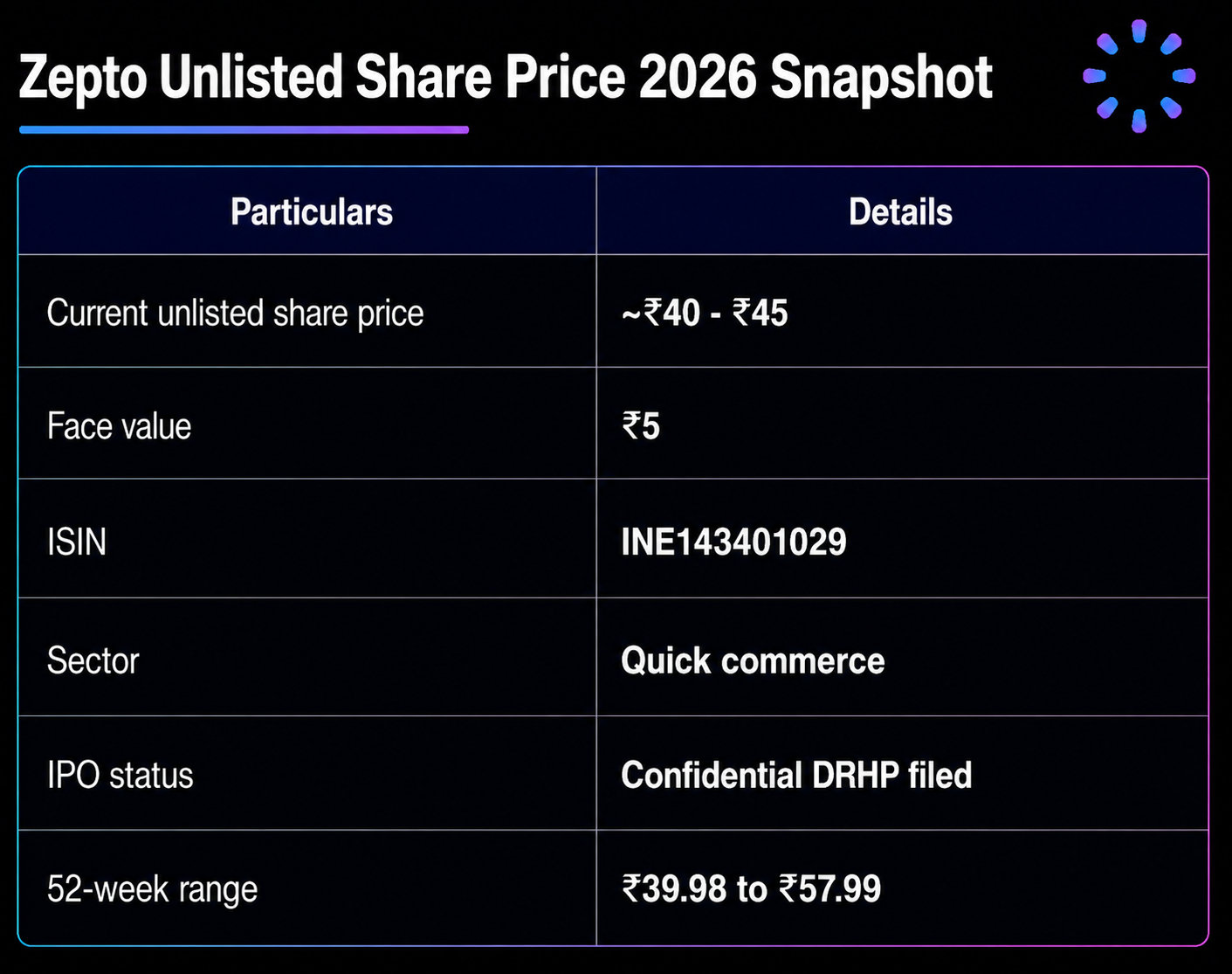
At around ~₹40 - ₹45 per share, Zepto's current unlisted price is below the cited 52-week high. That can make the entry point look more reasonable than earlier private-market levels.
But attractiveness depends on what the IPO eventually reveals. Investors should compare the current unlisted price with:
The implied valuation in recent funding rounds.
The eventual IPO price band.
Revenue growth and gross margin trends.
Losses, cash burn, and contribution margin.
Competitive intensity and discounting levels.
The quality of governance and disclosures in the DRHP.
The reported private valuation of around $7 billion gives a useful reference point for Zepto valuation, but it should not be treated as a floor. Listed markets can reward growth, but they also punish weak profitability, unclear unit economics, or aggressive IPO pricing.
For investors comparing Zepto with other private-market opportunities, the unlisted shares screener can help organise company research before making a decision.
What Investors Should Check in the Zepto DRHP
When Zepto's public DRHP or final prospectus is available, investors should read more than the summary pages. The filing should answer whether the company is becoming a stronger business, not just a bigger one.
Focus on these sections first:
Risk factors: Look for risks linked to competition, losses, delivery partners, dark stores, regulation, and customer retention.
Financial statements: Compare revenue, expenses, losses, cash flow, and working capital across years.
Use of proceeds: Check whether IPO money goes into growth, debt reduction, working capital, or selling shareholders.
Shareholding pattern: Review founder, investor, employee stock option plan, and post-issue ownership details.
Revenue mix: Understand how much revenue comes from product sales, delivery, advertising, platform income, or other streams.
Unit economics: Look for signs that mature stores or cities are improving profitability.
Related-party transactions: Check whether material transactions could affect governance or margins.
If you are new to private-market investing, the common investor questions page explains basic terms such as unlisted shares, demat transfers, and investor process.
Key Risks in Zepto Unlisted Shares
Zepto's growth story is compelling, but the risk list is meaningful. Pre-IPO investors should be comfortable with uncertainty before investing.
Competition Is Intense
Zepto competes with Blinkit, Swiggy Instamart, BigBasket Now, and other fast-delivery options. Customers can switch apps quickly if another platform offers better prices, faster delivery, or wider assortment.
This can pressure discounts, advertising spend, delivery costs, and margins.
Profitability Is Still the Main Test
Quick commerce companies can grow revenue quickly, but profitability is harder. Delivery costs, rent, inventory wastage, discounts, and customer acquisition can absorb a large part of revenue.
Investors should watch whether Zepto can reduce losses as it scales. Growth without margin progress may receive a lower public-market multiple.
IPO Valuation May Disappoint
There is no guarantee that Zepto's IPO valuation will be higher than current unlisted levels. If the IPO price band is aggressive, listed-market investors may demand a discount. If market sentiment weakens, the company may delay the listing or revise expectations.
Liquidity Is Limited Before Listing
Unlisted shares are less liquid than listed shares. You may not be able to sell quickly, and exit prices can vary based on buyer demand, platform availability, transfer restrictions, and market sentiment.
Information Is Less Complete Than Listed Companies
Until the public DRHP or final prospectus is available, investors may have limited access to detailed financials. That makes independent verification important.
For process-related questions, investors can contact Precize Care. Support teams can help with account, demat, and settlement questions, but they cannot provide personalised investment advice.
Should You Buy Zepto Unlisted Shares Before the IPO?
Zepto may suit investors who understand pre-IPO risk, can tolerate illiquidity, and want exposure to India's quick-commerce growth story before listing. It is not suitable for investors who need quick exits, guaranteed returns, or full public-company disclosure before investing.
A balanced approach is to treat Zepto as a high-growth, high-risk private-market opportunity. The DRHP filing improves visibility, and the lower unlisted price may make the case more interesting. But the investment still depends on valuation discipline, final IPO terms, profitability progress, and competitive execution.
Before investing, ask three practical questions:
Am I comfortable holding if the IPO is delayed?
Does the current price leave enough margin of safety versus possible IPO valuation?
Have I reviewed the latest financials, risks, and transfer terms?
If the answer to any of these is unclear, wait for more disclosure. In pre-IPO investing, missing an opportunity is usually better than entering without enough information.
Zepto Unlisted Share Price 2026 Outlook
The outlook for Zepto unlisted shares depends on two forces moving together: IPO momentum and operating performance.
The IPO pathway is now clearer after the confidential DRHP filing. That can support investor attention and improve the chance of a future liquidity event. At the same time, public-market investors will likely focus on profitability, cash burn, dark-store efficiency, and competition.
At around ~₹40 - ₹45 per share, Zepto's unlisted share price is no longer sitting near the cited 52-week high. That may make the opportunity worth studying for investors who already understand private-market risk. It does not make the investment automatically attractive.
The strongest case for Zepto is that quick commerce becomes a large, repeat-use category and Zepto remains one of its leading brands. The biggest risk is that growth stays expensive and IPO investors assign a lower valuation than private-market investors expect.
For more private-market and IPO updates, you can follow the Precize blog.
Final Take
The Zepto Unlisted Share Price 2026 case has become more interesting after the confidential DRHP filing because investors now have a clearer IPO pathway to track. The current unlisted price of around ~₹40 - ₹45 also sits below the cited 52-week high, which may improve the entry-point debate for long-term investors.
Still, the investment case should not rest only on the IPO event. Zepto needs to prove that quick-commerce scale can translate into stronger economics and, eventually, sustainable shareholder value.
Frequently Asked Questions
1. What Is the Current Zepto Unlisted Share Price?
The current Zepto unlisted share price is cited at around ~₹40 - ₹45 per share based on the source data supplied for this rewrite. Live prices can change based on availability, seller demand, lot size, transfer terms, and market sentiment.
2. Has Zepto Filed Its DRHP?
Zepto has reportedly moved ahead with a confidential DRHP filing. Investors should verify the latest filing status, public offer document, and IPO updates directly from SEBI or the company's final prospectus when available.
3. What Is the Zepto IPO Date and Price Band?
Zepto's final IPO date and price band were not confirmed in the source information supplied for this rewrite. Investors should wait for the public DRHP, red herring prospectus, price band announcement, and exchange notices before relying on any timeline.
4. What Are the Main Risks in Zepto Unlisted Shares?
The main risks are intense competition, profitability pressure, uncertain IPO valuation, limited liquidity, and incomplete public disclosure before the final offer document is available.
If you want to compare NCDEX with other exchange and infrastructure names in the private market, use the Precize screener to review available unlisted opportunities and financial trends before investing. If you need help understanding the process contact Precize Care. Stay updated with NCDEX and other unlisted companies through our Precize Community. If this article was useful, you can share it with other investors through the Precize Referral Program.
Disclaimer: This article is for informational purposes only and should not be considered investment advice. Investing in unlisted shares carries risks including illiquidity and potential loss of capital. This is not a recommendation to buy or sell shares of Zepto. Please consult with a qualified financial advisor before making investment decisions. Precize is not a stock exchange and is not authorized by any capital markets regulator.