What Are Market Trends: Definition and How to Identify

Understand market trends, their types, and importance in business. Learn how to identify trends effectively. Navigate industry effects with ease. Click to master trends now!
9 min read
market trends

Have you ever noticed how some businesses always seem to know what’s coming next, while others are caught off guard by sudden changes? That’s the power of understanding market trends. 

Things shift quickly, customer preferences, new technologies, and even global events can change the way industries move almost overnight. If you don’t keep up, it’s easy to fall behind. But when you understand the direction the market is heading, you can plan better, make smarter choices, and stay ahead of the curve.

In this blog, you’ll learn what market trends really mean, why they’re so important for every business, and the main types you should know about. You’ll also explore practical ways to identify and analyze trends effectively, along with the common mistakes people make when studying them, so you can understand where the market is heading and act with confidence.

Key Takeaways

  • Market trends show the direction in which industries, products, and customer preferences move over time.

  • Understanding trends helps you plan better, reduce risks, and respond quickly to market changes.

  • The main types of market trends include uptrend, downtrend, sideways, secular, intermediate, and short-term trends.

  • You can identify trends by researching data, tracking customer behavior, using social media insights, and analyzing market reports.

What Are Market Trends?

Market trends refer to the overall direction or movement of a market over a specific period, whether it’s upward, downward, or stable. They show how prices, demand, and market behavior change across sectors like finance, real estate, or technology. 

For example, if more investors are shifting towards sustainable companies or digital-first businesses, that indicates a growing trend towards responsible, tech-driven investments.

In the financial world, market trends help analysts, portfolio managers, and wealth advisors understand how the economy and specific industries are evolving. 

For instance, a long-term upward movement in the stock market reflects positive investor sentiment, while a downward trend may signal caution or uncertainty.

After learning what market trends represent, it’s time to explore why paying attention to them can make a real difference in how you plan and move forward.

Why Are Market Trends Important?
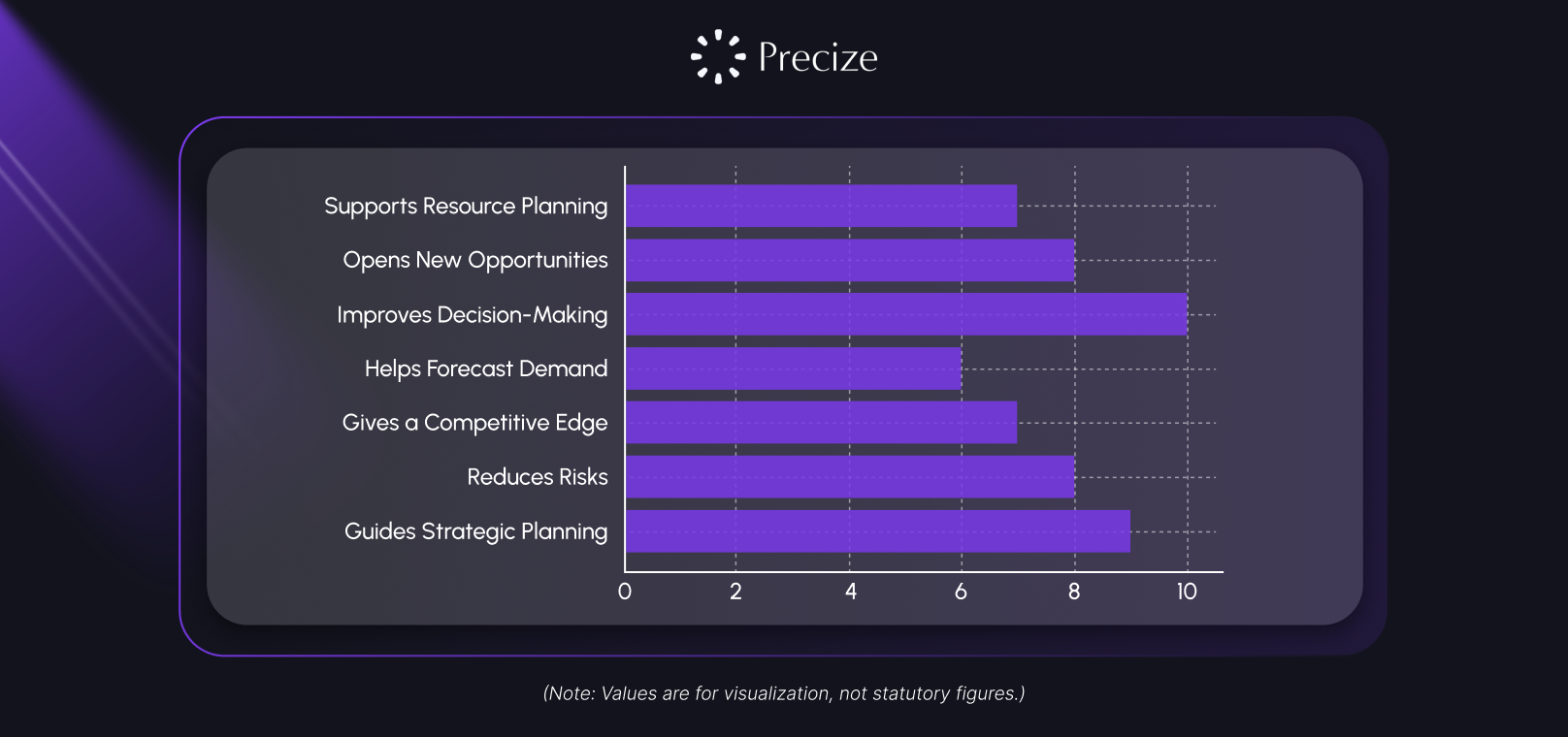
When you know how the market is moving, you can make smarter choices, plan better, and respond quickly to new situations. Here is why following market trends really matters:

1. Guides Strategic Planning

When you understand where the market is heading, planning becomes easier. You can set clear goals, adjust your approach when needed, and make decisions aligned with your industry's current direction.

2. Reduces Risks

Trends help you spot changes early. Whether it’s a shift in customer preferences or a slowdown in demand, you can prepare in advance and avoid sudden surprises that could affect your work.

3. Gives a Competitive Edge

Knowing what’s trending gives you an advantage over others. You can act faster, grab new opportunities, and keep your business relevant while others are still catching up.

4. Helps Forecast Demand

Market trends show what people are currently interested in and how those needs are changing. This helps you plan what to offer next, so your products or services match what customers are looking for.

5. Improves Decision-Making

When your decisions are based on real data and observed patterns instead of guesswork, they’re more accurate. This leads to better results and stronger performance over time.

6. Opens New Opportunities

By tracking emerging trends, you can discover new areas for growth. Maybe it’s a new audience, a rising technology, or a shift in habits; trends often point to fresh possibilities.

7. Supports Resource Planning

Understanding market direction helps you use your resources wisely. You can focus on areas that are growing and avoid spending too much on those that are slowing down.

After understanding why market trends are valuable, it’s helpful to explore their main types to see how each one influences market behavior.

Major Types of Market Trends

When you start studying market trends, you’ll notice that they come in different forms. Each type shows how the market behaves over time and helps you understand where it’s heading. Knowing these patterns makes it easier for you to plan, adapt, and make informed choices as the market changes.

1. Uptrend (Bull Market)

An uptrend occurs when prices or demand keep rising over time. You’ll usually see higher highs and lower lows, indicating that people are confident and active in the market.

  • Example: When more people buy smartphones each year, companies launch newer models at higher prices.

  • Pros: Encourages growth and creates more opportunities to expand.

  • Cons: Can lead to overconfidence, which sometimes causes prices to rise too high before a sudden drop.

2. Downtrend (Bear Market)

A downtrend shows a steady decline in prices or demand. You’ll notice lower highs and lower lows, as people tend to spend less during this phase.

  • Example: When car sales drop due to rising fuel prices or economic uncertainty.

  • Pros: Pushes businesses to manage costs more effectively and to seek more efficient ways to operate.

  • Cons: Can lead to reduced income, lower sales, and difficulty in maintaining business stability.

3. Sideways Trend (Horizontal Market)

A sideways trend happens when prices or demand remain almost the same for a period of time. The market neither grows nor declines noticeably.

  • Example: Products like salt or sugar, where prices stay stable year after year.

  • Pros: Offers predictability and stability for long-term planning.

  • Cons: Limits growth and provides fewer chances for expansion.

4. Secular Trend (Long-Term Trend)

A secular trend continues for many years or even decades. Significant changes in technology, lifestyle, or the environment usually drive it.

  • Example: The gradual shift toward renewable energy, such as solar and wind power.

  • Pros: Helps you understand long-term market direction and plan strategies accordingly.

  • Cons: Takes time to develop and may not show quick results.

5. Intermediate Trend (Medium-Term Trend)

An intermediate trend lasts for several months to a few years. It’s often shaped by economic conditions, policies, or specific market events.

  • Example: The growing demand for electric vehicles in recent years is due to policy support and environmental awareness.

  • Pros: Gives you time to adjust and respond to upcoming market changes.

  • Cons: Can reverse quickly if external factors or customer behavior shift.

6. Short-Term Trend

A short-term trend involves quick changes that happen over days or weeks. These shifts are often influenced by temporary factors or sudden events.

  • Example: A product’s sales increase sharply after being endorsed by a popular celebrity.

  • Pros: Helps you act quickly and take advantage of immediate opportunities.

  • Cons: Highly unpredictable and difficult to depend on for long-term planning.

After exploring the key types of market trends, it’s time to look at some ways to identify them with confidence.


How to Identify Market Trends?

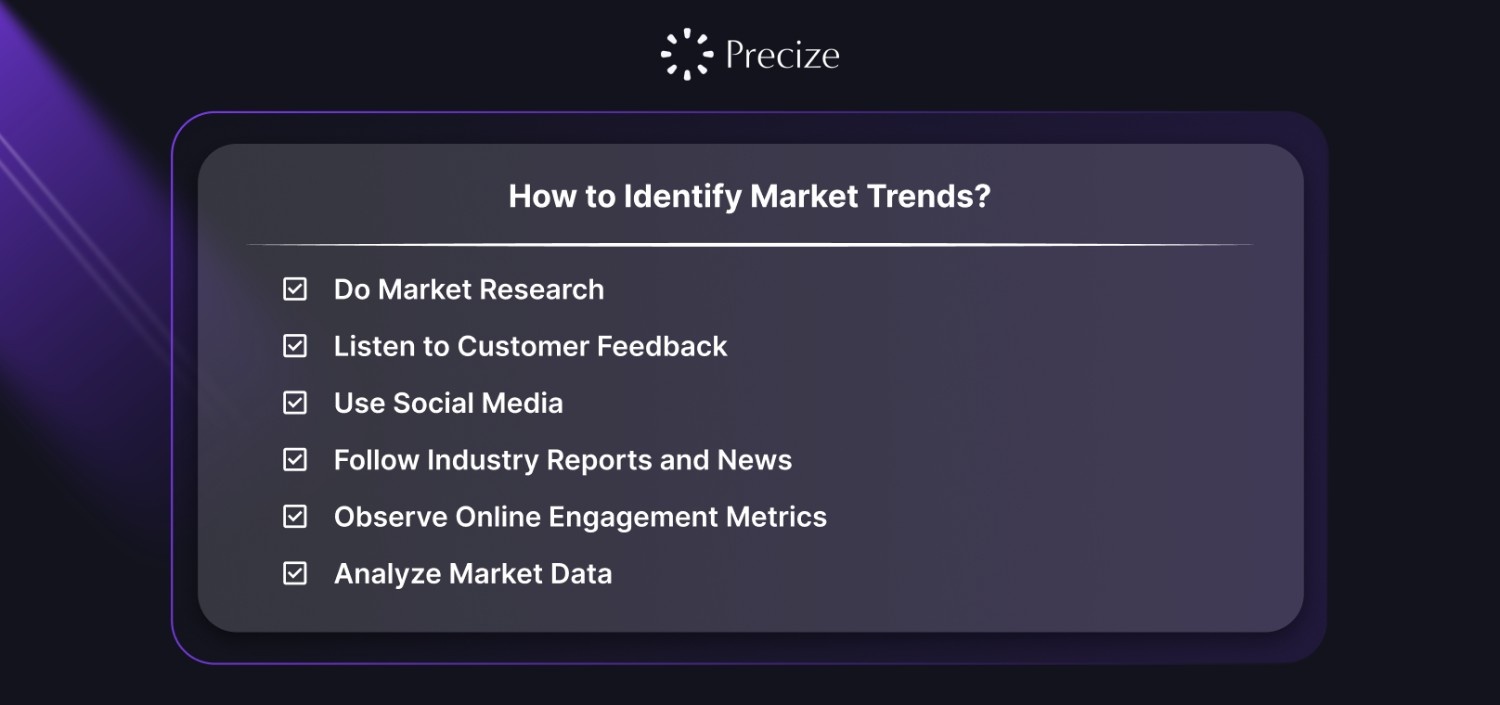
Identifying market trends takes careful observation and consistent effort. By paying attention to key signals, you can spot changes early and understand where the market is heading. Here are some simple and effective ways to do it:

  1. Do Market Research

Start by studying how the market has behaved in the past. Look at reports, surveys, and competitor activities to see what’s performing well and what’s losing interest. This helps you recognize patterns and understand which areas are growing or slowing down.

  1. Listen to Customer Feedback

Your customers often give the clearest signals about market direction. Pay attention to what they say through reviews, surveys, or support channels. Their opinions reveal what people value most and what they expect in the future.

  1. Use Social Media

Social media is one of the quickest ways to spot new trends. People constantly share their experiences and preferences online, giving you real-time insights into what’s becoming popular or fading away.

  1. Follow Industry Reports and News

Keep track of industry updates, expert opinions, and market research reports. These sources help you understand new technologies, policy changes, or shifts in consumer behavior that may influence market trends.

  1. Observe Online Engagement Metrics

Monitor online traffic, search data, and social media activity related to specific products or topics. A steady increase in engagement often signals a trend worth paying attention to.

  1. Analyze Market Data

Study data like sales figures, market share changes, and pricing patterns. These numbers reveal whether a change is just temporary or part of a longer, more stable trend.

While understanding how to identify market trends is essential, it’s equally important to know what mistakes to avoid during the process.

Common Mistakes When Analyzing Market Trends

When you study market trends, it’s easy to misread data or overlook key details. Avoiding common mistakes can help you get clearer insights and make better decisions. Here are some points to keep in mind:

  • Focusing on Only One Timeframe: Don’t rely on data from just one period. Look at short-, medium-, and long-term patterns to understand how the trend is developing. This helps you see the full picture rather than reacting to brief changes.

  • Ignoring Key Market Factors: Numbers alone don’t tell the full story. Always consider economic updates, political events, and industry news that might influence market direction. These external factors often explain why certain trends appear or shift suddenly.

  • Depending Too Much on Past Data: While history helps you understand patterns, the market doesn’t always behave the same way again. Combine past data with current information to get a realistic view of what’s happening now.

  • Using Too Many Indicators: Having too many tools or charts can create confusion rather than clarity. It’s better to use a few reliable indicators that work well together than to mix several that overlap or contradict each other.

  • Missing the Bigger Picture: Avoid studying trends in isolation. Different market elements often affect one another. Understanding these connections helps you interpret trends more accurately and spot broader movements.

  • Letting Personal Bias Affect Judgment: Your opinions or expectations can sometimes influence how you read the data. Stay objective, focus on facts, and avoid letting emotions guide your analysis.

  • Reacting to Short-Term Noise: Quick spikes or drops can be misleading. Instead of reacting to every small movement, focus on consistent patterns that reflect real, long-term trends.

  • Overlooking Market Changes: Markets evolve, sectors grow, companies merge, and indexes adjust. Keep track of these changes because they can alter how trends behave and what they actually mean.

Conclusion

By now, you’ve seen how market trends shape industries, guide decisions, and reveal future opportunities. From understanding different types of trends to learning how to identify and analyze them, it’s clear that staying aware of market direction helps you act with confidence and clarity.

To support your decisions with accurate data and deep insights, Precize offers a reliable solution. It’s an alternative investment platform in India that provides access to private equity and private credit opportunities.

With detailed research reports covering balance sheets, cash flow statements, income statements, and in-depth industry and peer analyses, Precize helps you make well-informed and strategic choices.

Reserve your access with Precize today and take the first step toward building a more diversified portfolio!

FAQs

  1. What factors have the biggest impact on market trends?

Market trends are shaped by many things, from changing customer preferences and new technologies to government rules and global events. Even small shifts, such as a policy update or an innovation, can quickly influence market dynamics.

  1. How often should you check market trends?

It’s a good idea to review market trends regularly, such as every month or quarter. Doing this helps you stay updated on what’s changing, spot new patterns early, and make timely adjustments before they affect your business.

  1. Which tools are useful for tracking market trends?

You can use tools like Google Trends, industry research reports, and social media analytics to track what’s gaining attention. These tools give you real-time insights into what people are talking about and how markets are shifting.

  1. How is a short-term market trend different from a long-term one?

A short-term trend usually lasts a few days or weeks and is driven by quick events or sudden changes in demand. A long-term trend develops slowly over months or years and is often influenced by bigger shifts like new technologies or lifestyle changes.

  1. Can market trends change suddenly?

Yes, they can. Factors like global news, new policies, or unexpected consumer behavior can cause sudden shifts. That’s why it’s important to keep monitoring trends regularly so you can adapt before the change affects your plans.

Disclaimer

The content provided in this blog is for informational purposes only. While every effort has been made to ensure accuracy, the information may not reflect the most recent market developments. Readers are advised to use their discretion and consult a qualified financial or business advisor before making any decisions based on the information shared here. Precize and the author are not responsible for any loss or consequence arising from the use of this content.

Precize
Precize
Content Strategy and Research Analyst

Stay in the Loop

Join our newsletter for exclusive access to thoughtfully curated content and we promise, no spam

The next generation of asset classes in India

Resources

Our Office

Office No. 1219, The Summit Business Park, Andheri Kurla Road, Andheri East, Mumbai, Maharashtra - 400093

Find us on Google

support@precize.in

+91 7738336457

All trademarks and logos or registered trademarks and logos found on this Site or mentioned herein belong to their respective owners and are solely used for informational and educational purposes.

The material presented in this advertisement is for informational purposes only and should not be construed as investment advice or investment availability. It is not a recommendation of, or an offer to sell or solicitation of an offer to buy, any particular unlisted share, security, strategy, or investment product. Investing in the private market and securities involves risks, including the potential loss of money, and past performance does not guarantee future results. Market trends, data interpretations, graph projections are provided for informational and illustrative purposes and may not reflect actual future performance. Nothing on this website should be construed as personalized investment advice or should not be treated as legal, financial, or any other form of advice. Precize is not liable for financial or any other form of loss incurred by the user or any affiliated party based on information provided herein.

Precize is neither a stock exchange nor does it intend to get recognized as a stock exchange under the Securities Contracts Regulation Act, 1956. Precize is not authorized by the capital markets regulator to solicit investments. The securities traded on these platforms are not traded on any regulated exchange.

The website will be updated regularly.

Copyright © 2026 - Precize - All Rights Reserved

What Are Market Trends: Definition and How to Identify