For many Indian businesses, especially small and medium enterprises, expanding into global markets often comes with financial hurdles, limited working capital, delayed payments, and cross-border risks. Trade finance is helping bridge this gap by making international transactions more manageable. India’s trade finance market is expected to grow from USD 2.72 billion in 2025 to around USD 3.88 billion by 2030, with a steady annual growth rate of 7.39%, according to Mordor Intelligence.
In this blog, we’ll look at how India's trade finance is supporting businesses in reaching international markets. We will cover what trade finance is, its key benefits for Indian businesses, the role of digital platforms and fintech, current challenges in the sector, strategies to make better use of trade finance, and the future outlook of India’s trade finance landscape.
So, let's get started to learn!
TL;DR
Trade finance helps Indian businesses manage global trade by offering funding, reducing risks, and supporting faster transactions.
Digital platforms and fintech are making trade finance quicker, paperless, and more accessible, especially for MSMEs.
Key challenges include high collateral demands, complex regulations, currency risks, and limited use of digital tools.
Strategies like using letters of credit, supply chain finance, and government-backed schemes can improve access and growth.
Sectors like textiles, pharma, engineering, and IT benefit most, and even small businesses can now access tailored trade finance solutions.
What is Trade Finance?
Trade finance refers to the financial tools and services that help businesses carry out international trade smoothly. When you export or import goods, there’s often a time gap between shipment and payment. Trade finance bridges this gap by providing working capital, reducing payment risk, and making sure both buyers and sellers feel secure. It includes services like letters of credit, export credit, invoice financing, trade credit insurance, and bank guarantees.
Understanding the basics is just the start, here’s how trade finance plays out step by step in real trade transactions.
How Trade Finance Works (with Examples)
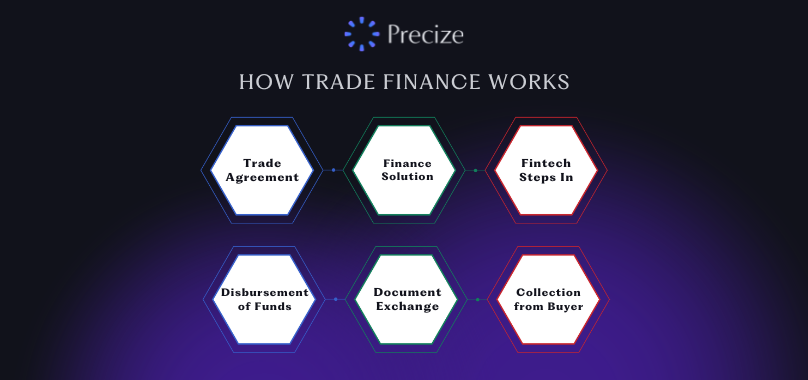
Trade finance might sound complex, but it actually follows a simple step-by-step process that supports your global trade journey.
Step 1: Buyer and Seller Sign a Trade Agreement
You and your overseas buyer agree on trade terms, product details, delivery timeline, payment method, and documentation needed.
Step 2: Choosing a Trade Finance Solution
Depending on your need (payment assurance, working capital, or risk cover), you pick a trade finance option like a letter of credit, invoice discounting, or export credit.
Step 3: Bank or Fintech Steps In
You approach a bank, NBFC, or fintech platform that offers trade finance. They assess your documents, trade contract, and buyer profile.
Step 4: Issuance of Guarantee or Disbursement of Funds
If you’re exporting, you might get up to 80–90% of your invoice amount in advance through export factoring.
If you’re importing, your bank may issue a letter of credit to guarantee payment to your seller.
Step 5: Shipment and Document Exchange
You ship the goods and share all necessary shipping documents (like bill of lading, invoice, packing list). These are verified before the final payment is made.
Step 6: Repayment or Collection from Buyer
For exporters: Once the buyer pays, the bank settles the remaining balance with you.
For importers: You pay back the financer within the agreed period.
Example 1: A Mumbai-based apparel exporter uses invoice discounting to receive early funds while waiting for a 60-day overseas payment.
Example 2: A Delhi electronics importer uses a letter of credit to assure a Chinese supplier of timely payment and get goods released faster.
With a clear picture of how trade finance operates, it’s easier to understand why more Indian companies are using it to grow globally.
Key Benefits of Trade Finance for Indian Businesses
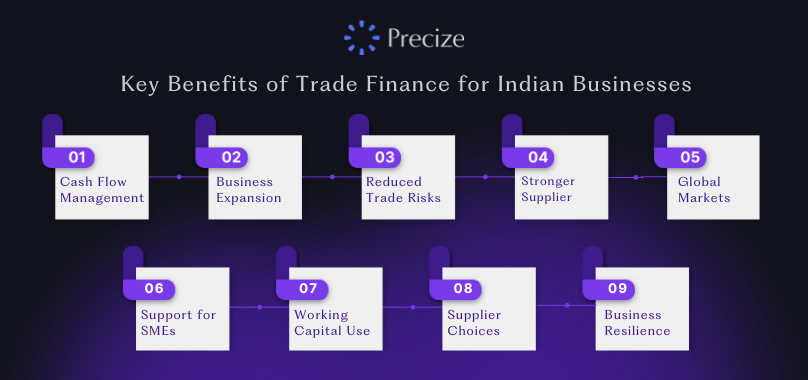
Trade finance brings several real-world advantages that help Indian companies manage global trade more confidently and efficiently. Here’s how it supports your business:
Stronger Cash Flow Management
Trade finance lets you pay your suppliers before receiving payment from your buyers. This means you don’t have to wait for money to come in, you can take on more orders and keep your business running smoothly.
Faster Business Expansion
It frees up money stuck in your inventory or unpaid invoices. With this extra funding, you can expand your operations, increase trade volumes, and grab new business opportunities both in India and abroad.
Reduced Trade Risks
Trade finance protects your business from common problems like late payments, customer defaults, or political issues in export markets. Tools like letters of credit and trade credit insurance help make transactions safer.
Stronger Supplier and Customer Ties
When you’re able to pay your suppliers on time and offer flexible payment terms to buyers, it builds trust on both ends. This can lead to better pricing, discounts, and a more reliable supply chain overall.
Easier Entry into Global Markets
Trade finance gives you the financial backing and peace of mind needed to enter new markets, manage cross-border transactions, and fulfill large export orders with confidence.
Inclusive Support for SMEs
Many trade finance options don’t rely solely on your credit history or large assets. That means even if you’re a smaller business, you can still access funding and grow without major collateral.
Smarter Working Capital Use
With flexible financing based on your trade cycle, you can manage your day-to-day cash needs better and avoid delays in business operations.
Wider Supplier Choices
With the support of trade finance, you can source from a broader range of suppliers across different countries, helping you improve costs and efficiency.
Greater Business Resilience
Trade finance also acts as a safety net, helping you manage unexpected delays, policy changes, or market shifts by giving you the financial flexibility to adapt and continue.
But how are these benefits delivered in practice? The answer lies in the tools businesses use every day.