If you’ve ever worried about the unpredictable nature of markets or the risk of sudden changes in prices, you’re not alone. Whether you’re a business owner dealing with fluctuating costs or an individual concerned about your investments, you’ve likely heard the term “hedging” in finance. Hedging is essentially a strategy used to protect oneself from financial risks caused by market volatility.
In this blog, we’ll cover the basics of hedging, including its meaning, types, strategies, and common instruments like options and futures. We’ll also explore real-life examples, the pros and cons of hedging, and tips for creating a successful hedging strategy. This blog will help you understand “what is hedging”.
Let’s get started!
What is Hedging in Finance?
Hedging in finance is a strategy used to protect yourself from potential financial losses caused by fluctuations in market conditions. It works by taking an opposite or offsetting position in a related asset, helping to reduce the impact of any unfavorable price changes in your primary investment. You can think of it like an insurance policy that helps balance the risks you face in the market.
For instance, if you own shares in a company and are concerned that the price might drop, you could buy a financial instrument like a put option. This option gains value if the stock price falls, allowing any losses in your shares to be partially or fully offset by the gains from the option.
With a clearer understanding of what hedging in finance entails, let's explore the different instruments you can use to implement this strategy effectively.
Types of Hedging Instruments
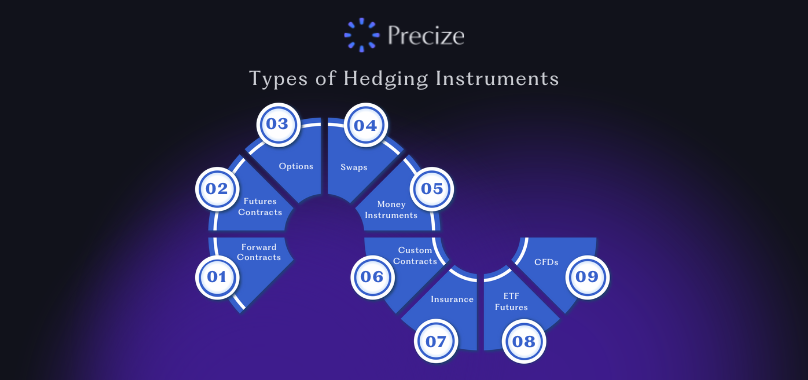
When you're looking to protect yourself from financial risks, there are several types of hedging instruments available. Here are the main hedging instruments you should be familiar with:
Forward Contracts
A forward contract is a confidential agreement where two parties agree to buy or sell an asset at a fixed price on a specific future date. It’s commonly used to hedge against changes in currency exchange rates, commodities, or interest rates.
Futures Contracts
Futures contracts resemble forward contracts, but they are standardized and traded on exchanges. They allow you to lock in prices for assets like stocks, commodities, or currencies, helping you protect against future price changes.
Options
Options give you the right, but not the obligation, to buy or sell an asset at a specific price within a set time frame. There are two types: call options (right to buy) and put options (right to sell). They’re widely used to hedge against potential losses in stocks, commodities, or indexes.
Swaps
Swaps are contracts where two parties agree to exchange cash flows or financial assets based on predefined terms. Common swaps include interest rate swaps and currency swaps, which help manage risks related to changing interest rates or currency values.
Money Market Instruments
Money market instruments, such as short-term loans or deposits, can also be used for hedging, especially in currency and interest rate markets. These are typically low-risk, short-term financial tools.
Over-the-Counter (OTC) Derivatives
OTC derivatives are customized contracts designed to meet specific hedging needs. These include forwards, swaps, and other tailored agreements that are not traded on standard exchanges.
Insurance
Insurance policies can act as hedging instruments, particularly when you need protection against risks like property damage or business interruption.
Exchange-Traded Funds (ETFs) and Index Futures
ETFs and index futures allow you to hedge an entire portfolio or a market segment, helping reduce overall market risk by tracking specific indexes or sectors.
Contracts for Difference (CFDs)
CFDs are contracts that involve exchanging the difference in an asset's value from when the contract is initiated to when it is closed. These are used to hedge price movements in shares, commodities, or currencies.
With a clear understanding of the available hedging instruments, it's time to look at some of the most commonly used strategies in finance.
Common Hedging Strategies in Finance
When you’re looking to reduce financial risk, several common hedging strategies can help you manage uncertainty in the markets. Each strategy has its own approach to balancing potential losses and gains. Here’s a look at some of the most widely used strategies:
Diversification
Diversify your investments by allocating them across various asset classes, including stocks, bonds, real estate, and commodities. This strategy reduces the risk of a single investment underperforming, as other assets may perform well and offset the loss.
Using Derivatives
Futures Contracts: These agreements allow you to buy or sell an asset at a fixed price on a future date. They're useful for protecting against price changes in commodities, currencies, or stocks.
Options Contracts: With options, you buy the right (but not the obligation) to buy or sell an asset at a certain price. For example, buying put options helps protect against falling prices.
Forward Contracts: Similar to futures, but more flexible and private, these contracts are often used to manage risks related to currency or commodity price changes.
Currency Hedging
If you have investments in foreign assets, you can use currency futures, forwards, or options to protect yourself against changes in exchange rates.
Interest Rate Hedging
Interest rate swaps or futures can help you manage the risk of changing interest rates, especially if you hold loans or bonds that might be affected by rate movements.
Commodity Hedging
Businesses and investors use commodity futures or options to lock in prices for essential goods like oil, gold, or agricultural products. This protects against price fluctuations in these markets.
Short Selling
Short selling involves selling borrowed assets with the plan to buy them back later at a lower price. This strategy can offset losses if the market or a particular asset drops in value.
Pair Trading
Pair trading involves buying one asset and selling another closely related asset, often within the same industry. This helps balance risk, especially if the sector moves together but one asset outperforms the other.
Protective Collar Strategy
This strategy combines buying a put option and selling a call option on the same asset. It limits both potential losses and gains, creating a protective range for your investment.
Volatility Hedging
Instruments like Volatility Index (VIX) futures and options are used to protect your portfolio from sudden market swings and increased volatility.
Hedging with ETFs
Explore Exchange-Traded Funds (ETFs) that move opposite to the market or a specific sector. Inverse ETFs are commonly used to protect against market downturns.
You’ve learned about the strategies, but seeing them in action can make things clearer. Let’s go over some key examples.
Key Examples of Hedging in Finance
Hedging in finance is all about using strategies to minimize the risk of losses from price changes in your investments. Here are some examples of hedging:
Hedging with Options
Suppose you own shares in a company and you're concerned about a potential drop in its price.
You can buy a put option, which gives you the right to sell your shares at a fixed price.
If the stock price falls, the value of the put option rises, helping to reduce your loss on the shares.
Commodity Hedging
Companies that rely on commodities like oil, wheat, or metals often use futures contracts to lock in prices.
For instance, an airline in India might purchase oil futures to protect itself from rising fuel costs.
Even if oil prices increase, the airline will pay the agreed-upon price, helping to keep its expenses stable.
Currency Hedging
Businesses that trade internationally are exposed to currency fluctuations.
For example, an Indian exporter expecting payment in US dollars could use a forward contract to secure the current exchange rate.
This protects the business from potential losses if the rupee strengthens against the dollar before the payment is received.
Interest Rate Hedging
Companies with loans that have variable interest rates might be concerned about rising rates.
To protect against higher interest costs, they can use interest rate swaps to convert their loans into fixed-rate loans. This ensures future payments are predictable and shields them from rising rates.
Portfolio Hedging with Index Futures
To protect an entire portfolio, investors can use index futures.
For example, if you expect the stock market to decline but don’t want to sell your holdings, you can sell index futures.
If the market does fall, the profits from the futures can help offset the losses in your portfolio.
Natural and Operational Hedging
Some businesses reduce risk by matching their revenues and expenses in the same currency or by sourcing materials from multiple suppliers.
This approach minimizes reliance on a single market or currency, providing more stability and protecting profits.
After exploring key examples of hedging, it’s crucial to weigh the advantages and potential drawbacks to determine if this strategy fits your needs.
Advantages & Disadvantages of Using Hedging Strategies
When using hedging strategies in finance, it’s important to understand both the benefits and the drawbacks they bring. Here is a look at the advantages and disadvantages of hedging:

Now with the advantages & disadvantages clear, it’s time to explore the practical steps for implementing a successful hedging plan.
How to Develop a Successful Hedging Strategy
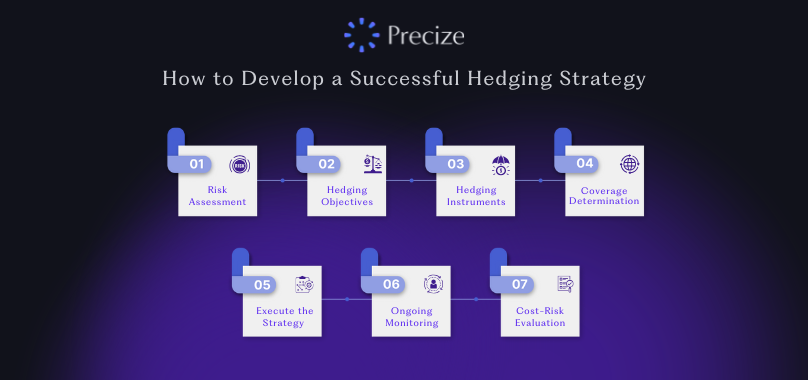
Developing a successful hedging strategy requires a clear and systematic approach. Below are steps on what you should focus on:
Step 1: Assess Your Risk Exposure
Start by understanding the risks you’re exposed to, such as fluctuations in stock prices, commodity values, currencies, or interest rates. Identify the assets or areas of your business most vulnerable to market changes.
Step 2: Define Your Hedging Goals
Define what you want to achieve with your hedge.
Whether you’re aiming to minimize losses, stabilize cash flows, or protect profits, make sure your goals are realistic.
Keep in mind that while hedging can reduce risks, it might also limit your potential for gains.
Step 3: Select the Appropriate Hedging Tools
Pick the financial tools that best suit your specific risks. Some common instruments include:
Derivatives such as futures, options, and swaps
Forward contracts to manage currency or commodity risks
ETFs for hedging a portfolio
For businesses, consider operational changes or natural hedging (like matching revenues and costs in the same currency).
Step 4: Decide on the Coverage Level
Decide how much of your exposure you want to hedge.
A full hedge covers all your risk, while a partial hedge covers just a portion.
Your decision will depend on your risk tolerance and financial goals.
Step 5: Execute the Strategy
Put your hedging strategy into action by executing the necessary trades or contracts. Ensure all transactions are properly documented and in line with your risk management plan.
Step 6: Track and Revise Regularly
Track the performance of your hedge and keep an eye on market changes. If the market conditions shift or your risk exposure changes, adjust your strategy accordingly.
Step 7: Consider the Costs and Risks
Remember that hedging comes with costs, such as premiums for options or fees for derivatives.
While hedging can help limit losses, it may also reduce potential profits if the market moves in your favor.
Conclusion
Hedging is an essential tool in financial risk management, helping businesses and individuals protect themselves from unpredictable market movements. Knowing “what is hedging” and the different strategies available is crucial for making informed decisions based on your risk tolerance and financial goals.
By using hedging effectively, you can manage exposure to price fluctuations and work towards more consistent returns. It’s important to evaluate your objectives carefully and choose the right hedging instruments that align with your needs.
Platforms like Precize in India offer opportunities in alternative investments, including private equity and private credit, which can also play a part in diversifying risk and creating balanced portfolios.
So, reserve access to explore these investment opportunities!
Disclaimer
The content provided in this blog is for informational purposes only and should not be considered as financial advice. Hedging strategies and financial instruments may not be suitable for all individuals or businesses, and it is important to carefully assess your own financial situation, risk tolerance, and objectives before making any decisions. Always consult with a professional financial advisor or investment expert before engaging in any financial activities.