
Debt redemption is a financial reset button, an essential move that can turn your business’s financial future around. It’s a smart strategy to clear the path for growth, enhance creditworthiness, and fine-tune your capital structure. Understanding the various methods of debt redemption enables organizations to manage liabilities efficiently, improve creditworthiness, and optimize capital structure.
In this blog, we will explore the key strategies businesses use to redeem debt and strengthen their financial foundation. Let’s get started!
Understanding the Concept of Debt Redemption
Debt redemption refers to the process by which a borrower, typically a business, government, or financial institution, repays or settles its outstanding debt obligations. This is usually done at the end of the debt’s maturity period, but can also occur earlier, depending on the terms of the agreement.
Redemption applies primarily to long-term financial instruments such as bonds, debentures, or term loans, and can be executed through methods like:
Lump-sum repayment at maturity
Scheduled installment payments
Early buyback of bonds or securities
Conversion of debt into equity
This process is not just a technical closure of a liability, it’s a critical element in financial lifecycle management.
Debt Redemption and Its Implications on Financial Health
Debt redemption plays a significant role in shaping a company’s financial performance, reputation, and strategic direction. Here's an in-depth look at its importance:
Enhanced Creditworthiness and Investor Confidence: Regular and timely redemption signals financial discipline and reliability, thereby improving the company’s credit ratings and attracting investments.
Lower Interest Costs: Redeeming costly or high-interest debt early can substantially reduce the overall cost of capital, increasing profitability in the long run.
Balanced Capital Structure: Effective debt management helps maintain a healthy debt-to-equity ratio, which is crucial for sustainable growth and stability.
Liquidity Management: Strategically planning debt redemption ensures the business maintains sufficient liquidity and avoids cash flow crises, especially during uncertain market conditions.
Risk Reduction and Regulatory Compliance: Timely redemption minimizes the risk of defaults and potential legal or regulatory consequences. It also helps meet statutory or contractual financial covenants.
Long-Term Financial Planning: By reducing debt obligations, businesses can focus more resources on expansion, innovation, or diversification efforts without being burdened by repayments.
Now that we’ve understood what debt redemption entails, let’s explore the various methods through which businesses can effectively carry out this process.
Effective Debt Redemption Strategies for Businesses
Choosing the right method of debt redemption is necessary for aligning repayment strategies with business goals, cash flow, and market conditions. Each method comes with its own financial implications, and understanding these can help businesses make informed decisions to reduce liabilities efficiently.
1. Lump-Sum Redemption at Maturity
This is the most straightforward method, where the borrower repays the entire principal amount in a single payment at the end of the loan or bond term. It requires strong financial planning to ensure adequate funds are available at maturity.
2. Redemption Through Sinking Fund
A sinking fund is a reserve set aside over time to repay debt. Businesses regularly contribute to this fund, reducing the repayment burden at maturity and offering assurance to investors about repayment reliability.
3. Bond or Debenture Buyback
Companies may repurchase their bonds or debentures from the market before maturity. This is typically done when interest rates drop or the company has surplus cash, allowing it to reduce future interest payments.
4. Redemption by Conversion
In this method, debt is converted into equity shares, commonly used in convertible debentures. It helps reduce liabilities without immediate cash outflow and can strengthen the company’s capital base.
5. Refinancing or Debt Replacement
Businesses may refinance existing debt by issuing new debt under better terms (e.g., lower interest rate or extended maturity). This is often used to improve cash flow or optimize financial costs.
6. Installment-Based Redemption
Instead of a lump sum, the debt is repaid in fixed periodic installments, which include both principal and interest. It eases the repayment pressure and supports better cash flow management.
7. Utilization of Insurance or Redemption Reserves
Some companies use specifically created reserves or insurance-linked funds to redeem debts. This is more common in long-term infrastructure or government-backed projects.
Moving on, let’s understand the practical application of these debt redemption methods.
Applications of Debt Redemption Methods
Understanding the methods of debt redemption is only the first step. Successful application requires strategic planning and sound financial management. Here’s how businesses put these methods into practice:
Systematic Repayment Using Sinking Funds
Sinking funds allow businesses to set aside small, periodic amounts over time to ensure full repayment of debt at maturity. This disciplined approach minimizes the risk of a large cash outflow and reassures creditors of repayment security.
Example: A manufacturing firm issuing ₹100 crore in bonds over 10 years may allocate ₹10 crore annually into a sinking fund. By the end of the term, the principal is fully covered without straining the company's cash flow.
Asset Liquidation to Meet Debt Obligations
Selling non-core or underperforming assets is a common strategy to generate immediate liquidity for debt redemption. This method is particularly useful during downturns or when refinancing is not favorable.
Example: A telecom company may sell unused spectrum licenses or real estate holdings to repay a portion of its long-term loans, reducing interest burden and improving balance sheet health.
Utilizing Reserve Funds and Retained Earnings
Companies often rely on accumulated reserves, such as general reserves, redemption reserves, or retained earnings, for early debt settlement. This helps avoid further interest costs and may improve market perception.
Example: An IT firm with ₹50 crore in retained earnings may use a portion of these funds to redeem convertible debentures ahead of schedule, thereby improving its debt-to-equity ratio.
Debt Redemption Through Operational Surpluses
Firms with strong cash flows may fund redemptions directly through operating profits, especially when the cost of debt exceeds return on surplus cash.
Example: A logistics company with steady EBITDA margins might allocate 20% of its annual profits toward redeeming short-term bonds without needing external funds.
Combination Strategies for Flexibility
In practice, companies often adopt a hybrid approach, combining sinking funds, reserve utilization, and asset sales to balance liquidity needs, investor confidence, and long-term growth goals.
These applications highlight the versatility of debt redemption strategies and also underline their importance in maintaining financial agility and creditworthiness.
Major Challenges in Debt Redemption
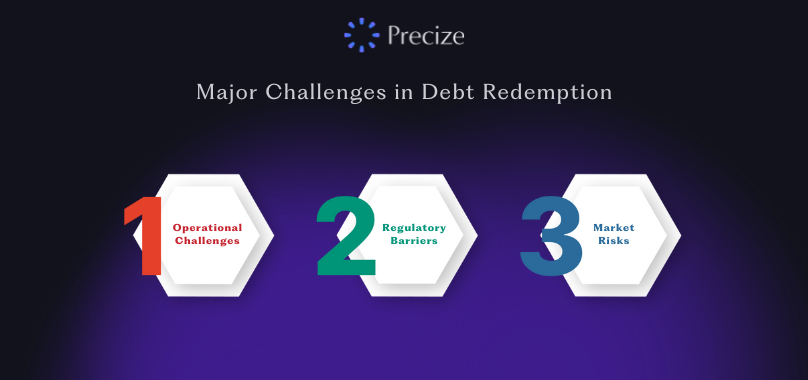
While debt redemption is essential for maintaining financial health, it is not without its complexities. Several internal and external factors can affect the successful execution of redemption strategies. Below are the key challenges businesses may encounter.
1. Operational and Strategic Challenges
Implementing debt redemption strategies often requires careful cash flow management, long-term financial planning, and cross-functional coordination. Potential hurdles include:
Liquidity Constraints: Businesses may struggle to allocate funds for redemption without disrupting operations or growth investments.
Inaccurate Forecasting: Misjudging future cash inflows or debt obligations can derail redemption plans.
Timing Issues: Premature redemption may lead to penalties, while delayed action can increase interest costs or default risk.
2. Regulatory and Legal Barriers
Debt redemption activities, particularly those involving bonds or public debt instruments, are subject to strict regulatory frameworks:
SEBI and RBI Guidelines: In India, redemption of listed securities must comply with SEBI (Listing Obligations) and RBI regulations.
Contractual Clauses: Redemption terms may include lock-in periods, call protection clauses, or penalty clauses that limit early repayment.
Tax Implications: Early redemption or debt conversion may trigger tax liabilities for both the issuer and the bondholder.
3. Market-Driven Risks and Unfavorable Conditions
Financial market conditions can significantly impact the cost and timing of debt redemption:
Interest Rate Volatility: Rising interest rates can make refinancing more expensive or unattractive.
Capital Market Sentiment: A bearish market may reduce liquidity, making it harder for companies to raise funds for redemption.
Exchange Rate Fluctuations: For foreign-denominated debt, currency volatility can increase repayment costs unexpectedly.
Anticipating these challenges and integrating risk mitigation measures into the redemption strategy can help businesses execute redemptions smoothly. Let’s take a look at these best practices.
Strategies to Enhance the Feasibility of Debt Redemption
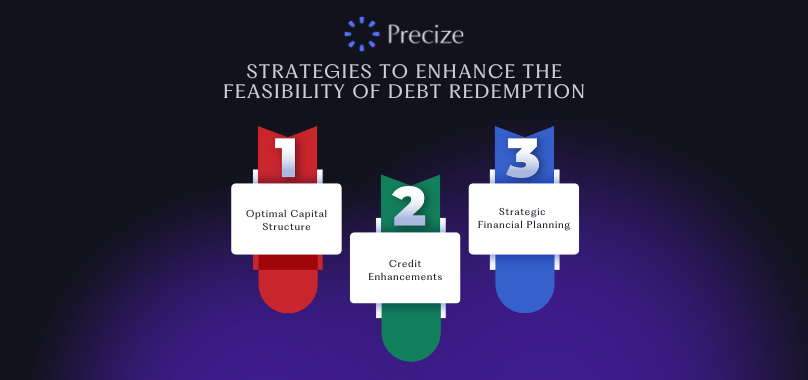
Implementing effective debt redemption strategies demands financial foresight, planning, and structural efficiency. Below are key strategies businesses can adopt to ensure redemption feasibility and long-term financial stability.
1. Maintaining an Optimal Capital Structure
A well-balanced capital structure is fundamental to managing debt efficiently and facilitating redemption without straining resources.
Balanced Debt-to-Equity Ratio: Maintaining a healthy ratio ensures that debt obligations are manageable and the company remains attractive to investors and lenders.
Reduced Interest Burden: A lower proportion of debt minimizes recurring interest payments, allowing businesses to allocate more funds toward redemption.
Increased Financial Flexibility: Companies with optimal leverage can tap into credit markets more easily when needed for refinancing or prepayment.
2. Utilizing Credit Enhancements
Credit enhancements are financial tools or strategies that improve a company's credit profile, making it easier and more cost-effective to redeem debt.
Securitization or Guarantees: Using third-party guarantees (such as bank guarantees or insurance-backed bonds) can reduce the cost of new borrowing for refinancing old debt.
Collateralization: Offering collateral can improve loan terms and facilitate smoother repayment or refinancing options.
Government or Institutional Support: In sectors like infrastructure, companies may benefit from state-backed credit facilities that ease the redemption process.
A renewable energy firm might use a partial credit guarantee from a development bank to refinance existing bonds at lower interest, accelerating the redemption of earlier liabilities.
3. Implementing Strategic Financial Planning
Robust financial planning lays the foundation for proactive debt management and timely redemption.
Cash Flow Forecasting: Accurate forecasting helps allocate funds for redemption without compromising operational needs.
Redemption Reserves: Setting up a dedicated redemption reserve fund allows businesses to spread the repayment burden over time.
Scenario Planning: Evaluating different market and business conditions helps prepare for uncertainties like interest rate hikes or revenue fluctuations.
Conclusion
Debt redemption isn’t just about paying off what you owe, it’s about doing it smartly. From sinking funds to asset sales and strategic reserve use, each method plays a role in managing liabilities effectively. By maintaining a solid capital structure, planning, and integrating financial tools, businesses can make debt redemption a useful part of their growth strategy.
In the long run, mastering debt redemption is key to building financial resilience and ensuring business sustainability.
Looking to optimize your financial strategy beyond debt redemption?
Platforms like Precize offer access to exclusive investment opportunities, ranging from unlisted and pre-IPO shares of India’s top private companies to global trade finance options that provide stable, fixed-income alternatives.
.
Reserve your access with Precize today and take a smarter step toward building a resilient, diversified portfolio!