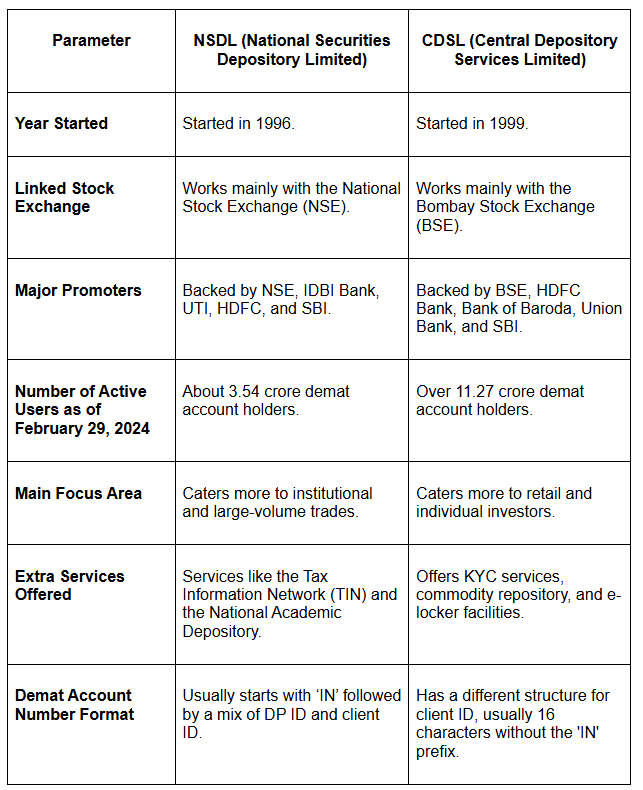
Why Transfer Shares from NSDL to CDSL?

There are some simple and practical reasons why you may choose to transfer your shares from NSDL to CDSL. It usually comes down to ease of use, broker preferences, or managing everything in one place. Here’s why this transfer makes sense for many:
Easier Account Management: If you have demat accounts with both NSDL and CDSL, shifting everything to one depository like CDSL helps you manage your holdings from a single account.
Broker Compatibility: Some stockbrokers work only with CDSL. If your broker is linked to CDSL, moving your shares from NSDL can make trading and account operations smoother.
Better Platform Experience: CDSL and NSDL provide different user platforms. You might find CDSL’s online portal easier to use for checking your holdings or managing transfers.
Online Transfer Support: Transfers between NSDL and CDSL are now possible online, making the process faster and more convenient without needing to visit your DP.
Less Paperwork: Choosing the online route helps you avoid physical forms or branch visits, saving you time and reducing manual steps.
Once you’ve decided to move your shares, the next thing to check is how much it might cost.
Charges Applicable for NSDL to CDSL Transfer
Before starting the transfer process, it’s important to understand the charges that may apply when moving your shares from NSDL to CDSL in 2025.
No Direct NSDL Charges: NSDL doesn’t charge investors directly. Instead, it charges your DP, who may pass on the cost to you.
Broker/DP Fees Vary: Most brokers or DPs charge a fee for such transfers. This can be a fixed amount per transaction or based on the number of securities (ISINs) being transferred.
Typical Fee Range: Many brokers charge a flat fee, usually between ₹20 to ₹25 per transaction or per security, plus GST and other applicable taxes.
Online Transfers May Still Incur Fees: Even if you're using platforms like NSDL’s Speed-e or CDSL’s Easiest, your broker might still charge a fee for the service.
Higher Cost Than Intra-Depository Transfers: Since this involves two different depositories (NSDL and CDSL), charges are generally a bit higher than transfers within the same depository.
Always Confirm in Advance: It's best to check with your broker or DP beforehand to know the exact charges you’ll need to pay for the transfer.
Once you're clear on the costs involved, the next step is understanding how to complete the transfer from NSDL to CDSL.
Simple 6 Steps To Transfer Shares from NSDL to CDSL Online
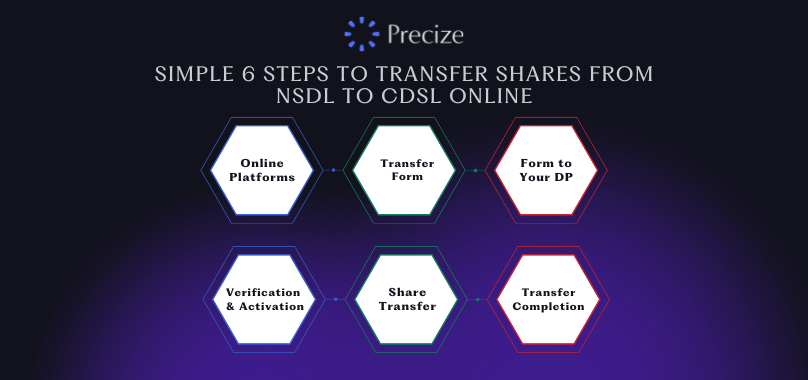
If you're planning to move your shares from an NSDL demat account to a CDSL demat account, the process is fairly straightforward. Here is how you can do it step by step:
Step 1: Register on the Online Platforms
Go to the NSDL SPEED-e portal and sign up using your demat account details like DP ID, Client ID, and email ID.
Step 2: Download and Fill Out the Transfer Form
Get the NSDL SPEED-e registration form from the NSDL website or ask your DP for it.
Step 3: Submit the Form to Your DP
Submit the completed form to your NSDL-linked DP. The DP will check your details and send the request to NSDL and CDSL for further processing.
Step 4: Wait for Verification and Activation
Once submitted, your information will be verified by the depository.
Step 5: Start the Share Transfer
Log in using the provided credentials. Choose the option to transfer shares from your NSDL to your CDSL account.
Enter your CDSL account details, including the DP ID, Client ID, and the quantity of shares to be transferred.
Authorize the transfer; this might require an OTP or a digital signature.
Step 6: Transfer Completion
Once the request is processed, your shares should show up in your CDSL demat account within 3–5 working days.
Things to Keep in Mind:
Both NSDL and CDSL accounts must be active and in your name.
Some DPs may charge a fee for inter-depository transfers.
Shares that are pledged, locked-in, or frozen can’t be transferred online.
Always double-check your details to avoid delays or rejection.
After submitting your transfer request, it’s important to keep an eye on its progress.
How to Track Your Transfer Status from NSDL to CDSL Online
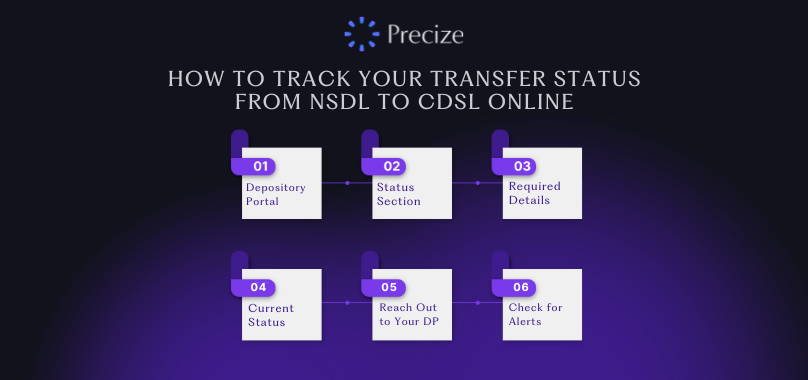
Once you’ve started the NSDL to CDSL shares transfer online, keeping track of the progress is easy. You just need to follow a few simple steps to see whether your request has been completed or is still pending.
Log in to Your Depository Portal
Use your login credentials to access the platform where you submitted the transfer, either NSDL’s SPEED-e or CDSL’s Easiest portal.
Go to the Transfer Status Section
Look for a tab or option labeled something like “Transfer Status,” “Transaction History,” or “Inter-Depository Transfers.” This section lists all your ongoing and completed transfer requests.
Enter the Required Details
You might be asked to enter information such as your DP ID, Client ID, or transaction reference number to check the status of a specific request.
View the Current Status
The system will show you updates like “Pending,” “Processed,” or “Completed.” If there's a delay or rejection, the reason will also be displayed.
Reach Out to Your DP
If the status hasn’t changed for a while or something doesn’t look right, contact your DP. They’ll be able to check the backend and help fix any issues.
Check for Alerts
You may also get SMS or email notifications once your shares are successfully transferred. Make sure your mobile number and email are updated in your demat account for timely alerts.
If you’re unable to use the online method or prefer paperwork, there's also an offline way to complete the transfer.
Offline Transfer Method Shares from NSDL to CDSL (If Online Option Isn’t Available)
If the online transfer option isn’t available, you can still transfer shares from NSDL to CDSL using the offline method. This involves filling out and submitting a physical Delivery Instruction Slip (DIS) to your NSDL depository participant. Here's how to do it:
Get the DIS: Ask your current NSDL DP (broker or financial institution) for a DIS booklet if you don’t already have one. This slip is needed to start the transfer.
Fill Out the DIS Form Correctly: Enter all required details, including:
Your NSDL demat account number (DP ID and Client ID).
Your target CDSL demat account number (DP ID and Client ID).
Tick the box for “Inter-Depository Transfer”.
Mention the ISIN (International Securities Identification Number) for each stock you want to transfer.
Write the number of shares to be transferred for each ISIN.
Sign the form exactly as per the signature linked with your DP.
Submit the Form to Your NSDL DP: Once filled, hand over the DIS form to your DP. They’ll process the request and give you an acknowledgment slip for reference.
Wait for the Transfer to Be Processed: The transfer usually takes about 2 to 5 working days. After that, the shares will appear in your CDSL demat account.
Check for Applicable Charges: Some DPs may charge a small fee for handling inter-depository transfers. It’s a good idea to check with your broker or DP beforehand.