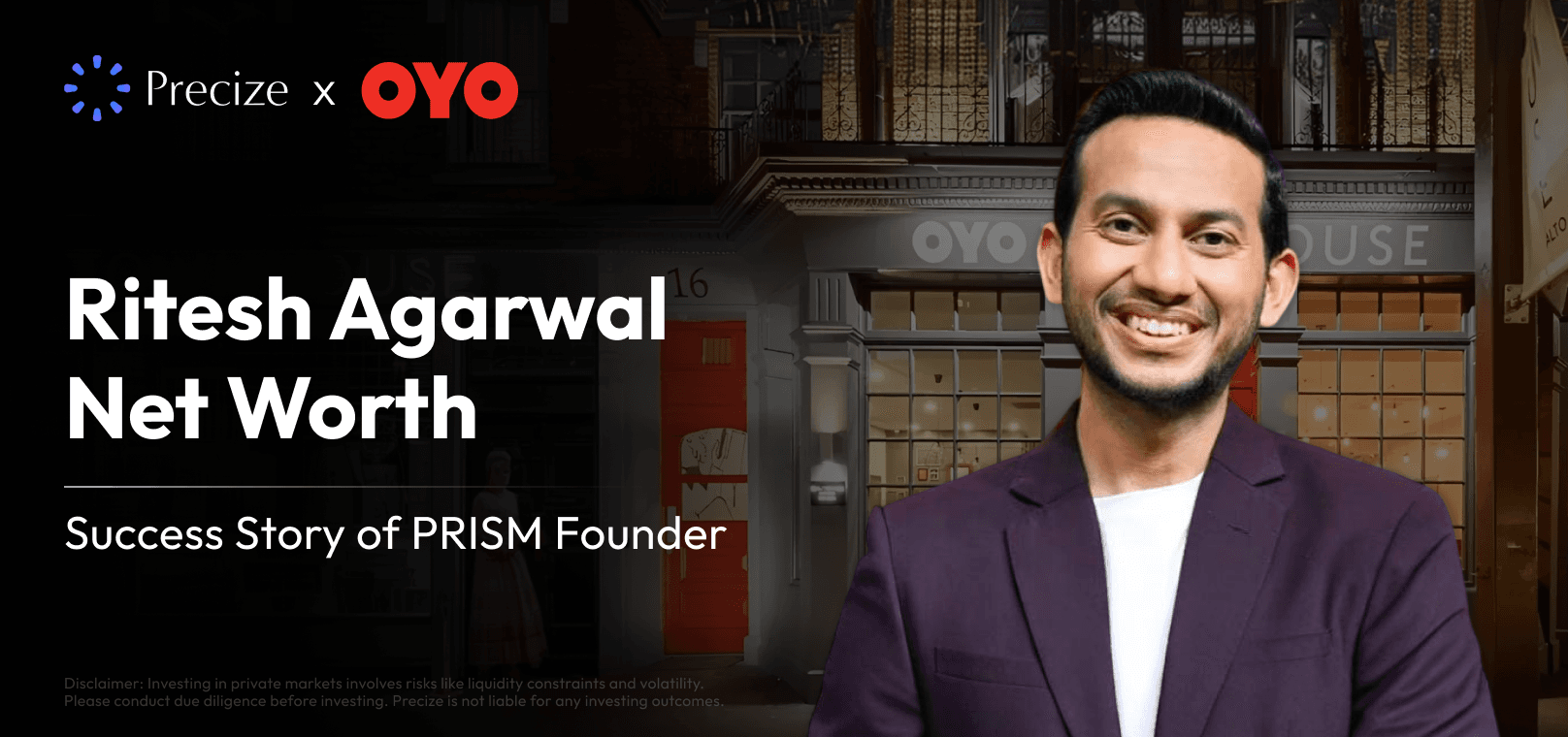
Ritesh Agarwal is the founder of OYO and the public face of one of India’s most recognised consumer-tech hospitality brands. Because most of his wealth is linked to his ownership in OYO’s parent entity (PRISM), searches like “net worth of Ritesh Agarwal”, “oyo valuation”, and “oyo owner” often move together.
Quick facts
Ritesh Agarwal, age: Born 16 November 1993.
Net worth of Ritesh Agarwal: Hurun Rich List 2025 estimate widely reported at Rs. 14,400 crore.
OYO owner/major shareholder: SoftBank reportedly holds 40%+, while Agarwal reportedly owns 30%+.
OYO valuation context: From about USD 10 billion (2019) to a SoftBank internal markdown USD 2.7 billion (2022), and more recently IPO valuation talk around USD 7–8 billion.
About OYO and its founder
OYO started as a budget-hospitality play and expanded into a broader hotel and homes platform across markets. Ritesh Agarwal built OYO after earlier experimentation with travel stays and then scaling the standardised-hotel network model. He is also closely associated with PRISM, the corporate parent that has been preparing for a public listing.
OYO owner: Who owns OYO today?
When people search “oyo owner”, they usually want a simple answer: OYO is not owned by a single person. It has a cap table with the founder and large institutional investors.
What’s consistently reported:
SoftBank remains OYO’s largest shareholder with a stake reported at over 40%.
Ritesh Agarwal is reported to hold over 30%.
This split matters because it also explains how founder wealth can swing: if the company’s valuation moves, the value of a large founder stake moves with it.
OYO valuation: why it keeps changing
The most searched phrase here is “oyo valuation”, and the reason is simple: OYO has seen multiple valuation regimes.
A few widely cited reference points:
2019: OYO was valued at around USD 10 billion in a high-profile transaction period.
2022: SoftBank internally marked OYO down to USD 2.7 billion, which became a major public reference point even as OYO disputed the rationale.
2025–26 IPO track: PRISM’s confidential filing and market reports have discussed an IPO valuation band around USD 7–8 billion, alongside a potential fundraise figure that has been reported near Rs. 6,650 crore.
Separately, coverage has also pointed to OYO/PRISM performance improvements (profitability and operating metrics) as part of the IPO narrative, which can influence how public markets frame valuation.
Net worth of Ritesh Agarwal
When you see a number for Ritesh Agarwal's net worth, it is almost always an estimate built from:
His ownership stake in OYO/PRISM
The valuation being used (secondary deals, reference marks, or IPO expectations)
Any personal leverage or financing linked to share purchases (where applicable)
A widely reported net worth estimate -
Mint, referencing the Hurun Rich List 2025, reported Ritesh Agarwal’s wealth at Rs. 14,400 crore.
Why the number can differ across sources
Different lists and publications may use:
Different valuation anchors (funding round vs internal mark vs IPO talk)
Different assumptions about stake percentage and holding entity structure
Different treatment of pledged shares, loans, and cash
That’s also why “net worth” numbers can move sharply in short periods for startup founders, even if the operating business is improving gradually.
The link between founder stake and wealth: what changed over time
Ritesh Agarwal is known to have actively shaped ownership over the years (including stake purchases and founder-led actions that affected shareholding outcomes). Coverage has highlighted how founder ownership mechanics played out through buybacks and stake consolidation.
This is important because OYO is not a typical “founder owns 5%” story. It’s closer to a “founder owns a large chunk, and that chunk becomes the core driver of net worth”.
Conclusion
Ritesh Agarwal’s wealth is best understood as a function of ownership + valuation. If OYO/PRISM’s IPO plans progress and public-market benchmarks emerge, “Ritesh Agarwal net worth” estimates will continue to update because the market will constantly re-price the underlying business.