Minimum Investment in Stocks: Start Small, Grow Smart

Start exploring the market with a minimum investment in stocks. Set goals, diversify small amounts, track progress, and grow your portfolio steadily.
10 min read
minimum investment in stocks

Have you ever wondered if you can participate in high-potential stock market opportunities without a huge capital outlay? Many investors hesitate, thinking significant wealth is required to get started, but small, strategic investments can deliver meaningful growth over time.

The biggest challenge for beginners is knowing where to start without getting overwhelmed. With countless stocks, mutual funds, and pre-IPO opportunities, it’s easy to feel lost or fear making the wrong move. The key is finding investments that align with both your budget and growth objectives.

In this blog, you will learn practical strategies to invest small amounts wisely, identify high-potential opportunities, and build a steady, risk-aware approach to growing your wealth.

Key Takeaways

  • Start Small, Start Smart: Even minimal investments like ₹500–₹1,000 can help you gain exposure, learn the market, and build a diversified portfolio.

  • Use Modern Tools: Fractional shares, ETFs, and SIP-style contributions allow small investors to diversify and manage risk effectively.

  • Focus on Key Metrics: ROI, PE ratio, PB ratio, ROE, net income, and profit margins help identify quality stocks suitable for limited capital.

  • Manage Risk Deliberately: Diversify, avoid hype, automate contributions, and maintain realistic expectations to grow steadily without overexposure.

  • Track and Learn: Regularly monitor your portfolio, assess performance, and adjust strategies to ensure consistent growth and informed decision-making.

Why Investing Small Amounts Gives You the Best Start?

Starting with limited money actually gives you an advantage: it protects you from going “all in” before you understand how the market behaves. Many retail users, financial advisors, and even institutional players suggest beginning with smaller positions so you can observe how your decisions work in real life, without pressure.

Here’s why it works well:

  • Helps build discipline without high emotional stress

  • Easier to experiment, track progress, and define your financial style

  • Encourages consistency over large, risky leaps

  • Allows you to explore multiple ideas without stretching your budget

Since this mindset sets your foundation, the next part naturally addresses an important question: what do you actually need before you start investing?

Basic Requirements to Start Investing in the Stock Market

In the past, getting started with stock market investments meant cumbersome paperwork, in-person verifications, and long wait times. Today, the process is almost entirely digital, making it easier than ever for anyone to explore investment opportunities.

Starting your journey in the stock market now simply requires a few essential accounts and documents. With these in place, you can begin investing small amounts, track your portfolio online, and make informed decisions without unnecessary delays.

Here’s everything you need:

1. Open a Demat Account

A Demat account is where your shares will be held in an electronic format, eliminating the need for physical share certificates.

  • Why You Need It: Every stock you buy is credited to your Demat account, making it easier and safer to manage your portfolio.

  • How to Open: You can open a Demat account with several brokers. Leading brokers in India include:

    • Zerodha: User-friendly interface, zero brokerage on equity delivery trades.

    • HDFC Securities: Reliable app with real-time updates and portfolio management tools.

    • Angel One: Comprehensive mobile app with advisory services and research tools.

Pro Tip: Most brokers now allow you to add a nominee during account setup, ensuring your investments are protected.

2. Open a Trading Account

A trading account is necessary to place buy and sell orders in the stock market.

  • Why You Need It: The trading account lets you execute trades online and is linked to your Demat account, ensuring purchased shares are automatically credited.

  • How to Open: Trading accounts can be opened online, similar to a Demat account. Brokers include:

    • Upstox: Cost-effective platform with advanced charting tools.

    • ICICI Direct: Full-service broker offering research, advisory, and multiple investment options.

Security Tip: Enable two-factor authentication (2FA) or OTP verification to protect your account from unauthorised access.

3. Required Documents for Opening Accounts

You must submit a few documents to open a Demat and a trading account. Make sure you have these ready:

  • Identity Proof: A government-issued ID, such as an Aadhaar, passport, or voter ID.

  • Address Proof: Utility bills, bank statements, or rental agreements.

  • PAN Card: Mandatory for all financial transactions in India.

  • Passport-sized Photographs: Typically, two recent photos are required.

  • Bank Statement: To link your bank account to your trading account.

4. KYC Compliance

The KYC (Know Your Customer) process is required by law in India to ensure the security of financial transactions.

  • What It Involves: Complete the KYC form and submit the documents above. Most brokers now allow fully digital KYC via their website or mobile app.

5. Linking Your Bank Account

You’ll also need to link your bank account to your trading account.

  • Why It’s Important: Linking enables smooth transfers between your bank and trading accounts for deposits and withdrawals.

  • How to Link: Most brokers allow linking during account opening or later through their online platform. Payment methods often include net banking, UPI, or wallet transfers for convenience.

6. Initial Funds Deposit

Once your accounts are set up, you’ll need to deposit funds into your trading account before you can start buying stocks.

  • How Much to Deposit: Begin with an amount you are comfortable with. Start small, learn how the market works, and gradually increase your investments as you gain confidence. The key is to invest only what you’re willing to risk while learning the ropes.

  • Methods of Deposit: Most brokers allow easy deposits via net banking, UPI, or mobile wallets, making it simple to fund your account instantly. Some even enable automatic top-ups for recurring small investments.

Also Read: How to Buy Shares in the Stock Market Online in India

Now that you know the basic requirements, the natural next question becomes: how exactly do you begin with small amounts and still make it meaningful?

How to Start Exploring Stocks with Minimum Money?

Modern trading platforms, fractional ownership, and SIP-style contributions now make it possible to begin with amounts as low as ₹500-₹1,000. The following are structured, actionable approaches to diversify, gain experience, and make each small allocation count, without waiting to accumulate a large sum.

1. Start with Fractional Ownership or Small-Case-Like Portfolios

Fractional ownership lets you purchase a portion of an expensive stock instead of paying the full share price.

Why it’s valuable:

  • Diversified exposure early: You can own fractions of multiple companies at once, reducing reliance on one stock.

  • Access to stable companies: Large-cap companies become accessible, which were previously too expensive.

  • Learn without pressure: You start small, observe market behaviour, and gradually increase allocations when confident.

Practical scenario: A professional saving ₹2,000/month could build a portfolio across five companies in under a year. This allows them to gain real-time experience in monitoring performance, understanding sector trends, and learning risk management.

2. Explore ETFs (Exchange Traded Funds)

ETFs are baskets of stocks bundled into a single fund. They offer exposure to multiple companies with just one purchase and are ideal for beginners exploring with small amounts.

Advantages for small-scale exploration:

  • Simplicity: You don’t have to research each stock individually.

  • Broad coverage: One ETF can represent an entire sector or index.

  • Stability: Spreads risk across several companies instead of relying on one volatile stock.

Scenario: If you’re in IT or SaaS, buying an Nifty IT ETF with ₹1,000 gives exposure to 10+ companies. You track sector trends while your small investment is spread across multiple stocks, minimising risk.

3. Use SIP-Style Features for Stocks & ETFs

Platforms now offer SIP-style options for stocks and ETFs. You can contribute a fixed amount monthly, similar to mutual fund SIPs.

Benefits:

  • Consistency: Builds a habit and helps beginners remain disciplined.

  • Lower stress: Reduces the need to time the market perfectly.

  • Steady growth: Small contributions compound over time, even at minimal amounts.

Scenario: Investing ₹500/month in fractional shares of top IT companies over a year yields a diversified mini-portfolio, all built without putting your full savings at risk. Over time, this provides insights into sector performance and your own risk tolerance.

4. Start With Sectors You Understand

Focusing on industries you know gives you an edge, even with small amounts.

  • IT/SaaS professionals: Understand cloud, CRM, and cybersecurity trends.

  • Sales or marketing professionals: Familiar with e-commerce, digital payments, and SaaS adoption.

Why it matters: If you already understand a company’s business model, market demand, and customer base, you are in a better position to make informed choices. This holds true even when starting with a minimal amount, allowing you to allocate funds with greater confidence.

Scenario: A SaaS sales professional exploring Zoho or Freshworks understands their adoption cycles and competitive edge better than someone reading reports online. This insight is crucial for making confident small-scale exploration choices.

Have you ever felt unsure about choosing the right opportunities when starting with small amounts? Precize helps you make informed decisions by offering verified research on pre-IPO shares and alternative market options that match your comfort and goals. Reserve access with Precize today!

Now that you know how to explore small amounts effectively, the next step is selecting the right stocks, because with limited capital, every rupee matters. Let’s see how to make those choices wisely.

Key Metrics to Evaluate Stocks for Small Investments
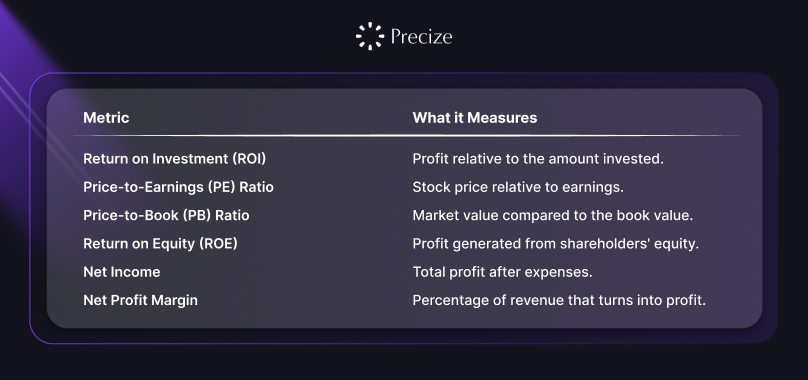
When you are exploring the market with limited capital, choosing the right stocks becomes crucial for managing risk and building confidence. You don’t need deep financial expertise; focusing on a few essential metrics can help you make clearer, more informed decisions:

  • Return on Investment (ROI): Measures how much profit a company generates relative to the amount invested. Higher ROI usually indicates better efficiency.

  • Price-to-Earnings (PE) Ratio: Compares a company’s stock price to its earnings. A lower PE may indicate undervaluation, but context matters.

  • Price-to-Book (PB) Ratio: Shows how the market values a company compared to its book value. Helps identify potential bargains.

  • Return on Equity (ROE): Indicates how effectively a company uses shareholders’ equity to generate profit. Higher ROE suggests stronger performance.

  • Net Income: The company’s total profit after expenses. Consistent growth in net income signals stability.

  • Net Profit Margin: Shows how much profit a company retains from revenue. Higher margins indicate operational efficiency.

Also Read: How Much Money Needed to Start Investing in Stocks

By focusing on these core metrics, you can identify quality stocks suitable for small contributors and minimise the risk of choosing underperforming companies. Carefully selecting companies is only the first step; the next crucial challenge is learning how to manage risk effectively while exploring the market with limited capital.


Smart Strategies to Reduce Risk When Investing Minimal Capital

Exploring stocks with limited capital requires being thoughtful, steady, and deliberate. Effective risk management helps you learn the market safely, gain exposure, and build confidence.

1. Diversify Your Small Contributions

Even a small amount can be spread across multiple companies or ETFs to reduce exposure to any single stock. Diversifying across sectors, such as IT, SaaS, and fintech, ensures that your portfolio is not overly dependent on a single industry and provides broader market insights.

2. Avoid Chasing Hype or Short-Term Trends

Following popular news or social media trends can lead to impulsive decisions. Focus on consistent analysis, understanding business models, sector growth, and market cycles. A disciplined approach reduces mistakes driven by FOMO and short-term volatility.

3. Automate Small Contributions

Regular automated contributions, similar to SIPs in mutual funds, build consistency and reduce the risk of poor timing. Small monthly allocations allow you to gradually increase exposure and understand market behaviour without needing large one-time investments.

4. Maintain Realistic Expectations

Starting small is about learning and gaining clarity, not achieving quick gains. Focus on understanding business performance, sector dynamics, and market cycles. Realistic expectations prevent impulsive moves and help you steadily approach the market

5. Track Your Progress

Regularly monitor your portfolio and evaluate your learning from each investment. Tracking performance helps identify what works, understand market patterns, and adjust your strategy, ensuring that even small contributions lead to meaningful growth over time.

Also Read: Comparing Investment in Indian vs US Stock Markets

These strategies help you explore stocks safely, turning small contributions into meaningful learning and market experience.

Conclusion

Starting to invest with minimal money can feel intimidating, but it doesn’t have to be. With the right strategies, even small, consistent contributions can help you build a diversified portfolio, gain market exposure, and grow your confidence as an investor.

At Precize, we make exploring private market opportunities accessible, secure, and informed. Our platform provides the tools and insights to help you navigate options confidently, from discovering pre-IPO shares to understanding alternative market avenues and building your first small-scale portfolio.

Start your journey today and explore smarter opportunities with Precize.

FAQs

1. Can I use automated methods to explore stocks with small amounts?

A. Yes, some brokers offer recurring contributions or SIP-style options for stocks. This helps you stay consistent and reduces the chances of entering the market at the wrong time.

2. How do brokerage fees affect small investments?

A. Even small fees can eat into tiny investments. Choose brokers with zero delivery charges or low-cost platforms to maximise returns.

3. Is it better to invest in ETFs or individual stocks when starting small?

A. ETFs offer instant diversification with minimal capital, making them safer for beginners, while individual stocks require careful research.

4. Can I invest in international stocks with limited funds?

A. Yes, many platforms now allow fractional exposure to global stocks. Even small allocations help you explore overseas markets and broaden your overall market understanding.

5. How can I track the performance of very small investments efficiently?

A. Use mobile apps or broker dashboards that provide real-time tracking and analytics. Even small portfolios can be monitored effectively this way.

Disclaimer

The information in this blog is intended for educational and informational purposes only. It explains strategies, tools, and metrics for starting small-scale investments in the stock market. This content is not a recommendation to buy, sell, or take any financial action. You should carefully consider your own financial situation, risk tolerance, and consult qualified financial advisors before making investment decisions.

Precize
Precize
Content Strategy and Research Analyst

Stay in the Loop

Join our newsletter for exclusive access to thoughtfully curated content and we promise, no spam

The next generation of asset classes in India

Resources

Our Office

Office No. 1219, The Summit Business Park, Andheri Kurla Road, Andheri East, Mumbai, Maharashtra - 400093

Find us on Google

support@precize.in

+91 7738336457

All trademarks and logos or registered trademarks and logos found on this Site or mentioned herein belong to their respective owners and are solely used for informational and educational purposes.

The material presented in this advertisement is for informational purposes only and should not be construed as investment advice or investment availability. It is not a recommendation of, or an offer to sell or solicitation of an offer to buy, any particular unlisted share, security, strategy, or investment product. Investing in the private market and securities involves risks, including the potential loss of money, and past performance does not guarantee future results. Market trends, data interpretations, graph projections are provided for informational and illustrative purposes and may not reflect actual future performance. Nothing on this website should be construed as personalized investment advice or should not be treated as legal, financial, or any other form of advice. Precize is not liable for financial or any other form of loss incurred by the user or any affiliated party based on information provided herein.

Precize is neither a stock exchange nor does it intend to get recognized as a stock exchange under the Securities Contracts Regulation Act, 1956. Precize is not authorized by the capital markets regulator to solicit investments. The securities traded on these platforms are not traded on any regulated exchange.

The website will be updated regularly.

Copyright © 2026 - Precize - All Rights Reserved