

Introduction: Two Major Names, One Market Transition
The journey from the unlisted market to the stock exchange can bring a significant change in how investors access, value and trade a company's shares. The recent listings of the National Stock Exchange (NSE) and SBI Funds Management offer two interesting examples of this transition.
Both companies attracted considerable attention in the private market before their IPOs. Their journeys provide an opportunity to compare indicative unlisted-market quotations with their IPO prices and listing performance, while understanding what changes when a company becomes publicly traded.
For investors exploring this space, understanding unlisted shares is a useful starting point, particularly how private-market transactions differ from buying shares on a stock exchange.
1. NSE: From Unlisted-Market Interest to Stock Exchange Listing
NSE was one of the closely watched names in India's unlisted market, supported by its position as a major market infrastructure institution. Its financial performance and eventual IPO made it an important example of how an established business can transition from private-market trading to public ownership. Investors evaluating such opportunities also need to consider unlisted-share valuation, as private-market prices are not determined through the same continuous trading mechanism as listed stocks.
NSE's Financial Performance
NSE reported the following consolidated financial performance for FY26:
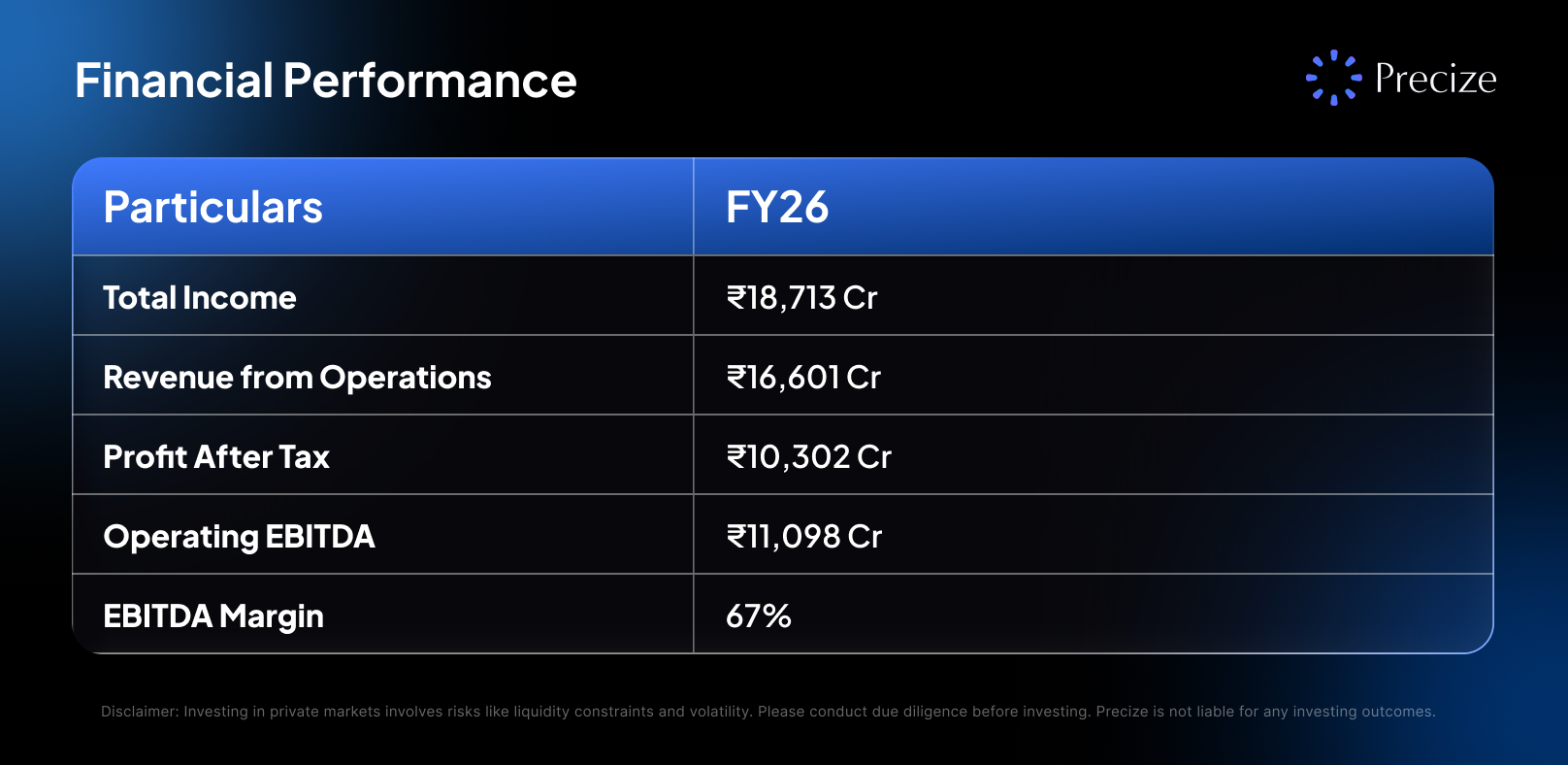
These figures highlight the scale of NSE's business and its profitability. However, financial performance is only one factor investors consider when assessing a company's valuation. Business outlook, earnings sustainability and industry position also matter.
NSE: Unlisted Price vs IPO Price
NSE's unlisted shares witnessed changes in their indicative market quotations in the period before its IPO.
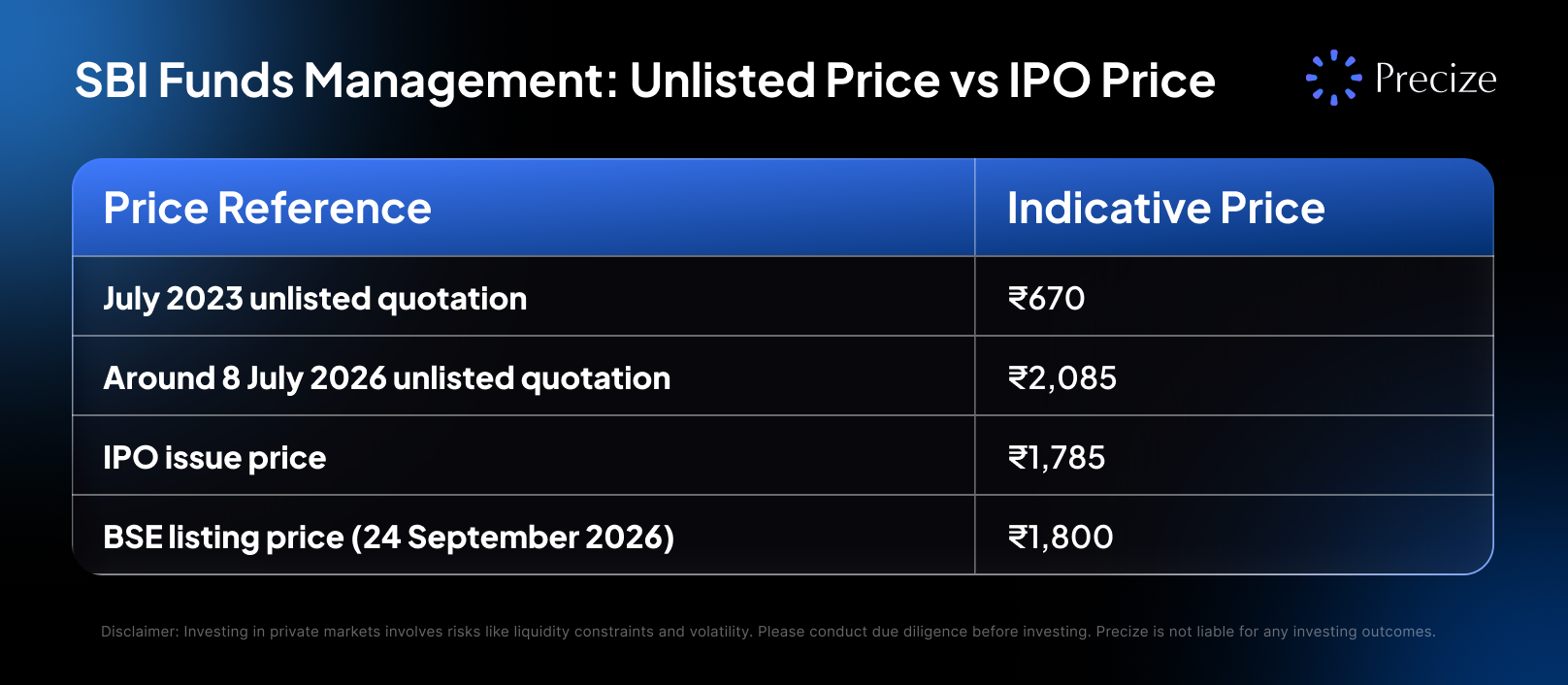
The reported unlisted quotations are media-reported private-market references, not exchange-verified transaction prices. They should not be interpreted as the actual purchase or sale price received by every investor.
NSE's IPO was entirely an OFS of 12,64,36,650 shares at an issue price of ₹1,785, aggregating approximately ₹22,562.71 crore. Existing shareholders sold their holdings, meaning NSE itself did not receive the IPO proceeds.
2. SBI Funds Management: A Major Asset Management Listing
SBI Funds Management, associated with the SBI brand, was another prominent company tracked in the unlisted market before its public listing. Its position in India's mutual fund industry made it an important name for investors evaluating the financial services sector. Its earlier unlisted-share journey also provides historical context to its transition into the public market.
SBI Funds Management's Financial Performance
For FY26, SBI Funds Management reported the following standalone financial figures:
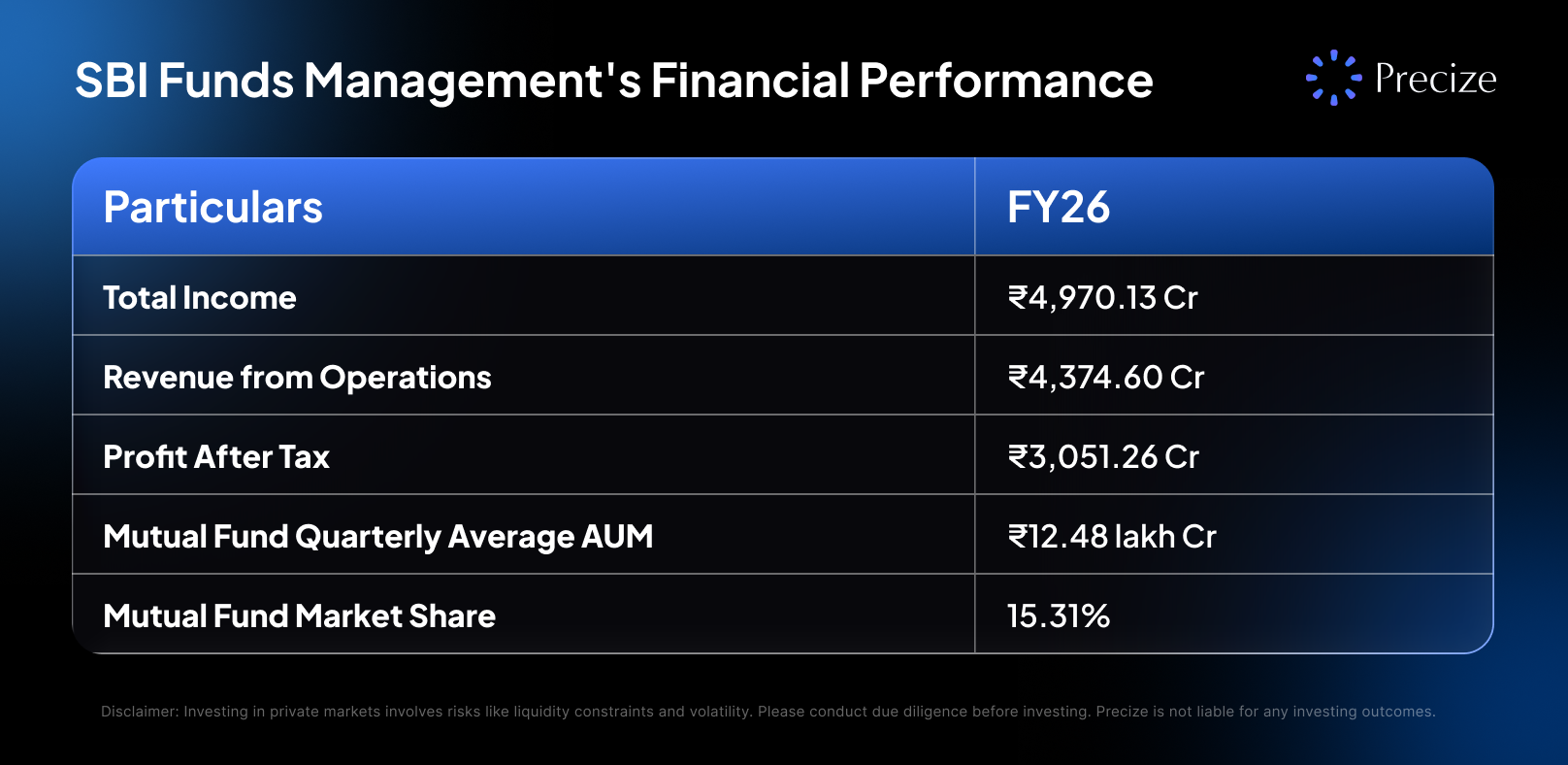
The company's mutual fund Quarterly Average Assets Under Management (QAAUM) stood at ₹12.48 lakh crore, with a market share of 15.31% as of March 2026. These operating indicators help explain why the company attracted investor attention before listing.
SBI Funds Management: Unlisted Price vs IPO Price
SBI Funds Management's reported unlisted quotations also changed in the period leading up to its IPO.
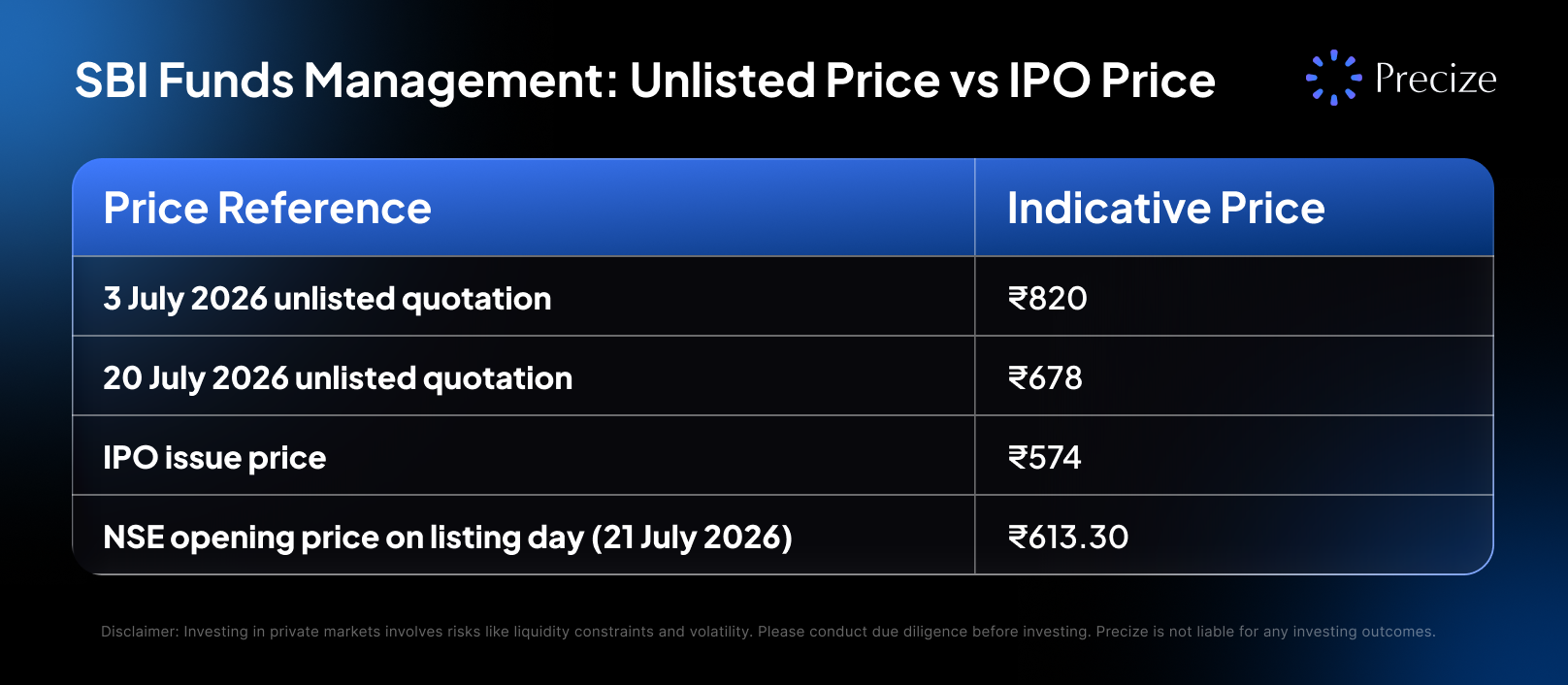
The unlisted quotations are media-reported market references and not verified transaction prices. SBI Funds Management's IPO was also entirely an OFS, with existing shareholders selling their shares rather than the company issuing fresh equity.
Its NSE opening price of ₹613.30 represented a premium of approximately 6.85% over the issue price of ₹574. The difference between the reported unlisted quotations and IPO price illustrates why investors need to consider the date and source of a private-market quote before making comparisons.
3. NSE vs SBI Funds Management: A Quick Comparison
Although NSE and SBI Funds Management operate in different sectors, their IPO journeys offer useful points of comparison. Both companies had an established business presence before listing, but their financial scale and industry drivers were different.
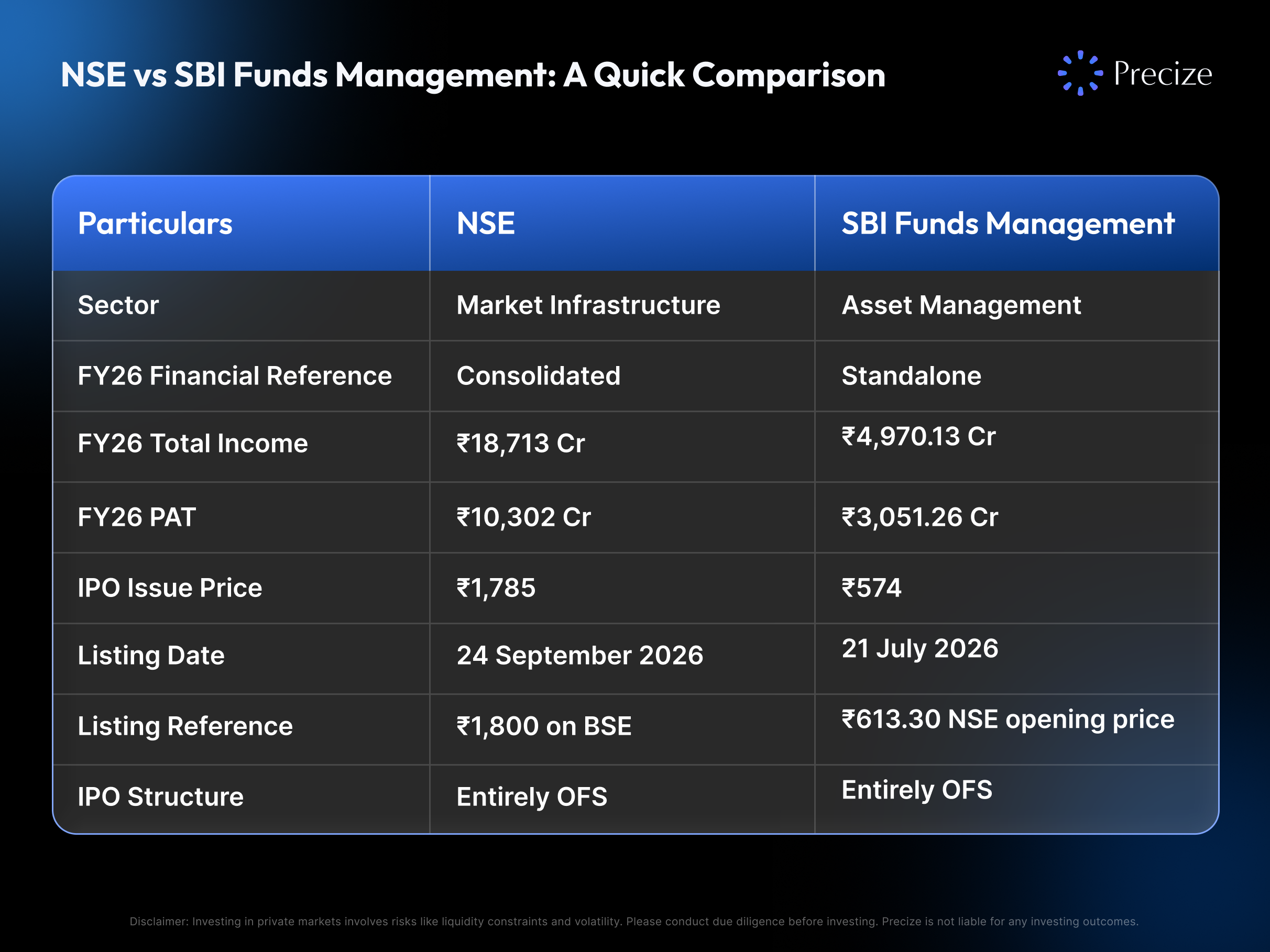
Note: Financial figures are not directly comparable because NSE figures are consolidated, while SBI Funds Management figures are standalone. Listing references also use different measures: NSE's BSE listing price and SBI Funds Management's NSE opening price.
Both IPOs being entirely OFS is a particularly relevant detail. An OFS allows existing shareholders to sell their holdings to public investors. It does not raise fresh capital for the company itself.
4. What Changes When a Company Moves from Unlisted to Listed?
The transition to a stock exchange changes more than just the way a company's shares are traded. It can influence price discovery, accessibility, disclosures and the options available to shareholders. A broader comparison of unlisted and listed shares helps explain these differences.
Greater visibility and price discovery: Listed shares are traded on recognised exchanges, where market demand and supply influence prices during trading hours. In contrast, unlisted-share prices are negotiated in private transactions.
Wider investor participation: Once listed and available for trading, shares can be accessed by eligible investors through regular brokerage and demat accounts.
Liquidity and exit options: Exchange trading generally offers a more visible route to buying and selling shares. However, liquidity can still vary depending on trading volumes and market conditions.
Disclosure and reporting: Listed companies are subject to applicable stock exchange disclosure and reporting requirements, giving public-market investors access to regular company updates.
For shareholders who entered before an IPO, listing does not always mean they can sell immediately. Applicable lock-in periods may restrict the sale of pre-IPO holdings after listing.
5. Why Do Investors Explore the Unlisted Market?
The unlisted market allows investors to research and evaluates companies before their shares become available on public exchanges. It offers a different entry point into businesses that may be established, growing or preparing for a potential public-market journey. Investors can learn more about pre-IPO shares and how they differ from shares already trading on an exchange.
Some reasons investors explore this segment include:
Early access to businesses: Investors can research companies before they enter the public market, subject to share availability and transaction conditions.
Opportunity to evaluate companies over a longer horizon: Private-market investing may suit investors who are willing to study a company's fundamentals and hold their investment over time.
Portfolio diversification: Unlisted shares can provide exposure to businesses and sectors beyond an investor's existing listed-equity portfolio.
Different entry valuations: Private-market prices may differ from eventual IPO or listed-market prices. However, a lower quoted price does not automatically mean a share is undervalued.
Affordability and lot sizes: Unlisted shares are often transacted in specified lot sizes, which can affect the minimum amount required to invest. Investors should check the minimum investment and lot-size requirements for each company before placing an order.
6. Risks to Consider Before Investing in Unlisted Shares
While the unlisted market offers access to companies before they list, it also involves risks that investors should evaluate carefully. These include liquidity constraints, valuation uncertainty and the possibility that a company may not proceed with an IPO.
Liquidity risk: Finding a buyer may take time, and an investor may not be able to exit at the expected price.
Valuation uncertainty: Private-market prices are not discovered through continuous exchange trading and may vary across transactions.
IPO uncertainty: A company may delay, change or abandon its listing plans. An IPO is not guaranteed simply because a company is available in the unlisted market.
Lock-in restrictions: Pre-IPO shareholders may be subject to regulatory lock-in periods after listing.
Business and market risk: A company's financial performance, competitive position and broader market conditions can change, affecting its valuation.
Tax considerations: Investors should understand the applicable tax treatment before buying or selling unlisted shares.
7. Explore Unlisted-Market Opportunities on Precize
NSE and SBI Funds Management demonstrate how companies in the unlisted market can eventually transition to public exchanges.
Investors can explore other businesses available on Precize, research their financial performance of top companies like
understand their business models and evaluate their potential independently. A company's presence in the unlisted market does not confirm an upcoming IPO, and listing timelines or outcomes should never be assumed.
Explore opportunities in unlisted market
Explore opportunities in unlisted market with Precize today.

Conclusion
The journeys of NSE and SBI Funds Management highlight the changing dynamics between the unlisted and listed markets. Their pre-IPO quotations, issue prices and listing references offer useful examples of how private-market valuations can differ from public-market pricing.
For investors, the key takeaway is to look beyond the possibility of an IPO. Understanding a company's fundamentals, valuation, risks, liquidity and long-term business prospects remains essential—whether the shares are unlisted or publicly traded.
FAQs
Unlisted shares are not traded on recognised stock exchanges, while listed shares are available for exchange-based trading.
No. An IPO is not guaranteed, and listing prices can be lower than the price paid in the unlisted market.
No. Both IPOs were entirely OFS, meaning existing shareholders sold shares and the companies did not receive the sale proceeds.
Not necessarily. Applicable lock-in requirements may restrict the sale of pre-IPO shares after listing.
Investors can research available unlisted companies and related information on platforms such as Precize.
Disclaimer:
This article is for informational purposes only and should not be considered as investment advice. Investing in unlisted shares carries risks including illiquidity and potential loss of capital. Please consult with a qualified financial advisor before making investment decisions. Precize is not a stock exchange and is not authorized by any capital markets regulator