In the world of investing, there's a famous character known as "Homo economicus." This rational being, as economic theory depicts, always makes perfectly logical decisions. But here's the plot twist—real humans don't always behave rationally. Enter the fascinating realm of behavioral economics, where biases, both emotional and cognitive, often sway our financial choices. In this blog post, we'll unravel the mysteries of these behavioral biases and how they can impact your investment decisions. So, fasten your seatbelts as we embark on this enlightening journey into the world of investor psychology!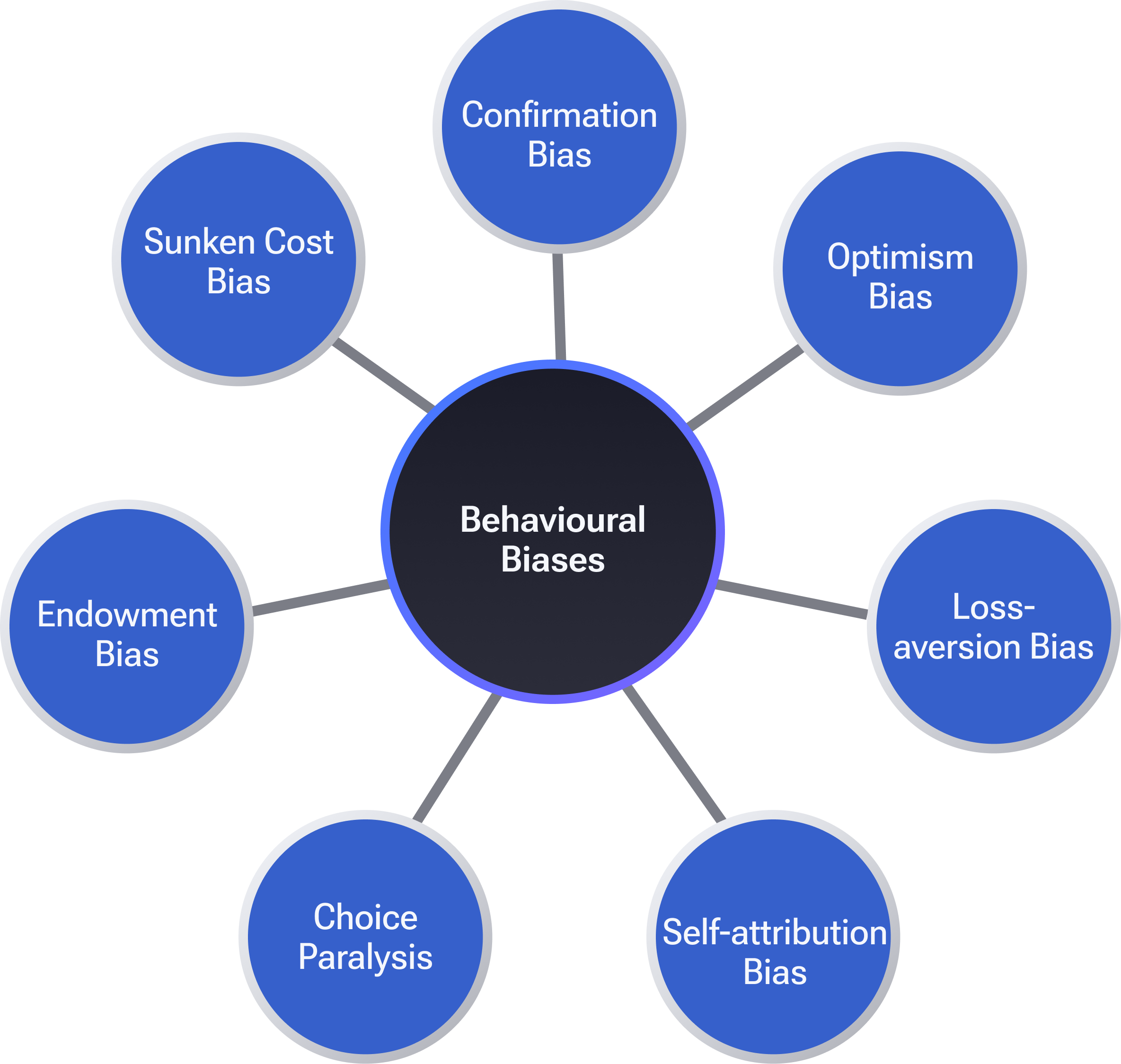
Emotional Biases: When Feelings Rule the Roost
Emotions can be both a friend and a foe in the world of investments. Emotional biases come into play when we let our feelings dictate our decisions, often disregarding cold, hard facts. They can make us swing between euphoria and despair, leading to impulsive choices.
Confirmation Biases: This one's a classic! It's when we seek information that validates our existing beliefs, ignoring anything to the contrary. In investment terms, it means cherry-picking data that supports our viewpoint while turning a blind eye to opposing facts.
Sunk Cost Bias: Have you ever found yourself pouring more money into an investment just because you've already invested a substantial amount? That's the sunk cost bias. It can keep us tied to failing investments out of a sense of commitment, even when the rational choice might be to cut our losses.
Endowment Effect: It's the tendency to overvalue what you already own. Once you own a stock, you might think it's worth more than it is. This can lead to holding onto underperforming assets longer than you should.
Choice Paralysis: The more choices we have, the harder it can be to decide. This is choice paralysis. In investing, it might manifest as procrastination or an inability to make decisions due to the overwhelming number of investment options.
Cognitive Biases: The Tricks of Our Minds
Cognitive biases, on the other hand, are more subtle. They're the quirks in our thought processes that can lead us astray when analyzing information.
Self-Attribution Bias: When an investment does well, we often attribute it to our own brilliant decision-making skills. But when it goes south, we're quick to blame external factors. This bias can cloud our ability to learn from our mistakes and improve our investment strategy.
Loss Aversion Bias: People tend to feel the pain of losses more intensely than the joy of gains. This bias can make us overly cautious, leading to missed opportunities or reluctance to sell underperforming assets.
Optimism Bias: Ah, optimism! While optimism is generally a good trait, overdoing it can lead to unrealistic expectations. This bias can make us overly confident about our investments, even when they might not warrant it.
Conclusion
Understanding these emotional and cognitive biases is a crucial step toward becoming a more informed and successful investor. It's essential to recognize that these biases can sneak into our decision-making process, clouding our judgment and potentially leading to financial setbacks.
The good news is that while emotional biases might be trickier to tackle due to their emotional foundation, cognitive biases can be corrected. By acknowledging and accepting these biases, we can adapt our investment strategies to account for them. In doing so, we become more rational, objective, and, ultimately, better investors.
In the complex investing world, recognizing and taming these cognitive and emotional biases is a journey. It's a journey that leads to more informed, balanced, and ultimately more profitable investment choices. So, as you navigate the markets, remember that mastering the art of investment is not just about numbers; it's about mastering the art of your own mind. Happy investing with Precize! 🚀💰