
When stepping into the world of investing, you’ll often come across terms like NFO (New Fund Offer) and IPO (Initial Public Offering). While both relate to introducing new investment opportunities to the public, they are fundamentally different in structure, purpose, and underlying instruments. Understanding the difference between NFO and IPO can help investors make more informed decisions depending on their financial goals.
Let’s explore what these terms mean, how they differ, and which one might be a better fit for your portfolio.
What Is an NFO?
NFO, or New Fund Offer, is the first-time subscription offer launched by a mutual fund company when it introduces a new scheme. Investors can subscribe to the units of the fund during this offer period, which usually lasts a limited time. After the NFO closes, the scheme is listed, and its Net Asset Value (NAV) fluctuates based on the market.
Key Features of NFO:
Issued by asset management companies (AMCs)
Investors pool their money into a mutual fund scheme
NAV(Net Asset Value) is typically ₹10 during the launch
Can be open-ended or closed-ended
Funds are managed by professional fund managers
What Is an IPO?
IPO, or Initial Public Offering, is the process through which a private company offers its shares to the public for the first time to raise capital and get listed on a stock exchange like NSE or BSE. Once listed, the company’s shares are traded in the open market.
Key Features of IPO:
Issued by private companies going public
Investors receive ownership in the company (equity shares)
Share prices are based on valuation or demand (price band)
Once listed, shares trade on stock exchanges
Investors can benefit from capital gains and dividends
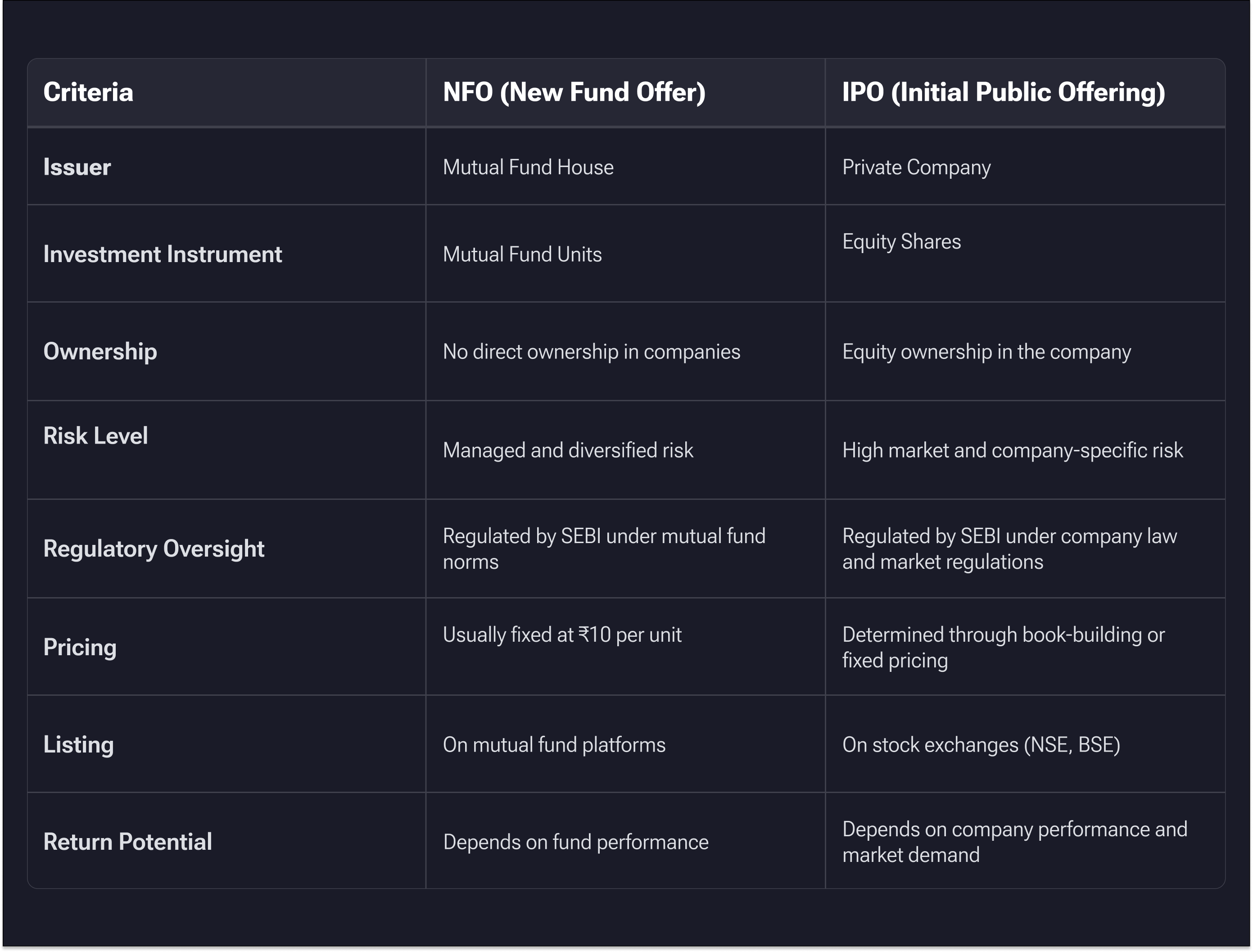
NFO vs IPO: Key Differences
Benefits of Investing in an NFO
Professional Management: Fund managers handle portfolio decisions.
Diversification: Investment is spread across various sectors and instruments.
Systematic Investment Plans (SIPs): Investors can continue investing post-NFO via SIPs.
Low Entry Price: Usually launched at ₹10/unit, giving investors a low-cost entry.
Risks Involved:
Fund performance is unknown at launch
Higher expense ratio in the beginning
May underperform existing mutual funds
Benefits of Investing in an IPO
Capital Gains: High listing gains are possible if demand is strong.
Ownership: You become a shareholder and can benefit from the company's growth.
Transparency: Companies disclose financials in the Draft Red Herring Prospectus (DRHP).
Risks Involved:
Market volatility can affect listing performance
Potential overvaluation
Lock-in periods for anchor or institutional investors may affect short-term trading
Conclusion
Though both NFOs and IPOs open new investment avenues, they serve different purposes and cater to different types of investors. While an NFO is a gateway to mutual fund investing, an IPO offers equity participation in businesses. Understanding their core differences will empower you to choose wisely and align your investment choices with your financial goals.
(Disclaimer: This blog is for informational purposes only and does not constitute financial advice or a recommendation to invest in any specific product, NFO, or IPO. Investments in mutual funds and equities are subject to market risks. Readers are advised to conduct their research or consult a certified financial advisor before making any investment decisions. Precize or the author shall not be held responsible for any financial losses or damages arising from investments based on this content.)